

Overview
Many factories rush for parts only after cranes break down. This is actually a major taboo in equipment management. The real secret to reducing costs and increasing efficiency is proactive crane spare parts lifecycle management. It is never just about “buying parts”. It is a complete closed loop. This ranges from identifying needs, managing suppliers, and planning inventory, to maintenance and final disposal.
Why is this essential? It directly cuts unnecessary inventory capital occupation. It also minimizes the unexpected downtime rate. In this guide, we will break down the real steps of management. We will show you how to avoid purchasing traps. You will learn to set safe inventory without tying up funds. We also explain when to replace that seemingly usable wire rope. Spend a few minutes reading this. Your parts accounts will no longer be a mess.
Want to build a more efficient crane spare parts management system?
HSCRANE provides crane equipment, key spare parts, and technical support. This helps improve maintenance efficiency and reduce unplanned downtime.
[Contact HSCRANE for the best solution]
Main Stages of the Crane Spare Parts Lifecycle
Treating only the symptoms is the worst thing in management. A healthy crane spare parts lifecycle must be organized from the very beginning.
Identification and Classification of Spare Parts Needs
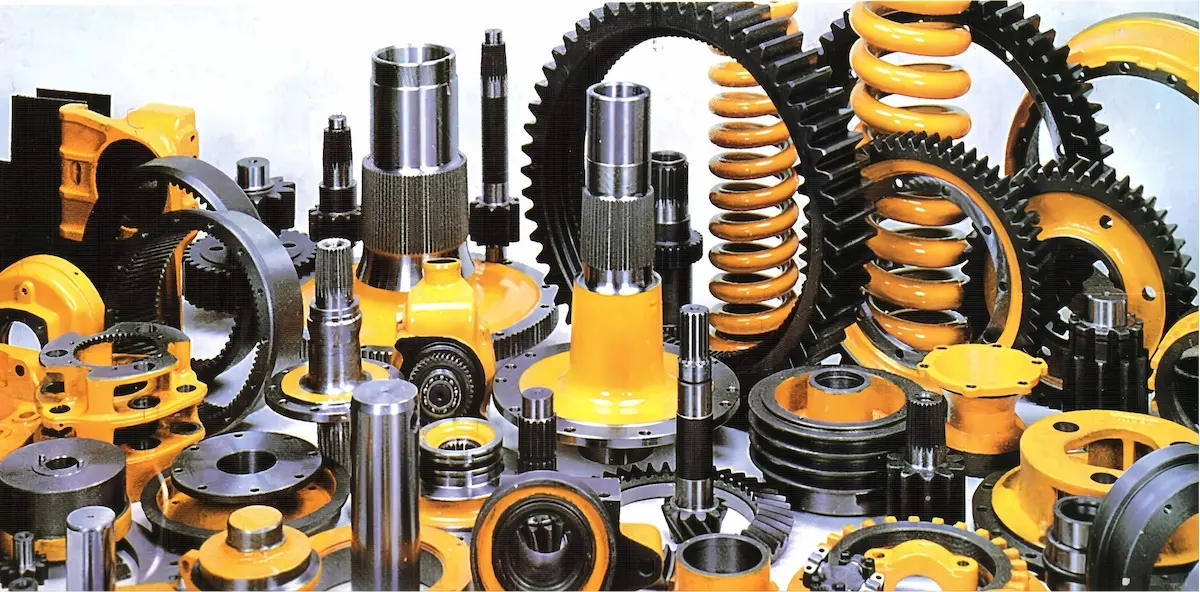
Many enterprise warehouses are fully packed. However, during equipment maintenance, they cannot find a single needed part. This is the result of poor need identification and classification. We suggest classifying parts into five categories based on crane structure and working conditions for different treatments:
●Key spare parts: Such as main hoist motors and core control boards. Once damaged, the entire crane breaks down directly. This may even cause the whole production line to stop.
●Wear parts: These are consumed quickly, like wire ropes, brake pads, and contactors. These crane spare parts need to be stocked regularly. You must keep track of their consumption rates.
●Routine maintenance spare parts: Indispensable materials for daily maintenance. Examples include various lubricating oils, filter elements, and sealing rings.
●Safety-related spare parts: Weight limiters, travel limit switches, and windproof iron wedges. These concern the life safety of on-site operators. Their quality cannot be compromised at all.
●Long-lead-time spare parts: Some non-standard customized large reducers or imported components. Their delivery times can easily take several months. You must make advanced plans ahead of time.
Management Tips: After classifying, do not just use a table for names. You must build an exclusive file for each part. Achieve “one item, one code”. Input the part code, specifications, crane equipment number, and parameters. This is the foundation for subsequent accurate purchasing.
Spare Parts Purchasing and Supplier Management
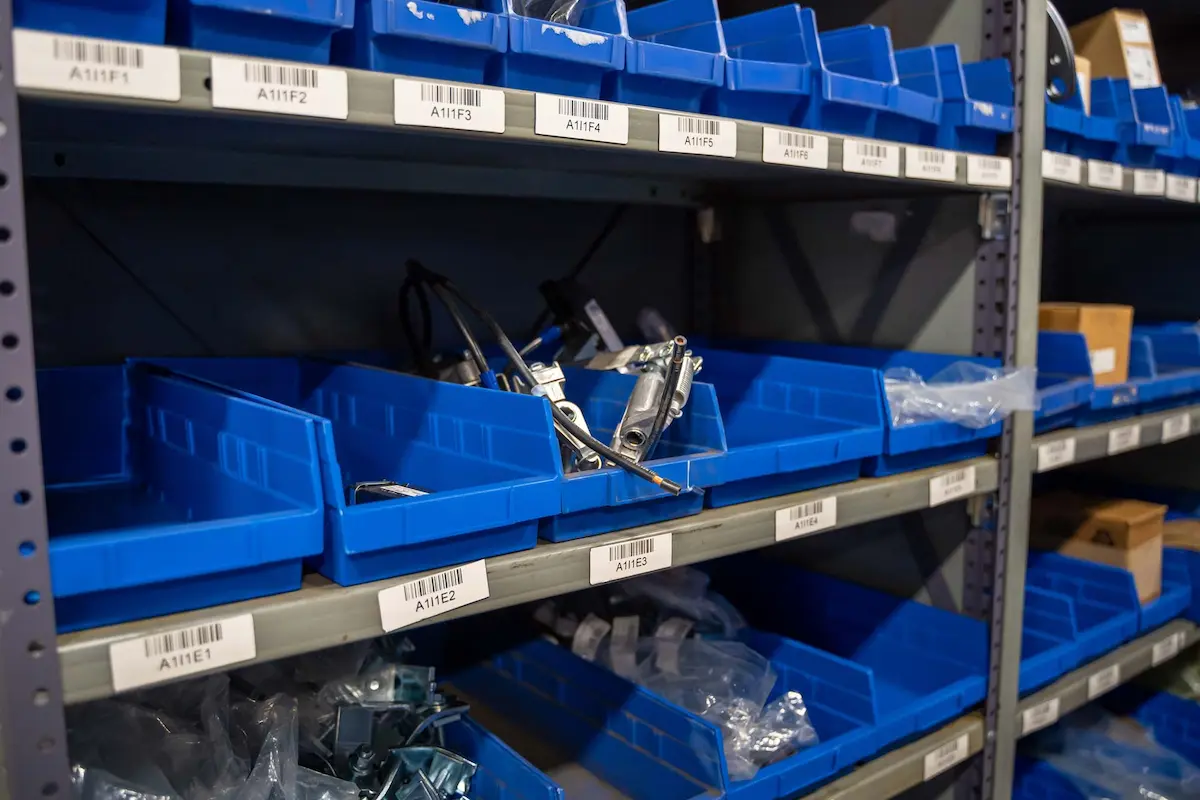
Many buyers make a fatal mistake when purchasing crane spare parts. They only focus on the unit price. They ignore the Total Cost of Ownership (TCO). Cheap inferior bearings might cause three shutdowns in six months. The resulting labor and downtime losses are huge. This cost is enough to buy ten high-quality original parts.
During the purchasing stage of crane spare parts, please strictly stick to these core indicators:
●Absolute match of technical parameters: A one-millimeter size difference means it cannot be installed. It will just be a pile of scrap iron.
●Product quality and traceability: Can you trace the source if problems occur? Are there factory certificates and test reports?
●Delivery cycle and supply stability: Can the supplier ensure parts arrive on time during emergencies? Can they continue supplying for the next three to five years?
●Supplier technical support capability: High-quality suppliers do not just sell parts. They are useful when you face installation difficulties. They can also provide solutions during equipment technical upgrades.
How to Manage Crane Spare Parts Inventory Well?
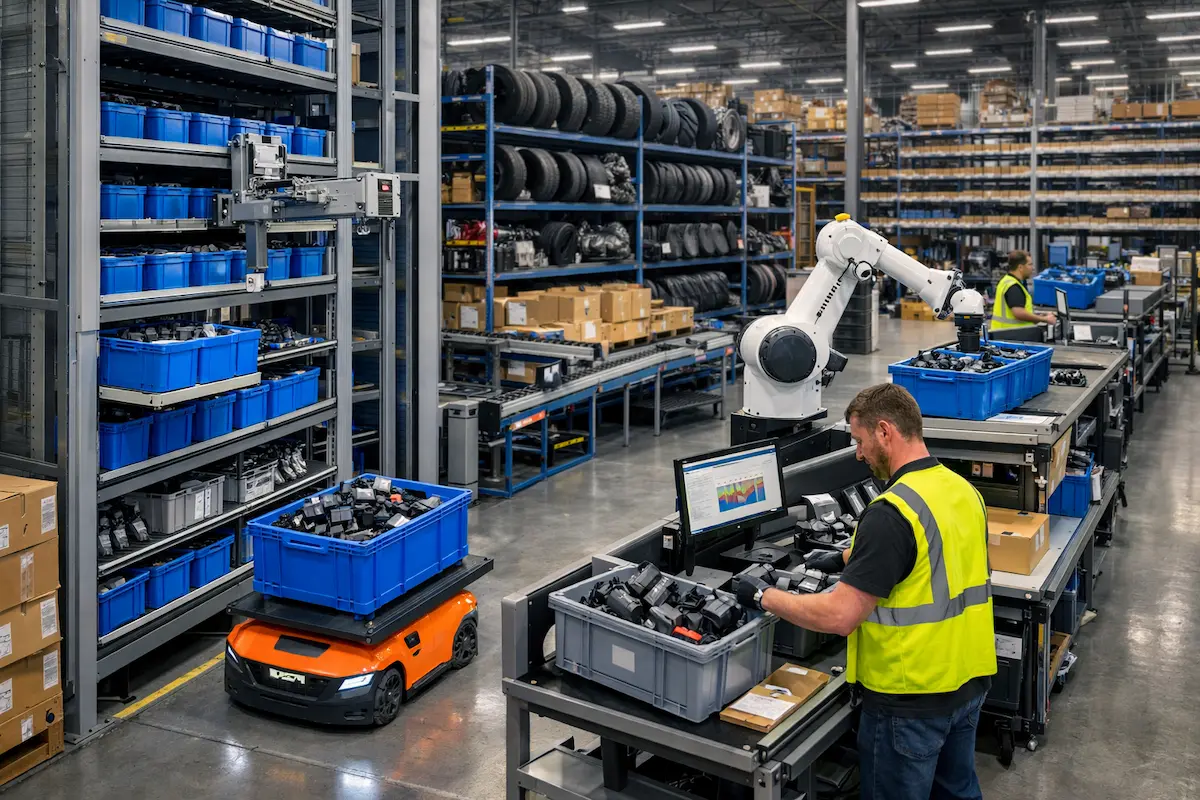
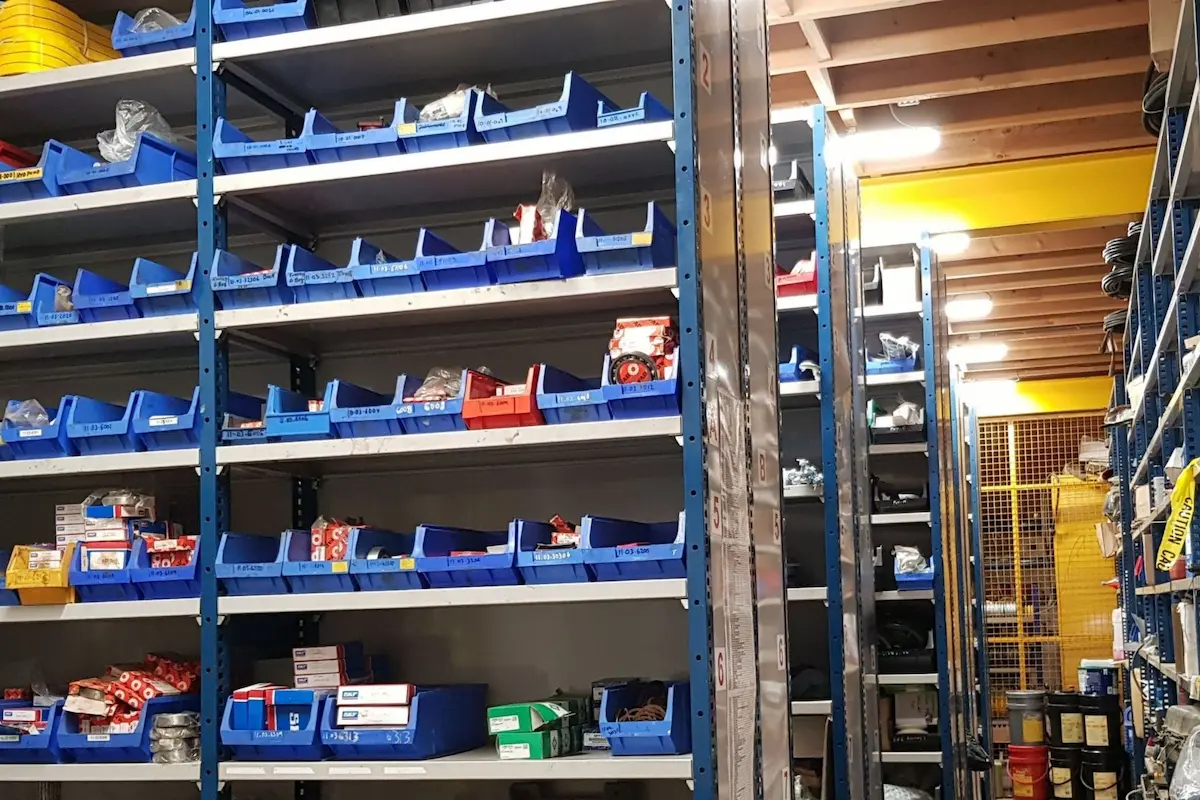
The core of inventory management is walking a tightrope. Overstocking ties up company liquidity, making the boss unhappy. Understocking brings downtime risks, upsetting the production department. How can you balance this? We compiled this core crane spare parts inventory management checklist. We suggest saving it directly in your equipment management folder:
|
Management Goals |
Core Execution Strategies |
Practical Operations and Notes |
| Set reasonable safety stock | Store on demand, reject guesswork | Deduce the inventory baseline from replacement frequency and delivery cycles. For example, a wear part consumes two per month. If purchasing takes a month, safety stock must exceed two. Ideally, set it to 3-4 just in case. |
| Avoid inventory backlog | Real-time ABC classification method | Class A (high value/long cycle): keep less or use VMI. Class B (medium value/regular): adjust inventory quarterly. Class C (low value wear parts): buy in bulk. This reduces purchasing frequency. Regularly clear dead stock. |
| Build an inventory warning mechanism | Set a “purchase trigger line” | Abandon the habit of buying only when almost run out. Set a minimum inventory warning line in the system. Once inventory hits this line, trigger a new purchase immediately. |
Practical experience sharing: Do you have multiple identical cranes? We strongly recommend promoting spare parts generalization. Centralize the management of interchangeable parts across different equipment. This can significantly reduce overall inventory levels.
Establish Crane Spare Parts Maintenance and Inspection Plans
Cranes are special equipment that fear working with faults. Many expensive overhauls start from an undiscovered worn part. You must intervene before crane spare parts fail completely. To prevent downtime, create a strict inspection plan for core parts. Experienced mechanics closely watch these core parts during daily inspections:
●Wire ropes and hooks: Do not just look visually. You must touch them and measure with calipers. Check for excessive broken wires, birdcaging, or severe wear. Check the hook’s safety latch and dangerous section wear. If cracks appear, there is no room for repair. You must replace it directly.
●Brakes: The safety baseline of cranes. Daily checks must focus on braking effectiveness. Check if brake pad wear is near the limit. Also, check if brake arm responses are delayed.
●Motors: Do not wait for smoke to find problems. Look, listen, and test more during inspections. Focus on abnormal temperature rises in the motor casing. Check for piercing high-frequency noise or abnormal vibration. Also, regularly test electrical performance like insulation resistance.
●Reducers: This component works quietly. Inspection focuses on lubricating oil level and quality. Look for metal debris in the oil. Listen to operating noise during gear meshing. A dull buzzing sound often means severe gear wear.
●Wheels and transmission parts: Check wheel tread and flange wear. See if wheel flange gnawing occurs during operation. This ruins wheels and severely damages tracks and motors.
Core logic: Maintenance inspection does not just record equipment age. It helps you arrange purchasing and replacement plans calmly. Do this before the sudden death of parts.

How to Determine Crane Spare Parts Replacement Time?
“The manual says half a year, so we replace it.” Using fixed cycles for crane spare parts replacement is bad. You waste parts with remaining life or risk danger. Crane usage conditions vary greatly. Determining replacement time cannot be a one-size-fits-all approach. It should be a comprehensive judgment based on data. We suggest considering these dimensions when deciding on replacements:
●Manufacturer advice vs. actual usage time: Manuals provide baselines. You must adjust dynamically based on actual working hours.
●Crane working class: A3 maintenance cranes differ from A8 steel mill grab cranes. The same part’s lifespan can vary drastically.
●Operating environment: Dusty, high-temperature, or corrosive chemical plants accelerate wear exponentially. The replacement cycle must be significantly shortened.
●Maintenance records and inspection results: Combine with daily inspection data. Has wear reached the critical value? Replace it! Do this even if it was used for three months.
●Historical failure data: Frequent damage to a specific part requires reassessment. You should reevaluate its replacement cycle or consider technological upgrades.
Safety red line warning: Do not take chances with key lifting safety components. These include wire ropes, brakes, and travel limiters. You must establish stricter degradation and scrapping standards for them. If they hit the red line, replace them immediately. There is no “making do” with safety issues.
Crane Spare Parts Scrapping and Disposal Management
When parts reach their end of life, they must be decisively scrapped. This also applies when daily checks deem them unsafe. With special equipment, fixing and making do brings heavy prices.
But note that throwing old parts away wastes a data goldmine. We strongly advise managers to build detailed scrapping ledgers for retired parts. This is not just a process. It is for review:
●Basic files: Part name and part number.
●Service life tracking: Actual usage time. This is accurate to running months or hours.
●Cause of failure identification: Reasons for scrapping. Examples include normal aging or deformation from impact. It also includes specific fault types.
●Handover records: Replacement date and the new replacement model.
Why do this? These real data are your bargaining chips with suppliers. They are the benchmark for optimizing inventory cycles. They are the hardest basis for deciding on technical upgrades.
How Does HSCRANE Support Customers in Crane Spare Parts Lifecycle Management?
As a professional crane manufacturer, HSCRANE provides various cranes and hoists. We also provide all kinds of core parts. Our technical services run through the entire crane spare parts lifecycle. We know efficient management requires precise matching and long-term support:
●Support customized technical matching: Parts mismatch is a big fear. We strictly follow ISO 4301-1:2016 (Clause 4). We consider your capacity, span, working conditions, and frequency. We match the most suitable key parts for you one-on-one. We never allow underpowered hazards on site.
●Strictly ensure key component reliability: Lifting and traveling mechanisms decide downtime rates. Our design and part selection deeply implement FEM 9.511 standards. We strictly enforce EN 13135:2013 (Clause 5.2) for brakes and drives. We use strict European norms to reduce your maintenance needs.
●Bottom-line spare parts and project technical support: HSCRANE maintains a stable and traceable supply chain. This solves downtime pains caused by out-of-stock key parts. You just provide the equipment model and specific working conditions. Our engineering team can intervene quickly at any time. We provide technical diagnosis and parts supply down to screws.
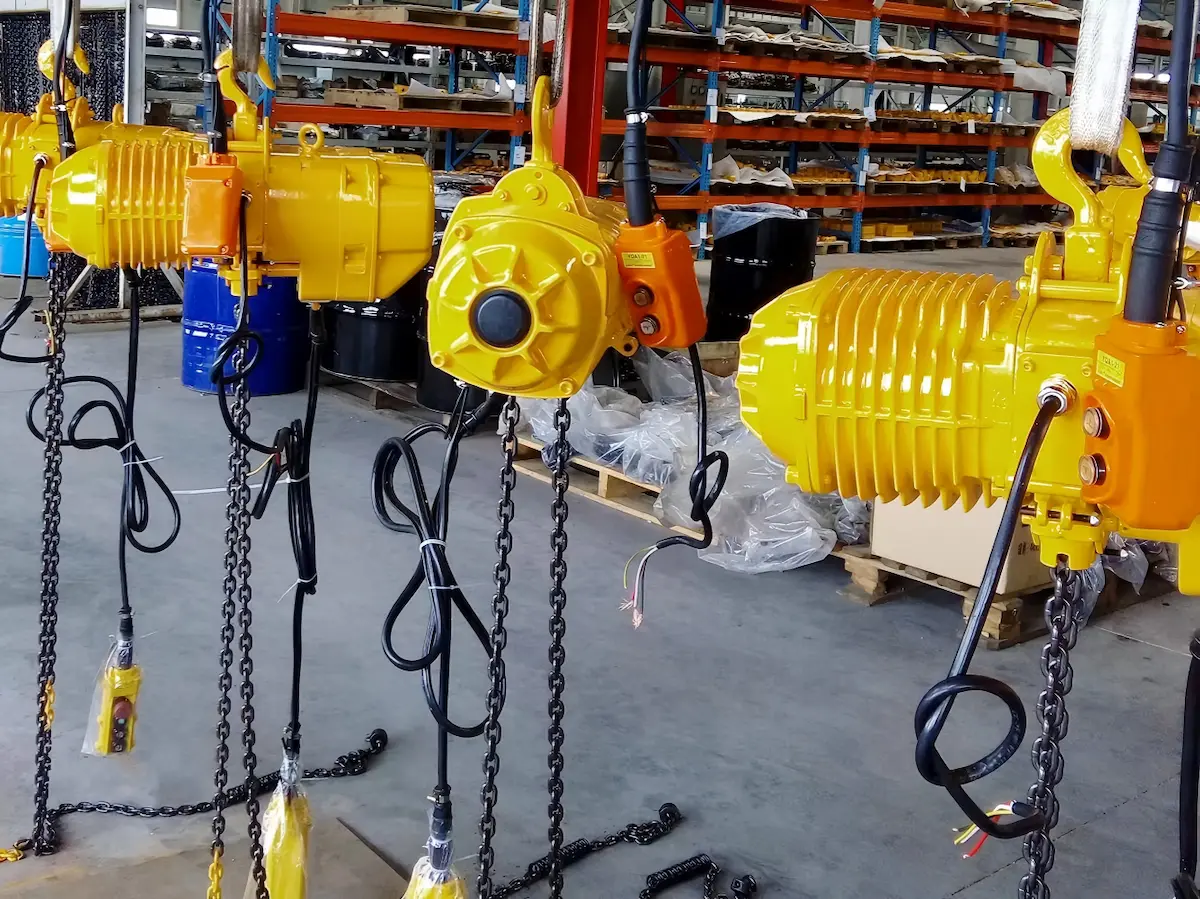
HSCRANE Classic Case: 5-Ton Chain Hoist Application in Malaysia Factory
Customer Logo: Trensor Malaysia Penang Factory, a multinational auto parts maker.
Project background and pain points: The Penang factory has high heat and humidity. The mold workshop runs high-intensity three-shift operations. Frequent mold lifting demands extreme equipment durability. Original equipment lacked systematic crane spare parts management. Chains and brakes wore out extremely fast. Crucially, they lacked advance reserves of core wear parts. Sudden chain breaks or brake failures required overseas shipping. Unplanned downtime averaged 15 hours per quarter. This severely dragged down the production line pace.
HSCRANE solutions: In August 2024, they introduced 12 heavy-duty hoists. These are HSCRANE 5-ton electric chain hoists. We delivered equipment and built a customized management plan. This is a complete crane spare parts lifecycle management plan:
1.Precise delivery and filing: We provided carburized high-strength lifting chains. We built a spare parts BOM for all 12 hoists. This “one file per machine” was done on day one.
2.Advance inventory and maintenance: We helped formulate a safety stock warning line. It covers sprockets and brake pads quarterly. We also output a forced inspection plan based on hours.
Project results:
●Plummeting downtime rate: After two years, unplanned downtime dropped sharply. It fell from 15 hours to under 2 hours quarterly. This is a drop of over 86%.
●Spare parts cost optimization: Precise safety stock warnings replaced blind purchasing. The capital occupation rate of their warehouse dropped by 30%.
●Lifespan extension: Proper daily checks and timely lubrication helped immensely. The actual safe service cycle of chains was extended. It lasted 4 months longer than expected.
How to Establish a Complete Crane Spare Parts Lifecycle Management System?
There are thousands of theories, but execution is key. To truly manage crane spare parts, you must connect every step. This means managing everything from buying to disposing. We organized the following system construction execution table for you. We suggest printing it directly for your equipment management department. They can use it as a standard operating procedure framework:
|
Lifecycle Stage |
Core Management Actions |
Execution Tools |
Key Performance Indicators |
| Stage 1: Needs and Planning | Find out details of all cranes. Classify parts into key, wear, and regular parts. Record equipment parameters and part codes. | “Crane Equipment Ledger and Spare Parts BOM” | Part code accuracy 100% |
| Stage 2: Purchasing and Supply | Abandon the “low price only” theory. Comprehensively evaluate supplier delivery time, TCO, and technical capabilities. | “Qualified Supplier List and Scoring Table” | Core parts on-time delivery rate (OTD) |
| Stage 3: Inventory and Warehousing | Set a safety stock baseline. Implement the ABC classification method. The system automatically triggers purchases when hitting the line. | “ERP/WMS Dynamic Inventory Warning Table” | Dead stock ratio < 5%. Part shortage rate < 2% |
| Stage 4: Operation and Maintenance | Reject working with faults and rigid replacement. Decide maintenance nodes based on conditions and actual measured data. These include wear and temperature rise. | “Crane Daily Inspection and Deep Testing Record” | Sudden equipment failure rate (Quarterly) |
| Stage 5: Scrapping and Review | Replace parts hitting extreme wear or mandatory scrapping standards immediately. Record scrapping reasons to feed the next purchasing plan. | “Scrapped Parts Retirement and Replacement Tracking Ledger” | Cases of dangerous parts serving overtime: 0 |
Conclusion
Many enterprises spend heavily on crane repairs annually. Yet, a missing cheap limit switch can halt the whole production line. Crane spare parts lifecycle management is not just about metal lumps. It fundamentally manages enterprise downtime risks and cash flow.
You need to connect the whole process thoroughly. This includes identifying needs, controlling purchases, inventory warnings, maintenance, and final scrapping. You will find equipment management is no longer exhausting firefighting. Instead, it becomes a calm state of having everything under control.
Still unsure how to clean up that messy account?
You might need to reserve core accessories for key equipment. Or you may want to build scientific part files for all factory cranes. The technical team at HSCRANE is here to support you.
[Click here: Contact HSCRANE experts for your free exclusive spare parts inventory optimization plan]
After understanding the crane spare parts lifecycle, purchasing is the next puzzle.
Do you struggle between expensive OEM and risky aftermarket parts? Which core parts must strictly use OEM? Which components are better replaced with alternatives? This internal technical comparison and guide helps you find the best solution. It balances cost reduction and safety perfectly.
[Click to read: Critical Crane Parts Sourcing: OEM vs. Aftermarket – A Technical Comparison]
FAQ
Q1: What if original crane spare parts for old cranes are discontinued?
A: This is common. Do not use unqualified workshops for random copies. Stress deformation brings huge safety risks. Find a regular manufacturer like HSCRANE for technical upgrades. We use standardized parts to replace old systems. This solves supply crises permanently.
Q2: Must I strictly buy OEM crane spare parts?
A: It depends on the part location. For safety and core parts like brakes, insist on OEM parts. You buy a safety baseline despite high prices. High-quality aftermarket parts work well for common fasteners. Their parameters must match perfectly with compliance reports.
Q3: Our parts warehouse is a mess; what is the first step?
A: Stop blind purchasing and do a full checkup. Record all crane nameplates, models, and classes first. Then, match all warehouse parts with on-site equipment. Build a basic equipment-parts BOM table. Advanced systems are useless without clear base accounts.
Q4: Do unused crane spare parts expire in the warehouse?
A: Absolutely. Parts also age naturally over time. Old rubber seals become brittle. Backup oil can oxidize easily. Electrical components fail due to pin rust in humidity. Long-term inventory needs good moisture and dust protection. Strictly implement the FIFO principle.
Q5: Can HSCRANE manage parts for different crane brands overall?
A: Absolutely. HSCRANE provides high-quality self-branded parts. We also supply compatible parts for most mainstream cranes. We use our mature supply chain to achieve this. This turns multiple chasing troubles into one-stop purchasing ease.
This document is for reference only. Specific operations must strictly comply with local laws and regulations and equipment manuals.