

Abstract
Experienced workshop engineers know a crane’s performance depends entirely on its heart. That heart is the crane hoist mechanisms. The worst workshop scenario is a hoist mechanism failure. Brake issues or load slipping can happen anytime. This slows production down. More importantly, it crosses safety red lines. Whether planning new lifting solutions or upgrading old cranes, you must understand hoists. Choosing the right hoist mechanism ensures equipment lifespan and efficiency. However, online crane data is often too dry. Selection is not just about formulas. Therefore, this guide focuses on practical application instead of dry theory. We will analyze mainstream hoist mechanism designs deeply. We will also explain key technical indicators to avoid buying mistakes. Finally, an expert preventive maintenance checklist is attached.
Expert Advice:
If you have a tough lifting project now, do not struggle with parameters alone.
【Click here to contact the HSCRANE technical team directly】
Tell us your actual needs. We will provide a customized selection solution quickly to save your time.
What is a Crane Hoist Mechanism
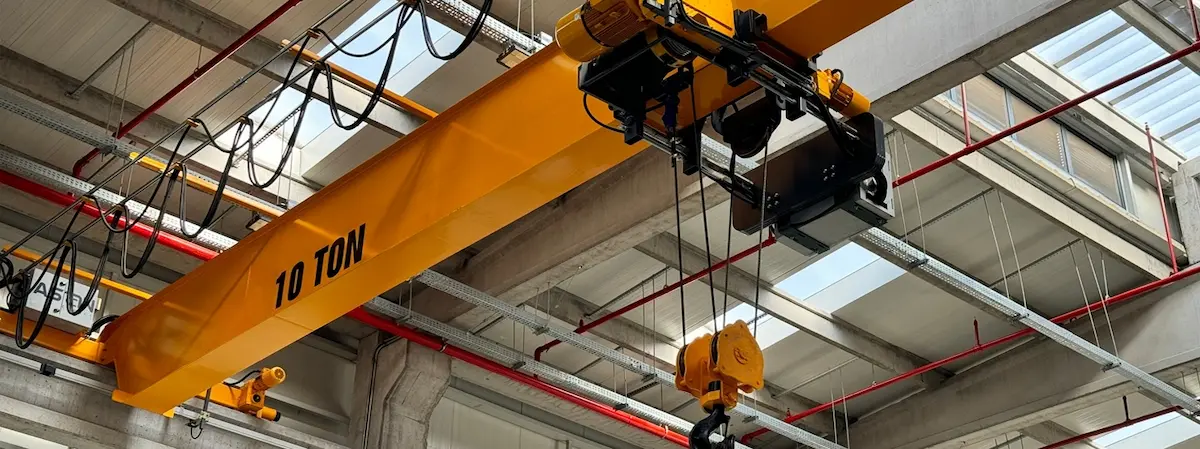
For new equipment buyers, the term “hoist mechanism” might sound abstract. Simply put, it lifts and lowers heavy loads. Think of an overhead crane as a moving mechanical arm. The crane and trolley move horizontally. The hoist mechanisms act as the hand for vertical lifting. Without it, the crane is just an empty shell.
Core Components Analysis
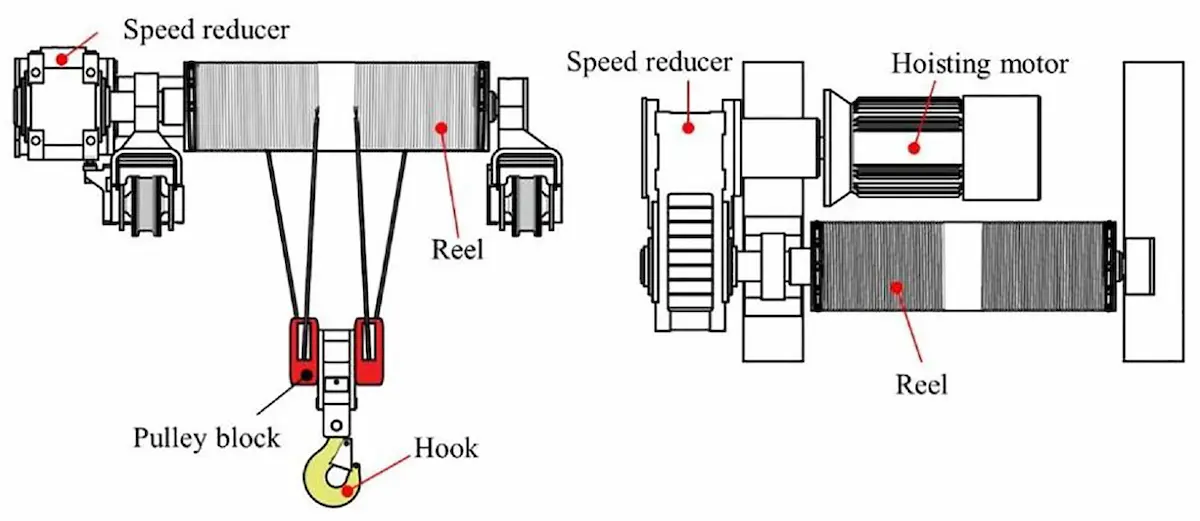
To help you understand, let us break down this device. The hoist mechanism consists of three systems and seven components:
|
Core System |
Component Name |
Core Function |
| Power & Transmission | Electric Motor | The heart of hoist mechanisms. It determines lifting capacity and speed. It must withstand frequent starts. |
| Power & Transmission | Gearbox | It converts high motor speed into high torque. This ensures smooth lifting and prevents structural damage. |
| Winding & Lifting | Drum (or Sprocket) | It acts like a giant spool. The drum winds steel wire ropes neatly. The sprocket engages load chains. |
| Winding & Lifting | Wire Rope/Chain | The lifeline connecting the load. Wire ropes offer high breaking force. Chains suit lighter equipment better. |
| Winding & Lifting | Hook Assembly | The hook hangs the load directly. For heavy lifting, it usually conceals several pulley blocks inside. |
| Safety & Control | Brake | A critical safety component! It must lock the load instantly during power cuts to prevent slipping. |
| Safety & Control | Electrical Control | Includes contactors and limit switches. The limit switch prevents over-hoisting to protect the equipment. |
Common Installation & Configurations
After understanding the internal structure, let us look at installation methods. Configurations vary based on workshop space and working conditions:
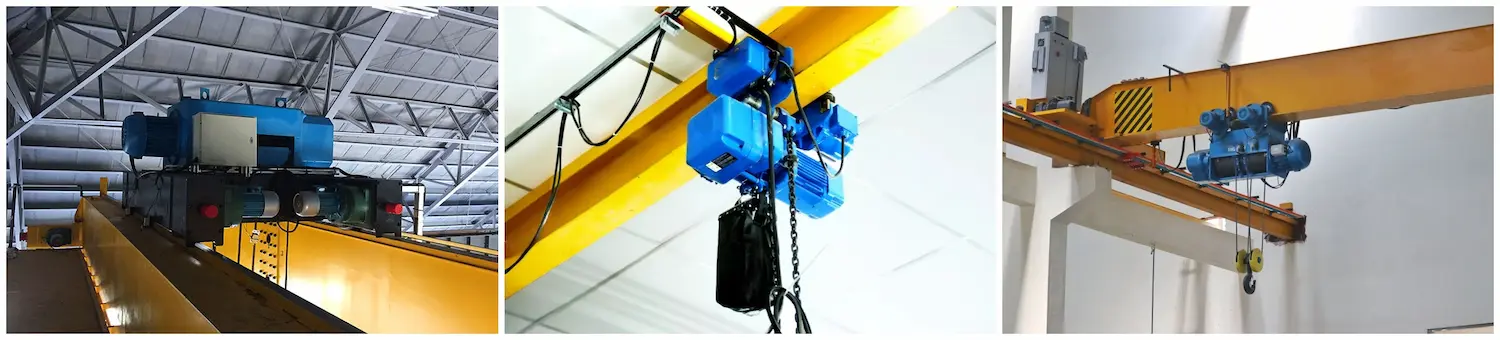
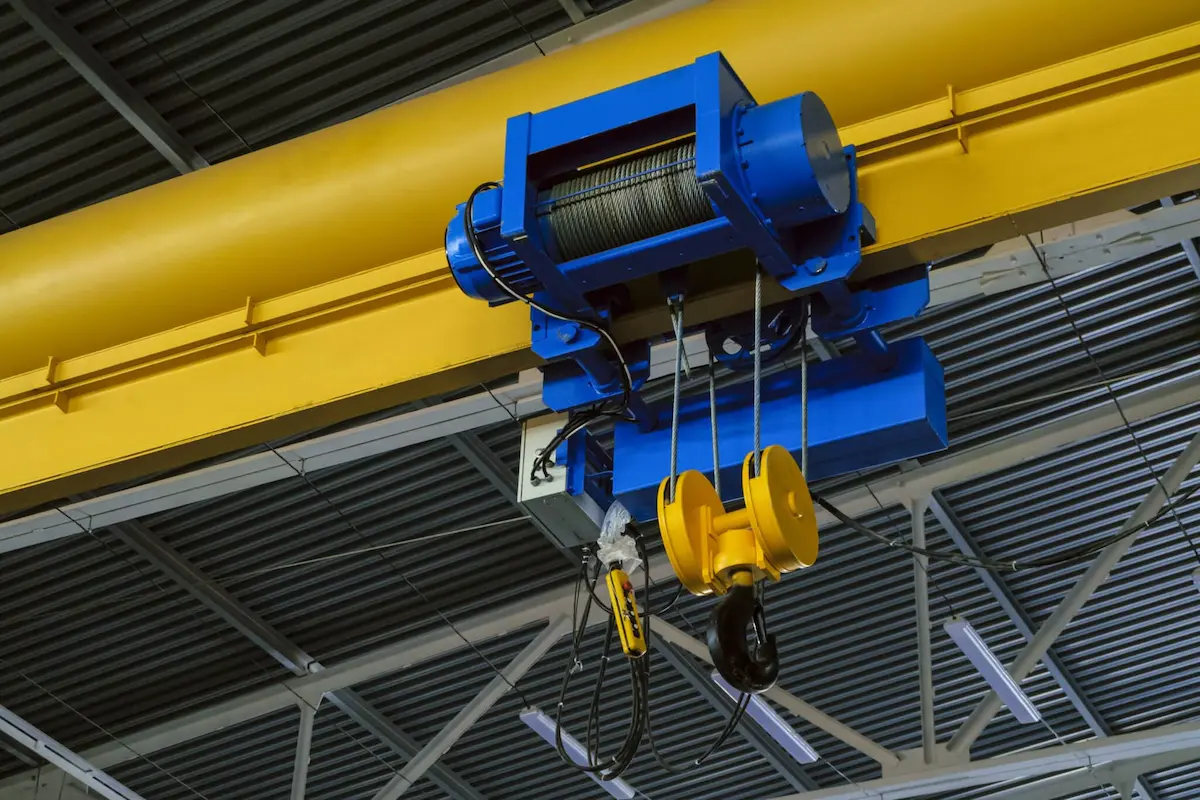
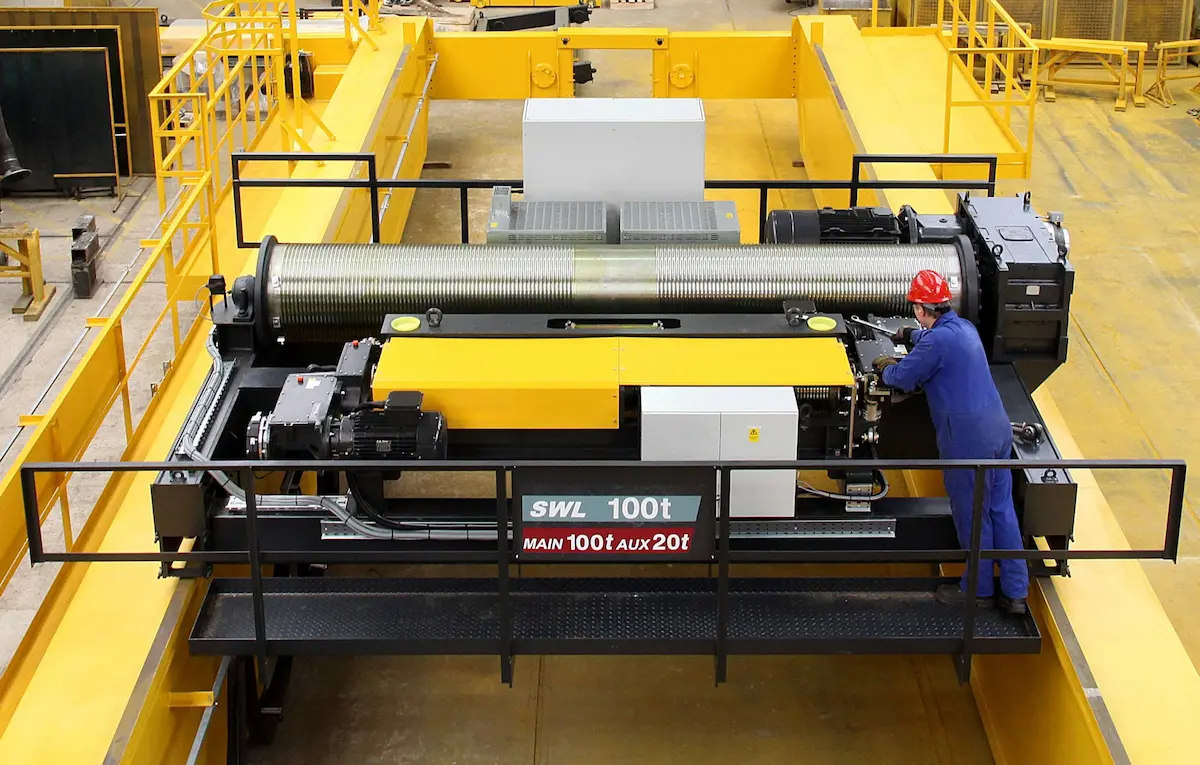
●Top-running double-girder: Hoist mechanisms are designed as a heavy crab. It travels on top of two main girders. This design offers extreme stability and high capacity. Heavy industrial cranes often use this top-running configuration.
●Under-hung single-girder: Hoist mechanisms, usually electric hoists, hang below a single main girder. This design saves workshop headroom. It is highly economical and popular for workshops under 20 tons.
●Monorail electric hoist: This setup eliminates crane main girders entirely. The hoist hangs on a fixed overhead I-beam track. It moves along fixed assembly lines. This is common in automotive and machining workshops.
Classification and Comparison of Mainstream Crane Hoisting Mechanisms
Customers often complain about varied hoist quotes and huge price differences. There is no perfect hoist mechanism, only the most suitable one. The wrong choice leads to wasted money or constant equipment breakdowns. There are four main types of hoist mechanisms used in industry today. This table explains everything directly:
|
Hoist Mechanism Type |
Core Technical Advantages |
Best Matching Work Conditions |
Pitfalls & Tips to Avoid |
| Electric Wire Rope Hoist | Large rope capacity for high lifts, extreme load capacity, and fast lifting speed. | Heavy machinery manufacturing, steel processing, and high-frequency continuous lifting under heavy duty cycles. | The reliable workhorse for heavy tasks. However, its complex structure requires care against rope tangling or breaking. Rope guides need regular lubrication and experienced maintenance. |
| Electric Chain Hoist | Extremely compact structure, saves workshop headroom, and has very low maintenance requirements. | Light-duty lifting under 10 tons, machine tool loading, and intermittent assembly lines. | A compact and worry-free all-rounder with zero rope tangling issues. It rarely breaks unless overloaded continuously. The main downside is slower lifting speed, making it unsuitable for high-speed workstations. |
| Pneumatic / Hydraulic Hoist | Inherently explosion-proof with no electrical sparks, supporting pure physical stepless speed regulation. | Chemical plants, high-dust workshops, and paint spray booths with strict explosion-proof requirements. | A lifesaver for hazardous environments, offering millimeter-level precise control. However, it is expensive and requires stable workshop air or pump stations. It is a costly but necessary special equipment. |
| Manual Lifting Equipment | Completely independent of power grids, compact in size, and extremely low purchase cost. | Outdoor operations without electricity and fine-tuning auxiliary tools during large equipment maintenance. | Relies entirely on manual labor. It is excellent for emergency maintenance but never plan it for high-frequency production lines due to low efficiency. |

Summary from an Experienced Engineer
For small capacities, low frequencies, and peace of mind, choose chain hoists. For large capacities, high frequencies, and fast speeds, focus on wire rope hoists.
If your working conditions fall in between, do not guess blindly. Send your daily lifting cycles and full load ratios to the HSCRANE technical advisors. We will use data to calculate the most cost-effective option for you.
【Contact HSCRANE Technical Advisors】
Six Core Indicators for Crane Hoist Mechanism Selection
Many buyers look only at capacity and price when buying hoists. Consequently, motors burn out from overloading, or hooks fail to reach necessary positions, disrupting workshop workflow. Experienced engineers know selection means choosing the right fit for specific working conditions instead of the costliest option. To avoid endless disputes and repairs later, you must focus on these six core technical indicators:
1. Safe Working Load (SWL)
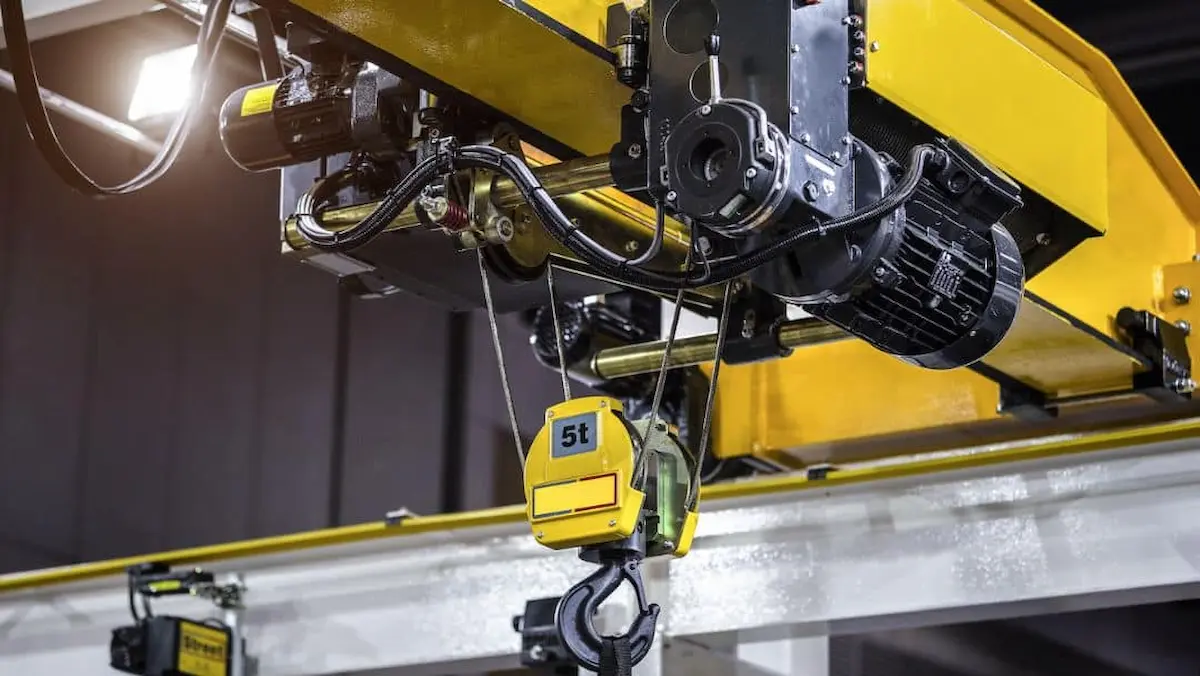
Choosing a five-ton mechanism for five-ton loads seems straightforward, but this is a common mistake. You must consider dynamic loads and impact factors in real workshop conditions. For example, pulling workpieces from molds or sudden lifting creates instantaneous forces exceeding actual load weights. If you operate near full capacity long-term, choose the next higher capacity rating to ensure adequate safety margins.
2. Lifting Height and Headroom Limitations
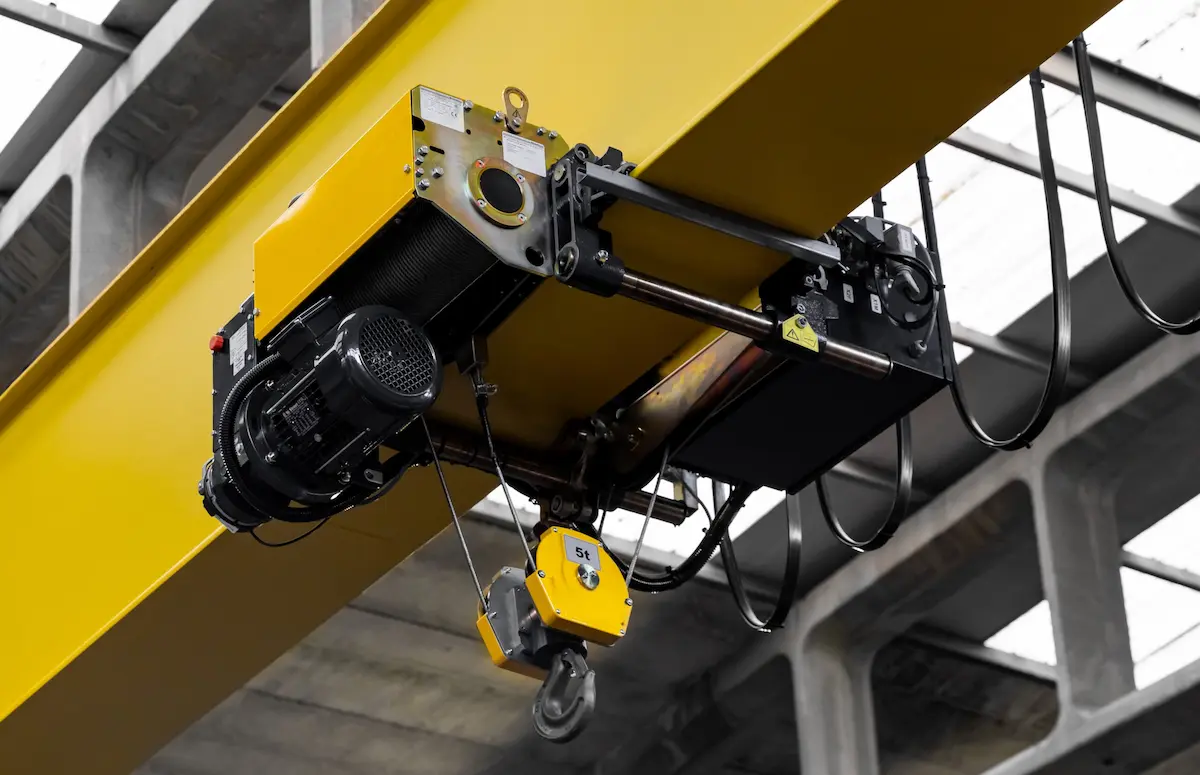
Lifting height measures how high the hook can raise the load above the ground, not just rope length. Headroom is the most common pitfall here. Low ceilings in older workshops cause standard hoists to consume too much vertical space, restricting load lift heights. In these cases, specify a low headroom hoist mechanism to gain dozens of centimeters of effective lifting space. Also, evaluate horizontal hook blind spots to ensure full coverage of every workstation.
3. Lifting Speed
Faster speeds are not always better for your operations.
●For open-air yards grabbing bulk materials, high or ultra-high speeds are essential to maximize work efficiency.
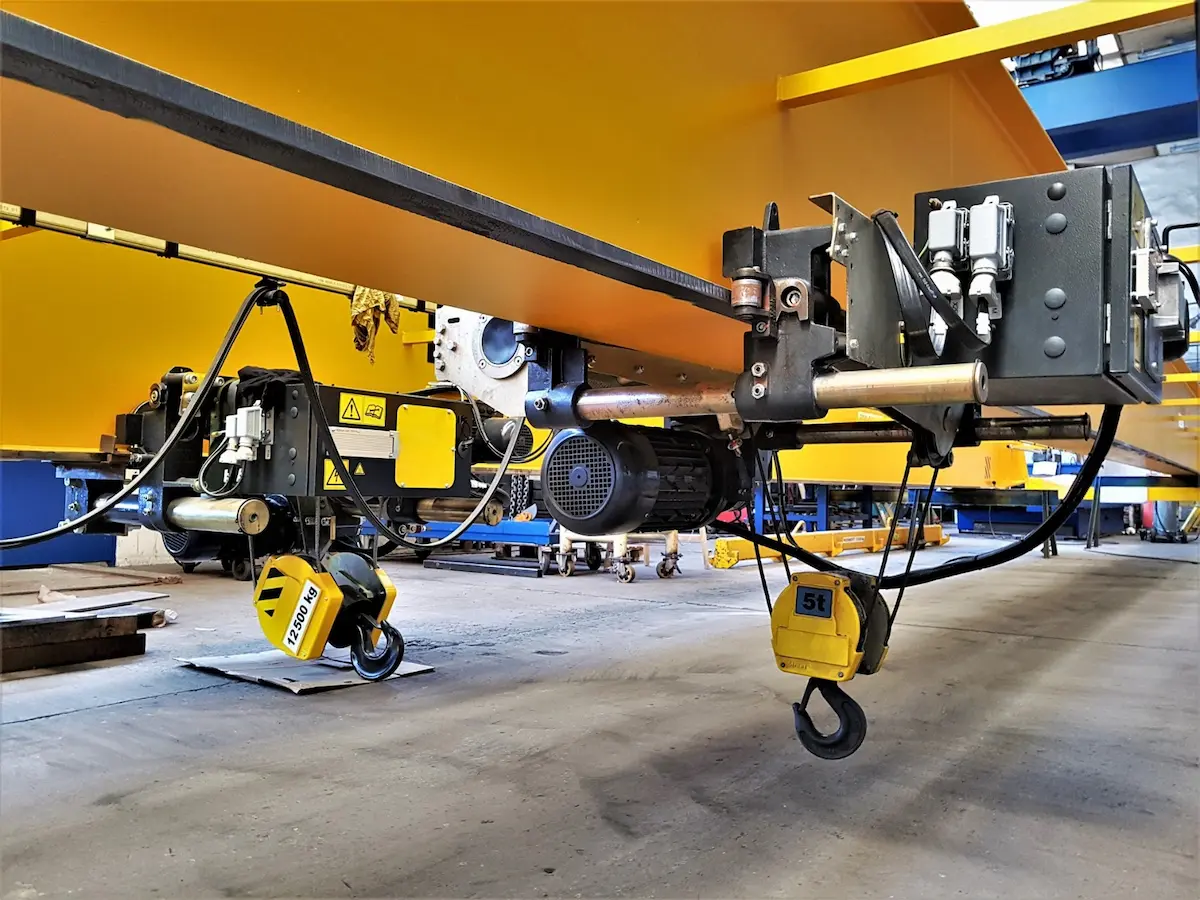
●For machine tool loading or high-precision mold mating, choose dual-speed motors or variable frequency drives (VFD). Use fast speeds for general travel, then switch to a creep speed near the target for millimeter-level precise placement.
4. Duty Cycles and Standards (FEM/ISO)
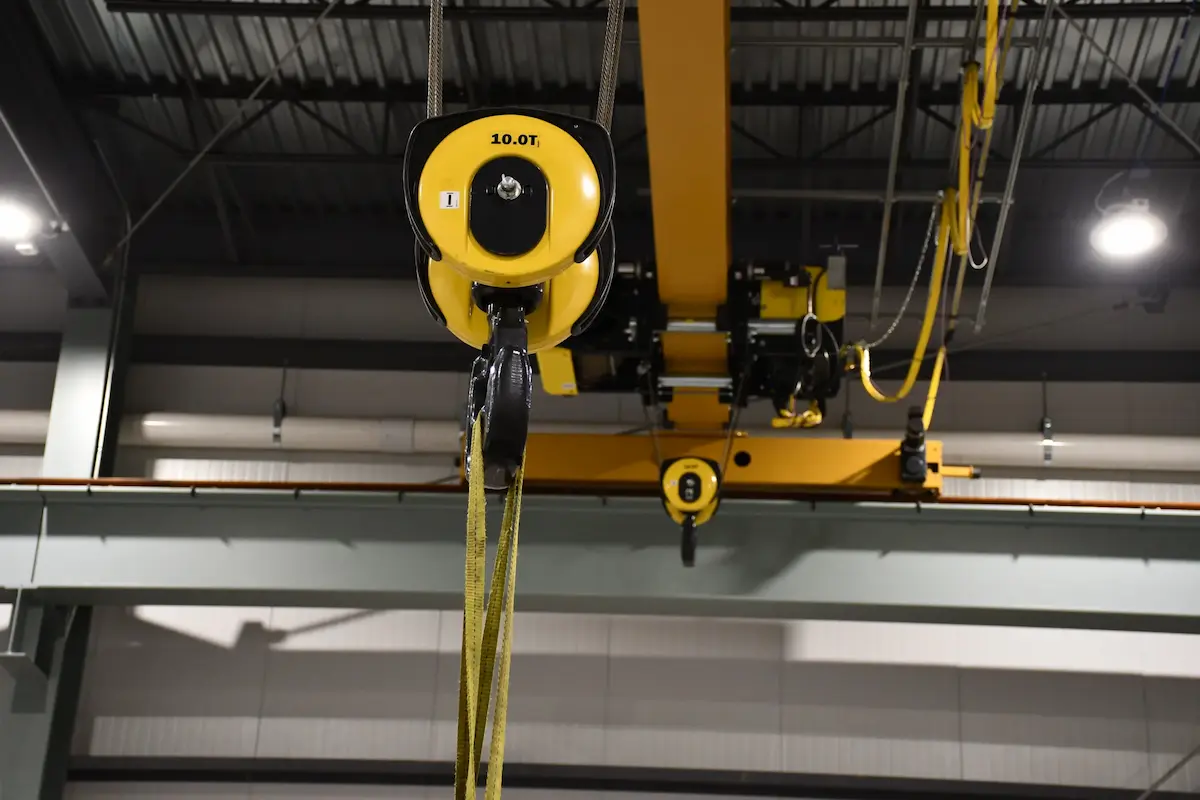
This core indicator determines equipment lifespan but is often overlooked by buyers. Duty cycles, such as ISO M3 to M8 or FEM 1Am to 4m, combine daily usage frequency with load ratios.
●M3/M4 (Light duty): Suitable for maintenance workshops with occasional lifting needs.
●M5/M6 (Medium-Heavy duty): Ideal for manufacturing assembly lines running multiple shifts continuously.
●M7/M8 (Severe duty): Dedicated to steel plant chemical sections or waste incineration plants operating around the clock. Never place an M3 light hoist into heavy industrial settings, as frequent starts will cause the motor to overheat and burn out.
5. Special Working Environment Evaluation
Where will your equipment operate? Standard IP55 protection ratings suffice for normal indoor workshops. However, special working conditions require specific notes in your technical agreements:
●Outdoor sun and rain: Requires IP65 dustproof and waterproof motors plus protective rain covers.
●Corrosive environments like electroplating plants: Requires special anti-corrosion coatings like epoxy zinc-rich primers or stainless steel enclosures.
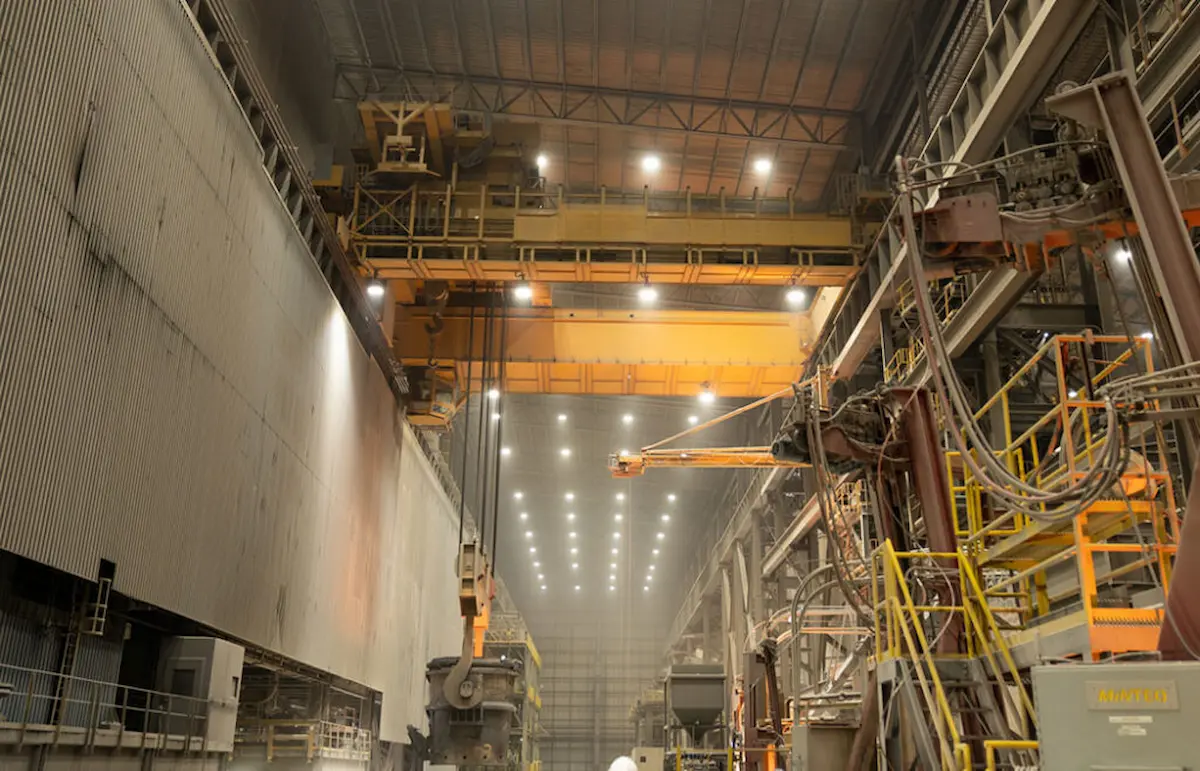
●High temperatures and dust like foundries: Must feature Class H insulation motors and extra heat shields to prevent lubrication drying out.
6. Control Methods Integration
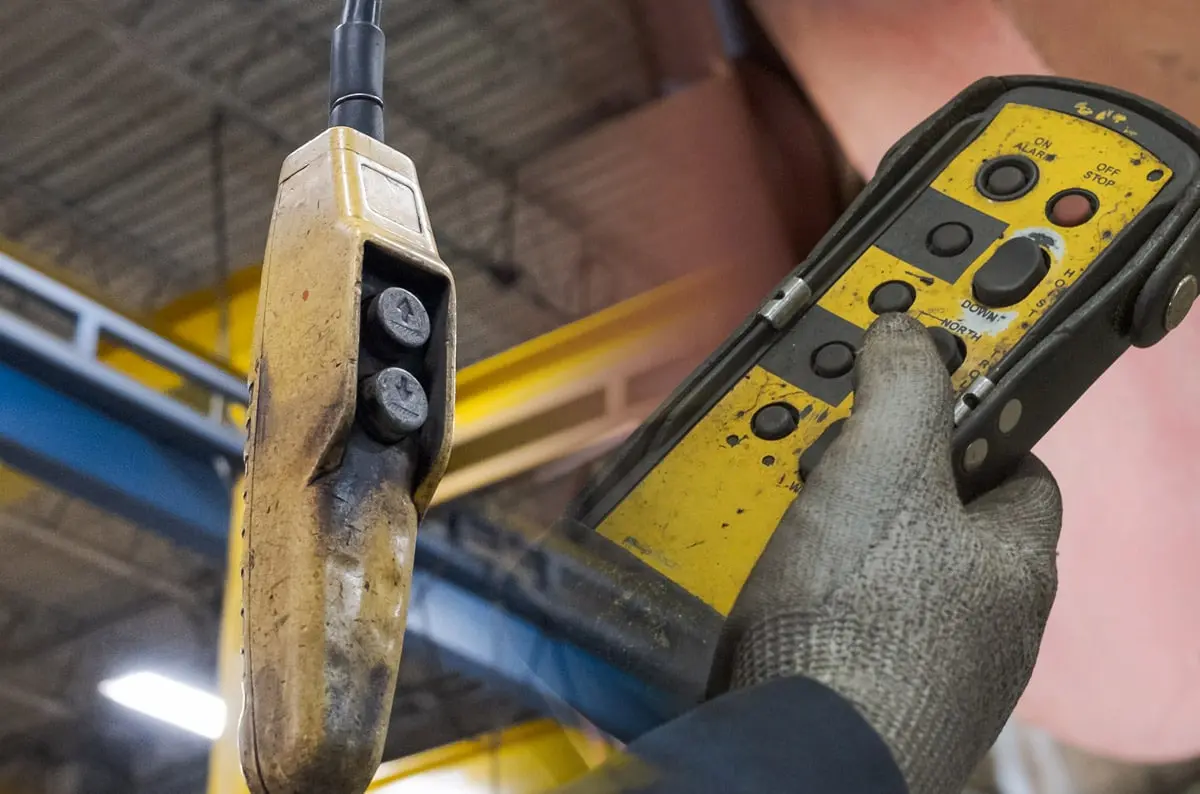
●Pendant controls: The most traditional and economical method, but workers must follow the load closely, posing tripping hazards.
●Industrial wireless remotes: The absolute mainstream choice now, allowing workers to operate from safe distances and avoid blind spots.
●Automated PLC integration: For fully automated production lines, hoist mechanisms can include communication interfaces for remote unmanned operations.
Preventive Maintenance and Care for Hoist Mechanisms
An old saying in the crane industry states that performance relies thirty percent on purchase and seventy percent on maintenance. Even premium hoist mechanisms will fail at critical moments if operated with existing faults long-term. Strict preventive maintenance saves owners from costly major overhauls and protects essential safety baselines. Whether referencing ASME B30.16 or GB/T 6067.1 safety codes, standard hoist maintenance must strictly follow these four procedures:
Pre-Shift Daily Inspection
Spend three minutes checking the equipment before each shift to prevent eighty percent of severe accidents.
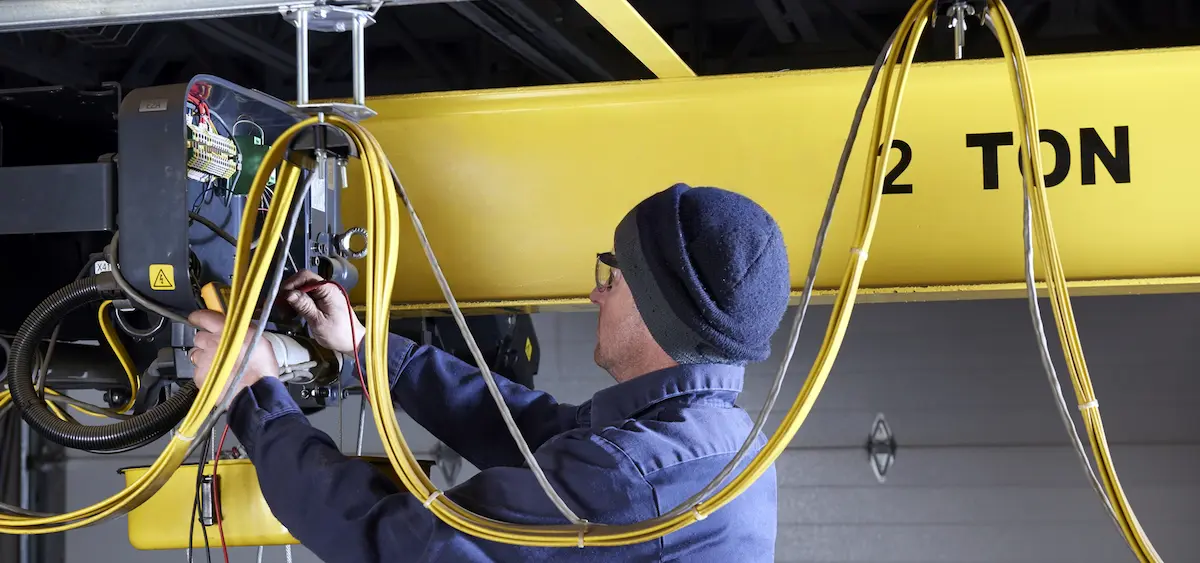
●Inspect hooks and ropes: Verify if the hook safety latch is present and ensure the hook opening has not stretched. Check steel wire ropes for kinks or broken wires, and inspect load chains for deformation or jamming.
●Test brakes: Lift the hook without a load and release the button to ensure the hook stops instantly. If stopping feels delayed or shows noticeable sliding drift, the brake requires adjustment.
●Test limit switches: Raise the hook to its highest point to verify that the upper limit switch cuts power decisively. If the anti-two-blocking device fails, an operational error can pull and rupture the entire drum.
Periodic Professional Inspections
Arrange for specialized personnel to conduct periodic inspections based on factory operational intensity and duty cycles:
●Monthly/Quarterly inspection: Focus primarily on wear parts. Check rope guides for cracks, inspect gearbox housings for oil leaks, and examine electrical control box contactor points for burn marks.
●Annual major inspection: This step requires mandatory compliance records. Use non-destructive testing equipment to check load-bearing structures for fatigue cracks and measure motor insulation resistance to prevent electrical aging and leakage.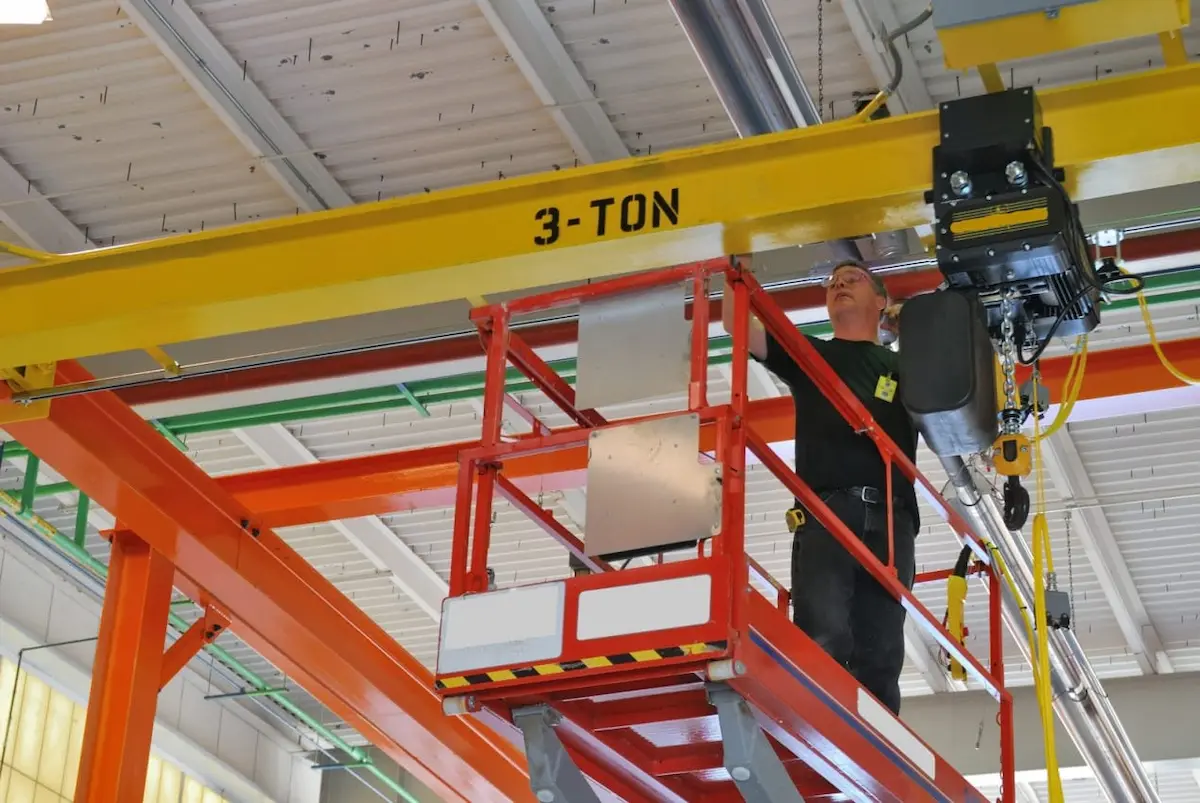
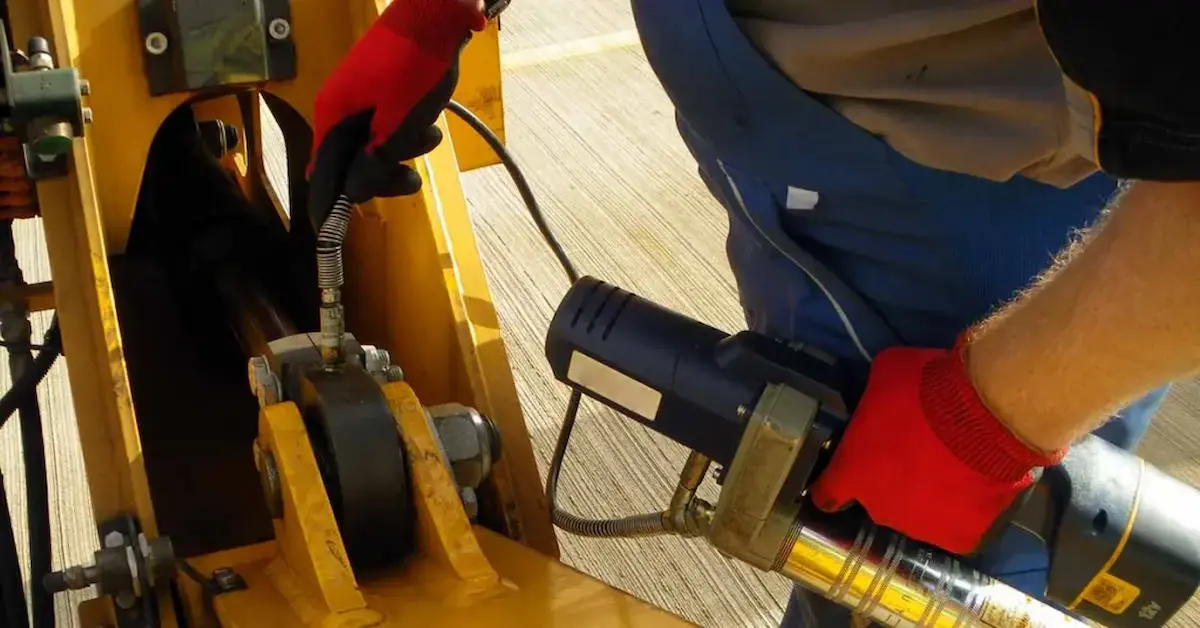
Critical Lubrication Guide
Using standard grease for every component is a major mistake that technicians must avoid.
●Gearboxes: Fill with specified industrial gear oil industrial grades according to the manual. Change oil after the initial 300 operating hours to flush out break-in metal shavings, then change it annually.
●Wire ropes/Chains: Apply a thin layer of specialized wire rope surface lubricant. Heavy applications attract workshop dust, turning grease into abrasive paste. Use penetrating light oil for chains to reach chain link friction surfaces.
●Bearings and pulleys: Inject appropriate lithium-based grease regularly to prevent dry friction and loud squealing sounds.
Records and Compliance Management
Never misplace maintenance logbooks. Sign and date the equipment logbook after every inspection, component replacement, and lubrication task. When repairing major equipment faults, hang safety warning tags reading “Do Not Start, Personnel at Work” on control pendants or power boxes using strict Lockout/Tagout (LOTO) life-saving rules.

Core Advantages of HSCRANE Hoist Mechanisms
If you are tired of constant equipment repairs, HSCRANE provides your tailored breakthrough solution. We do not compete on extremely low prices but focus on these three core advantages:
●Heavy-duty design: We utilize custom crane motors with high insulation ratings and optimized cooling air ducts. Even under continuous three-shift operations and high-frequency dynamic load impacts, they maintain stable output, ending motor overheating nightmares.
●Maintenance-free brakes: Load slipping poses the greatest safety hazard in workshops. HSCRANE upgraded to maintenance-free electromagnetic disc brakes featuring automatic wear compensation. Technicians never need to climb high to adjust clearances, saving maintenance time and securing safety.
●Smart anti-sway monitoring: HSCRANE introduces electronic anti-sway and digital monitoring systems. Control algorithms suppress hook sway to millimeter levels for precise placement. Built-in smart black boxes monitor remaining lifespan and output fault codes, turning breakdown repairs into proactive prevention.
Classic Application Cases of HSCRANE Hoist Mechanisms
Technical parameters sound impressive, but real workshop performance matters more. Here is how HSCRANE hoist mechanisms perform in two extreme industrial environments:
Case 1: Large Automotive Component Manufacturer
●Site conditions: This workshop handles heavy stamping mold loading and frequent mating. Molds weigh dozens of tons and require millimeter-level assembly precision. Operating twenty-four hours continuously demands high duty cycles, micro-speed positioning, and extreme equipment stability.
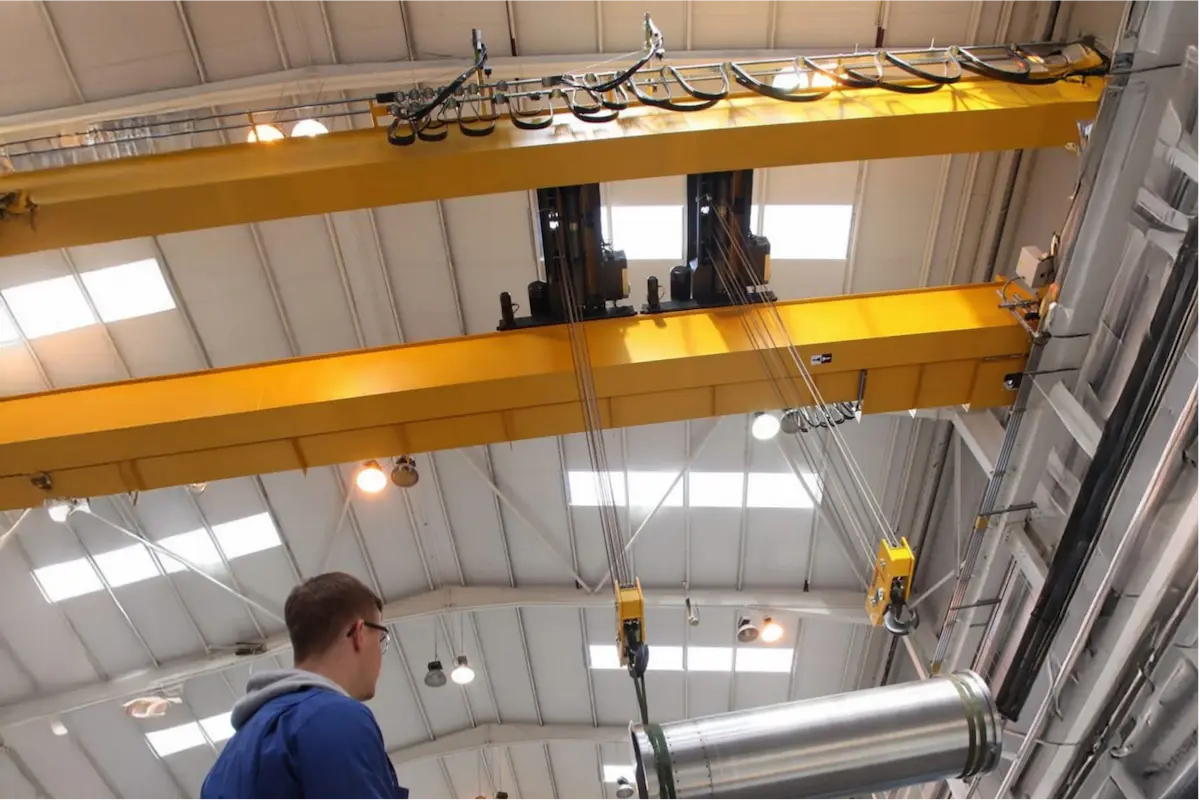
●HSCRANE solution: Implemented an HSCRANE variable frequency dual-speed wire rope hoisting crab paired with a smart electronic anti-sway system.
●Real performance data: Precise anti-sway and variable micro-speeds reduced single mold positioning time by nearly one-third, increasing lifting efficiency by 28%. Digital monitoring shifted maintenance from reactive repairs to proactive prevention, lowering unexpected production line downtime by 65%.
Case 2: Municipal Waste-to-Energy Plant
●Site conditions: Cranes handle twenty-four-hour continuous waste grab feeding operations. The workshop contains high concentrations of acidic gas, extreme dust, and high temperatures, representing severe M7/M8 environments. Standard hoists fail quickly here due to electrical shorts or jammed brakes.
●HSCRANE solution: Customized a special heavy-duty HSCRANE hoist mechanism. Motor protection was upgraded to IP65 with multi-layer heavy anti-corrosion epoxy zinc-rich coatings and fully sealed brakes.
●Real performance data: In harsh conditions where standard cranes fail within six months, our maintenance-free sealed brakes resisted acidic dust perfectly. The braking system lifespan extended more than three times compared to traditional equipment. Eliminating frequent climbing for lubrication and brake adjustments reduced overall maintenance costs by 42%.
Conclusion
Ultimately, the crane hoist mechanism is not a minor component you can select without careful thought. It is the heart determining production line lifting efficiency and the final line of defense for workshop safety. Following this complete process saves significant money on major overhauls and downtime losses. This ranges from ignoring price-only arguments and focusing on technical indicators early on, to executing strict daily inspections and periodic lubrication later. Choosing the right equipment and maintaining good habits allows a hoist to serve reliably for over a decade.
If calculating parameters using tables feels too time-consuming, or your workshop conditions are complex, do not order blindly.
Need a direct solution? Send us your workshop drawings or on-site photos, and we will provide free one-on-one selection calculations to customize your most reliable hoisting solution.
【Book an appointment with a senior HSCRANE technical engineer online now】
Further Reading: The Ultimate Confrontation in Crane Heart Selection
Customers often complain about receiving two hoist quotes with a huge price difference, wondering which to choose. Hoist mechanisms have no absolute good or bad, only suitability for specific working conditions. Want to avoid daily brake repairs and tangled ropes?
【Click to reveal: “Chain Hoist vs Wire Rope Hoist: How to Choose the Right Hoisting Solution?“】 Learn how front-line maintenance technicians make their selection.
FAQ
Q: What is the fundamental difference between a chain hoist and a wire rope hoist? A: Chain hoists feature a compact structure driven by sprockets, making them low-maintenance and perfect for light-duty lifting under 10 tons. Conversely, wire rope hoists utilize drums to wind ropes, offering larger capacities and faster speeds for heavy industrial tasks.
Q: How often must a crane hoist mechanism undergo a comprehensive major inspection? A: Operators must perform visual inspections daily before starting shifts to check the hooks, ropes, and brakes. Furthermore, specialized technicians should conduct detailed maintenance quarterly, while certified agencies must perform compliance testing annually.
Q: Can I move an indoor hoist outdoors for open-air use to save time and effort? A: Absolutely not, because standard indoor hoists lack adequate protection against severe outdoor rain and moisture. Outdoor operations require upgraded IP65 motors, specialized protective rain covers, and heavy-duty anti-corrosion shell coatings.
This document is for reference only. Specific operations must strictly comply with local laws and regulations and equipment manuals.