

Summary
Choosing crane hooks or crane grabs for a new crane or retrofit is hard. They are both vital components at the crane end. However, their working styles are completely different. Choosing the wrong lifting attachment hurts efficiency. It also significantly increases safety risks and maintenance costs. HSCRANE will analyze their core differences here. We compare structural principles, working conditions, and maintenance needs. This guide will help your project choose correctly.
●Crane hooks specialize in precision handling. They work with slings and wire ropes to lift structural parts and machinery.
●Crane grabs handle bulk materials. They grab coal, ore, or scrap steel by opening and closing shells.
Still hesitating about your project selection?
[Click to contact HSCRANE engineers], tell us your material types and working conditions. We will provide a 1-to-1 custom lifting attachment solution.
What is a crane hook?
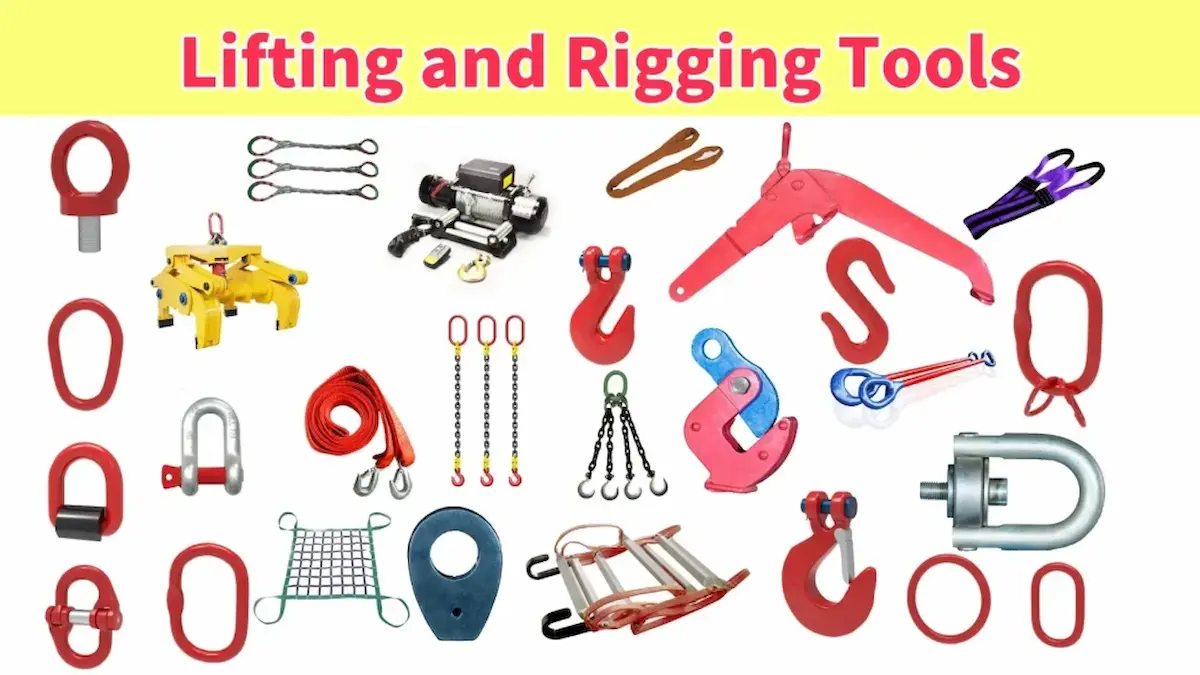
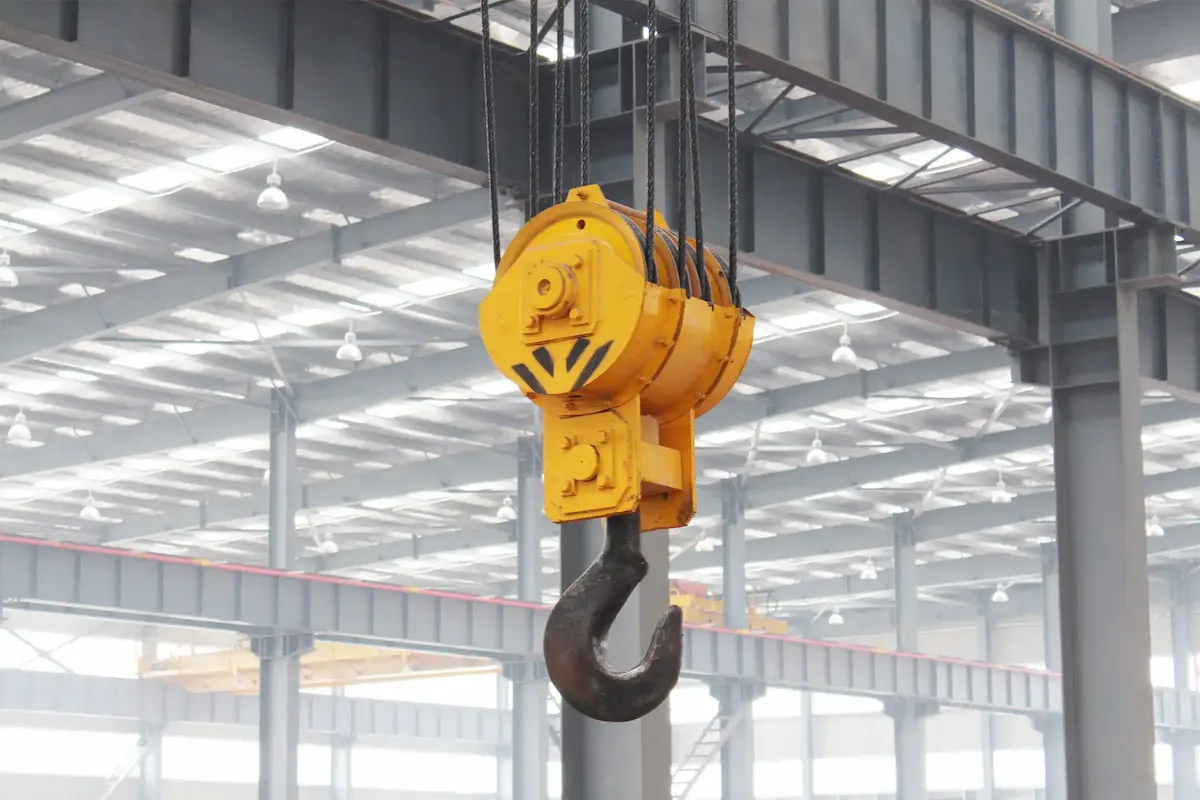
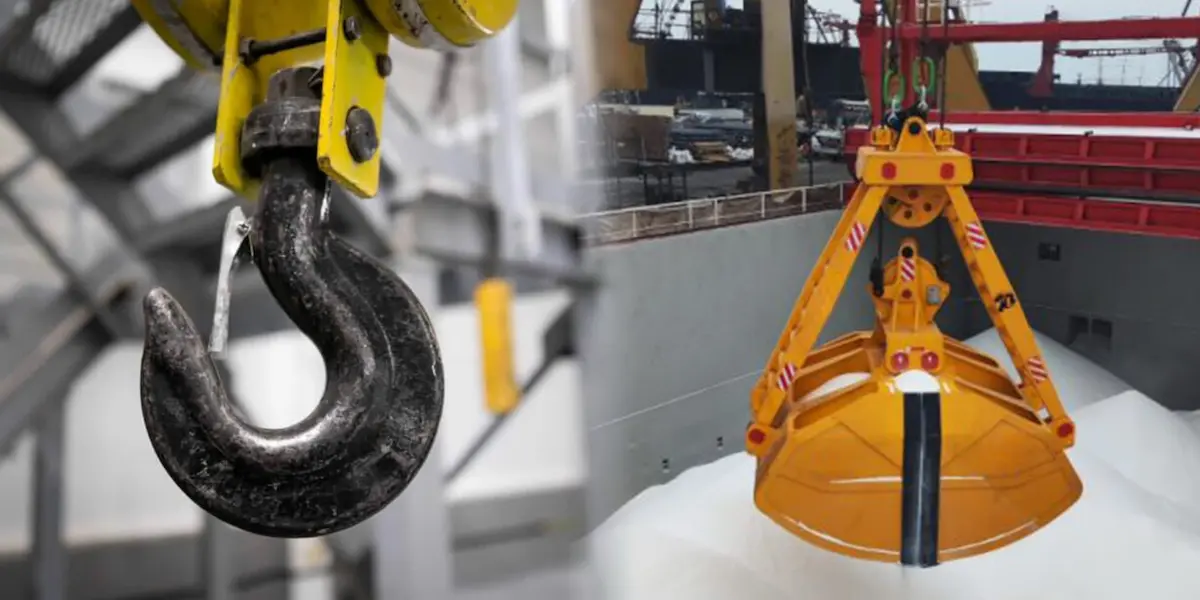
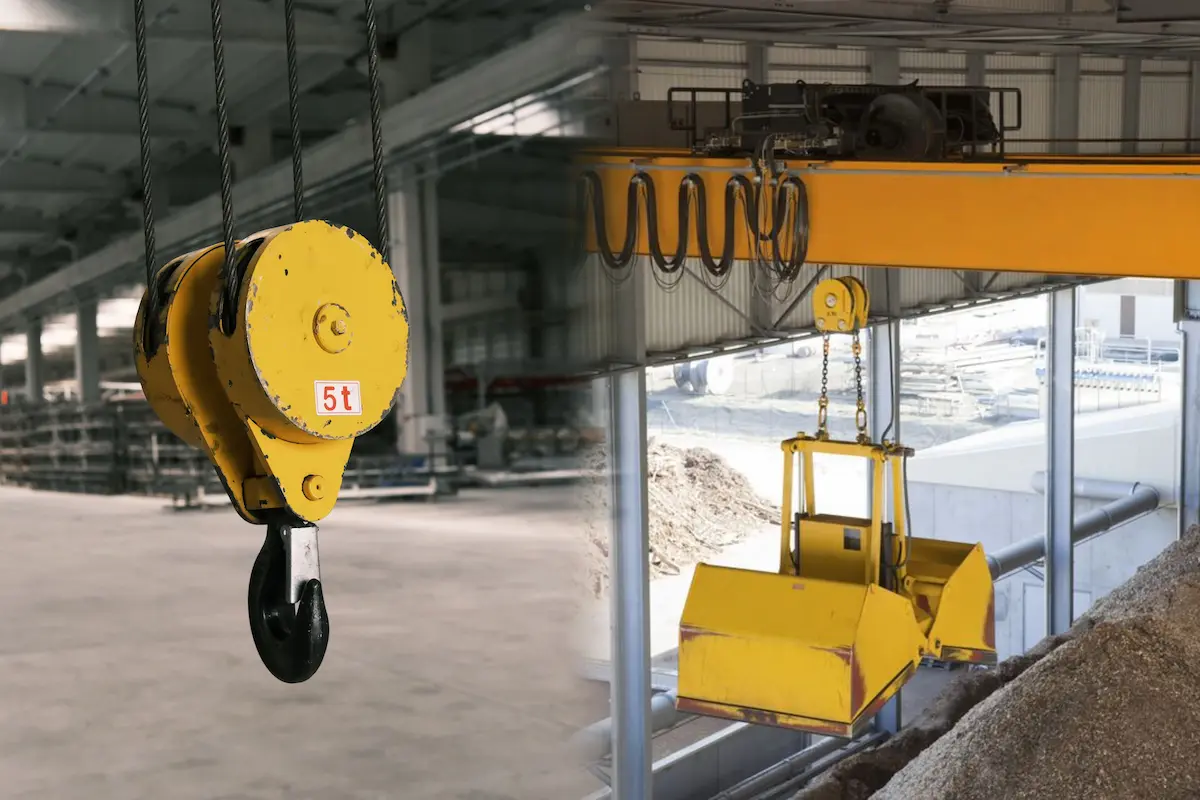
When mentioning a lifting attachment, the first image in mind is usually a crane hook. It is the most basic and common lifting tool on cranes. Essentially, a crane hook is a connection hub. It does not grab goods directly. Instead, it acts as a bridge. It works with wire ropes, slings, or chains to lift heavy equipment and units safely.
Main roles of crane hooks
In actual material handling, crane hooks play three key roles:
●Serving as a rigging connection hub: It provides a reliable mounting point. This allows flexible rigging like flat slings and shackles to attach and detach quickly.
●Bearing extreme tension: During lifting, crane hooks are the core load-bearing part. They directly carry weights from tons to hundreds of tons.
●Securing safety baselines: They work with anti-slipping latches. This ensures rigging will not slip accidentally when goods swing or face wind.
Common crane hooks types and applications
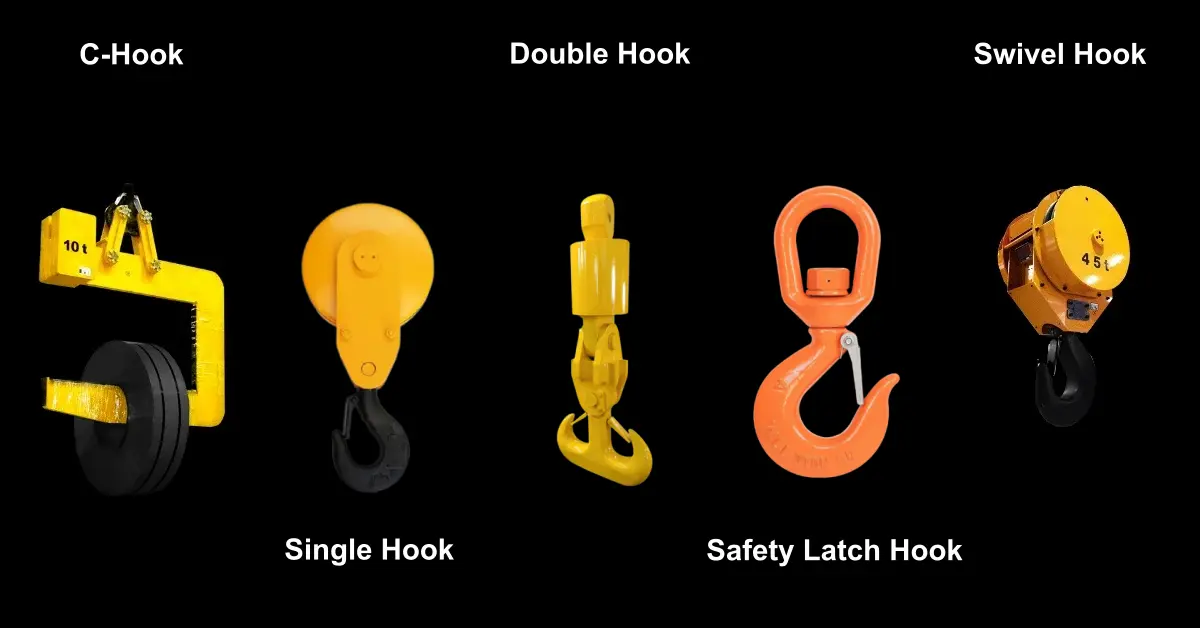
Different working conditions require different force distributions on crane hooks. Here are the most common crane hooks types:
●Single Hook: The manufacturing process is simple. It is very convenient to use. It is usually used for small and medium cranes under 80 tons.
●Double Hook: It looks like a symmetrical anchor. The force distribution is more even, reducing internal material stress. It is mainly used for heavy-duty cranes or metallurgical cranes over 80 tons.
●C-Hook: It looks like the letter “C”. This is designed for coiled materials like steel or aluminum coils. It is easy to handle and protects coil edges from damage.
●Swivel Hook: It features a rotating bearing. This allows goods to rotate 360 degrees when suspended. It is highly practical in equipment installation and precision assembly workshops.
●Safety Latch Hook: It is equipped with a spring-loaded anti-slip latch. This is standard on most modern cranes. It maximizes safety by preventing accidents caused by manual rigging errors.
What is a crane grab?
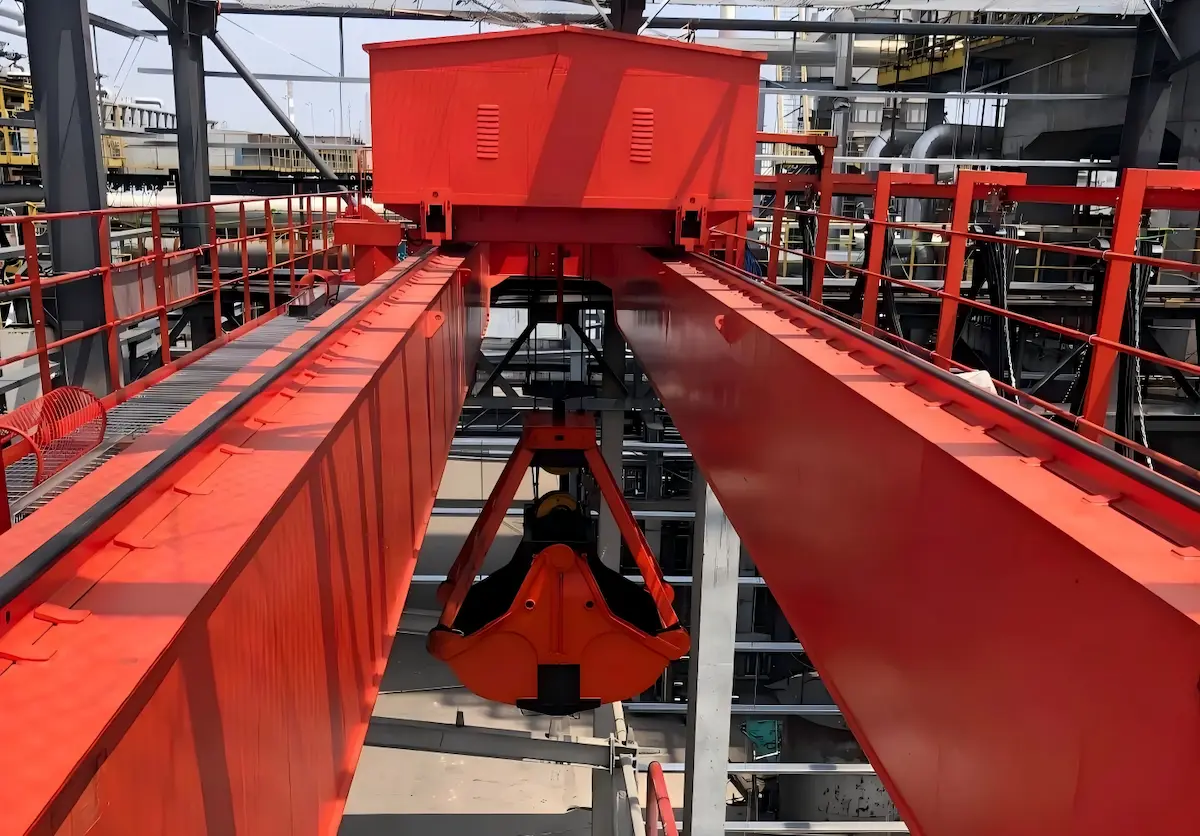
If a crane hook is the crane’s “wrist” for lifting, a crane grab is its “mouth” for active feeding. A crane grab is an active material-gathering device with its own executive mechanism. It requires no manual rigging or hooking. Instead, it relies on mechanical pulleys, hydraulic pump stations, or electro-hydraulic systems to control shell opening and closing. It plunges directly into material piles to complete grabbing, lifting, and unloading.
Main roles of crane grabs
For bulk cargo handling, the position of crane grabs is irreplaceable:
●Grabbing bulk materials: Whether light like grain and fertilizer, or heavy like coal and ore, or even irregular scrap steel, crane grabs can swallow them all.
●Achieving continuous high-frequency operations: Crane grabs eliminate tedious manual hooking steps completely. Operators just push joystick levers in the cabin to achieve continuous, non-stop operations from unloading to warehousing, boosting efficiency exponentially.
●Reducing manual involvement: In harsh environments with toxic dust (like cement plants) or high temperatures (like steel mills), crane grabs make pure mechanization or full automation possible.
Common crane grabs types and applications
Choosing the right crane grab type directly determines the single fill factor of the equipment:
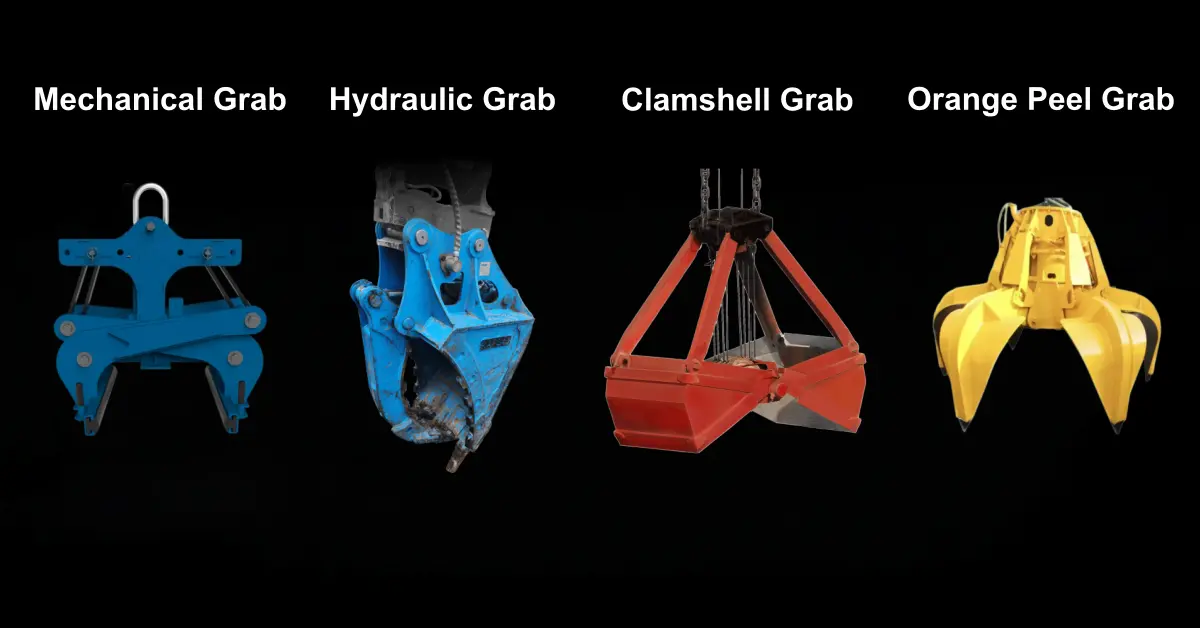
●Mechanical Grab: The structure is classic, relying on crane wire ropes (single, double, or four ropes) to control opening and closing. Without complex hydraulic components, maintenance costs are extremely low, making them common at bulk terminals.
●Hydraulic Grab: It comes with its own hydraulic system, providing immense closing force. When encountering landslides, compacted mineral powder, or hard waste, hydraulic crane grabs can bite hard into the material with full force.
●Clamshell Grab: It consists of two symmetrical shells that close like a tight clam. With excellent leak-proof performance, it is ideal for loose, fine-grained materials like yellow sand, coal, grain, and fertilizer.
●Orange Peel Grab: Also known as a lotus grab, it usually has 4 to 6 shells acting like claws that fit material shapes independently. It is the designated tool for waste incineration plants handling garbage and steel mills handling irregular scrap steel.
Core differences between crane hooks and crane grabs
To understand the differences quickly, the following table provides a visual comparison:
|
Comparison Dimension |
Crane Hooks |
Crane Grabs |
| Structural Complexity | Ultra-simple and durable: mostly high-strength forged structures, keeping failure rates extremely low. | Complex and precise: combined from multiple mechanical parts like pulleys, shells, or hydraulic pump stations. |
| Working Principle | Passive load-bearing: no direct contact with cargo, bearing loads by connecting other lifting tools. | Active gathering: relying on its own kinetic energy to bite and enclose target materials directly. |
| Rigging Dependence | High dependence: must work with lifting slings, chains, or wire ropes to perform tasks. | Zero dependence: contacts and grabs materials directly, requiring no auxiliary connecting parts. |
| Material Form | Unit goods: machinery equipment, steel structural parts, containers, large pipes, etc. | Bulk materials: coal, iron ore, yellow sand, grain, fertilizer, and scrap steel pieces. |
| On-site Operation Mode | Manual assistance: requires ground personnel to cooperate with hooking and unhooking, consuming manpower. | Automated/Semi-automated: operators complete grabbing and unloading by pushing joysticks in the cabin. |
| Daily Maintenance | Low: requires only simple visual inspections and regular crack detection. | High: requires regular lubrication of joints, wire rope wear checks, or hydraulic line maintenance. |
| Initial Investment Cost | Economical: low procurement cost, serving as the basic standard configuration for cranes. | Relatively high: depending on mechanical or hydraulic drive forms, costs are far higher than normal crane hooks. |
| Continuous Efficiency | Medium: overall efficiency is limited by the speed of ground personnel hooking and unhooking. | Extremely high: pure mechanized continuous grabbing, perfect for bulk throughput in ports and steel mills. |
How to choose Lifting Attachment: 5 key selection factors
When choosing between crane hooks and crane grabs, you should focus on the following core factors.
Material type
This is the first watershed deciding your equipment selection.
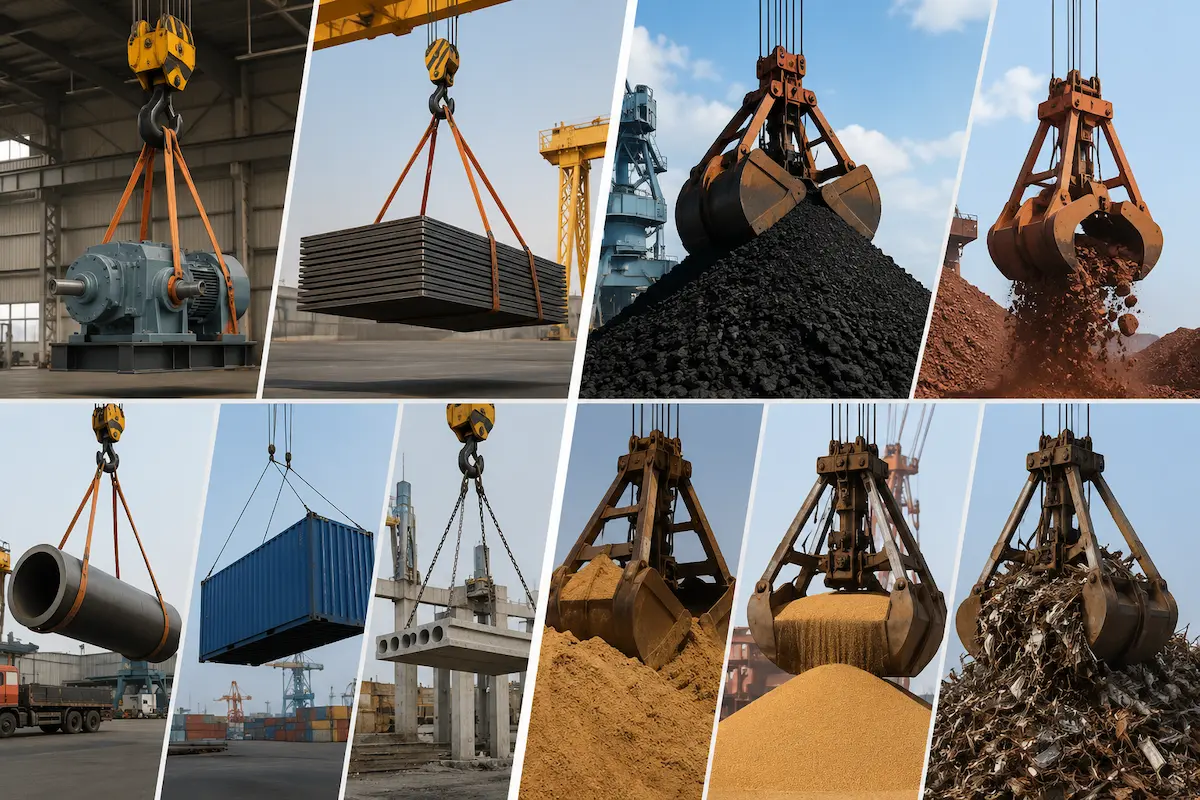
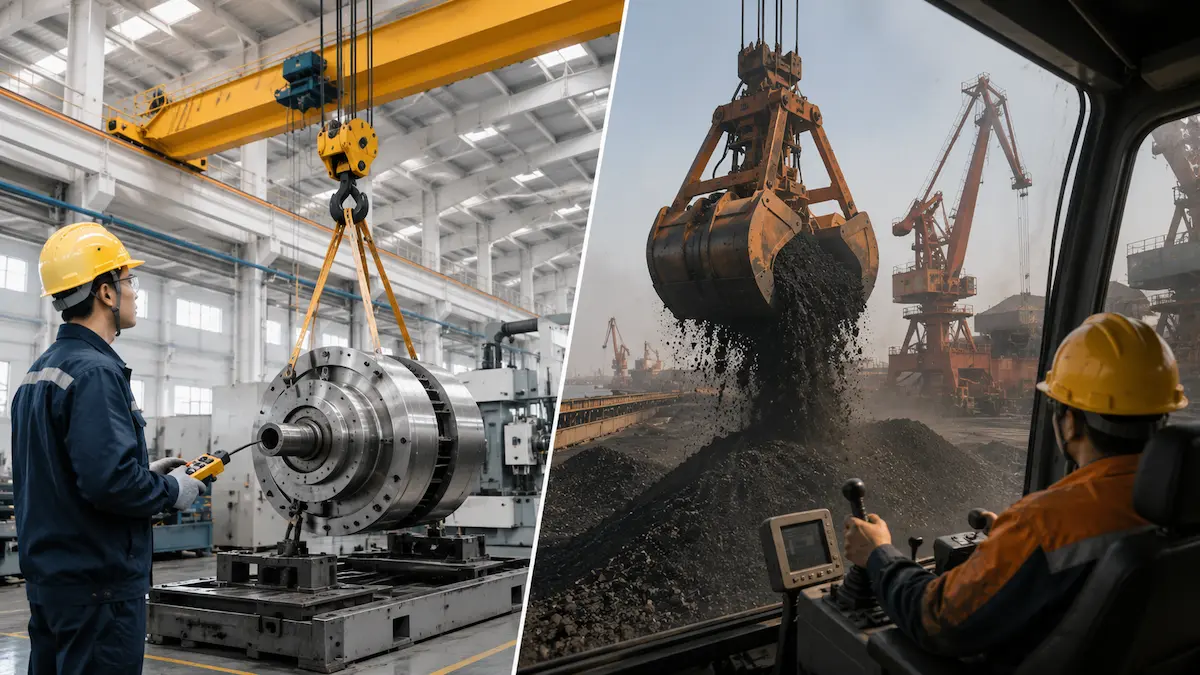
●Choose crane hooks: Use them if you handle machinery, steel plates, large pipes, containers, or precast concrete blocks. These unit goods need precise load-bearing points. Crane hooks work with flexible slings or wire ropes to lift them safely.
●Choose crane grabs: Do not hesitate if your site is full of coal, iron ore, sand, grain, fertilizer, or irregular scrap steel. Crane grabs are born to handle these bulk materials. They can plunge into piles and bite firmly.
Lifting capacity and working duty
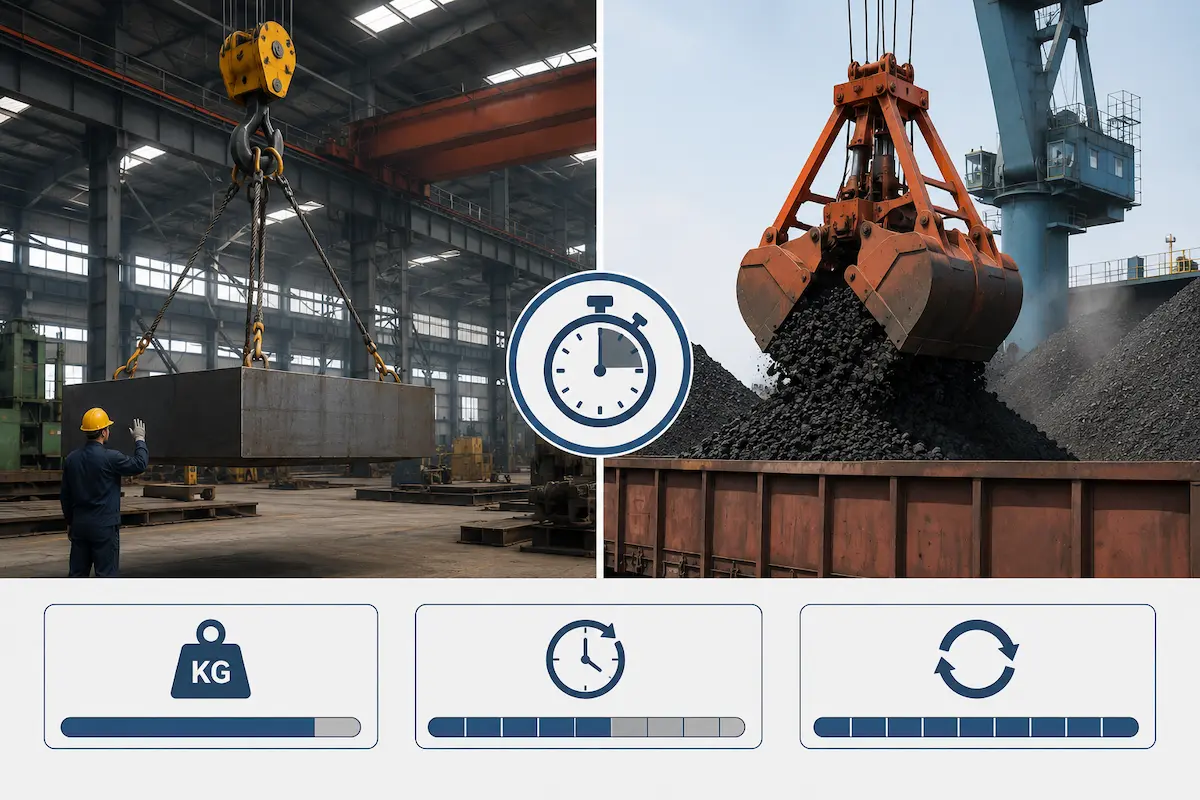
Many customers only focus on crane tonnage but ignore operation frequency. Before selection, evaluate three data points:
●Single lifting weight
●Average daily operation frequency
●Work cycle numbers
If you lift heavy loads occasionally, crane hooks are fully competent. However, suppose your crane handles bulk materials frequently under full load between piles and trucks daily (reaching A7 or A8 working duty). In that case, manual rigging efficiency cannot keep up. Here, the continuous high-frequency advantage of crane grabs stands out.
Operating environment
The working environment determines the fault tolerance of operations.
●Precision environments (like manufacturing shops or heavy equipment installation sites): These need millimeter-level micro-inching control and smooth landing. Crane hooks are undoubtedly the best and safest absolute mainstay here.
●Harsh environments (like bulk terminals, mines, or steel mills): These sites are full of dust, high temperatures, or hazards. Frequent human access is forbidden. Crane grabs allow operators to work remotely inside air-conditioned cabins, boosting efficiency and personnel safety.
Operational efficiency requirements
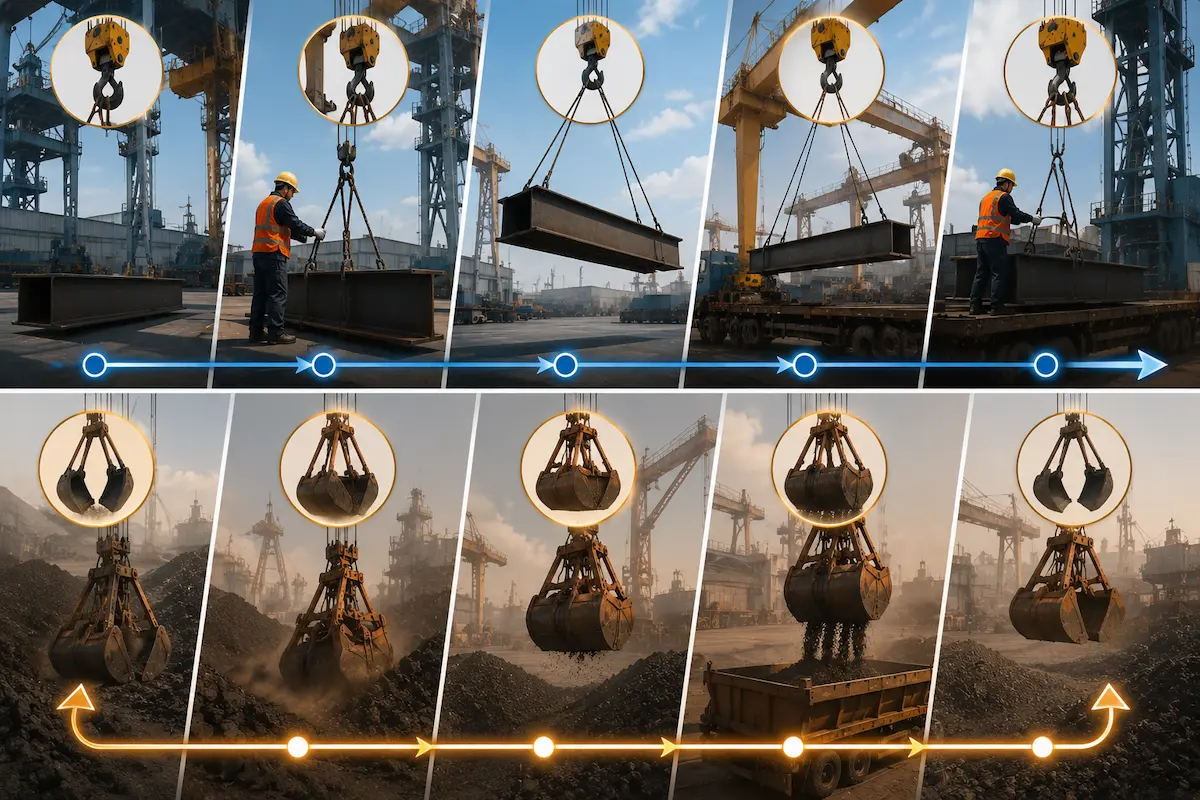
Time is productivity. When using crane hooks, the whole process is interrupted:
Lowering hooks→Manual rigging→Lifting→Landing→Manual unhooking
This process cannot be fast.
Conversely, crane grabs perform a closed-loop combo: lowering, automatic grabbing, lifting, and unloading. The whole cycle is seamless. In mass bulk handling tasks, crane grabs eliminate all manual waiting time, crushing crane hooks in efficiency geometrically.
Total Cost of Ownership (TCO)
Owners care most about whether money is well spent. Do not just look at initial component costs. Calculate the total cost of ownership, including procurement, daily maintenance, spare parts consumption, and downtime losses.
●For standard unit goods handling, crane hooks are highly economical. They are cheap, durable, and rarely break down.
●The purchase price of crane grabs is indeed much higher. Their hydraulic lines, wire ropes, and shells are wearing parts, meaning maintenance costs are high. However, if you run bulk throughput, crane grabs save huge labor costs and shorten vehicle waiting times. You can earn the equipment price difference back within months.

Not sure which solution is more cost-effective? Armchair analysis is worse than targeted remedies.
[Contact HSCRANE engineers now], tell us your material characteristics, workshop conditions, and capacity goals. We will provide 1-to-1 professional selection support and customized solutions for you.
Crane Hooks vs. Crane Grabs: Cost and Maintenance Comparison
|
Dimension |
Crane Hooks |
Crane Grabs |
| Initial Investment Cost | Extremely low: crane hooks are standard factory components, making additional procurement or heavy-duty upgrades highly economical. | High: whether mechanical or hydraulic, precise transmissions and heavy steel make crane grabs independent, expensive machines. |
| Daily Maintenance Needs | Effortless: virtually maintenance-free. Mechanics only perform quick visual checks for cracks, deformation, and occasional bearing lubrication. | Demanding: requires massive maintenance. Operators must lubricate pins frequently, check pump stations, clean valves, and change hydraulic oil. |
| Core Wearing Parts | Minimal and cheap: main consumables are spring safety latches and upper pulley grooves, keeping replacement costs extremely low. | Multiple and costly: mechanical crane grabs wear out wire ropes fast. Hydraulic hoses leak easily, and shell edges suffer severe wear. |
| Downtime Impact | Negligible: simpler structures rarely fail. Replacing a damaged safety latch takes minutes, causing almost no production delays. | Severe: burst hydraulic lines or tangled wire ropes require hours of emergency repairs, causing costly transport delays at ports. |
Senior Mechanic’s Advice
If you choose crane grabs, never skimp on routine maintenance. Many crane grabs scrap early or jam frequently due to lack of oil or dirty hydraulic oil. We recommend stocking sufficient wearing parts, especially matching wire ropes and seal rings, to minimize unexpected downtime.
Safety and Compliance Requirements for Lifting Attachments
Safety is always the primary consideration in lifting operations.
Crane hooks standards
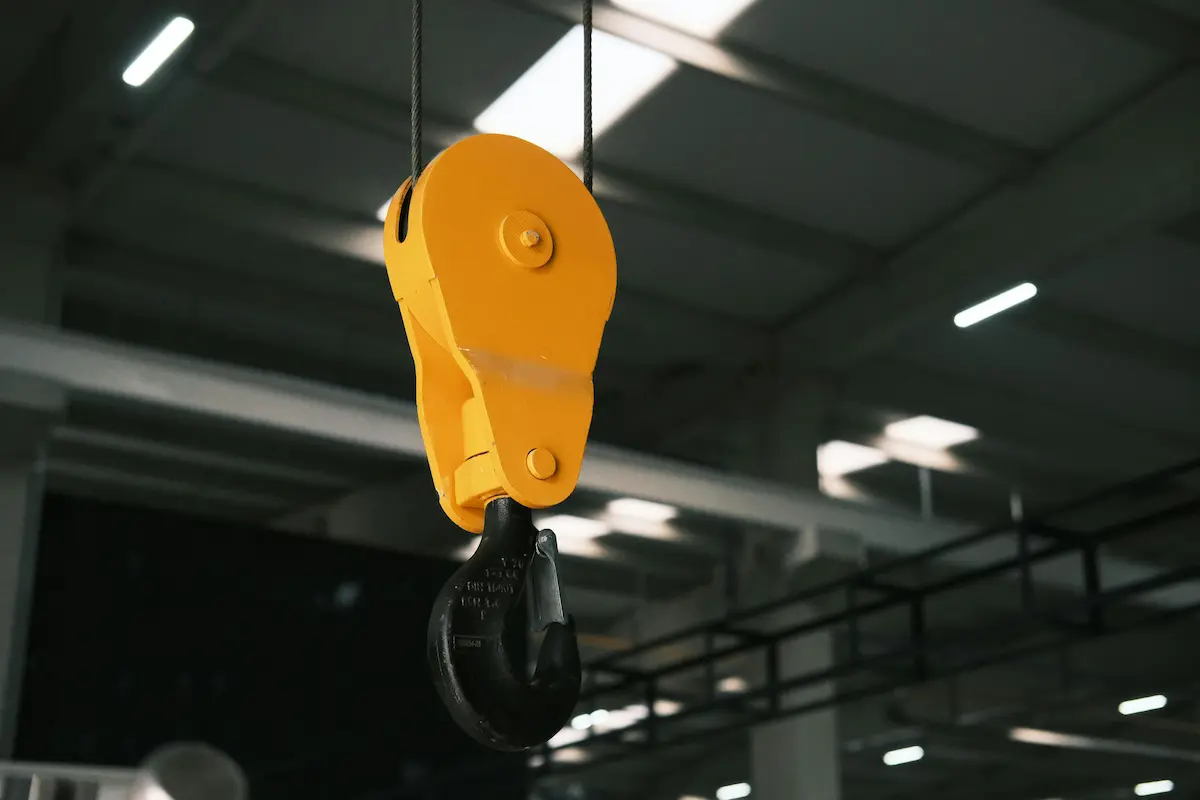
In North America and global premium projects, ASME B30.10 is the design and use guide for crane hooks. This standard specifies design margins and provides clear inspection criteria and scrap conditions.
Crucial Notice: Maintenance personnel must never repair damaged crane hooks by welding. Standards strictly prohibit this practice.
Common inspection items for crane hooks
●Surface flaw and crack detection: Focus on the hook neck and bottom stress area. Invisible micro-cracks can rip apart instantly under heavy loads.
●Critical section wear: Check the hook bottom where wire ropes rub. If wear exceeds 10% of the original size, it must be scrapped.
●Opening deformation measurement: An enlarged hook opening indicates past severe overloading. If deformation exceeds 5% or 15 degrees, the hook loses capacity.
●Safety latch status: Never treat this as optional. Spring function and tight automatic closing form the final defense against rigging slippage.
Crane grabs standards
Compared to single-body crane hooks, crane grabs are complex mechanical or hydraulic integrated assemblies. Standards define them as non-fixed lifting attachments or below-the-hook lifting devices.
●European Market EN 13155: This focuses on detachable lifting attachment types, emphasizing structural fatigue strength and anti-dropping designs.
●International Market ASME B30.20: This covers structural mechanics testing, marking, and regular mandatory inspection requirements for below-the-hook lifting devices.
Common inspection items for crane grabs
●Load-bearing structure integrity: Crane grabs suffer violent impacts when grabbing coal or scrap steel. Check main hinge shafts and tie-rod welds for cracks.
●Shell closing synchronization: Observe whether shells close tightly in the air. Poor alignment causes material leakage and eccentric loading on cylinders.
●Hydraulic system leakage: For hydraulic crane grabs, check high-pressure hoses for aging. System pressure loss causes sudden material dropping mid-air.
●Control system response speed: Test cable reel retraction smoothness and check for signal delays to ensure precise execution of movements.
Why choose HSCRANE lifting attachment solutions?
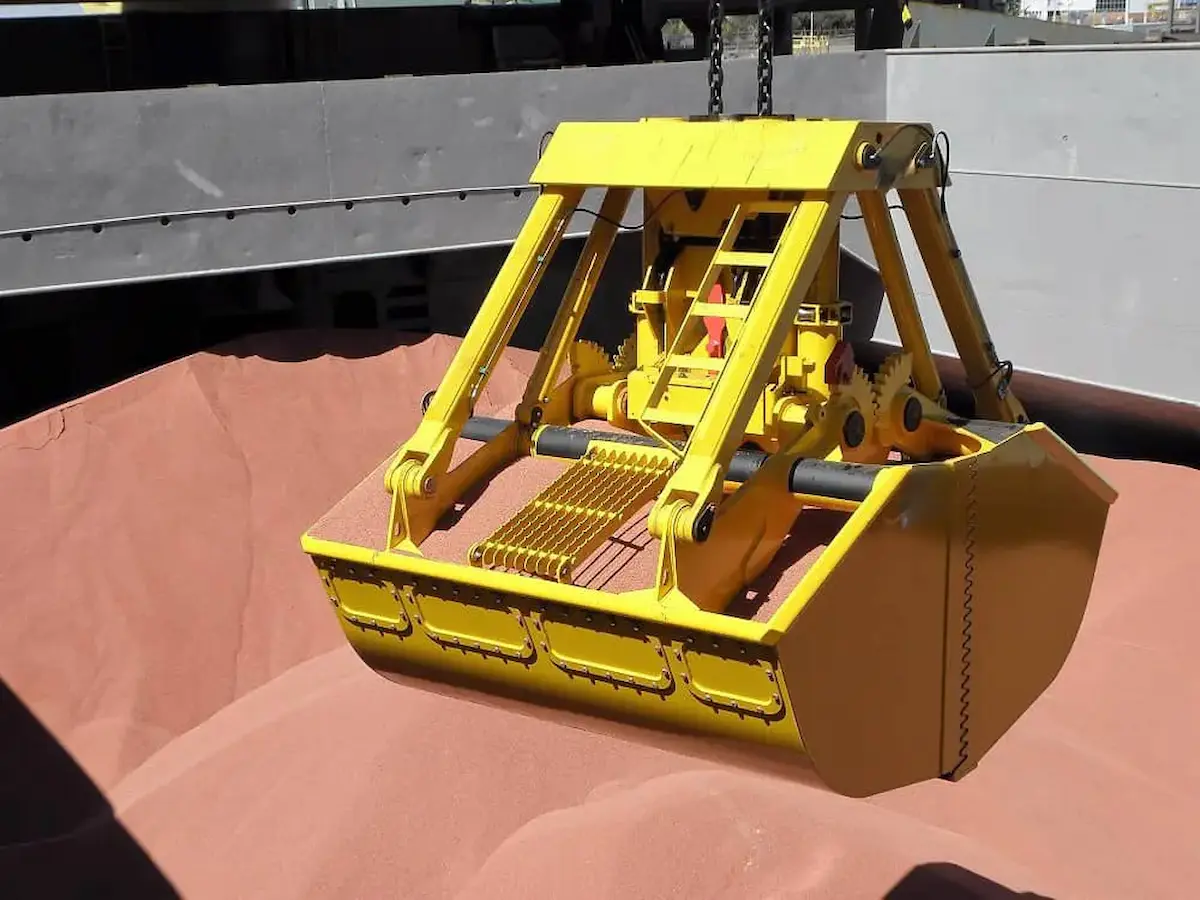
●Rich product range: From standard single hooks to hydraulic orange peel crane grabs, we offer a one-stop hardware library for your projects.
●Strict quality control: All crane hooks use high-strength forged alloy steel. Crane grabs feature premium wear-resistant steel plates, passing 100% overload tests.
●Customization service: HSCRANE excels at tailoring solutions. Engineers design non-standard attachments based on your material density, clearance, and crane interfaces.
●Global project experience: From busy Southeast Asian bulk terminals to hot Middle Eastern steel mills, HSCRANE equipment handles extreme working conditions worldwide.
Practical Application Cases: When to Choose Crane Hooks? When to Choose Crane Grabs?
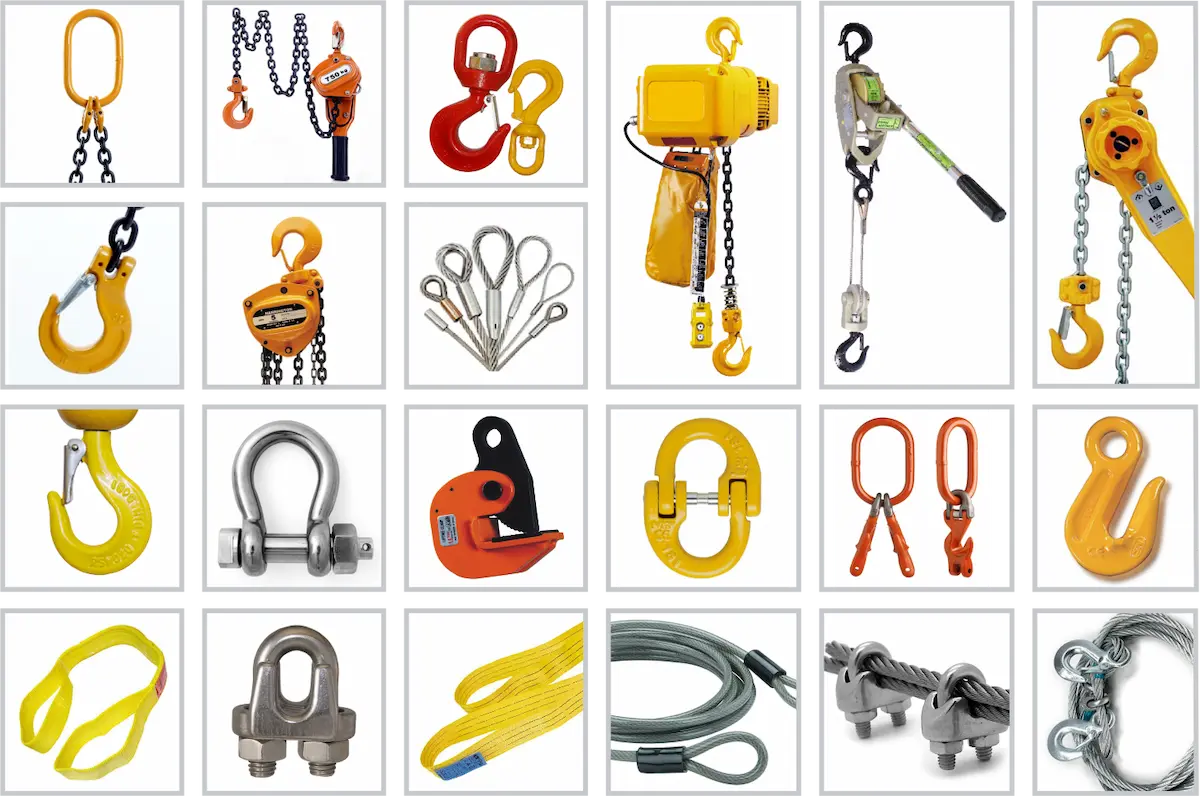
Case 1: Container Lifting
●Site Pain Points: Containers are standard giant objects. Whether 20ft or 40ft, lifting must guarantee absolute horizontal balance. Any slight tilt might deform the box or cause unhooking.
●HSCRANE Solution: Choose crane hooks (working with container spreaders).
●Practical Analysis: Crane grabs are completely useless here. The common practice uses main crane hooks to suspend a dedicated container spreader. As the core load-bearing hub, the hook holds the spreader steadily. Then, twistlocks lock the four corners of the container precisely. This process demands stability and precision, making the hook system an irreplaceable cornerstone.
Case 2: Scrap Steel Recycling
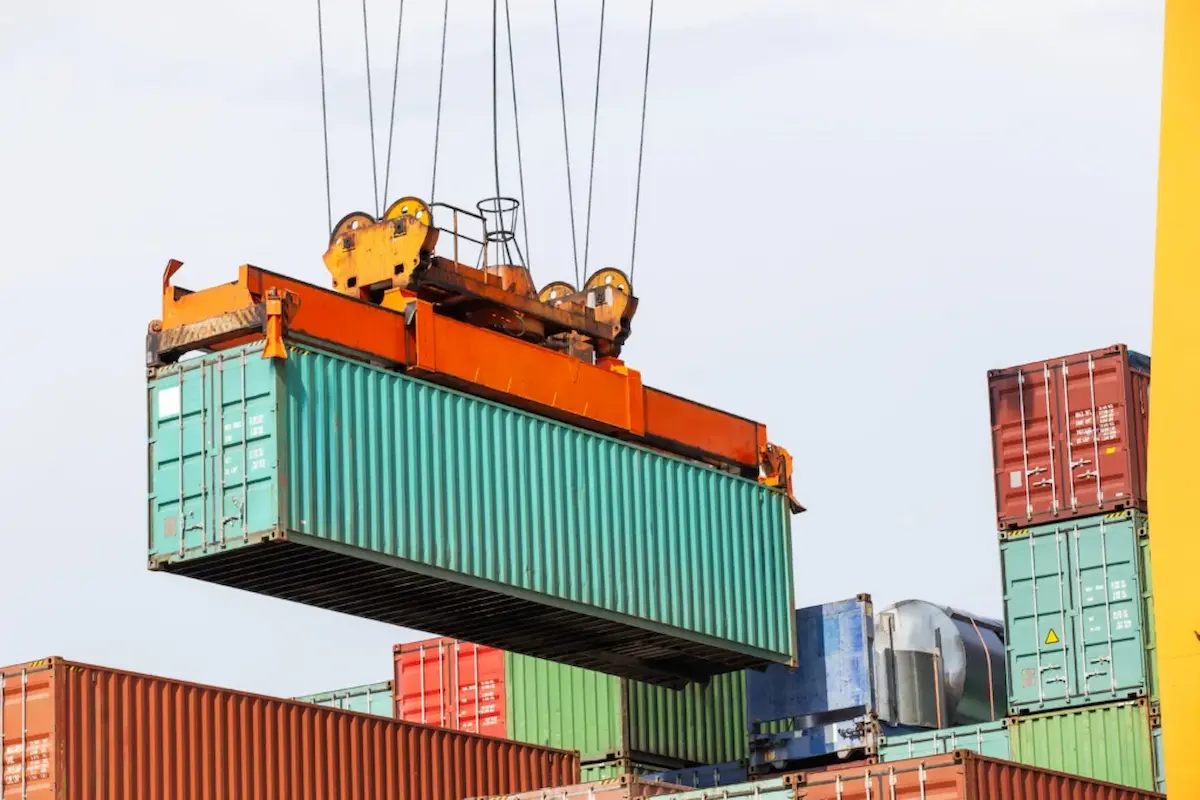
●Site Pain Points: Scrap steel yards act as equipment meat grinders. Rebars, car frames, and iron sheets entangle randomly with sharp edges. Manual rigging with wire ropes is extremely dangerous and practically impossible.
●HSCRANE Solution: Choose hydraulic orange peel crane grabs.
●Practical Analysis: Facing tough materials, we recommend 4-blade or 6-blade orange peel crane grabs with independent hydraulic pump stations. Since each shell flexes independently, it embeds into scrap piles like a giant steel claw. It tears out entangled waste effectively. Under these conditions, the grab is an efficiency tool and a protective safety shield.
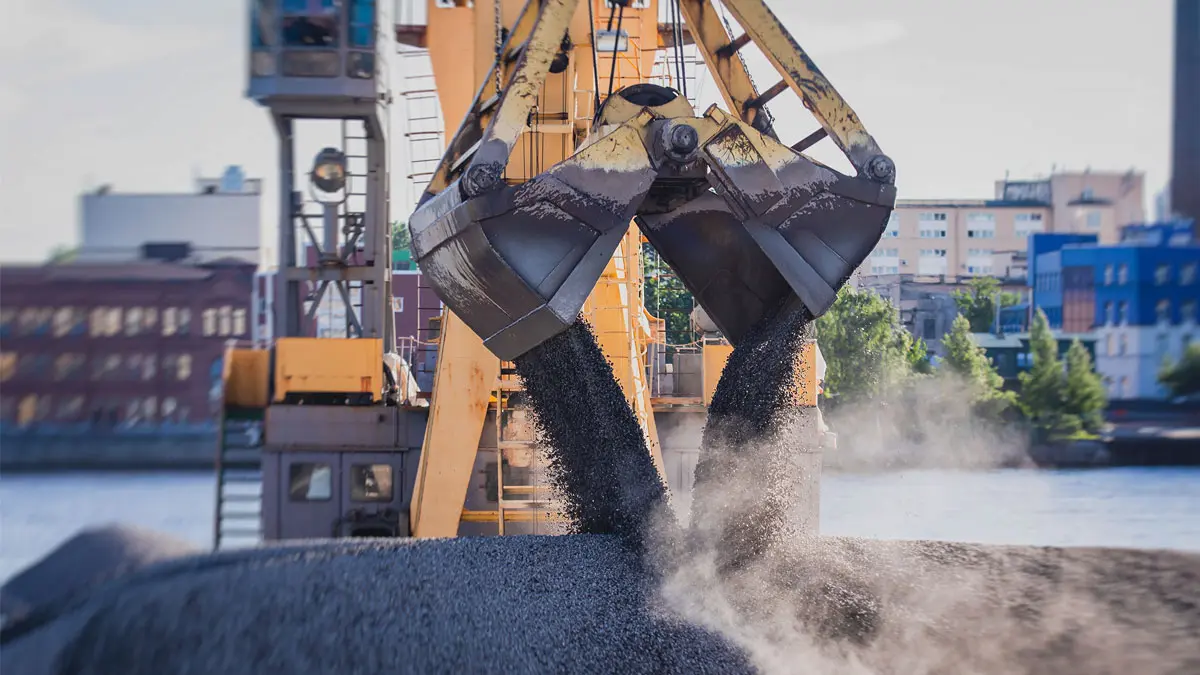
Case 3: Coal or Grain Vessel Unloading
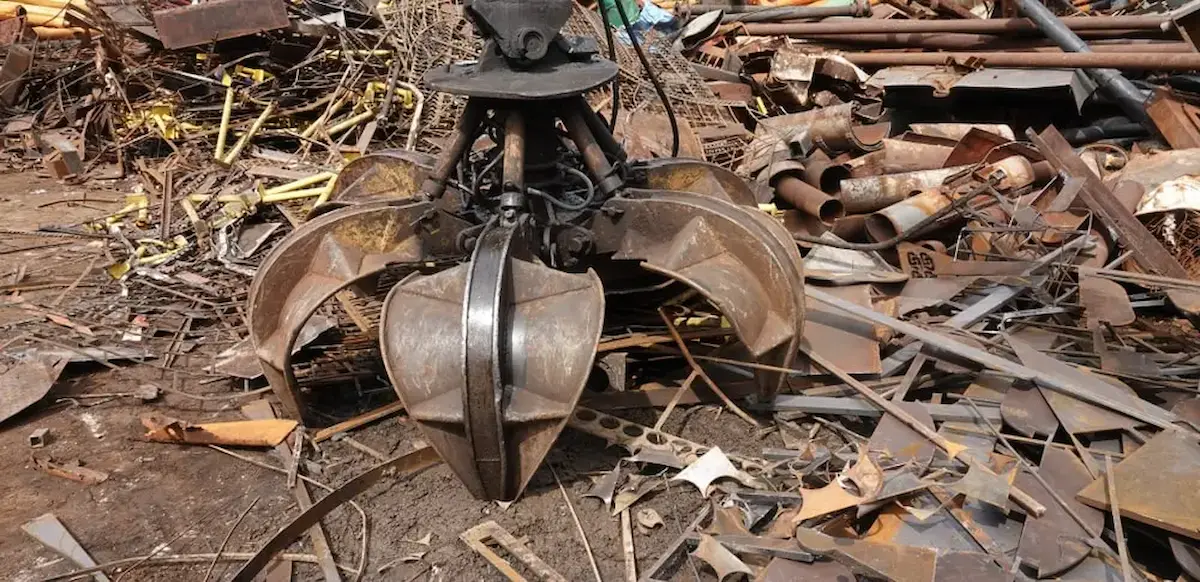
●Site Pain Points: Large bulk carriers dock at terminals, incurring massive daily demurrage fees. Unloading must race against time. Furthermore, coal generates dust, and leaking grain represents direct financial loss.
●HSCRANE Solution: Choose four-rope clamshell crane grabs.
●Practical Analysis: This is a typical battle for throughput. Manual hooking is pure fantasy here. The clamshell crane grabs we configure for ports can swallow dozens of tons of bulk material per bite. The closing edges close tightly like clam shells. This ensures fast continuous transfer while minimizing cargo spillage along the way.
Case 4: Precision Equipment Installation
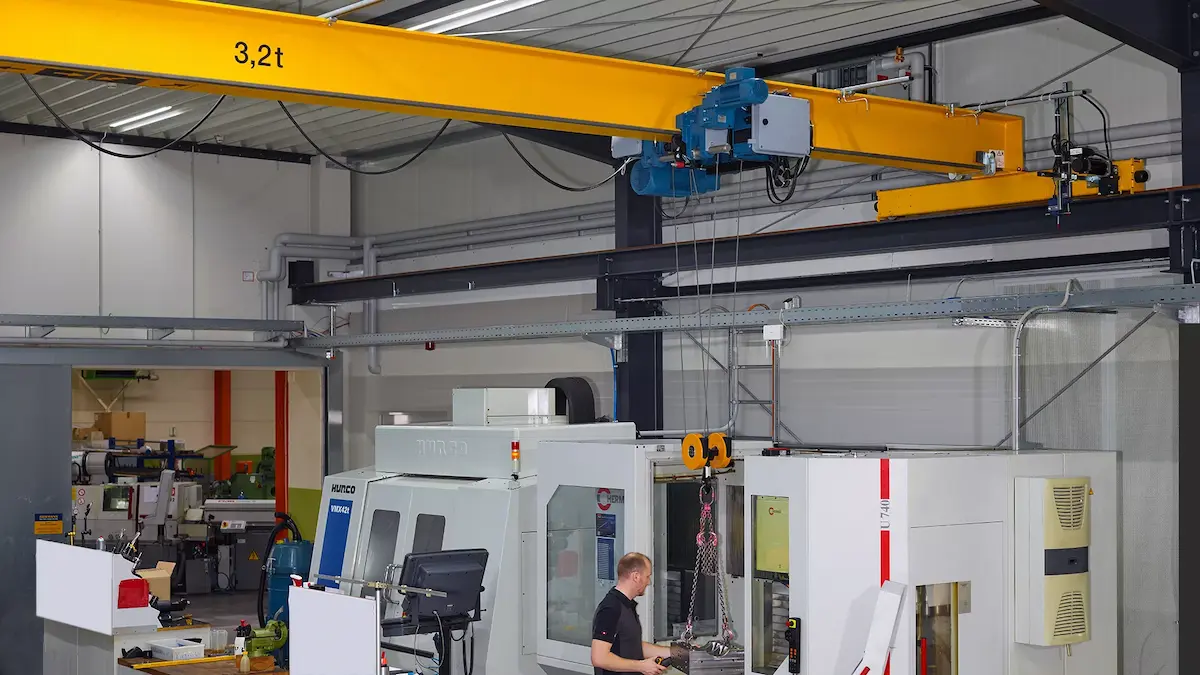
●Site Pain Points: Lifting multi-million dollar CNC machines, gas turbine rotors, or aerospace components. Surfaces are extremely delicate, and installation requires millimeter-level alignment accuracy.
●HSCRANE Solution: Choose swivel crane hooks (working with flexible slings).
●Practical Analysis: This scenario represents precision work. High-value precision equipment must avoid any collisions. Engineers use swivel crane hooks with high-strength nylon flat slings to lift the equipment gently. Ground personnel can push suspended equipment slightly to align anchor bolts precisely. The stability provided by hooks is unmatched.
Conclusion
By now, you understand the characteristics of both attachments well. Neither is universally better; it is about which fits your site best. Crane hooks win on precision, safety, and high cost-effectiveness for unit goods. Crane grabs win on explosive continuous throughput for bulk handling fields.
Choosing crane attachments is like equipping soldiers with weapons. The wrong choice limits your entire crane’s productivity.
Ready to upgrade your material handling efficiency?
Selection does not have to be a headache. Send us your material types, daily throughput, and crane parameters. The HSCRANE technical team will provide a tailored configuration plan and detailed quotation within 24 hours.
[Contact us now for free selection consulting services!]
Advanced Selection Guide:
If crane grabs are your final choice and you handle hazardous waste, household garbage, or chemical scrap metals, you must consider corrosion resistance. The wrong anti-corrosion rating leads to repair costs exceeding the equipment value. Do not let corrosion eat your profits!
[Read HSCRANE Column: How to Choose a Durable Crane Grab for Highly Corrosive Waste Handling Environments]
FAQ
Q: What is the biggest difference between crane hooks and crane grabs?
A: The core difference lies in the operation logic: passive versus active. Crane hooks are passive load-bearing parts requiring manual rigging to lift unit goods, while crane grabs feature an active opening mechanism to grab bulk materials directly without human assistance.
Q: Can a single crane in my factory use both crane hooks and crane grabs?
A: Yes, this is a common practice in many multi-purpose workshops. If you switch frequently, we recommend installing quick-change couplings on the crane to drastically reduce changeover downtime.
Q: Is it true that crane grabs are always more efficient than crane hooks?
A: It depends entirely on the type of material handled. Crane grabs offer crushing efficiency for mass bulk handling by eliminating manual rigging time, but only crane hooks can handle precision lifting like machinery installation or container handling.
Q: Crane hooks look very solid, so how often do they really need inspection?
A: Solid appearance can be deceiving, so you must strictly follow ASME B30.10 compliance standards. Operators should perform visual daily checks before shifts, while professional maintenance teams must conduct detailed monthly measurements and annual non-destructive testing.
Q: Which industries rely most heavily on crane grabs?
A: Crane grabs are standard equipment for fields managing large volumes of bulk throughput. Typical users include bulk ports, coal-fired power plants, steel mills, aggregate mines, grain storage terminals, and waste-to-energy facilities.
This document is for reference only. Specific operations must strictly comply with local laws and regulations and equipment manuals.