

Overview
Frequent wire rope replacement in cranes drives up operating costs. It also creates severe safety hazards for onsite production. When facing broken wires, engineers often replace them with higher-strength wire ropes. However, they ignore the real rope-destroying culprit: the crane pulley diameter. If the pulley D/d ratio is poorly designed, the wire rope acts like repeatedly bent iron wire. Excessive bending stress makes fatigue wire breakage almost inevitable. This is not just a lifespan issue. It directly challenges equipment reliability.
This article skips complex pure theories. We will dive straight into the core parameter: the D/d ratio. We break down wear mechanisms and share industry standard tips. Learn how optimizing pulley configuration ends the short wire rope lifespan cycle.
Struggling with high crane maintenance costs?
Stop letting mismatched pulleys drag down your production line efficiency. Learn how to accurately diagnose equipment risks. Get a pulley block technical upgrade plan tailored to your conditions. Click below to talk directly with HSCRANE experts for one-on-one consultation.
[Get Pulley Block Optimization Plan Now / Consult Engineers Online]
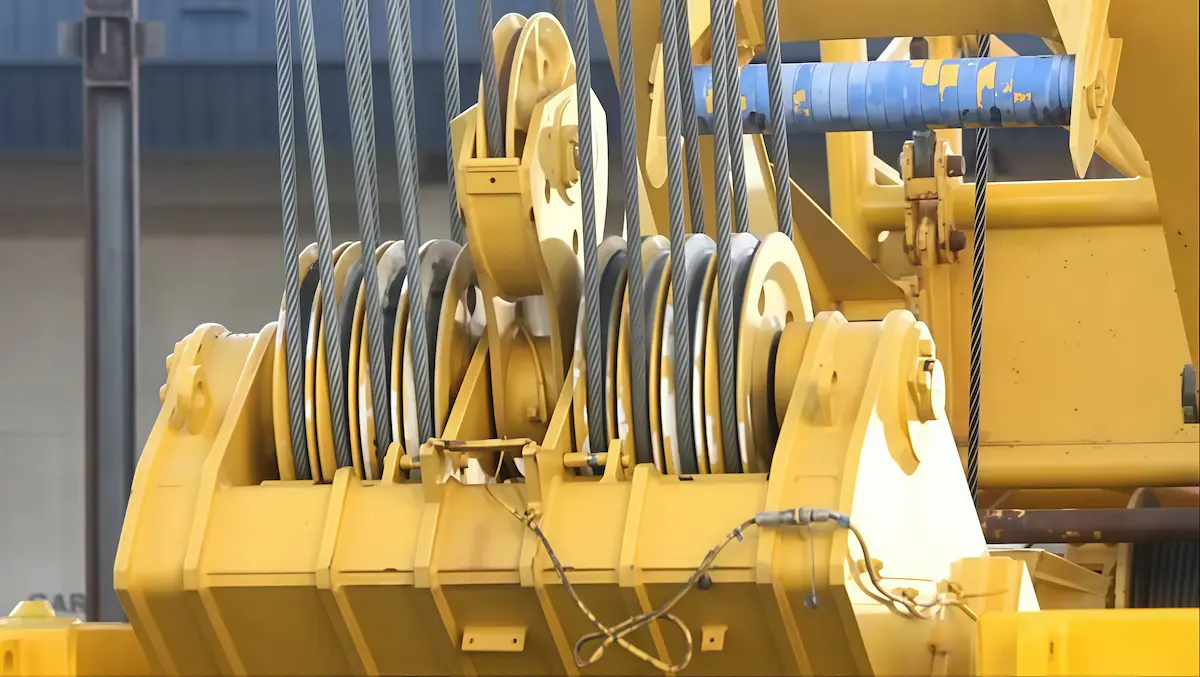
Why Does Crane Pulley Diameter Affect Wire Rope Lifespan?
Many maintenance workers view wire ropes as mere consumables. They think replacing them when broken is enough. In reality, choosing the wrong pulley guide hub ruins everything. Even high-strength imported wire ropes will fail quickly.
What Exactly Is a Crane Pulley?
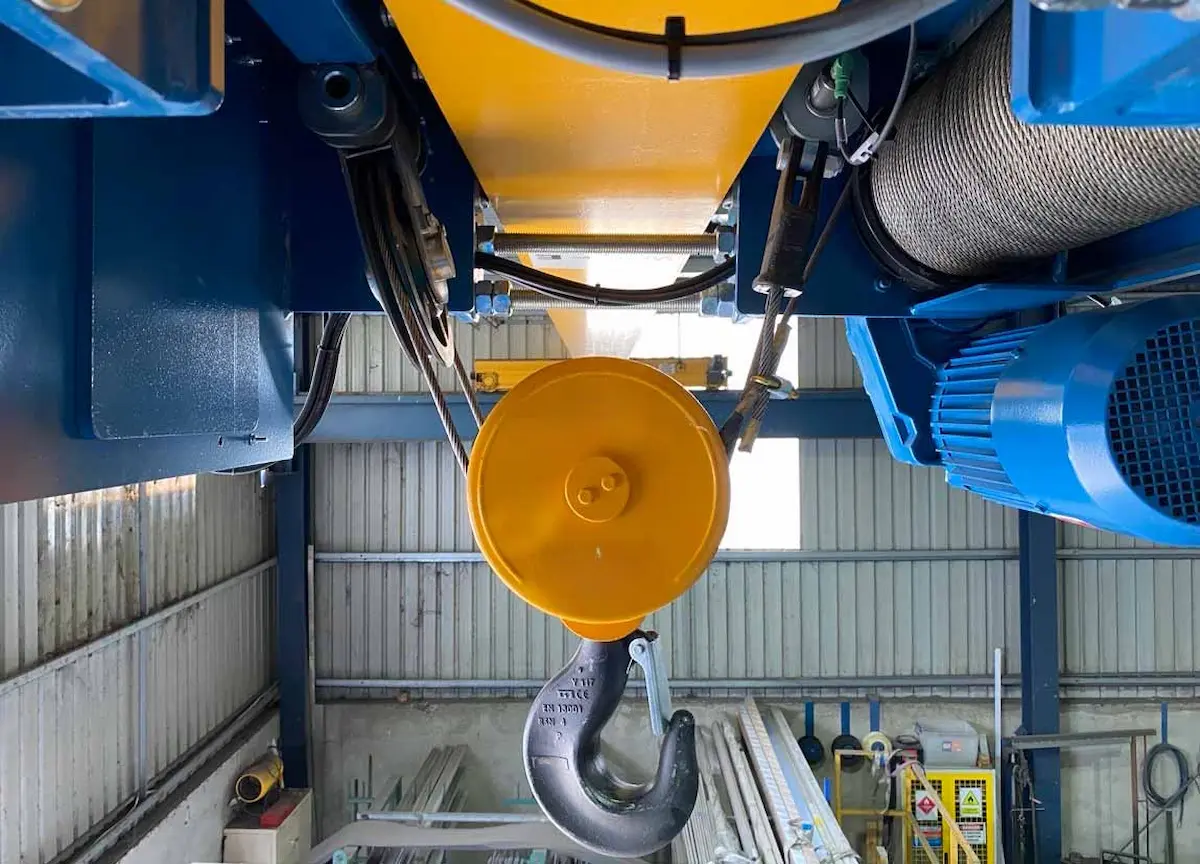
●Definition: Though just a grooved wheel, it is a vital crane hoisting mechanism node. Its core mission is supporting and guiding the wire rope. It converts drum horizontal tension into hook vertical lifting force.
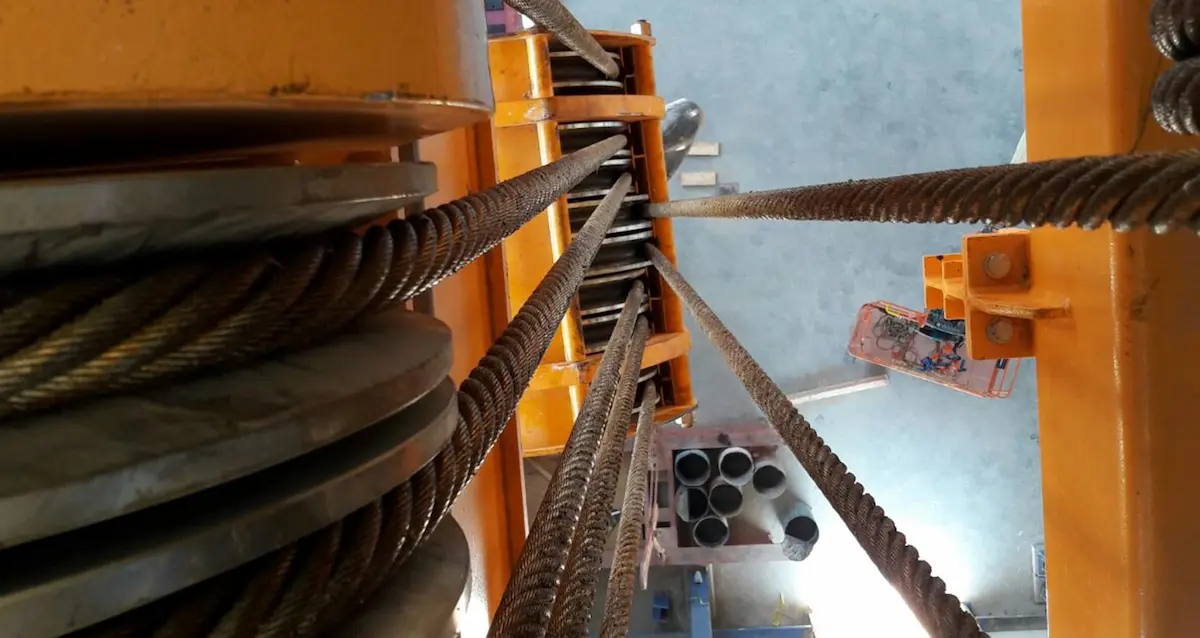
●Why must the wire rope wrap around the pulley?: Pulleys save effort via reeving ratio and ensure precise lifting points. The wire rope must constantly move through multiple pulleys during operation. During every lift and lower, the wire rope cycles through straightening and bending. Crucially, this bending does not happen under zero load. The wire rope is forced to bend while bearing tons of heavy tension.
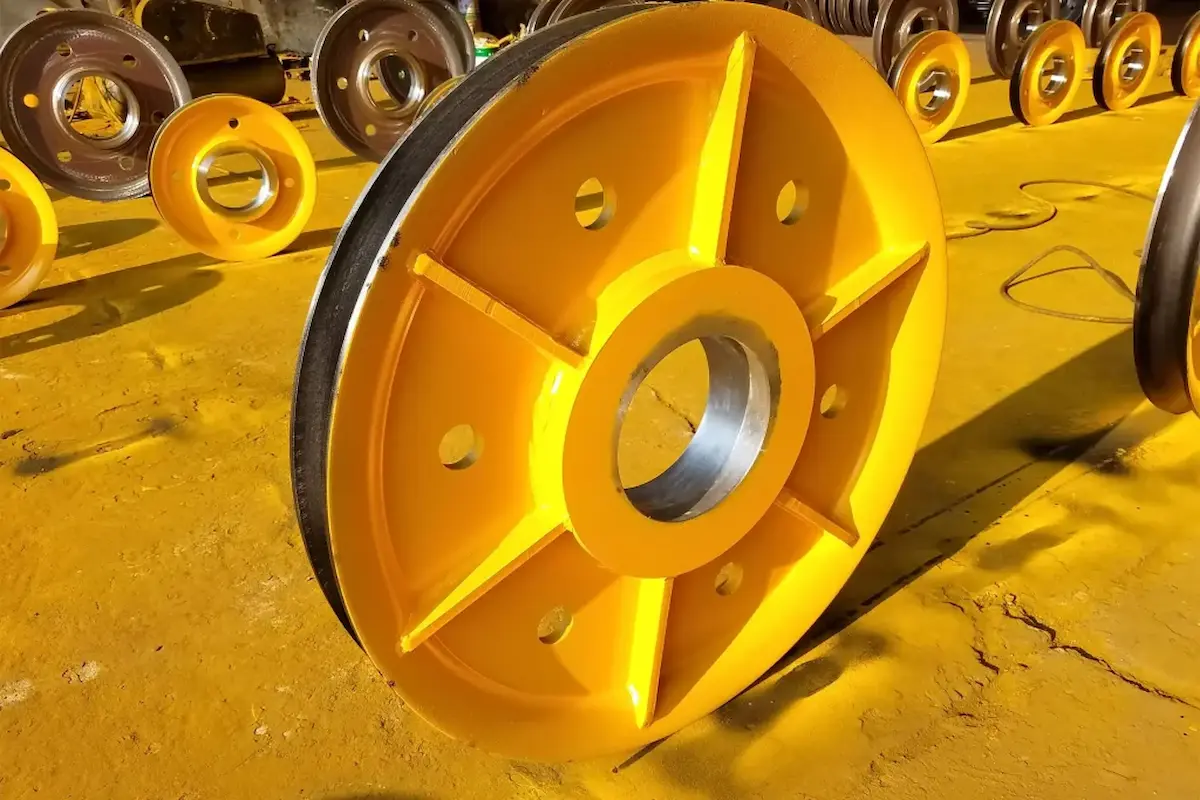
Relationship Between C rane Pulley Diameter and Wire Rope Bending Stress
We must highlight a core parameter: the D/d ratio. This is the ratio of pulley pitch diameter D to wire rope diameter d.
Imagine the wire rope as a thick iron wire. Wrapping it around a large bucket is very easy. Wrapping it around your finger stretches the outer side to its limit. Meanwhile, the inner side gets severely compressed. Smaller pulley diameters exponentially increase the bending stress on the wire rope.
|
D/d Ratio Evaluation |
Bending Stress State |
Expected Wire Rope Fatigue Life |
Onsite Visual Performance |
| < 16 (Undersized) | Extremely high; wires face extreme tension and compression. | Extremely short (measured in months or weeks). | Frequent wire breakages; severe strand deformation; routine replacements. |
| 20-25 (Standard) | Moderate; kept within material safe yield strength. | Standard normal lifespan. | Smooth wear; replace during normal maintenance cycles. |
| > 30 (Generous/Heavy Duty) | Very low; bending deformation is extremely gentle. | Significantly extended. | Rare early scrapping from pure bending fatigue. |
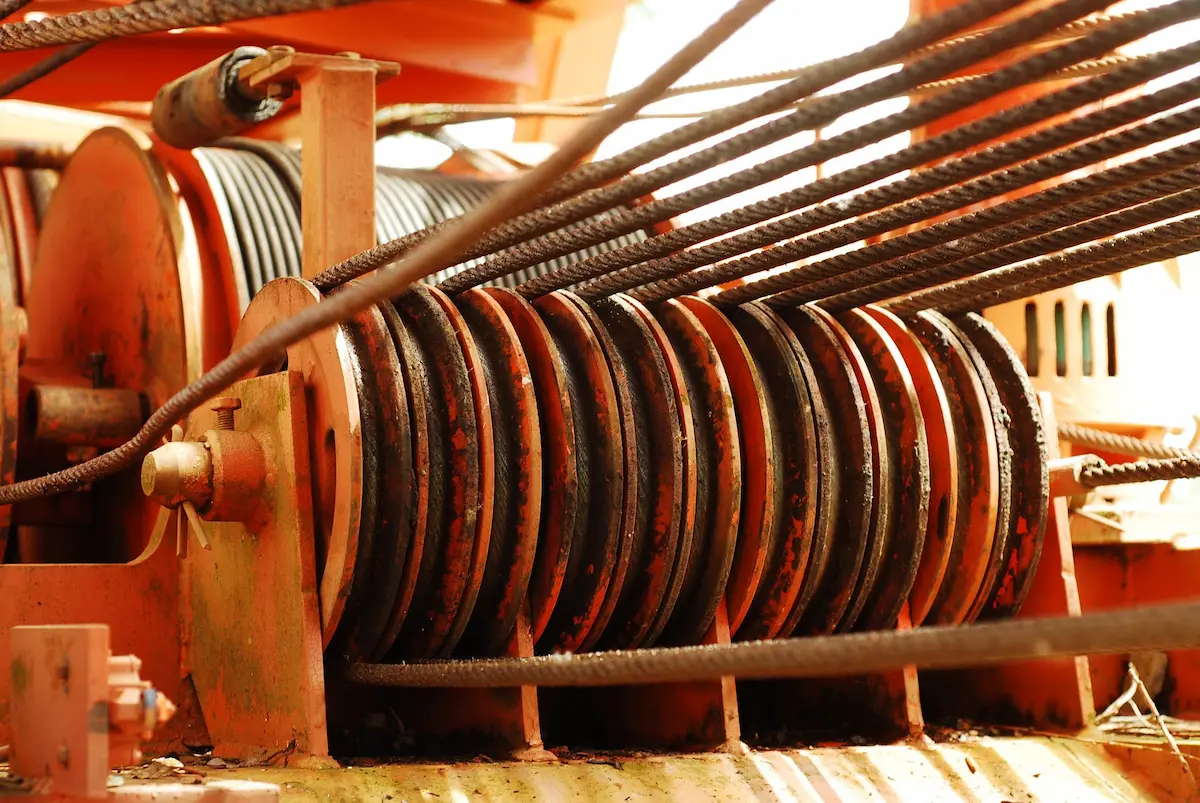
What Problems Do Undersized Pulley Diameters Cause?
Some non-standard manufacturers secretly reduce crane pulley diameters to shrink crane size. They also do this to compress manufacturing costs. Forcing wire ropes into this tight fit causes direct negative consequences. Onsite maintenance costs and downtime both spin out of control:
●Accelerated wire rope bending fatigue: This resembles repeatedly bending a paperclip at sharp angles. Small pulleys force heavy-loaded wire ropes into tiny radius bends. Each pass through the pulley groove severely tests wire fatigue limits. Internal stresses cannot be released effectively.
●Rapid increase in broken wires: Under extreme bending stress, the outermost wires suffer first. New wire ropes seem fine for a few months. Then, the surface suddenly frays into a hedgehog shape. A single broken wire causes uneven local stress distribution. Adjacent wires snap quickly without leaving a buffer observation period.
●Shortened wire rope lifespan: This is the most painful financial loss for customers. Wire ropes designed for a year might face mandatory scrapping in months. Line stoppage costs from frequent rope replacements exceed initial pulley savings.
●Increased pulley wear: Do not think only the rope gets damaged. Small diameters trigger immense squeezing force as ropes enter pulley grooves. The ultra-hard wire rope bites the pulley like a hacksaw blade. Over time, deep grooves and edge cracks form in the pulley. Ultimately, the entire pulley block must be scrapped together.
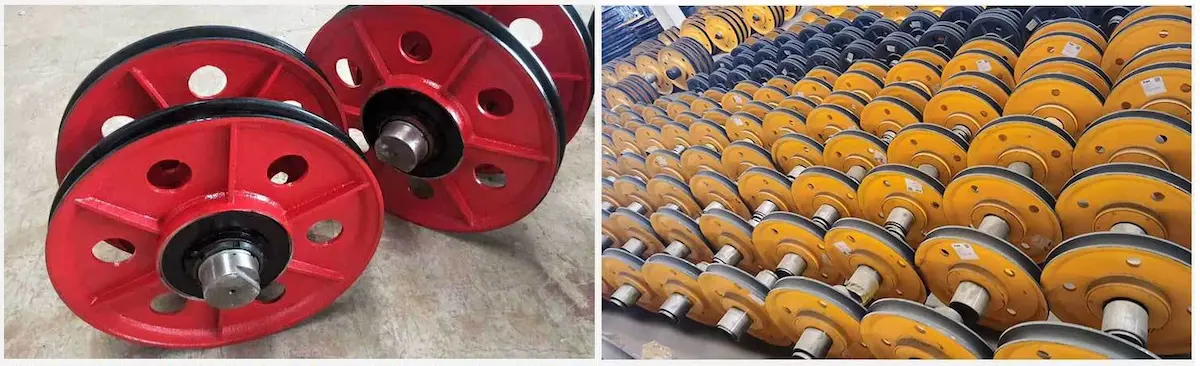
Why Is the D/d Ratio So Important?
In the crane industry, ISO, FEM, and GB standards all require a rigid indicator. This critical indicator is the D/d ratio for wire rope and crane pulley selection. It is not just a math formula on blueprints. It determines your equipment maintenance costs later.
What Is the D/d Ratio?
Do not be scared by the formula. It is a very intuitive geometric ratio.
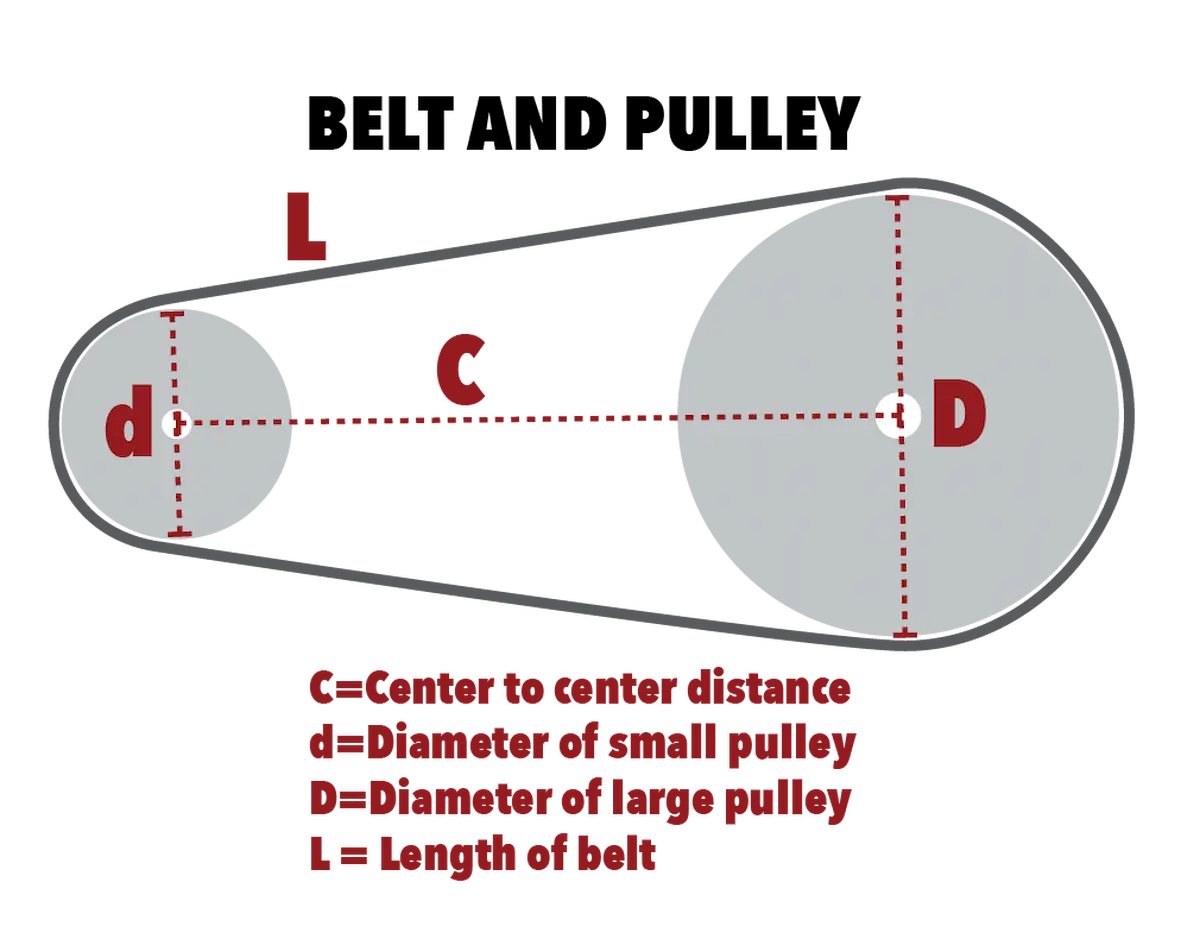
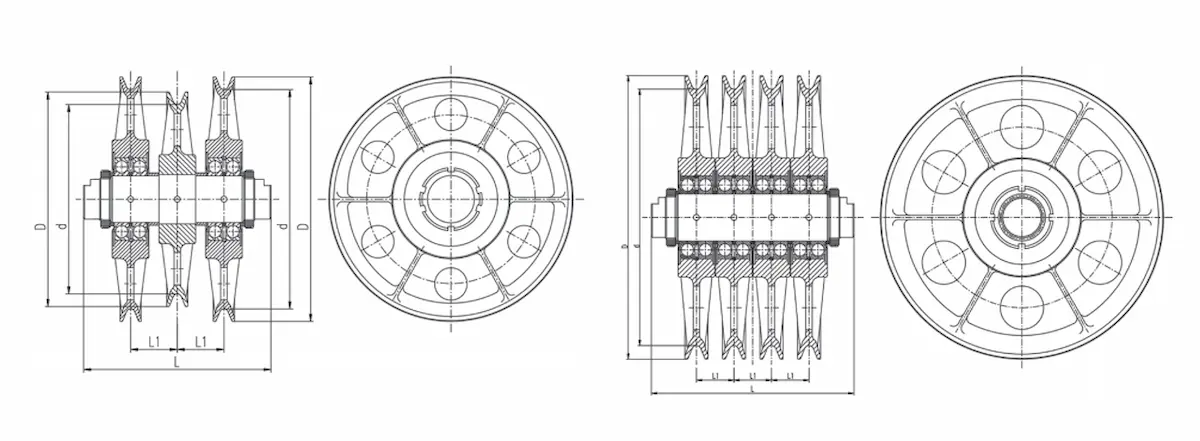
●D: Pulley pitch diameter: This is not the outermost pulley edge. It is the diameter of the wire rope centerline path. This path represents the actual effective working trajectory under load.
●d: Wire rope diameter: This is the size specification on your wire rope label, like 16mm or 20mm.
D/d Ratio = Pulley Pitch Diameter ÷ Wire Rope Diameter. This calculated value directly defines how severely the wire rope bends on the crane pulley.
Why Is a Larger D/d Ratio Better?
Experienced manufacturers maximize crane pulley size whenever space allows. Increasing the D/d ratio heavily benefits the wire rope. It delivers three immediate, highly effective benefits:
●Significantly reduces bending stress: A larger D/d ratio creates a smoother curve for the wire rope. It resembles a car taking a wide turn instead of a sharp one. Internal and external wire rope tension and compression are minimized, ending severe twisting.
●Extends fatigue lifespan: Wire ropes consist of countless tiny steel wires twisted together. A gentle bending radius drastically cuts internal friction between wires and strands. Lower microscopic wear naturally multiplies the overall fatigue lifespan.
●Effectively prevents broken wires: Most early broken wires occur when outer wires exceed their yield limit. Increasing the D/d ratio provides ample deformation margin for outer wires. This eliminates rapid wire breakage right at the root source.
Recommended Industry Standard Values
Crane usage intensity varies drastically across different industries. Maintenance shops lifting twice daily differ heavily from 24/7 steel mills. Their crane pulley D/d ratio requirements are completely different.
Based on field experience and FEM/ISO standards, here is a quick D/d ratio reference:
|
Operating Condition / Industry Scenario |
Typical Duty Class |
Recommended D/d Ratio (Minimum) |
Selection Advice & Field Notes |
| Light duty / Occasional use (e.g., hydropower maintenance, assembly shops) | M1-M3 | ≥ 16-18 | Low frequency means fatigue is minor. Meet basic safety standards and focus on compact equipment size. |
| Medium duty / General manufacturing (e.g., machining workshops, logistics warehouses) | M4-M5 | ≥ 20-22.4 | This common configuration balances hoisting mechanism compactness with economical wire rope lifespan. |
| Heavy duty / High-frequency work (e.g., port terminals, scrap steel yards) | M6-M7 | ≥ 25-28 | High-frequency lifting causes rapid fatigue. Choose larger pulleys if space allows to reduce rope replacement downtime. |
| Extreme conditions / Metallurgical casting (e.g., steel mill charging, molten metal handling) | M8 | ≥ 30 | Safety is a strict red line. High temperatures reduce wire rope strength, requiring maximum D/d ratio protection. |
HSCRANE Engineer’s Note: The table values show absolute minimums. If your current crane suffers frequent wire breakages, consider upgrading the pulley size. If space permits, upgrade the D/d ratio from 20 to 22.4. Spending slightly more on the pulley saves massive wire rope and maintenance costs within year one.
What Other Factors Affect Wire Rope Lifespan?
“Our D/d ratio meets standards, so why do wire ropes still break?” It is a common field question. The crane pulley diameter isn’t always the sole culprit. The hoisting mechanism is a complete system, and these easily overlooked hidden killers might be draining your wire rope’s lifespan:
●Mismatched pulley groove size: If the groove is too wide, the wire rope flattens under pressure and loosens internally. If it is too narrow, the rope gets severely pinched, causing extreme squeezing fatigue.
●Pulley material and heat treatment: Soft, unquenched pulleys wear rapidly. The harder wire rope carves deep into the pulley, creating sharp edges that cut the outer rope layers like a blade.
●Pulley misalignment: An excessive fleet angle causes severe friction against the groove sidewall. This destroys the pulley and applies massive tangential force to the wire rope.
●Pulley bearing quality: Failed bearings cause the pulley to jam or seize. The rope is then forced to slide through a static groove, generating instant high temperatures that can anneal and ruin the steel.
●Wire rope lubrication: Without regular application of specialized grease, dry internal strands cause severe metal-on-metal friction, snapping wires from the inside out.
●Lifting speed and load changes: Frequent sudden stops, starts, and overloading create extreme shock tension. This violent pulling is devastating to the wire rope’s fatigue life.
Tired of frequent breakages with no clear cause?
Don’t just blindly replace the wire rope. Let the HSCRANE technical team diagnose your hoisting system for free to catch the real culprit.
[Click Here to Submit Equipment Conditions and Damage Photos for Professional Analysis
How to Determine If a Pulley Needs Replacement?
Do not wait until wire ropes snap or pulleys burst to regret it. Excellent maintenance means catching crane pulley distress signals early during routine inspections. If you spot any of the following conditions, replace the crane pulley immediately without hesitation:
●Pulley groove wear exceeds standards: Groove bottom wear reaches 25% of the nominal wire rope diameter. Alternatively, wear depth exceeds 20% of the pulley groove wall thickness. At this stage, the pulley groove loses its guiding protection capability.
●Pulley groove deformation: Corrugated patterns or uneven wire imprints show material yield failure. This deformed pulley groove surface acts like a file, quickly destroying new wire ropes.
●Pulley cracks: Hairline cracks on spokes or chipped pulley groove rims require absolute zero tolerance. Under heavy loads, cracks expand rapidly. This risks sudden shattering and falling objects.
●Severe uneven wear: Extremely deep wear on one side makes the pulley groove edge razor-thin. You must replace the pulley. Inspect the rope guide and fleet angle immediately.
●Inflexible pulley rotation: Spinning the pulley by hand during downtime reveals obvious resistance or catching. Internal grinding noises indicate that the pulley bearing is completely destroyed.
●Bearing damage: Noticeable axial play or radial runout on the shaft proves bearing seat failure.
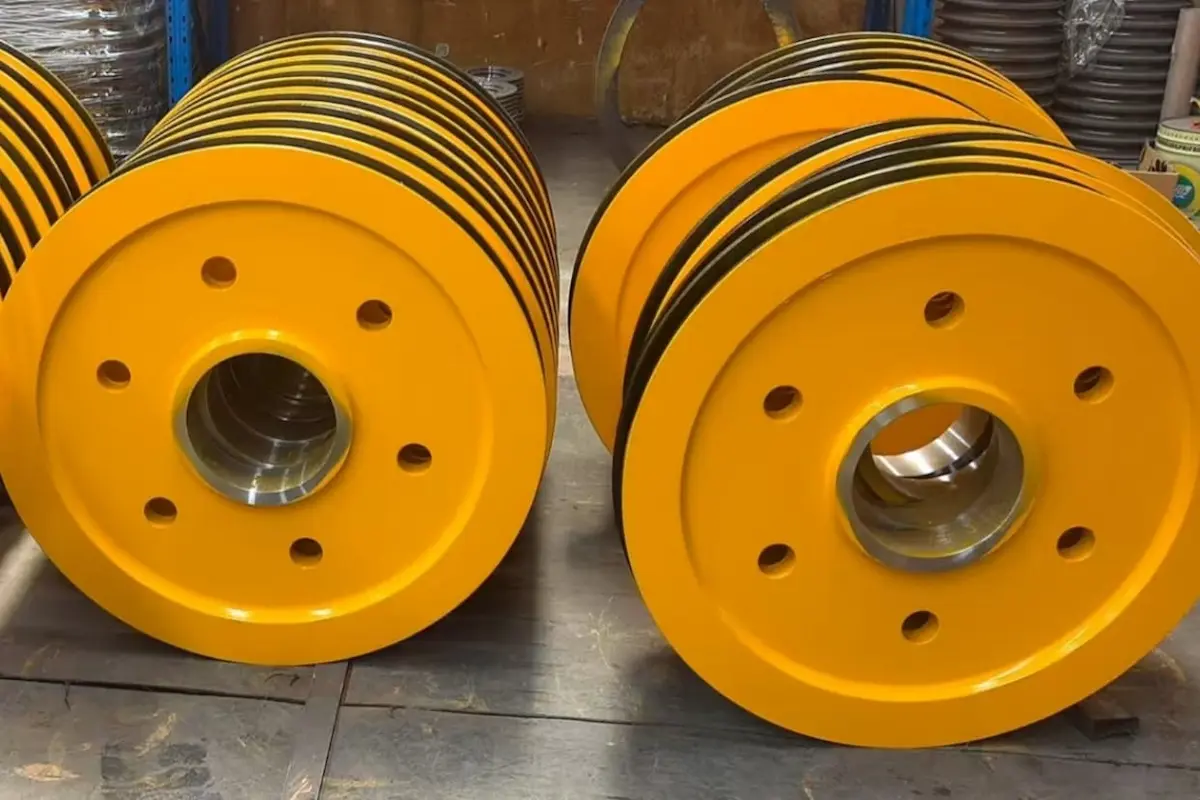
How to Choose the Right Crane Pulley?
Choosing a crane pulley is not like buying screws at a hardware store. A reliable crane pulley must be custom-tailored to your actual working conditions. During selection, use the following table to align specifications with your pulley supplier:
|
Selection Dimension |
Core Parameters & Technical Indicators |
Field Practice Tips to Avoid Traps |
| Matching wire rope specifications | Nominal wire rope diameter (d), pulley groove bottom radius (R), required D/d ratio | Never buy directly using old blueprints. Many cranes upgrade to thicker wire ropes later. Pulleys must upgrade simultaneously to ensure the R value perfectly fits the new wire rope. |
| Matching ultimate load | Maximum static load, breaking tension safety factor, pulley block reeving ratio | Larger tonnage cranes require higher pulley material strength. For heavy-duty conditions, choose forged steel or rolled steel pulleys. Eliminate brittle old cast iron pulleys. |
| Matching duty class | FEM/ISO mechanism duty class (M3-M8), start/stop frequency | For M6 class and above, pulley grooves must undergo medium-frequency surface quenching. Hardness should reach HB300-380 to survive high-frequency friction. |
| Handling special environments | Ambient temperature (high-temperature metallurgy, extreme cold), corrosiveness (port salt spray, chemical plants) | Metallurgical cranes require high-temperature resistant bearings and fully enclosed designs. Marine cranes need extra anti-corrosion coatings and seawater-resistant bearing seals. |
| Aligning with international standards | ISO 4308-1 (wire rope selection), FEM 1.001 (crane design rules), EN 13001 (European crane safety) | Avoid manufacturer self-praise. State the required standard clauses directly in the contract. Request corresponding material certificates and non-destructive testing reports. |
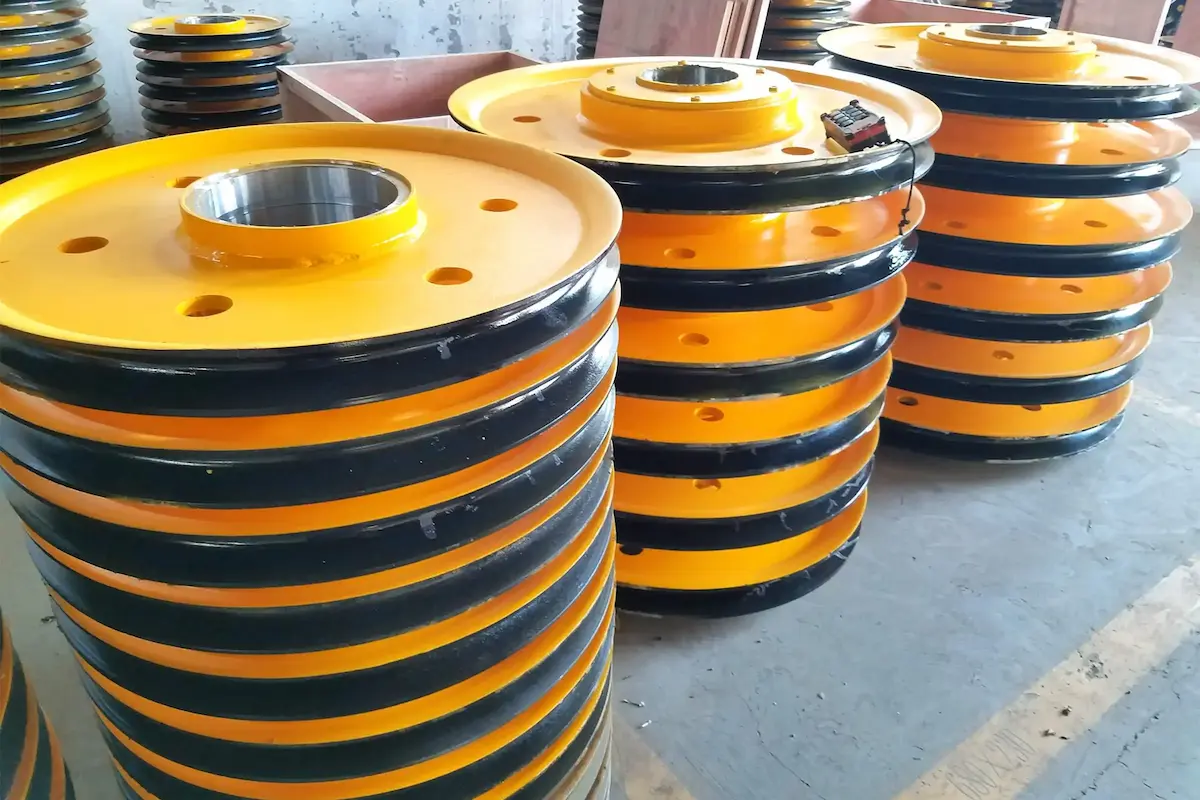
HSCRANE Crane Pulley Product Advantages
We know a crane pulley is not the most expensive crane component. However, it is the most troublesome consumable. HSCRANE refuses to cut corners in hidden places. Our pulleys withstand harsh conditions through strict manufacturing baselines:
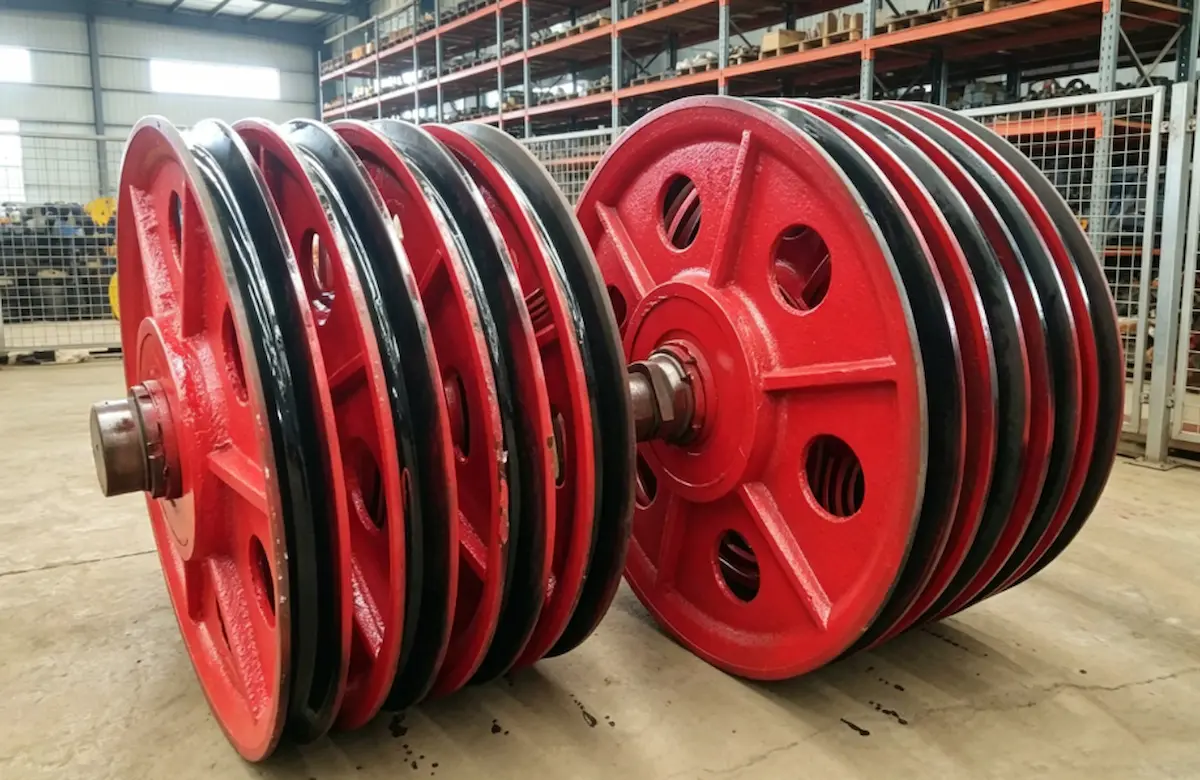
●High-strength premium steel: We reject cheap cast iron with hidden air holes. We use Q355B or 42CrMo forged or hot-rolled steel. Impact resistance and yield strength increase exponentially.
●Precision CNC machining and core hardening: Pulley grooves are never roughly lathed. Every pulley groove undergoes CNC machining. Medium-frequency surface quenching keeps hardness strictly at HB300-380. The smooth surface protects wire ropes and completely eliminates groove gouging.
●Premium dustproof and heavy-duty bearings: Bearings are the heart of a pulley. We strictly select heavy-duty spherical roller bearings from SKF, NSK, or top domestic brands. Labyrinth seals are added for high-dust and high-humidity environments. This ensures smooth rotation without jamming.
●Customization and full size coverage: We offer pulleys from Ø200mm guide wheels to Ø1600mm port machinery sizes. Using hot-rolling, forging, or welding, we provide matched drawings and stock for any rare equipment.
●International standard factory testing: We reject verbal promises and rely strictly on data. Our pulley block design and fatigue calculations strictly follow rigid global industry standards. These include ISO 16625:2025 Clause 5 for rigid D/d ratio specifications. We also follow FEM 1.001 Volume 4 for hoisting component selection and fatigue life checks. Finally, we verify limit states and fatigue strength using EN 13001-3-2:2014 standards.
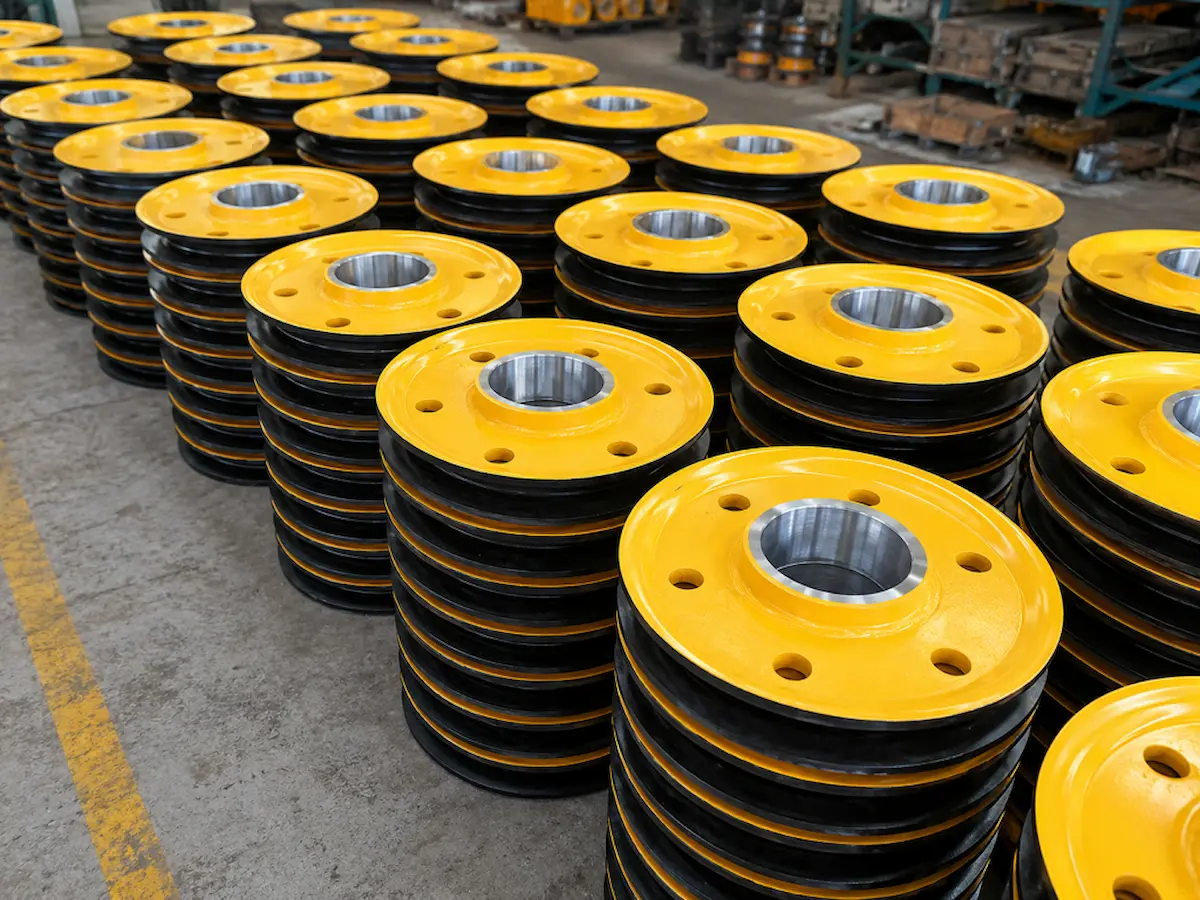
HSCRANE Classic Cases
Many overseas customers approach us filled with extreme frustration. Here are two real multinational retrofit records. See how the right crane pulley reverses maintenance deadlocks.
Case 1: Overhead Crane Pulley Upgrade Project
●Project background: Hoa Phat Group steel rolling shop, Vietnam. Retrofit of 35t overhead crane with 12 hoisting pulley blocks.
●Field pain points: This is a typical M7 heavy-duty, high-frequency operating condition. The original manufacturer chose cheap, undersized cast iron pulleys with a D/d ratio of only 18. Extreme bending stress and high workshop temperatures caused severe wire rope breakage every six months. Furthermore, the pulley grooves were deeply gouged by up to 5mm.
●HSCRANE Optimization Solution:
1.We remeasured the interference space without changing the original hook or trolley frame. Then, we expanded the pulley pitch diameter from Ø500mm to Ø630mm, raising the D/d ratio to 24.
2.The material was replaced with 45# forged steel, featuring deeply quenched pulley grooves.
●Quantifiable Results:
1.Doubled wire rope lifespan: After running for 18 months, wire ropes show only normal surface wear. Not a single wire rope has broken.
2.Drastically reduced downtime: This completely ended the previous biannual forced shutdowns, which took 12 hours per replacement.
3.Cost accounting: Average annual maintenance labor and consumable costs dropped directly by 65%.
Case 2: Port Gantry Crane Pulley Modification
●Project background: Tanjung Priok Port, Jakarta, Indonesia. Retrofit of 40t gantry crane grab system using 16 heavy hot-rolled pulleys.
●Customer requirements: Ocean salt spray easily rusts and seizes bearings, causing sluggish original pulley rotation. This caused the wire rope to suffer dry friction and overheat inside the pulley groove. The customer urgently needed a maintenance-free, long-term solution for highly corrosive marine environments.
●HSCRANE Configuration and Retrofit Solution:
1.We chose heavy-plate hot-rolled pulleys to reduce overall weight and lower hoisting inertia.
2.We applied a C5-M marine anti-corrosion coating system, including epoxy zinc-rich primer and polyurethane topcoat.
3.Custom flange covers were fitted with special V-shaped waterproof seals and injected with SKF lithium grease.
4.We provided detailed 48-hour rapid replacement blueprints to align with port shipping schedules.
●Actual Operation and Feedback:
1.Operational effect: After two years of use through multiple rainy seasons, pulleys rotate smoothly without abnormal noise. The anti-corrosion coating shows zero peeling.
2.Customer feedback: "HSCRANE pays terrifying attention to product details. Their custom waterproof bearing cover solved our worst seawater corrosion issue. Since replacing these pulleys, my team avoids climbing cranes to grease them during typhoons." — Mr. Bambang, Maintenance Director.
Conclusion
Onsite maintenance often gets trapped in a vicious cycle. People treat symptoms while ignoring the underlying design logic. For frequent broken wires, the wire rope is just a scapegoat. The real culprit draining budgets is the substandard, deformed pulley.
Saving a few hundred dollars on a cheap pulley causes massive future losses. It triggers higher wire rope costs and unplanned downtime. As professional equipment managers, calculate the total cost. Optimizing pulley diameter and the D/d ratio relieves stress and secures safe production.
Stop paying for frequent wire rope breakage and downtime!
Is your equipment running past its prime? Contact HSCRANE immediately. Share your tonnage, wire rope specs, and condition photos. Our engineers will provide a free pulley block diagnostic and upgrade report within 24 hours.
[Submit Condition Assessment Now / Get Custom Non-Standard Quote]
Optimize Your Hoisting System Completely
Pulleys and drums together determine wire rope lifespan. Knowing the pulley D/d ratio solves only half the problem. Incorrect drum capacity or mismatched groove patterns will ruin previous optimizations.
Next, learn how to select the best drum and wire rope combination for your specific operating conditions.
[Related Technical Guide: Crane Drums & Wire Ropes Selection: D/d Ratios, Fleet Angles & Spooling Guide]
FAQ
Q: Can I replace a broken wire rope with a thicker or higher-tensile one directly?
A: Absolutely not. Using a thicker rope on the same pulley reduces the crucial D/d ratio, multiplying bending stress. The new rope will fail faster and may crush the groove. To truly solve the issue, either increase your pulley diameter or use a more flexible specialty rope of the same diameter.
Q: Must I replace pins and brackets when upgrading to HSCRANE forged steel pulleys?
A: Usually, no. If your existing bracket space permits, we can custom-match the new pulley’s inner diameter to your current pin. Just swap the pulleys—no welding or structural cutting is required.
Q: Is it safe to keep using a pulley with slight wavy imprints in the groove?
A: No. Wavy patterns indicate material yield failure. This rough “washboard” surface will quickly destroy your wire rope’s outer layers under heavy loads. Prepare spares and replace the pulley at your next shutdown to ensure safety.
Q: Can you manufacture pulleys for a 30-year-old crane with no blueprints?
A: Yes, we excel at reverse engineering. Simply use our measurement form and a caliper to provide five key dimensions: outer diameter, groove bottom diameter, shaft bore, hub width, and groove radius. We will accurately replicate your pulley using modern, high-strength materials.
This document is for reference only. Specific operations must strictly comply with local laws and regulations and equipment manuals.