

Overview
Wire ropes break wires often and fail again soon after replacement. Many site staff first blame the rope quality itself. But after changing several brands, the problem remains. Often, you must revisit an easily ignored variable: the diameter match between crane sheave and wire rope. When a wire rope bends over a sheave, it bears alternating bending stress. The smaller the ratio of sheave pitch diameter to rope nominal diameter (D/d), the greater the bending curvature. Higher bending stress on outer wires speeds fatigue crack initiation and growth. A common site condition is this: the wire rope looks fine, and the groove shows no obvious damage. But broken wires cluster on the rope section bending over one specific sheave. The fractures are flat and have wear marks, typical of bending fatigue. But then again, D/d is only one variable. Groove shape deviation, poor sheave alignment, unreasonable reeving, and poor lubrication all affect actual rope service life. This article does not aim to provide a universal formula. It aims to give you one quantifiable, verifiable dimension when troubleshooting rope faults.
Is your crane wire rope wearing out too quickly?
Contact HSCRANE to discuss your sheave dimensions, wire rope specifications, and operating conditions. Our team can help assess a suitable pulley configuration.
[Click to contact the HSCRANE technical team]
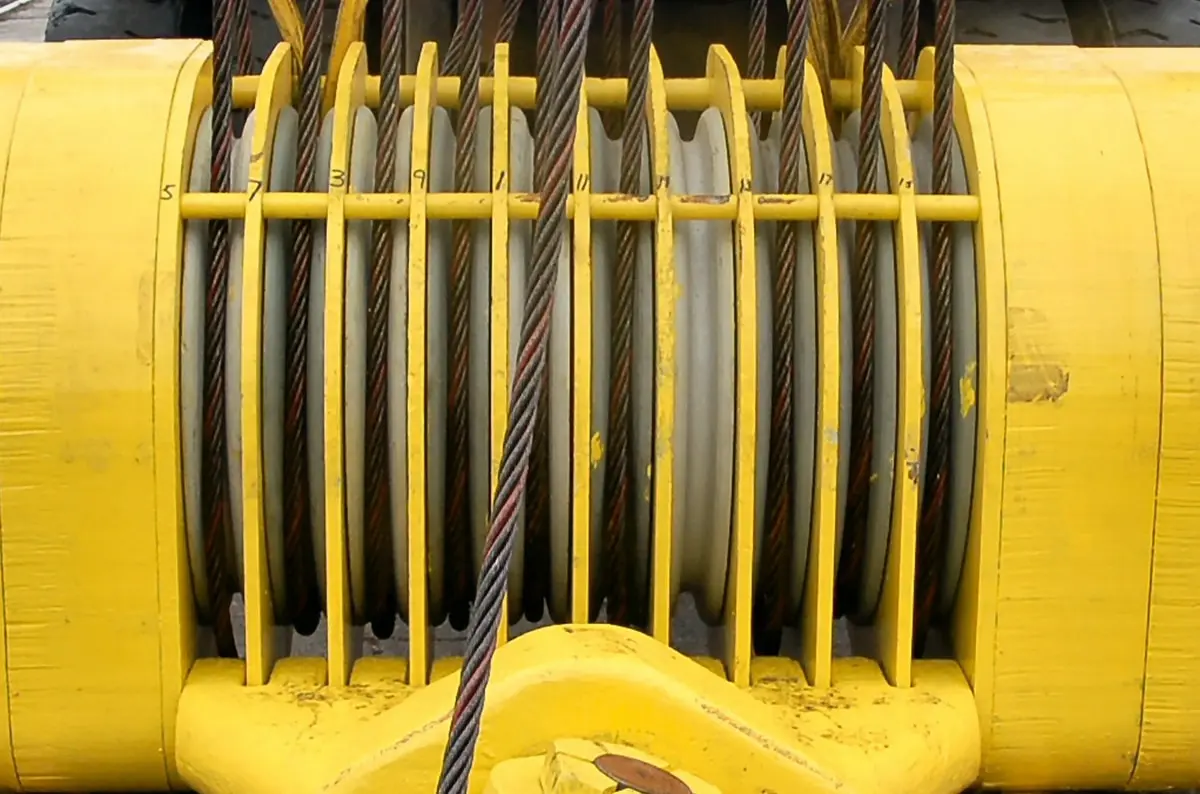
What is the relationship between crane sheave diameter and wire rope?
The crane sheave and wire rope look like two independent parts. In a hoisting mechanism, they are partners that must work together. When troubleshooting, people often check the wire rope first. Is breaking force enough? Is there a certificate? Is lubrication adequate? These checks are necessary, but if the sheave side is wrongly selected, the problem will recur. No matter how many ropes you change, it keeps appearing at the same location.
Main functions of the crane sheave
The sheave’s role on a crane is not just letting the wire rope pass over it. It mainly handles several tasks:
●Guide the wire rope path: let it enter the drum and pass sheaves as designed. This avoids tangled rope, jumping grooves, or interference with structures.
●Change force direction: in hoisting, drum pull often differs from hook movement direction. The sheave turns the pull direction and transmits power to the lifting device.
●Work with the sheave block to complete lifting motion. Fixed and moving sheaves combine to save effort or change speed. Multiple wire rope parts share the load together.
●Support and transmit contact pressure: when the rope bends in the groove, pressure passes through the sheave. It reaches the axle and support structure. In this process, groove shape, sheave alignment, and bearing condition affect actual rope load.
In other words, the crane sheave itself does not generate lifting force. But it determines the rope’s stress conditions while bending. Whether these conditions are good directly affects how long the rope lasts.
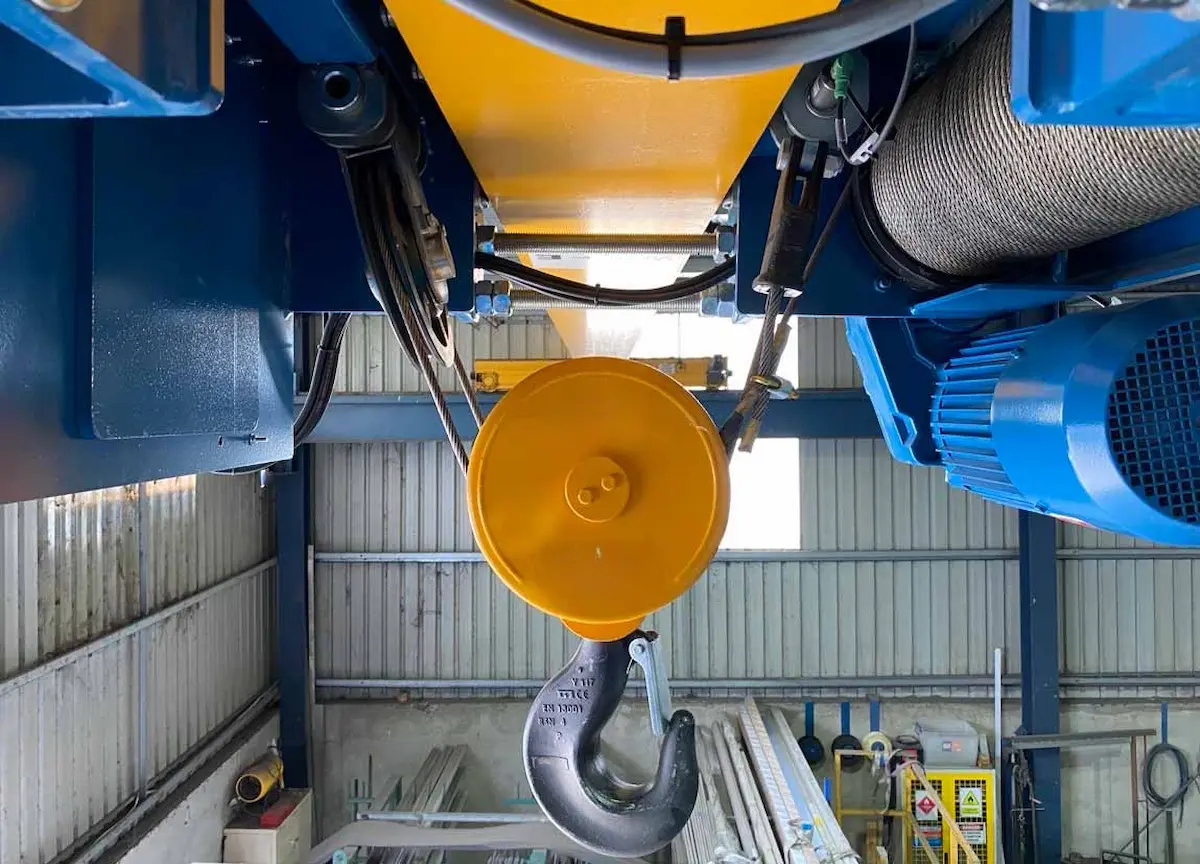
What is the D/d ratio?
D/d is a commonly mentioned index when matching crane sheave and wire rope. Its meaning is very direct:
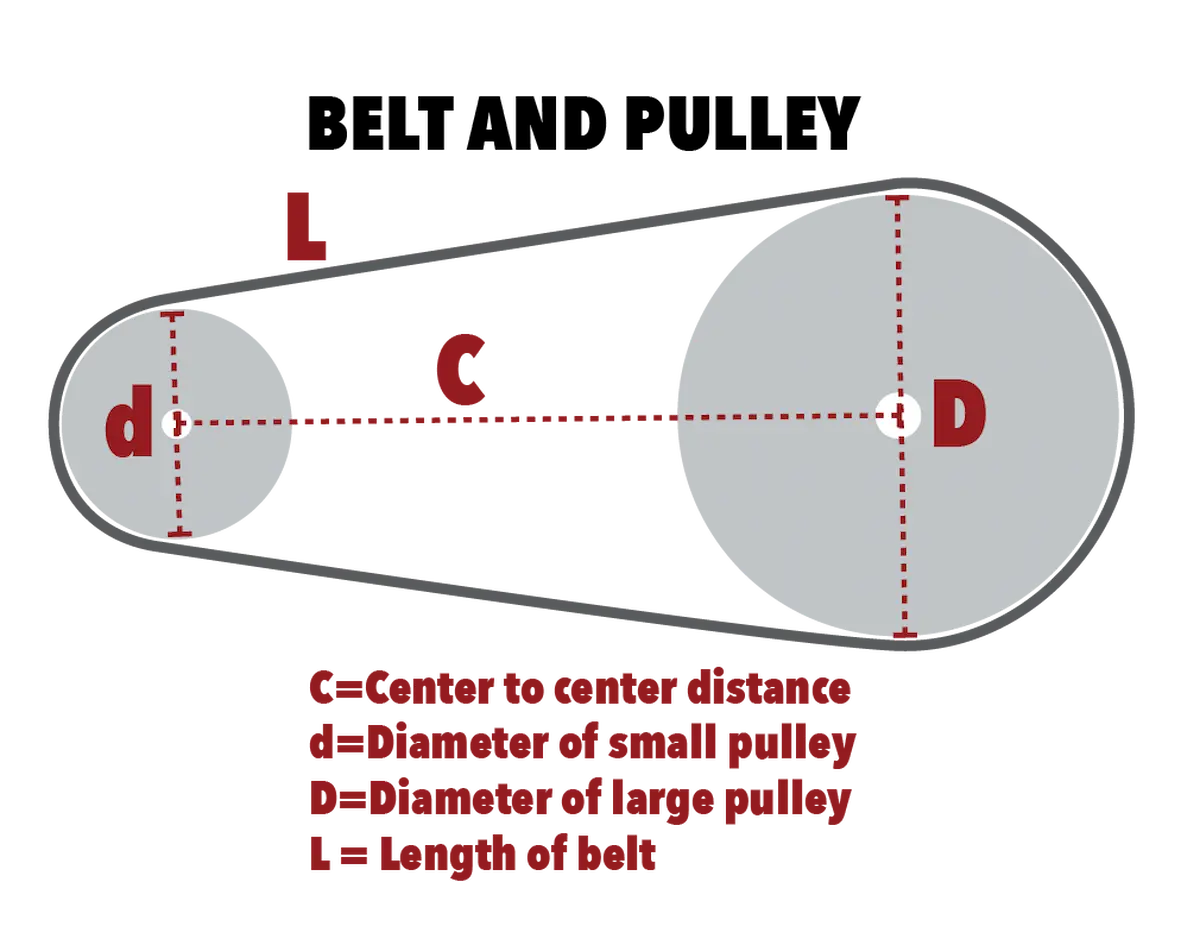
●D: sheave pitch diameter. This is the diameter of the wire rope centerline path. It is not the sheave outer diameter or groove bottom diameter. This point is easily confused when checking drawings or measuring on site. The outer diameter may look large, but pitch diameter may not meet requirements.
●d: wire rope nominal diameter, such as 20 mm or 24 mm. Use the rope nameplate or measured nominal diameter.
Divide these two values to get the D/d ratio.
Why is this ratio important? For the same rope diameter, bending over a smaller sheave creates greater curvature. It also creates higher bending stress inside the rope. The smaller the D/d, the more severe the bending when the rope passes over the sheave. The larger the D/d, the gentler the bending, usually benefiting rope life.
Actual selection cannot rely only on D/d. Different rope constructions, such as 6×36 WS, 8×19, compacted strands, or mixed wire sizes, react differently to bending. Different crane duty classes mean very different fatigue cycle counts. Single bending or reverse bending also clearly affects service life. So D/d is an important entry indicator, but not the only criterion.
Why does crane sheave diameter affect wire rope life?
When a wire rope passes over a sheave, it bends and straightens. Each pass is one bending cycle. Outer wires stretch, inner wires compress, and bear contact stress. The smaller the sheave diameter, the greater the curvature and outer wire stress.
Repeated bending does not break the rope immediately, but fatigue accumulates. Over time, outer wires develop microcracks, and crack growth becomes broken wires. A common sign is broken wires clustered where the rope passes over one sheave, with flat fractures and wear marks. Do not blame only the rope. Check the sheave’s D/d.
Main problems caused by too small diameter:
●Bending stress rises, reducing fatigue life;
●Outer wires are prone to fatigue breakage;
●Contact pressure between rope and groove increases wear;
●The rope appears stiffer, and smoothness worsens.
But increasing sheave diameter does not mean other design conditions can be ignored. If groove shape and wire rope do not match, contact area changes. Wrong groove radius or angle raises local pressure. Poor alignment causes uneven wear. Bearing damage or sticking causes impact and vibration. Increasing sheave diameter alone cannot solve these combined problems.
During site troubleshooting, do not measure only outer diameter. First confirm pitch diameter, then compare it with rope nominal diameter and actual conditions. D/d is a simple handle for bending severity. Consider it with groove, alignment, reeving, and duty class. Only then can you judge whether the sheave is too small, or the matching plan needs rechecking.
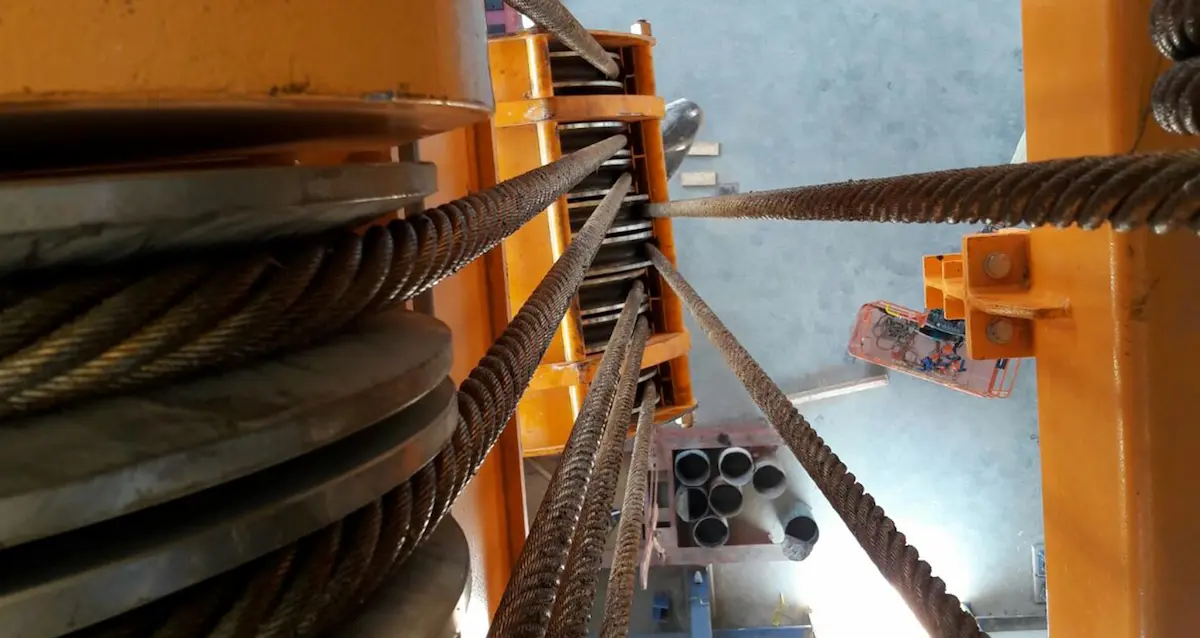
How should crane sheave diameter match wire rope?
Matching is not just applying one D/d value. A safer method follows five steps.
Step 1: Confirm basic wire rope parameters
Confirm nominal diameter, construction, tensile strength, and lay direction. For old equipment, measure rope diameter when possible. Wear, compaction, or stretching can change actual diameter. If d is inaccurate, later calculations will be off.
Step 2: Determine D/d ratio according to applicable standards
Different standards, duty classes, and rope constructions have different requirements. ISO 4301, FEM 1.001, and EN 13001 specify duty classes and sheave diameters. Check single or reverse bending. Reverse bending is usually more severe.
Step 3: Calculate required sheave pitch diameter
D ≥ (D/d) × d. This is pitch diameter, not outer diameter. After selection, confirm pitch diameter and groove bottom diameter with the manufacturer. Avoid a large outer diameter but small actual pitch diameter.
Step 4: Check whether groove and wire rope match
Groove radius, angle, and depth must match rope diameter. A narrow groove pinches; a wide one reduces contact and raises pressure. Replace sheaves worn beyond limits. Do not let a new rope adapt to an old groove.
Step 5: Consider installation space and working environment
Increasing sheave size may require changes to brackets, axles, drums, and reeving. Consider high temperature, dust, corrosion, and frequent impact. Ports, steel mills, and refuse cranes have different groove and material requirements.
Final reminder: Matching calculation is only the start. After installation, observe running-in, wear, and broken wire locations.
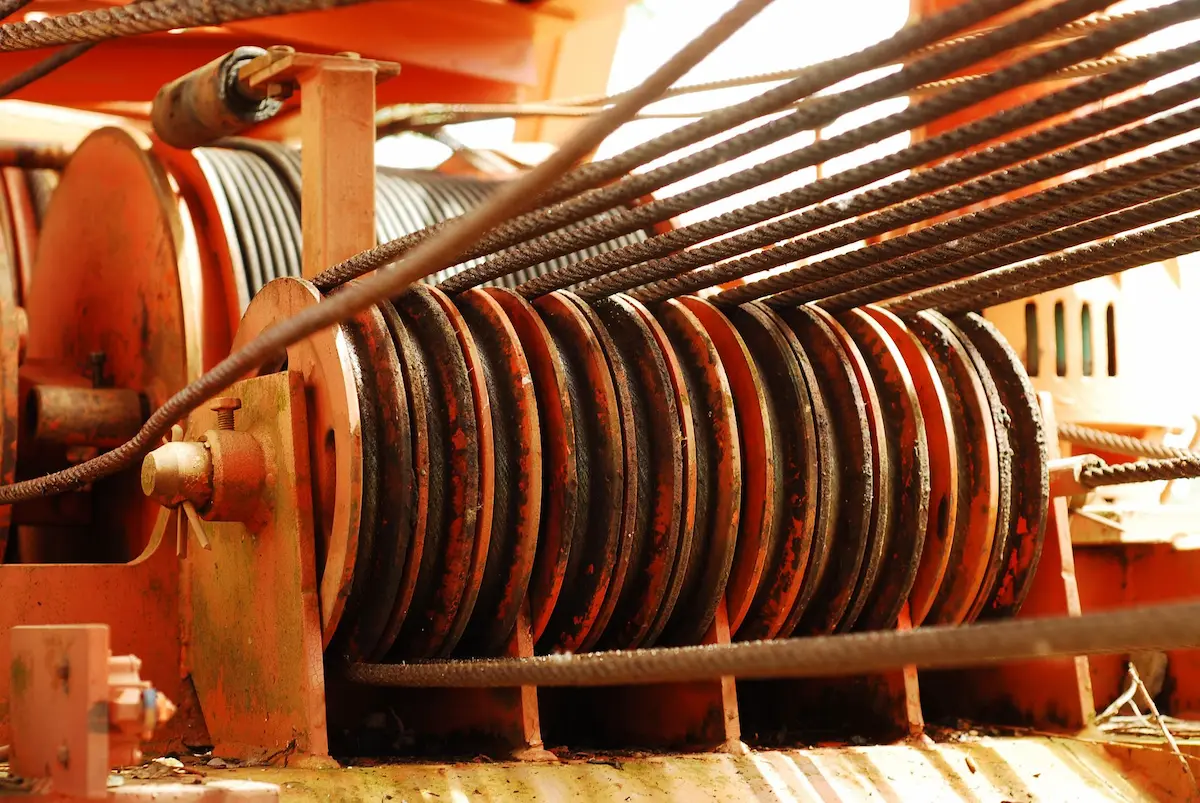
What are the effects of unreasonable crane sheave and wire rope matching?
Unreasonable matching may look usable short term. Over time, problems spread from wire rope to downtime and cost. Common effects include:
●Diameter too small: Accelerates bending fatigue. A small D/d increases curvature and outer wire stress. Broken wires cluster where the rope passes over one sheave. After replacement, the same location still fails, not due to poor rope quality but severe bending.
●Wire rope and groove mismatch: Increases local wear. A too small groove radius pinches the rope; a too large radius reduces contact area. Both concentrate pressure, causing indentations, flattening, abnormal wear, and even core damage.
●Abnormal sheave wear: Raises repair and replacement frequency. Worn grooves change shape and accelerate rope wear, forming a vicious cycle. Bearing or axle faults add vibration and impact, shortening maintenance intervals.
●Frequent downtime: Raises total operating cost. Early rope scrapping includes purchase, downtime, labor, safety risk, and schedule delay. For steel mills and ports, one unplanned shutdown often costs more than sheave modification.
●Oversized dimensions without system check: May create new installation problems. Bigger is not always better. It can reduce bracket space and wrap angle, cause reeving interference, change axle loads, and affect lifting height and speed. Increasing sheave size requires rechecking, not simple replacement.
Summary: Unreasonable matching rarely affects only the wire rope. It transmits along grooves, sheaves, bearings, and structural parts. When troubleshooting, view crane sheave and wire rope together. This is often more effective than replacing the rope alone.
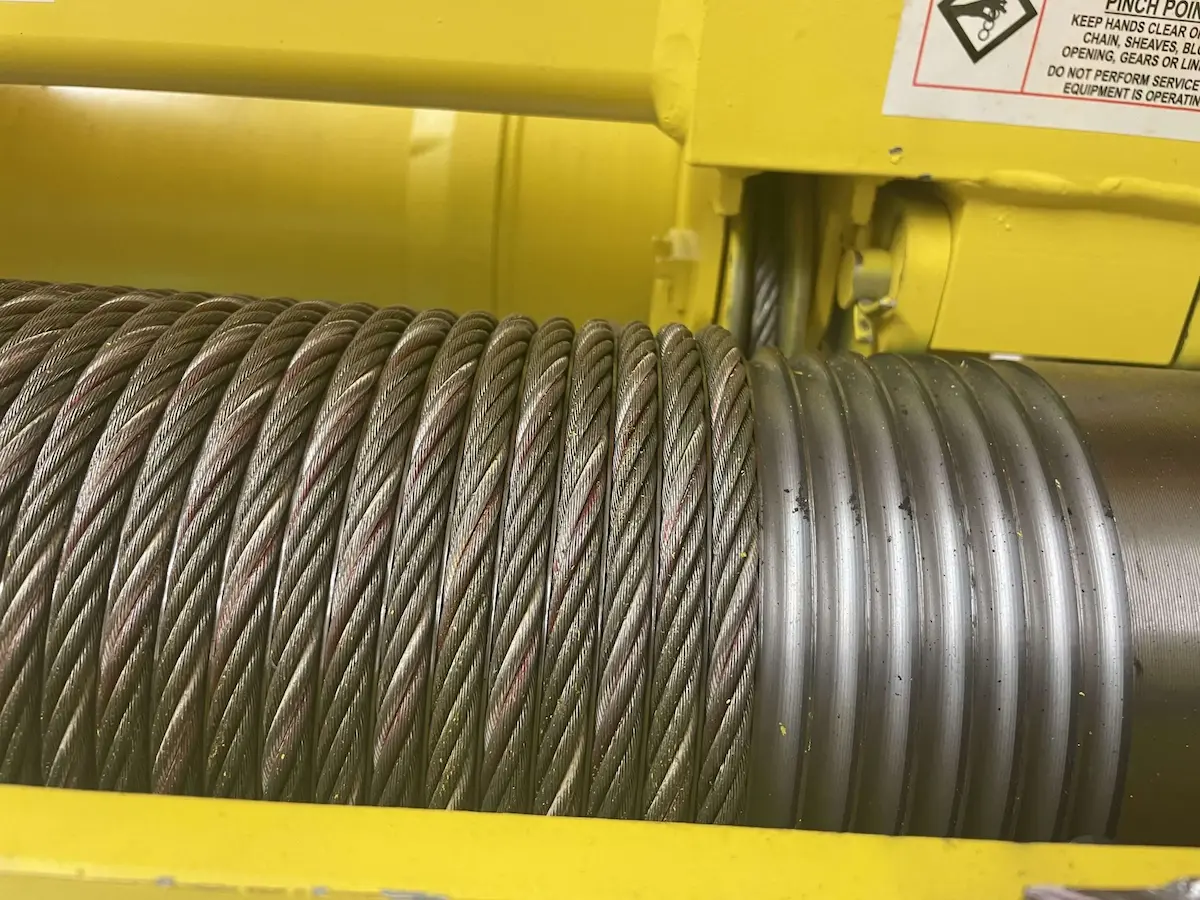
How to judge whether crane sheave and wire rope match?
|
Check item |
Method |
Basis for judgment |
| Wire rope damage characteristics | Record broken wire locations, fracture shapes, and wear mark directions. Check if broken wires cluster on a rope section passing over one sheave. Check if fractures are flat. | If broken wires repeatedly appear in the same sheave section and fractures are flat, bending fatigue is likely. Recheck D/d. |
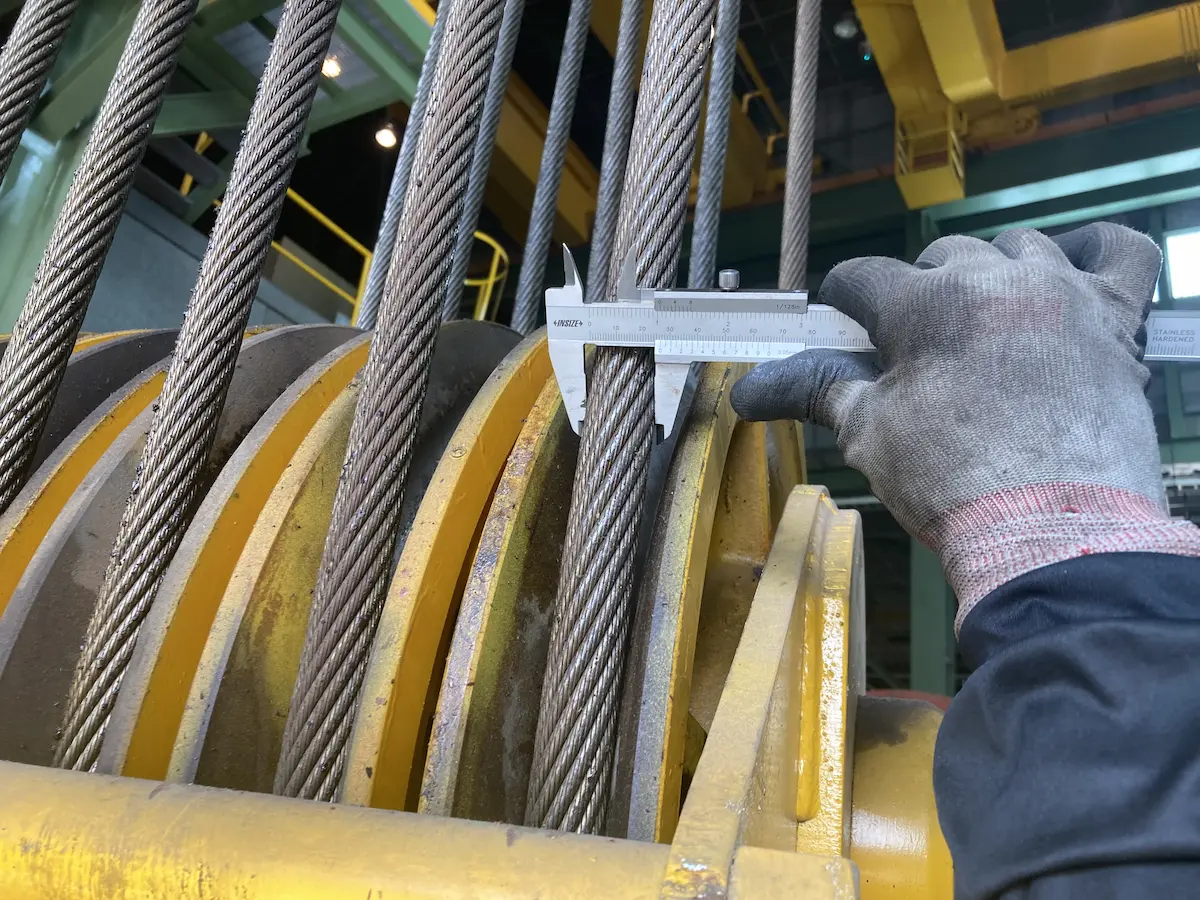
| Measure sheave and groove dimensions | Use a groove template to check groove bottom radius. Use calipers to measure groove bottom wear. Focus on pitch diameter, not outer diameter. | A too small groove bottom radius pinches the rope. A too large radius gives insufficient contact area. If groove bottom wear exceeds 25% of rope diameter, consider replacement. |
| Check bearings, alignment, and reeving | Turn the sheave and listen for abnormal noise or sticking. Use a straightedge or laser to check sheave parallelism with the drum and adjacent sheaves. Compare the reeving diagram with actual routing. | Alignment deviation causes uneven wear. Reeving errors, such as crossed ropes, worsen wear. |
| Develop replacement or modification plan | If D/d is too small or groove wear exceeds limits, first check whether replacing only the sheave is enough. If brackets, axles, or wrap angle change, perform overall verification. | Do not replace only the sheave without checking brackets and reeving. An old groove with a new rope often cannot solve the root problem. |
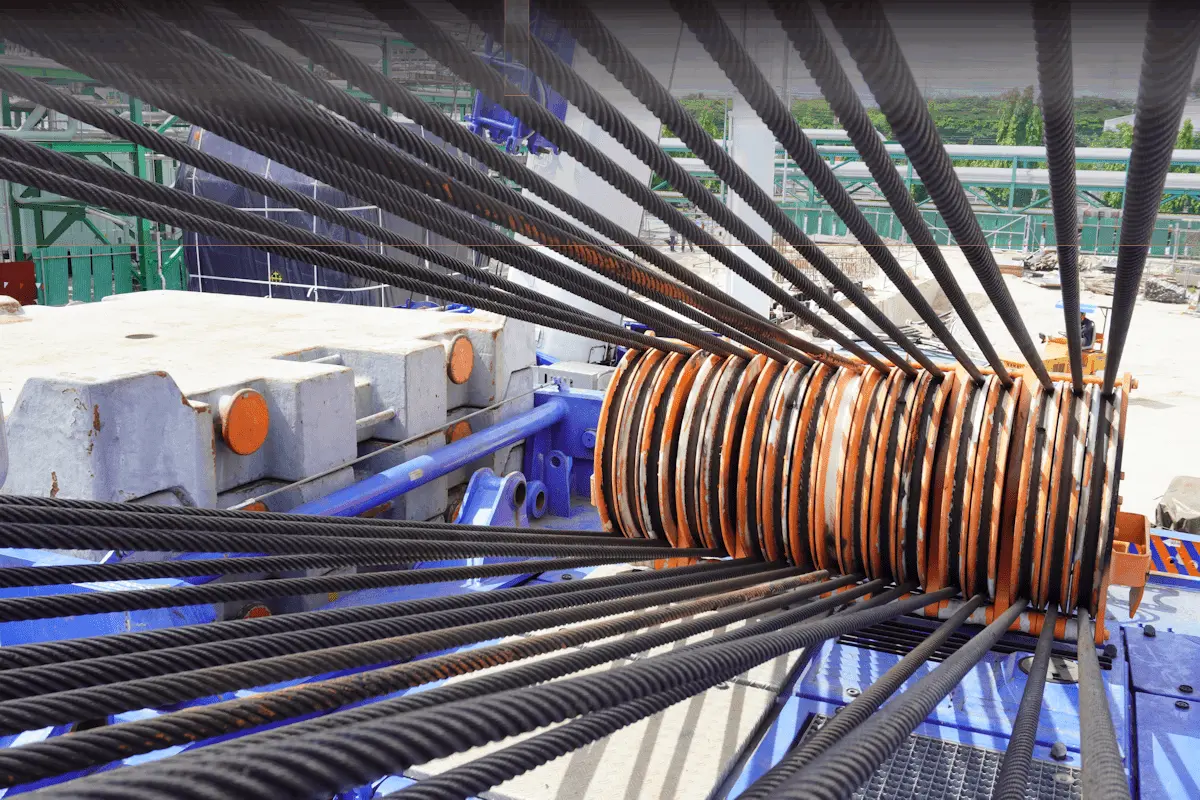
Why choose HSCRANE crane sheave?
●Multiple diameters and wire rope specifications: Set D/d by duty class, not by a rough value. The sheave pitch diameter is determined by mechanism duty class and actual wire rope mechanism. Refer to ISO 4301-1:2016 classification combinations for use classes A03–A11 and load states Qp0–Qp5. Also refer to FEM 1.001 (3rd edition, 1998) Chapter 4, Table T.4.2.3.1.1. It gives D/d coefficient h values for different mechanism groups. Check each item one by one.
●Multiple materials and manufacturing processes: Groove matching comes first. Grooves are customized by wire rope nominal diameter and construction. Groove bottom radius and groove angle match the rope. Select cast steel, forged steel, or rolled sheaves by working conditions. Heat treatment ensures uniform groove bottom hardness. Follow EN 13001-3-2:2014 Clause 6.4.2 for drum and sheave D/d ratio requirements. Also follow Clause 6.4.7 for groove radius control.
●Custom adaptation for existing equipment: Measure before modifying old machines. First measure pitch diameter and groove wear on old machine modifications. Use EN 13001-3-2:2015-10 capability proof method to check sheave groove and D/d. Then decide whether to replace only the sheave or also brackets and axles. HSCRANE provides full-process support from selection calculation to installation dimension confirmation.
●Focus on operating performance, not just matching dimensions: Include sheave alignment, bearing condition, anti-drop device clearance, and reeving in factory inspection. Follow ISO 4301-1:2016 Chapter 5 for mechanism and component duty class division. Confirm sheave verification conditions under target working conditions.
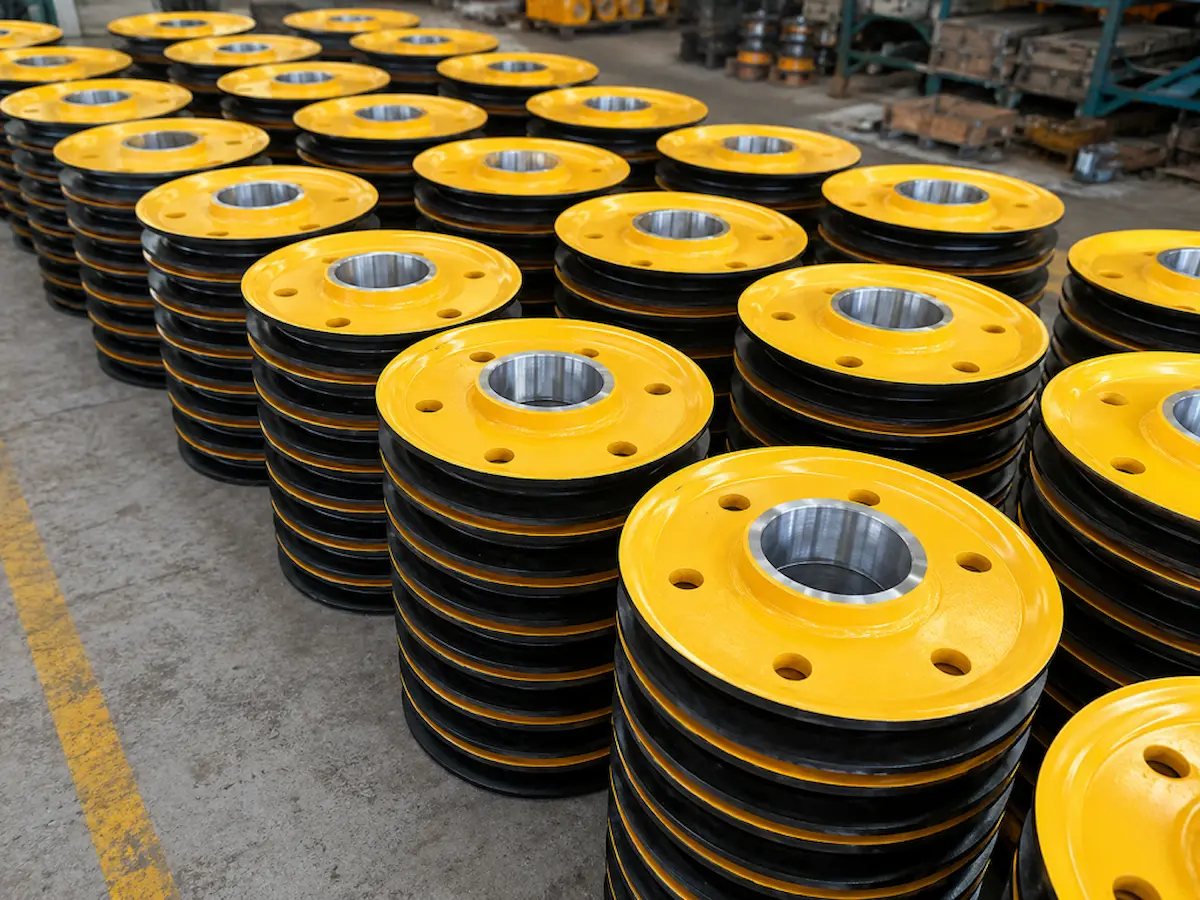
HSCRANE classic cases: how does sheave optimization improve wire rope performance?
The two cases below come from HSCRANE actual modification projects in Southeast Asia. Customer names, equipment parameters, and before-after data come from project execution records. They can be traced and checked.
Case 1: 35-ton bridge crane sheave modification at Hoa Phat Group steel mill, Vietnam
●Customer information: Hoa Phat Group, one of Vietnam’s largest steel producers. The project is at Dung Quat Economic Zone steel mill, Quang Ngai Province. Hoa Phat invested in a 4 million ton per year steel complex.
●Equipment: Four 35-ton double-girder bridge cranes for ladle transfer and billet lifting. They run all day, duty class A7 (FEM 3m).
●Problem: Hoisting wire ropes showed concentrated broken wires in 3 months. Breaks clustered on rope sections passing over hook block sheaves. Replacing several high-strength rope brands did not improve the failure cycle. Measured sheave pitch diameter D=560 mm, rope nominal diameter d=28 mm, D/d=20. The groove had obvious indentations and uneven wear. Groove bottom radius was too large, reducing rope contact area.
●HSCRANE solution: Per ISO 4301-1:2016 duty class A7 and FEM 1.001 mechanism group M7, D/d should not be lower than 25. Increase pitch diameter to D=720 mm (D/d≈25.7). Reprocess the groove for 28 mm rope, with bottom radius precisely matching rope diameter. Check sheave axle, bearing housing, and hook block side plates. Ensure installation space and wrap angle meet requirements.
●Results: After 12 months, no concentrated broken wires. Average service life extended from 3 months to over 11 months. Replacement frequency dropped 70%. Groove wear remained within normal range, with no abnormal uneven wear. Customer applied this standard to phase two.
Case 2: 40-ton gantry crane sheave modification at Jakarta port, Indonesia
●Customer information: Operator of Tanjung Priok Port, Jakarta, Indonesia’s busiest container port, ranking first nationwide in throughput.
●Equipment: Six 40-ton rubber-tyred gantry cranes (RTG) for container yard operations. In service over 8 years, operating over 18 hours daily.
●Problem: Wire ropes were scrapped after about 4 months. Broken wires concentrated on hoist rope sections passing over trolley sheaves, with flat fractures and wear marks. Groove wear required build-up welding repair every 8 months. Measured original sheave pitch diameter D=600 mm, rope diameter d=26 mm, D/d≈23.1. Groove template found bottom radius worn 1.5 mm larger than standard. The rope floated in the groove, concentrating contact stress.
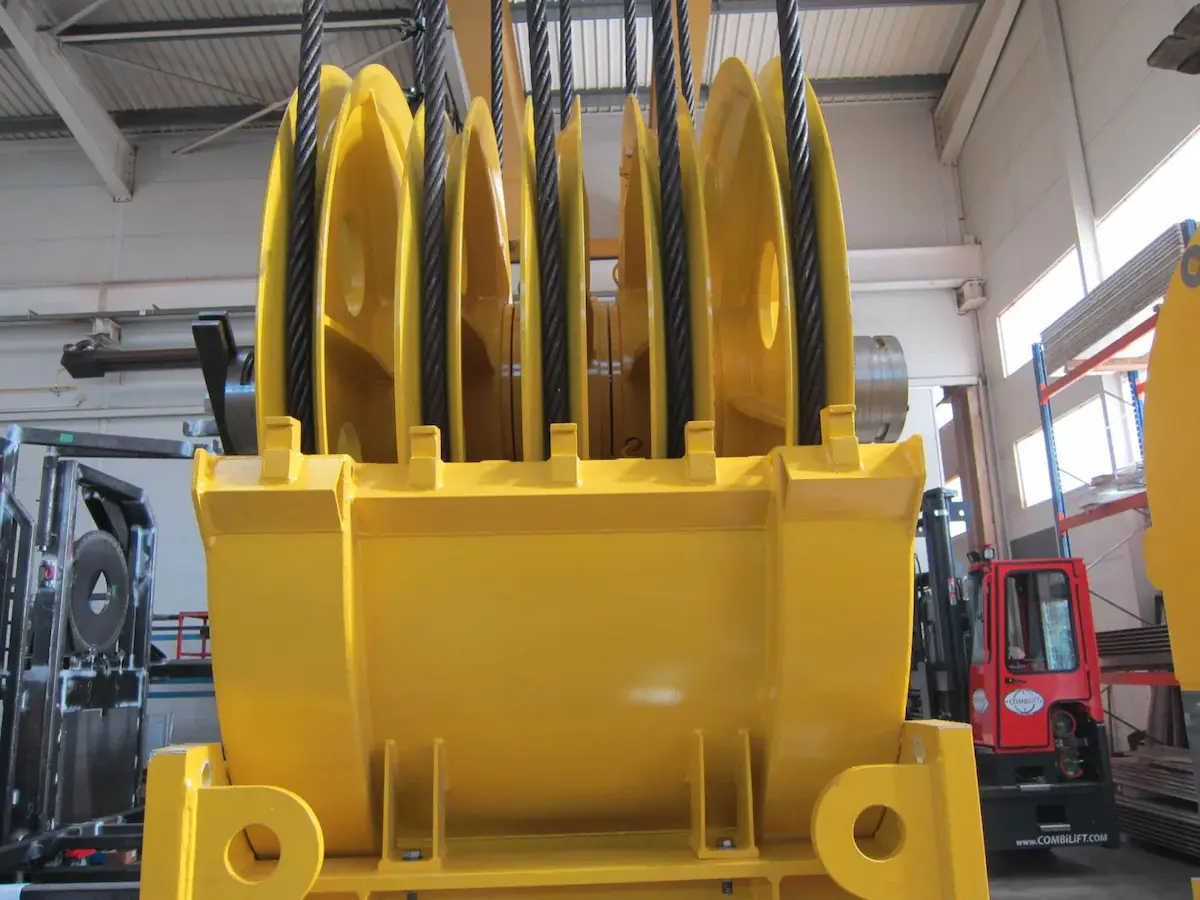
●HSCRANE solution: Adjust pitch diameter to D=700 mm (D/d≈26.9). Redesign groove for 26 mm rope and high-frequency port conditions. Use medium-frequency induction hardening for groove bottom, hardness HB320–360. For Jakarta’s high temperature, humidity, and salt fog, choose 42CrMo forged steel and apply anti-corrosion treatment. Modify six cranes in two batches, single machine downtime within 36 hours.
●Results: After 10 months, average rope service life extended from 4 to 9 months. Replacement frequency dropped over 55%. Groove wear significantly decreased, with no further build-up welding repair. Maintenance supervisor reported broken wires changed from concentrated in sheave sections to scattered and few. Hoisting smoothness improved noticeably.
Conclusion
Frequent wire rope problems are not always the rope’s fault. The matching between sheave diameter and rope specification is often skipped, especially the D/d ratio. If D/d is too small, bending stress is high and fatigue broken wires come quickly. If the groove mismatches, local wear concentrates. Poor alignment and stuck bearings stack problems. Buying expensive rope only delays failure; the root cause remains.
But bigger is not always better. Replacing one sheave alone cannot solve all problems. The correct approach considers rope parameters, duty class, groove condition, reeving, and installation space together. Calculate, measure, and modify as needed. HSCRANE data from steel mills and ports show correct D/d and groove matching clearly improve rope life and reduce downtime.
Want more detailed solutions for crane sheave and wire rope?
If you face early scrapping, concentrated broken wires, or abnormal sheave wear, send equipment parameters and site conditions. The HSCRANE technical team can help calculate D/d, check groove dimensions, and suggest replacement or modification.
[Contact HSCRANE technical team]
Further reading:
Wire rope changed several batches, but broken wires still cluster near the same sheave? Do not rush to change rope again. This article “Why Does Crane Pulley Diameter Affect Wire Rope Service Life?” explains how to calculate D/d, how bending fatigue occurs, and when to check the sheave instead of changing rope. If similar, click and compare.
[Click to read full article →]
FAQ
Q1: Is a larger sheave diameter always better?
A: No. Larger D/d reduces bending stress, but may affect bracket space, wrap angle, axle load, and lifting height. Forcing a larger sheave without rechecking can cause installation and load problems. Set target D/d by duty class and rope construction, then confirm with whole-machine conditions.
Q2: Is there a universal D/d value?
A: No. Different standards, duty classes, and rope constructions have different values. ISO 4301-1:2016, FEM 1.001, and EN 13001-3-2 all give specific requirements. Select by applicable standards and working conditions, not one empirical number.
Q3: For frequent broken wires, change rope or check sheave first?
A: Check the sheave first, or together with the rope. Record broken wire locations, fracture shapes, and wear marks. If breaks repeatedly cluster where the rope passes one sheave with flat fractures, bending fatigue is likely. Changing only the rope will likely fail at the old location.
Q4: For old equipment, can you replace only the sheave without checking brackets?
A: Usually no. Changing pitch diameter may require adjusting axle load, bearings, bracket dimensions, and wrap angle. Replacing only the sheave body can cause installation failure, misalignment, or bearing overload. Measure the original structure and recheck by standards first.
Q5: Can you help with selection calculation or site problem judgment?
A: Yes. Send rope specifications, sheave drawings or measured dimensions, duty class, and fault symptoms. HSCRANE can help calculate D/d, check groove matching, and suggest replacement or modification. For whole-machine modification, we can help confirm installation dimensions and bearing configuration.
This document is for reference only. Specific operations must strictly comply with local laws and regulations and equipment manuals.