

Overview
Efficient scrap handling directly impacts profits in steel mills and scrapyards. Managing various metal waste forms is a complex daily challenge. Choosing between electromagnets and grabs for scrap handling is a common dilemma. Both options represent the most frequent lifting solutions available. Scrap operations face harsh environments and chaotic materials. They also require high-frequency, continuous loading and unloading. Choosing the wrong lifter slows down shop floor logistics significantly. It also causes endless device maintenance costs later on.
This article details the working logic and field performance of both options. We compare core metrics to clarify selection logic across materials. This helps you evaluate different operating scenarios effectively. You will also see how HSCRANE uses manufacturing experience to help you. We build efficient scrap handling tools tailored to your working conditions.
Selecting Lifting Equipment for a Scrap Handling Project?
Choosing the right spreader improves loading and unloading efficiency effectively. Selection depends on scrap type, lifting weight, frequency, and environment. Contact HSCRANE to get a scrap handling solution for your site.
[Click here to contact HSCRANE for the best solution]
How Is an Electromagnetic Crane Used for Scrap Handling?
Electromagnetic cranes are standard for scrap handling involving ferrous metals. Its operation logic is straightforward and eliminates tedious manual hooking steps. It is a powerful tool for high-frequency, rapid loading and unloading.
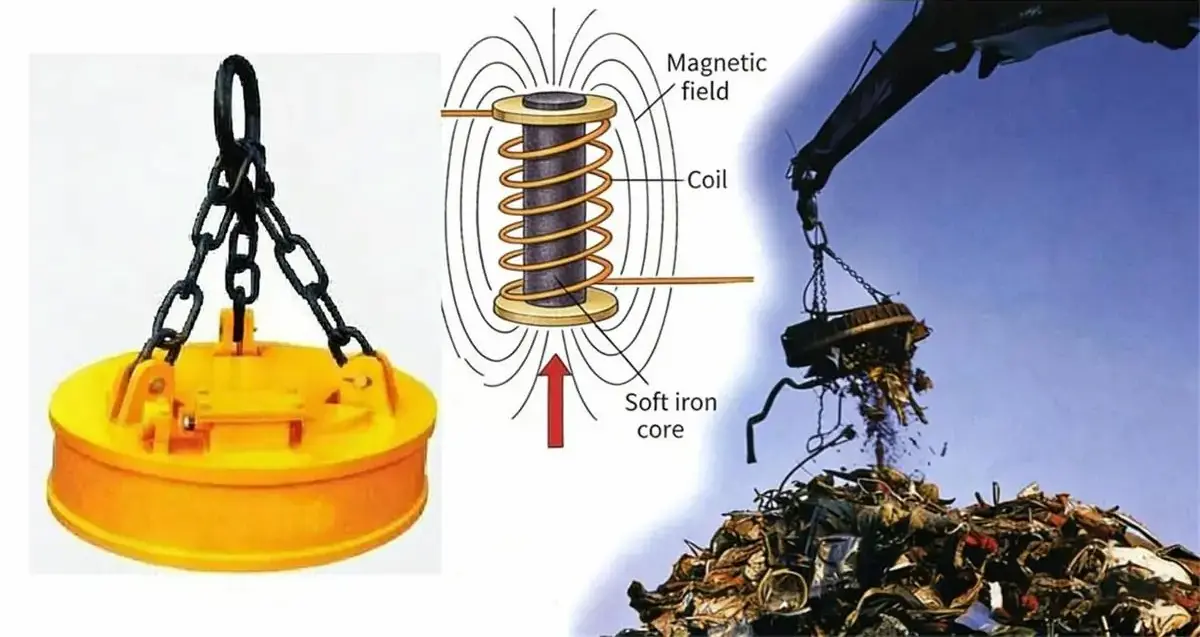
Electromagnetic Working Principle
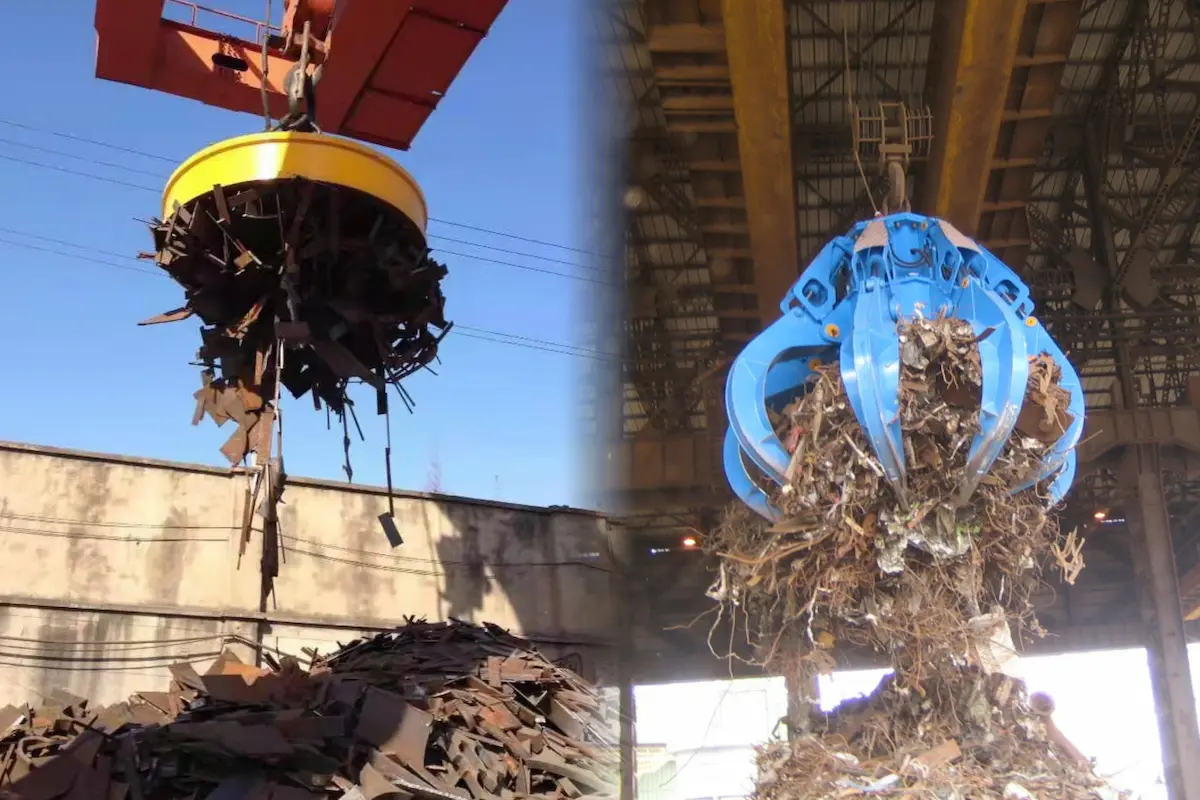
Simply put, it magnetizes when powered and demagnetizes when unpowered. The crane supplies power to the electromagnet via a cable reel. A strong magnetic field instantly penetrates and attracts the scrap steel. After moving material to position, the operator cuts the power. The magnetic force disappears, dropping the scrap precisely by gravity. The entire lifting and releasing action is clean and decisive.
Basic Components of an Electromagnetic Crane
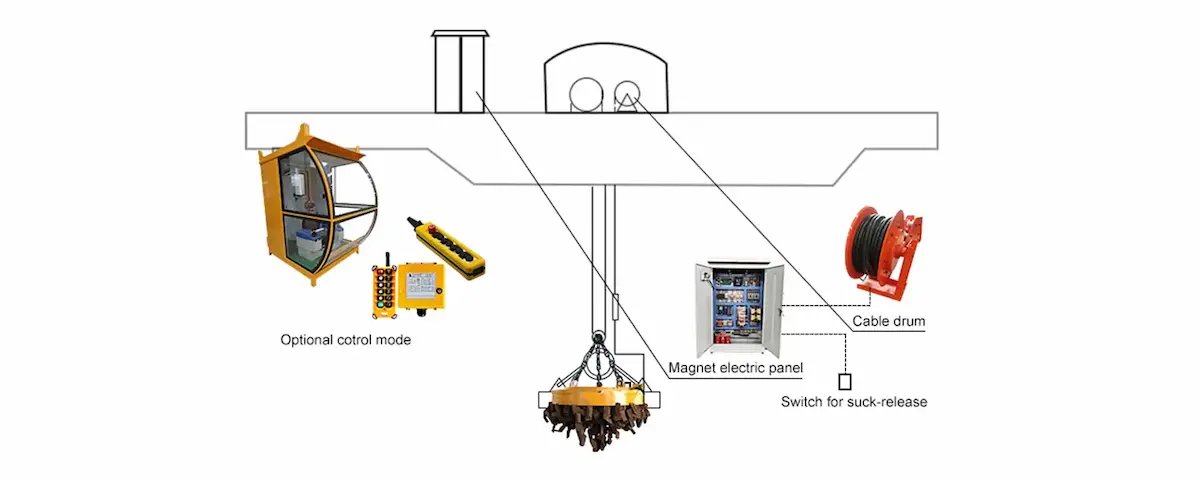
An electromagnetic crane operates continuously in harsh dust environments. It consists of the following core modules:
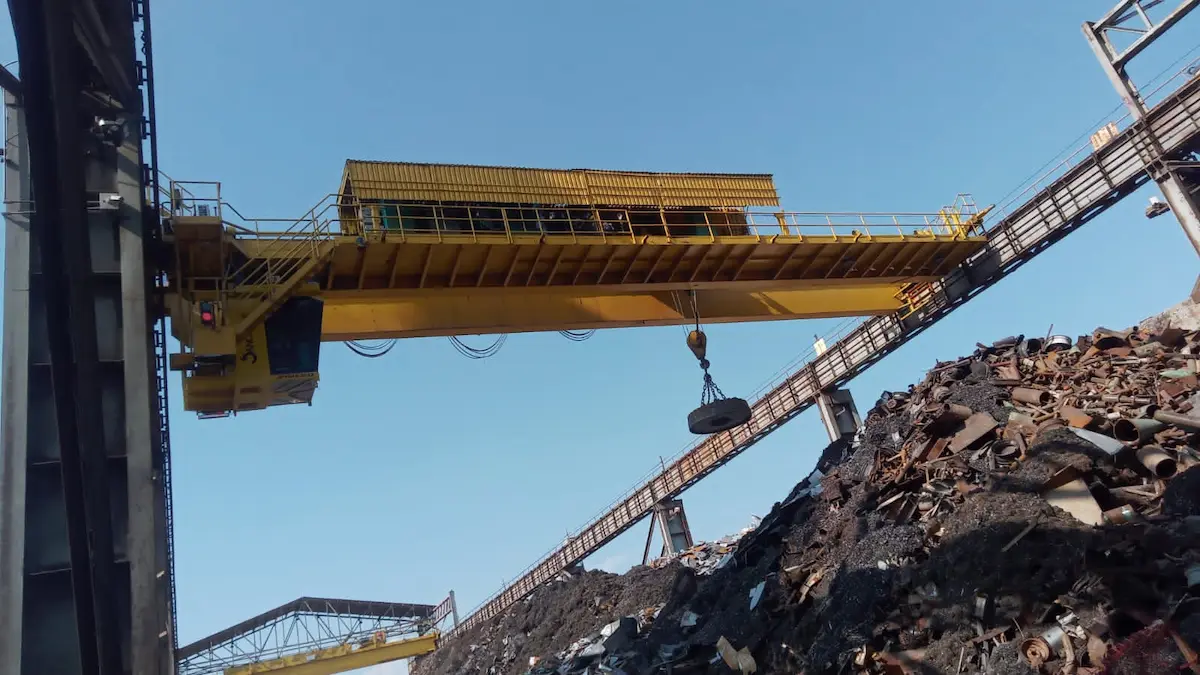
●Crane Main Frame: Overhead cranes (indoor workshops) or gantry cranes (outdoor yards) are used.
●Electromagnetic Chuck: This hand touching material is circular or rectangular. Internal coils require strong insulation and heat resistance.
●Hoisting Mechanism: This mechanism moves the load up and down. Heavy electromagnet weight demands higher motor and gearbox specs than standard cranes.
●Traveling Mechanism: This drives bridge and trolley along tracks. It achieves full-coverage operations across the workspace.
●Electrical Control System: It includes standard variable frequency speed regulation. A power-loss magnet retention system with batteries prevents accidental steel drops.
Which Types of Scrap Are Suitable for Electromagnets?
Not all scrap materials suit this method. Electromagnets excel primarily with pure magnetic metals. Its performance in scrap handling is shown in the table below:
|
Scrap Type |
Lifting Performance |
Suitability Evaluation |
| Scrap Blocks | Excellent | Magnetic lines penetrate dense blocks well. Single lift volume is large without dropping. |
| Steel Plates and Offcuts | Highly Suitable | Large contact area ensures extremely strong attraction. It is common in steel mill shearing processes. |
| Rebar | Suitable | Long rebar requires careful balance during attraction. Rectangular magnets or dual chucks are usually recommended. |
| Steel Chips and Magnetic Fines | Extremely Efficient | It attracts fine scrap like iron powder on magnets. It cleans bulk fine materials fastest with great results. |

Main Advantages of the Electromagnet Solution
Electromagnet efficiency is irreplaceable in applicable scrap handling scenarios:
●Ultra-Fast Attraction and Release: There is no waiting for mechanical opening. It lifts when powered and unloads when unpowered.
●Complete Labor Liberation: Operators manage all actions from the cab or via remote control. No ground crew is needed for rigging, greatly improving safety.
●Designed for High Frequency: It adapts to heavy duty cycles (like A6-A8) in scrapyards. It supports continuous, high-intensity operations.
●King of Bulk Material Handling: It grabs large areas of loose fine steel scrap instantly. Loading and stacking efficiency is remarkable.
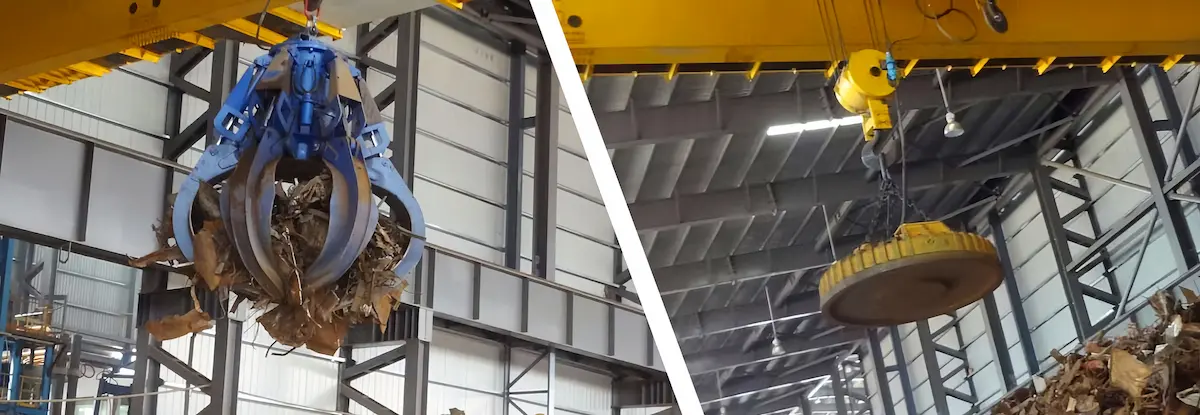
How Is a Grab Crane Used for Scrap Handling?
If your scrapyard contains dirt, non-ferrous metals, or weirdly shaped car shells, electromagnets are picky. You must rely on grab cranes with mechanical bites to complete scrap handling.
Working Principle of Grabs
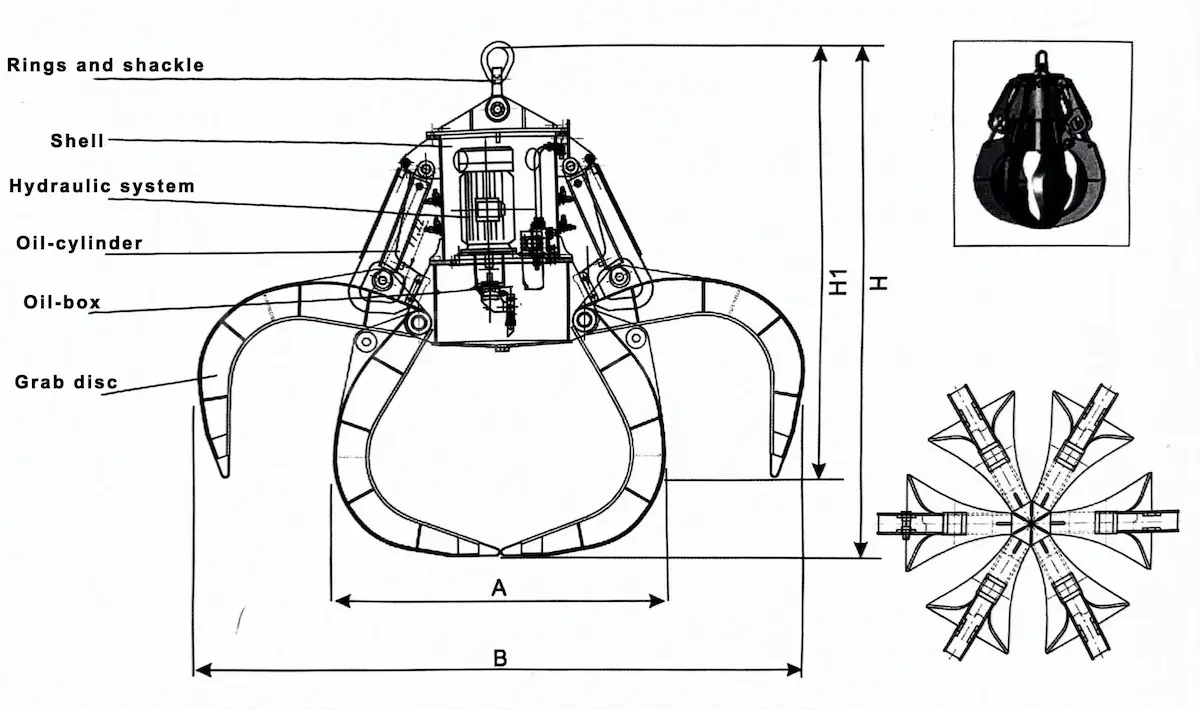
Grab cranes do not rely on physical material properties. Instead, they rely entirely on pure mechanical external forces. Operators control mechanical reels or hydraulic pump stations on the crane. This opens multiple jaws of the orange peel grab and inserts them into scrap. The jaws are then forcibly closed to wrap materials tightly for lifting and handling.
Which Types of Scrap Are Suitable for Grabs?
The core advantage of grabs in scrap handling is strong inclusivity. They are ideal for materials that electromagnets cannot attract or hold securely.
|
Scrap Type |
Suitability Analysis |
| Large Scrap Blocks / Scrapped Car Bodies | They are bulky and hollow, making effective magnetic circuits difficult. The grab’s strong jaws directly penetrate and lock materials. |
| Irregularly Shaped Scrap | Regardless of distortion, multi-jaw grabs automatically adjust closing angles to bite tightly. |
| Mixed Scrap Materials | Grabs handle old appliances or industrial waste mixed with plastic and wood entirely. There is no need to sort pure iron. |
| Non-Magnetic / Non-Ferrous Materials | For non-magnetic metals like stainless steel or aluminum, grabs are the only automatic lifting solution. |

Main Advantages of the Grab Solution
When facing complex scrap handling conditions, grabs show extremely strong field adaptability:
●Ignoring Material Magnetism Completely: It grabs iron, copper, aluminum, or mixed garbage within capacity limits.
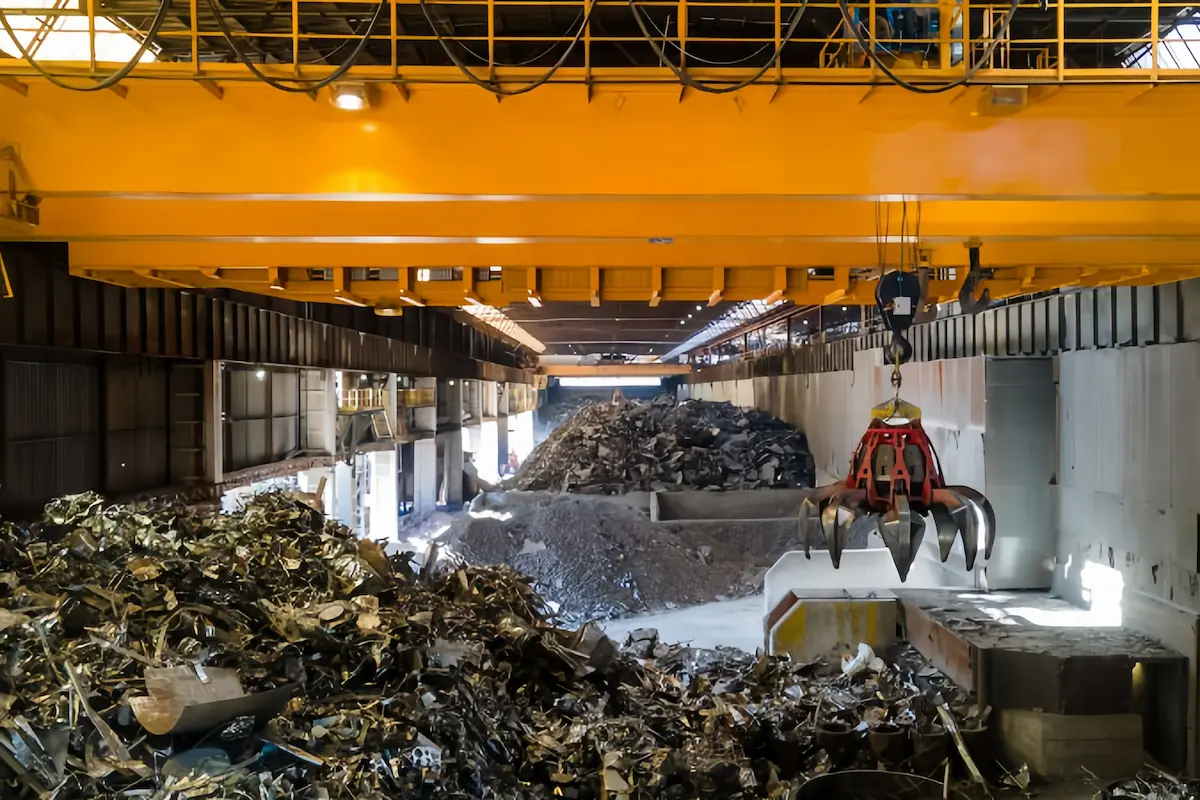
●Strong Terrain and Material Adaptability: Orange peel grabs offer excellent penetration and digging in deep pits or huge piles.
●Solving Special Material Problems: It is ideal for feeding domestic scrap or light materials before baling.
●Large Single Grab Capacity: Large multi-jaw grabs handle tons of fluffy scrap at once. It clears large carriages very quickly.
Electromagnets or Grabs for Scrap Handling? Core Comparison
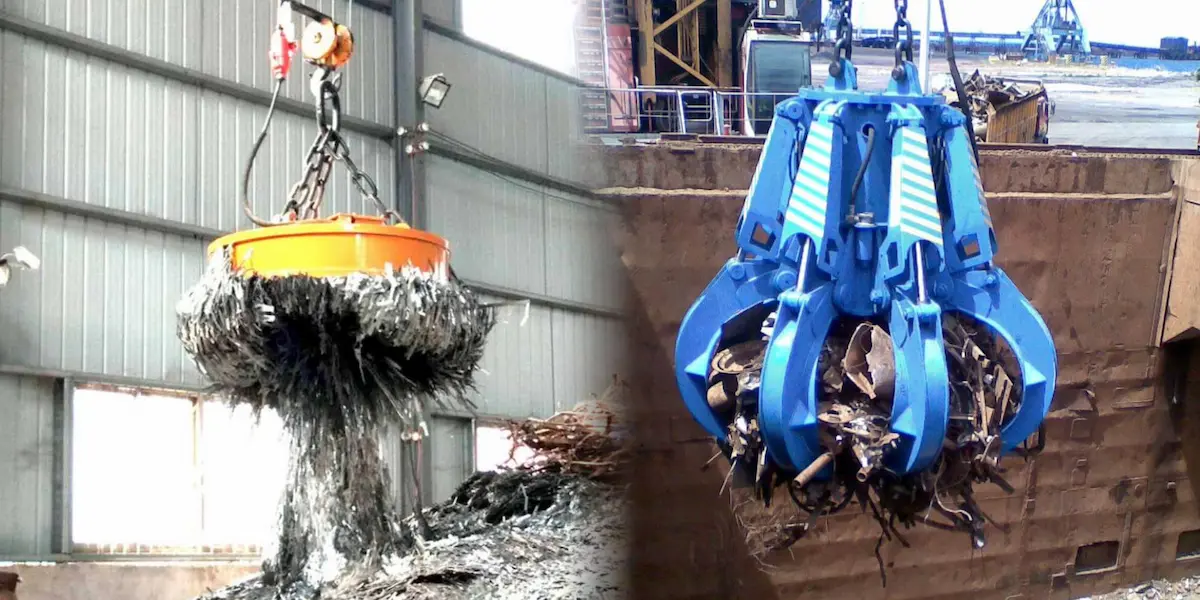
In actual scrap handling operations, equipment selection is never simply black and white. It requires balancing efficiency, material characteristics, and maintenance costs. To help calculate these operational costs intuitively, we compare the core hard metrics directly. Choose by directly referencing your scrapyard’s actual conditions:
|
Comparison Item |
Electromagnet Solution |
Grab Solution |
| Working Method | Magnetic attraction, lifting when powered and unloading when unpowered. | Mechanical grabbing, no forced jaw closure required. |
| Material Magnetism Requirement | Good magnetism is strictly required. | No such requirement, depending on material volume. |
| Lifting Speed | Generally faster with no mechanical action delays. | It depends on grabbing conditions and digging depth. |
| Bulk Scrap Handling | Suitable, offering great site cleaning effects. | Suitable, offering large single grab volumes. |
| Mixed Scrap (with impurities) | Limited, non-magnetic materials are left behind. | More suitable, grabbing everything indiscriminately. |
| Non-Magnetic Materials (Aluminum/Stainless Steel) | Not suitable. | Can be processed. |
| Automated Operation | Easier to achieve via electronic controls. | Achievable, requiring hydraulic or mechanical control coordination. |
| High-Frequency Loading Adaptability | Advantages are extremely obvious. | Applicable. |
| Daily Maintenance Focus | Electromagnetic system, power cables, and chuck insulation. | Grab body structure, wire ropes, and opening mechanisms. |
How to Choose for Different Scrap Applications?
Discussing selection without real working conditions is meaningless. Even for scrap handling, needs differ vastly between large mills and scrapyards. Here are five typical scenario selection suggestions based on delivery experience:
●Steel Mill Scrap Yards: Electromagnets are the absolute main force. The scrap throughput here is huge and mostly pure steel. Large electromagnets enable fast handling of massive materials. This maximizes high-frequency operation efficiency.
●Scrap Recycling Centers: Mix flexibly based on the impurity ratio. Incoming scrapyard materials are usually highly mixed. If pure steel dominates, choose electromagnets. If the site has mixed waste like appliances or plastics, consider orange peel grabs. They save you headache-inducing preliminary sorting work.
●Steel Production Lines (Inside Workshops): Prioritize electromagnetic solutions. Scrap here is usually cut regular steel and plate offcuts. These materials have excellent magnetism, allowing electromagnets to hold firmly. They also integrate easily into workshop PLC automation for unmanned operations.
●Scrap Loading and Unloading: Consider vehicles, sites, and frequencies. Scrap handling here depends on materials, vehicle types, and site layouts. For high frequency and precise distribution, rotating beam electromagnets are preferred. For digging fluffy mixed materials from deep carriages, grabs offer more digging power.
●High-Temperature Scrap Environments: Beware of thermal demagnetization traps. Steel mills process high-temperature waste straight from furnaces. Conventional spreaders easily fail here. Customize high-temperature electromagnets based on specific scrap temperatures. Match higher crane working classes (like A7/A8) to ensure continuous safety.
Product Advantages of HSCRANE Scrap Handling Cranes
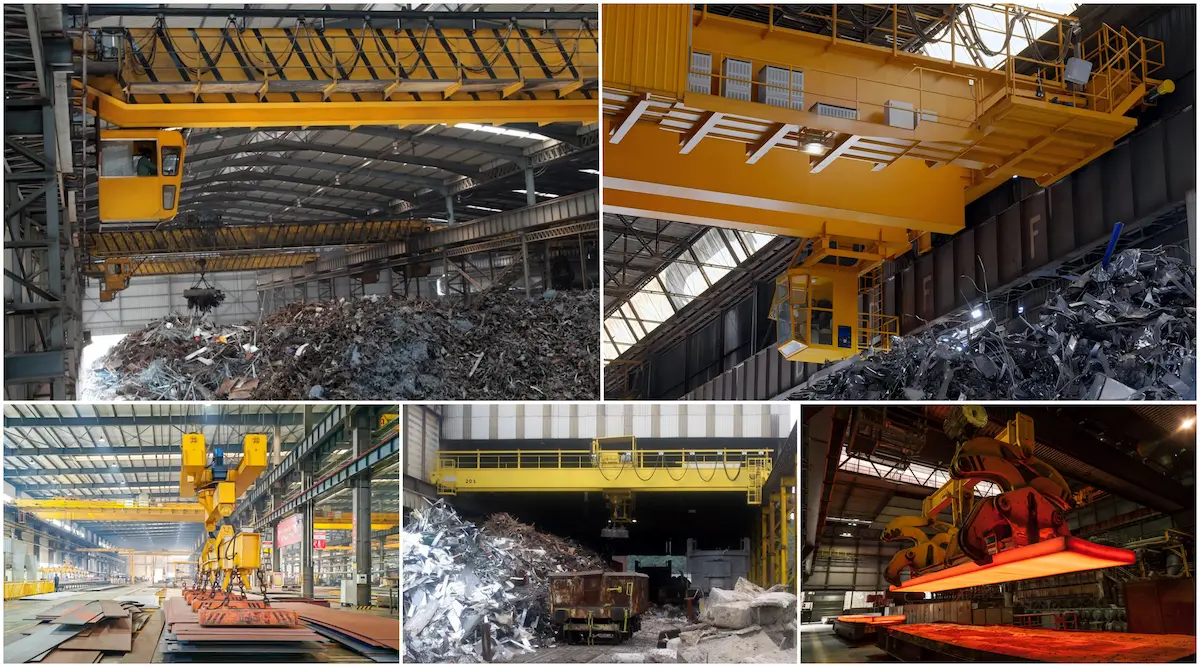
Scrap workshops never house fragile equipment. High dust, high impact, and 24-hour continuous operations demand truly durable equipment. When designing scrap handling systems, HSCRANE avoids just assembling parameters. We embed top international crane standards strictly into every manufacturing detail.
●Hardcore Configuration for Scrap Conditions: We understand the high-frequency nature of scrap handling. Equipment working classes strictly follow ISO 4301-1:2016 as A7 or A8. This means core transmission parts maintain long lifespans under full-load conditions.
●Structural Genes of Safe and Durable Design: Bridge fatigue life calculations directly meet EN 15011:2011+A1:2014 safety requirements. We thickened main girder webs and specially reinforced stress areas. This completely prevents structural cracking from high-frequency scrap handling impacts.
●Stable Hoisting and Traveling Systems: Mechanism selection strictly follows FEM 1.001 standard groupings. Hoisting mechanisms reach the M8 level. The entire crane uses VFD. This suppresses spreader sway effectively and makes precise scrap placement smoother.
●Efficient Electromagnetic Chuck Configuration: Deep-penetration electromagnetic chucks are standard. They include safety-compliant power-loss magnet retention systems. This prevents scattered scrap falling accidents during sudden power outages.
●Flexible Structures and Custom Services: Whether facing low indoor headroom or large spans, our engineers measure on-site. We provide comprehensive customized scrap handling solutions. These include span, lifting height, and quick spreader switching options.
Classic HSCRANE Scrap Crane Case: BSRM Steel Group
Customer Information:
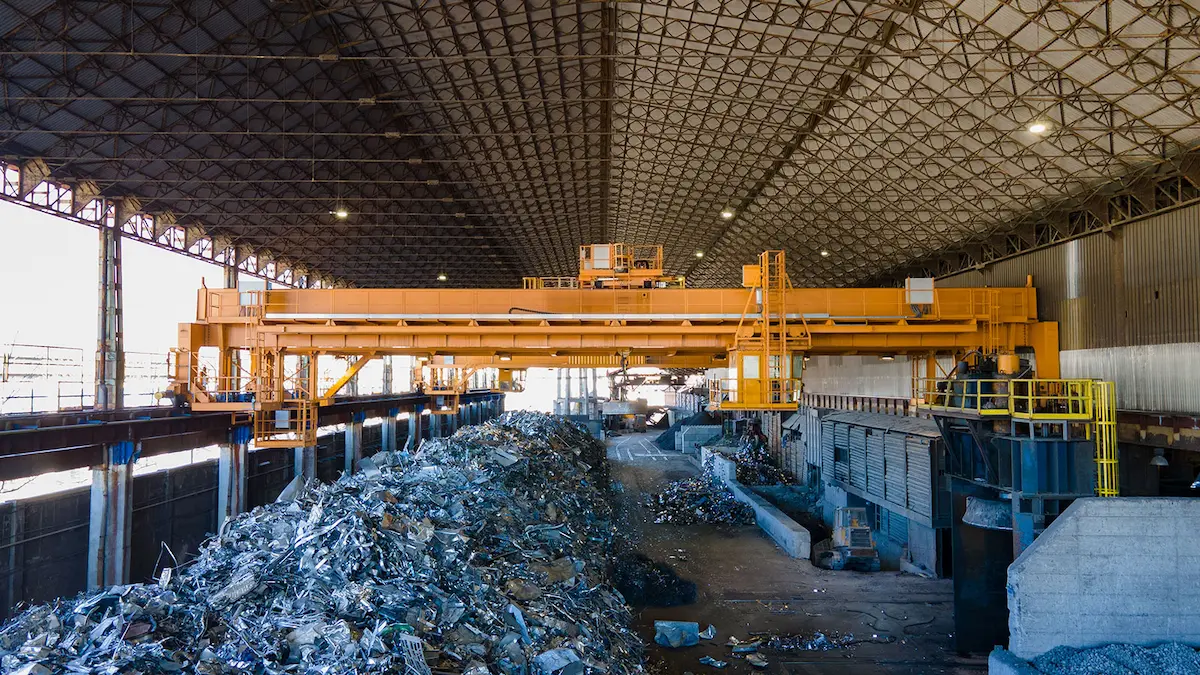
●Customer Name: BSRM Bangladesh (A top local steelmaker).
●Project Type: Scrap handling for EAF steelmaking workshops.
●Delivery Quantity: Two 25+25t double-girder electromagnetic overhead cranes.
●Core Parameters: Span 28.5m, lifting height 16m, working class A8.
Project Background: BSRM is expanding its production line. The new scrapyard provides continuous feeding for electric arc furnaces. High temperatures and extreme dust caused frequent old equipment failures. This severely slowed down scrap proportioning rhythms.
Customer Needs: The customer proposed three strict requirements. It must adapt to 24-hour continuous, high-frequency scrap handling. Electrical systems must withstand 55℃ dusty environments. Single lifting volumes must be large to reduce crane trips.
HSCRANE Solution: We customized two extra-heavy (A8) double-girder electromagnetic cranes. For dust and heat, we equipped electrical rooms with industrial ACs. We upgraded all motor protection classes above IP55. Spreaders use large rectangular electromagnets for mixed scrap handling.
Project Delivery and Testing: The project took 85 days from design to shipment. After on-site assembly, our engineers performed strict overload tests. These included 125% static and 110% dynamic load tests. All deflection indicators exceeded industry standards.
Customer Usage Effect: These cranes have served continuously for 18 months. The plant reported a 32% overall scrap feeding efficiency increase. The main mechanisms and steel structures achieved zero failures. This greatly alleviated scrap bay logistics bottlenecks.
Conclusion
There is no perfect lifter in the scrap handling industry. Only solutions fitting site conditions exist. Electromagnets offer fast handling for daily piles of pure steel scrap. They maximize efficiency significantly. Durable orange peel grabs handle complex mixed waste easily. They save manual sorting labor for mixed materials.
Wrong equipment causes loss beyond initial purchasing costs. It drags down production rhythms and increases maintenance fees daily.
Do not let unsuitable lifters bottleneck your capacity.
Unsure about equipment tonnage for your yard? Struggling to choose between electromagnets and grabs? Share your site conditions with us! Click below to speak with HSCRANE solution engineers directly. We provide free customized plans, including selection and rail layouts.
[Click here to get a free customized scrap handling plan]
Further Reading:
After scrap handling and smelting, finished steel handling begins. High-temperature billets and finished coils differ in physical forms. Clamping forces and surface protection requirements vary greatly. Do not ruin expensive steel with improper spreaders. Click below to understand differences between these core spreaders:
[Billet Spreader vs. Coil Spreader: Key Differences and How to Choose the Right One]
Scrap Handling Frequently Asked Questions (FAQ)
Q: Can one crane switch between electromagnets and grabs for scrap handling?
A: Yes. We offer dual-purpose solutions for scrap handling sites. Quick connectors and electrical switching systems enable fast changes. Operators attach electromagnetic chucks for loose iron. They switch to electro-hydraulic grabs for mixed waste. Experienced operators complete the process within fifteen minutes easily.
Q: How do you prevent accidents if power fails during scrap handling with magnets?
A: Safety is essential in scrap handling. HSCRANE electromagnetic cranes include mandatory power-loss retention systems. When outages occur, the system switches to backup batteries seamlessly. It maintains magnetic force for 15 to 30 minutes. This provides drivers time to lower scrap steel safely.
Q: Can we mount electromagnets on standard hook cranes for scrap handling?
A: It works for emergencies, but long-term use is discouraged. Scrap handling requires heavy duty cycles like A6-A8. Standard hook cranes are designed for medium frequencies. Magnet weight reduces effective lifting capacity significantly. Frequent impact reduces gearbox and girder structural lifespans rapidly. Buying dedicated scrap handling cranes is more cost-effective long term.
Q: Do electromagnets and grabs lift equal amounts of scrap handling loads?
A: No, lift volumes vary significantly. Scrap density and shapes differ greatly across materials. Magnet capacity depends on scrap compactness. Grab capacity is limited by bucket volume and fluffiness. HSCRANE engineers evaluate scrap types and hourly throughput targets. This determines precise equipment configurations.
This document is for reference only. Specific operations must strictly comply with local laws and regulations and equipment manuals.