

Overview
Frequent workshop visitors may notice a change. Today’s electric hoist in factories differs greatly from past bulky equipment. In industrial lifting, the FEM standard electric hoist is rapidly replacing traditional wire rope ones. It is the top choice for modern cranes and smart production lines.
This is not a blind trend. These two devices have visible gaps in structural design and effective lifting height. They also differ in operating precision and later maintenance costs. You cannot just look at the initial quote when buying lifting equipment. The hidden bills later are equally fatal. We will comprehensively compare technical parameters, performance, applications, and TCO. Using HSCRANE’s real cases, we will clarify your equipment selection. This helps spend your budget wisely.
Are you seeking a lifting solution with higher efficiency and lower maintenance costs?
Still wondering which equipment suits your workshop better? HSCRANE offers high-performance FEM standard electric hoist solutions. We also provide customized overhead crane solutions.
[Contact HSCRANE technicians for professional selection and project quotes]
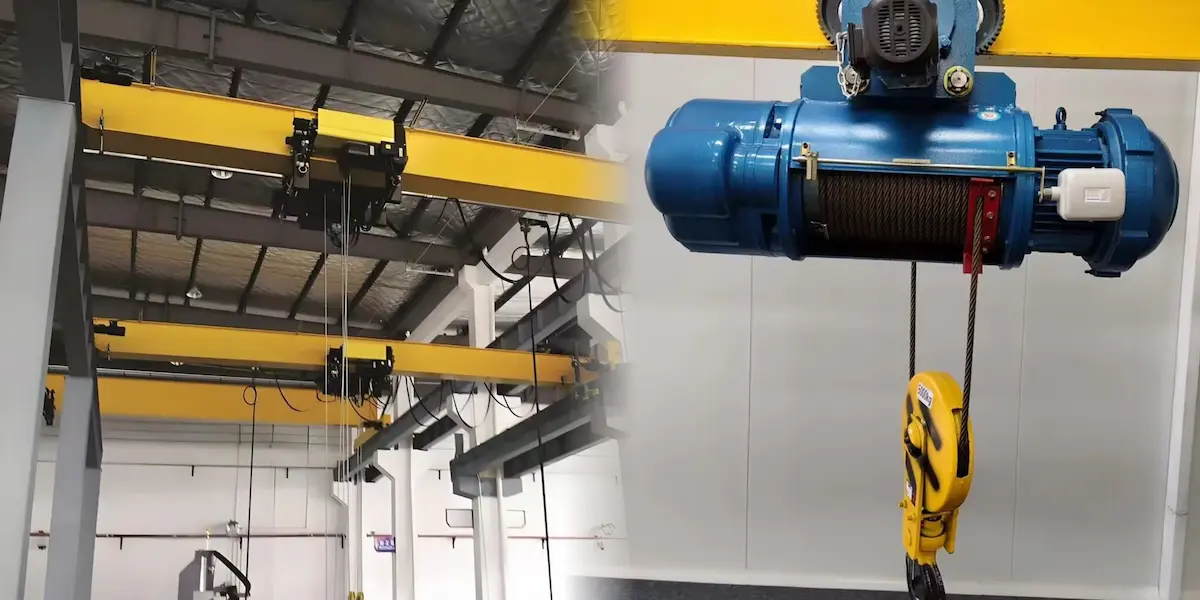
What are FEM standard electric hoist and traditional wire rope electric hoist?
Before discussing selection, we must understand the background of both devices. Many clients ask during consultation: “Is the European style just a gimmick?” Actually, two completely different industrial design logics lie behind this.
What is a FEM standard electric hoist?
In the crane industry, “European style” is not a simple geographical concept. It refers to lifting equipment strictly designed by FEM and DIN standards.
●FEM Standard Intro: The FEM standard is a globally recognized, highly demanding design code. Equipment born under this standard naturally has rigorous, efficient, and durable genes.
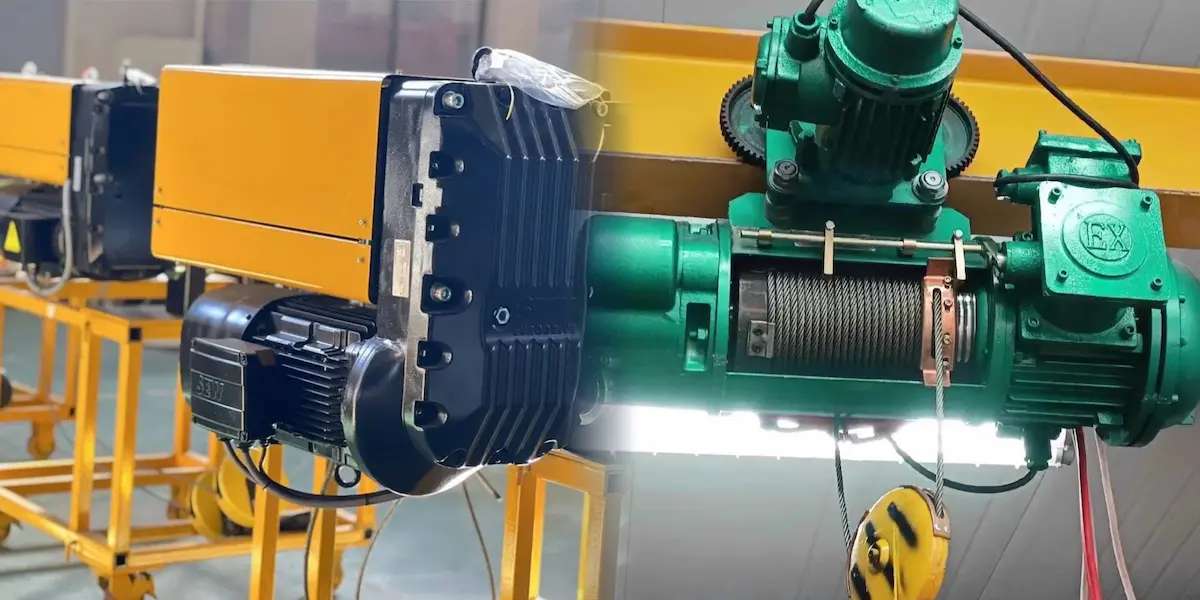
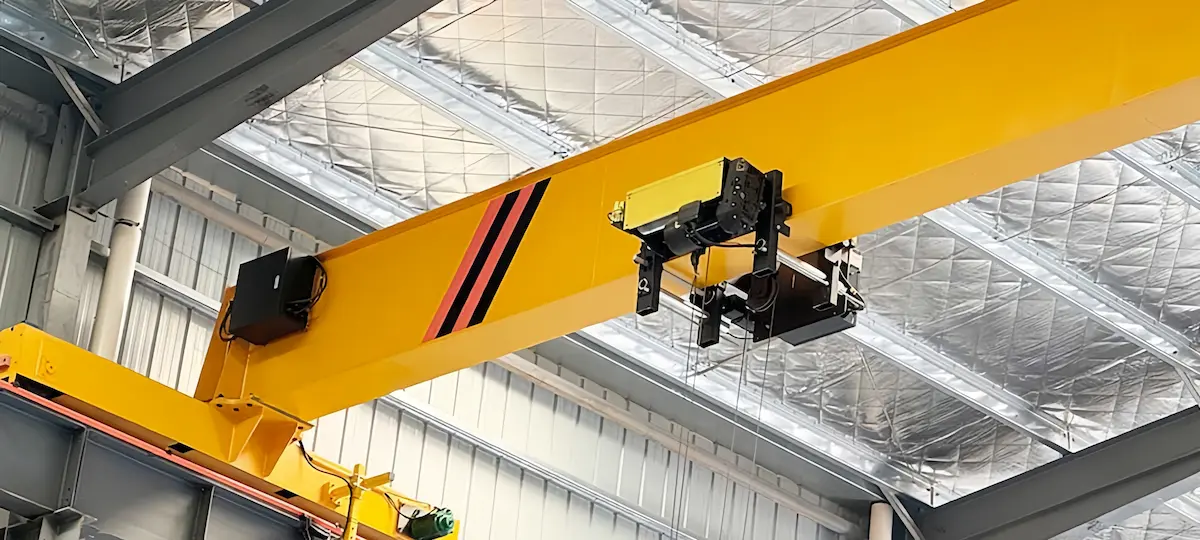
●European Design Concept: “Extreme utilization” best describes this design. It uses a modular design to compactly integrate the motor, reducer, and drum. It looks square and tiny, but hides great capabilities inside.
●Difference from Traditional Design: Traditional design favors large and heavy builds for capacity. However, the FEM standard electric hoist removes all excess dead weight. It does this through high-strength materials and precision machining. Simply put, European equipment is like a lean track athlete. It has no extra fat, showing strong explosiveness and endurance.
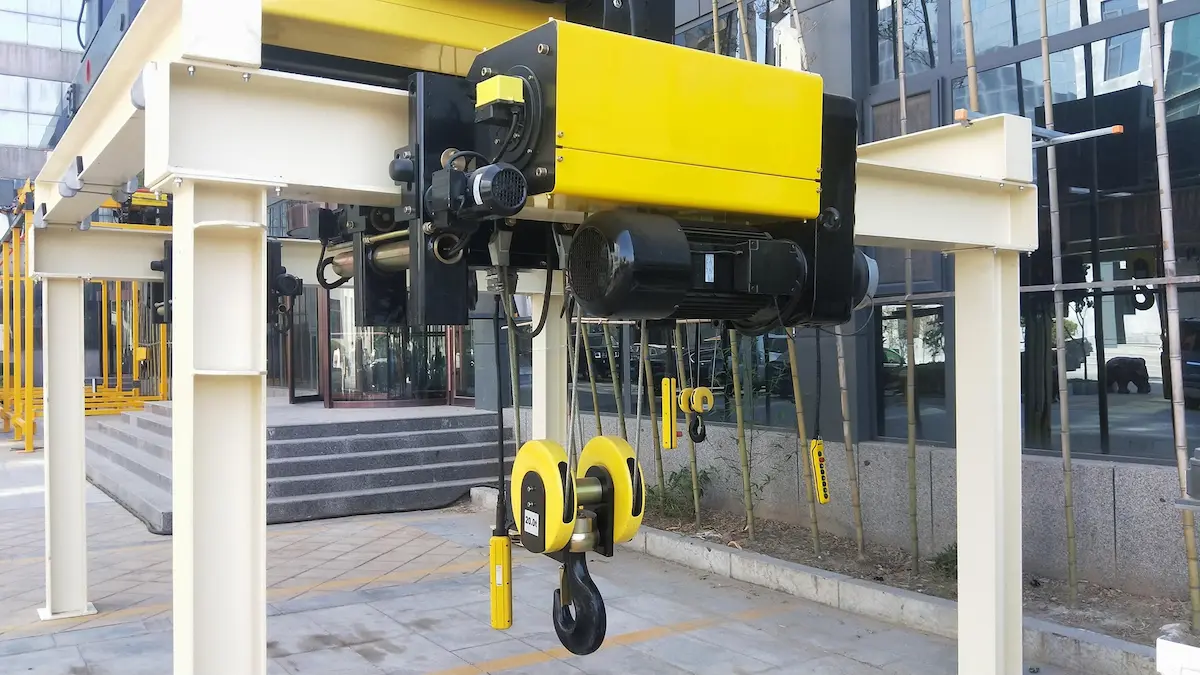
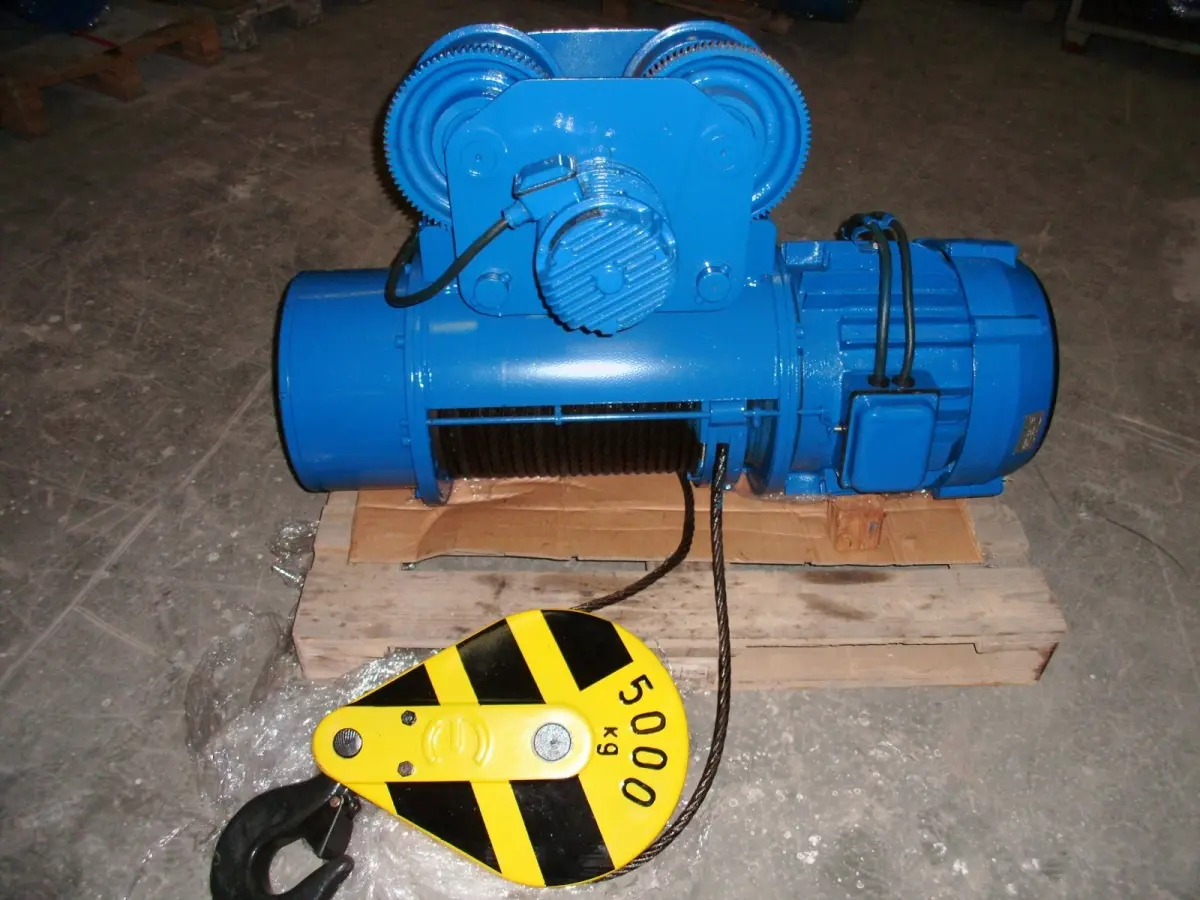
What is a traditional wire rope electric hoist?
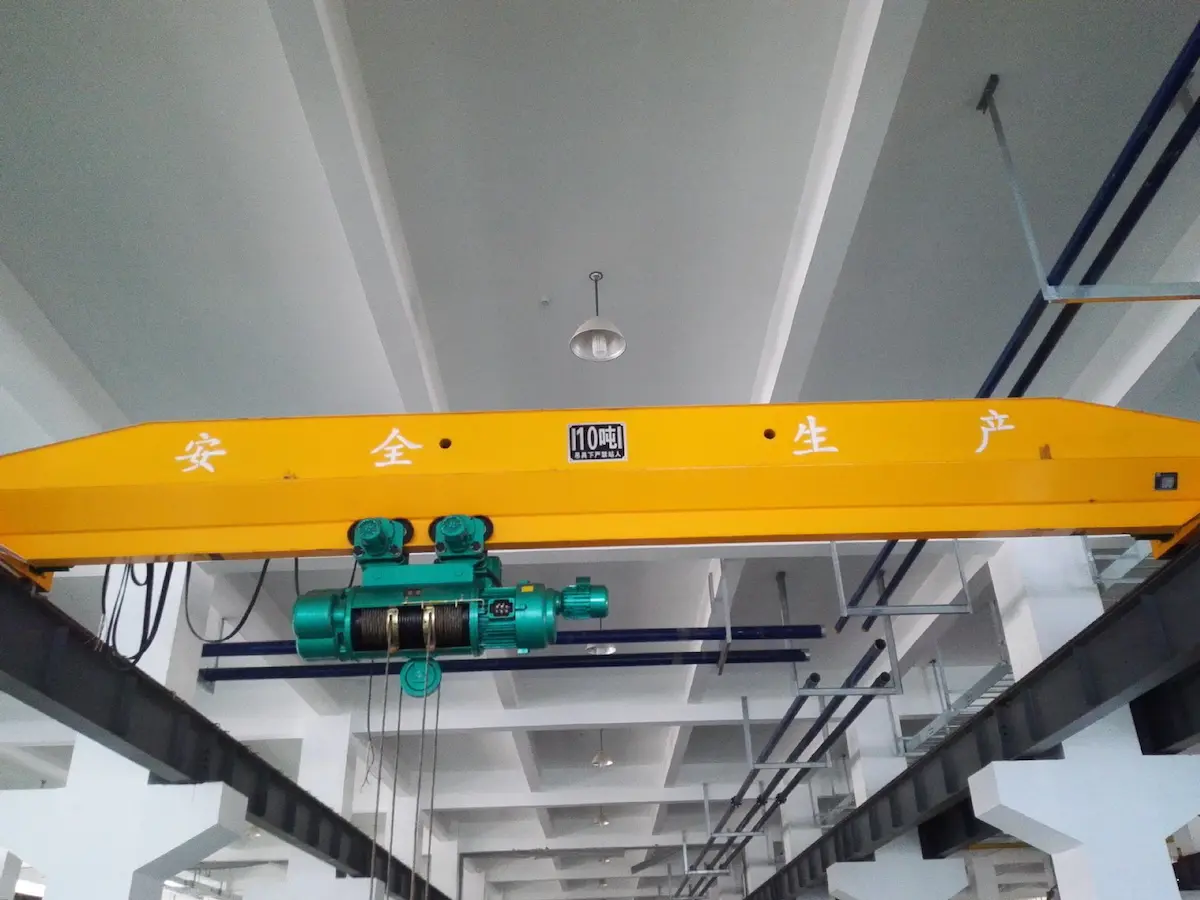
If you visit older domestic factories, you will definitely see them above. They have a classic cylindrical look, usually painted green or blue. CD1/MD1 types are the most common in the market.
●Traditional Structure Features: They usually adopt a tandem layout. This includes the motor, drum, and reducer. The motor is on one end, and the reducer is on the other. The drum sits right in the middle. This structure is simple but results in huge volume and heavy weight.
●Common Applications: Relying on early reputation, these devices are still widely used. They are found in old workshops with low precision and space needs. This includes general machining, building materials, and mines.
●Market Status: The biggest advantage of traditional hoists is cheap initial procurement. They still have a market for rare lifts and tight budgets. However, modern factory costs are soaring rapidly today. Enterprises demand higher automation and production efficiency. Thus, traditional equipment is gradually being marginalized.
What are the differences between FEM standard electric hoist and traditional wire rope electric hoist?
We often hear clients complain about insufficient new factory height. “Once installed, the traditional hook cannot reach the needed height.” Or, “Cargo sways heavily before stopping.” We directly compared core indicators below. This decides your decade-long operating efficiency:
|
Comparison Dimension |
FEM standard electric hoist |
Traditional wire rope electric hoist |
| Structural Design | Modular and compact. Light weight reduces factory load. | Tandem and huge. Heavy weight demands stronger beams. |
| Lifting Height (Headroom) | Low headroom design. It compresses hook-to-beam distance, adding 1-1.5m height. This saves factory construction costs. | Large upper space occupied. Factories must be built higher. |
| Operating Performance | Standard variable frequency. Smooth lifting with zero swaying. Precise millimeter positioning. | Single or double speed. Heavy loads sway heavily, needing manual wait. |
| Safety Performance | Intelligent monitoring. Overload protection and limits prevent troubles. Optional data recorder available. | Basic mechanical protection. Relies on operator experience to avoid accidents. |
| Energy Performance | High efficiency and energy-saving. Uses efficient motor and precise gears. Saves 30% energy. | Higher energy consumption. Average motor efficiency and large transmission loss. |
| Maintenance | Almost maintenance-free. Galvanized wire rope rarely breaks. Disc brake automatically compensates without manual adjustment. | Frequent maintenance. Needs regular greasing. Brake pads require frequent manual adjustments. |
| Service Life | Extremely long life. High M5/M6 design standards. Reducers offer 10-year maintenance-free operation. | Many vulnerable parts. High replacement frequency causes high maintenance downtime. |
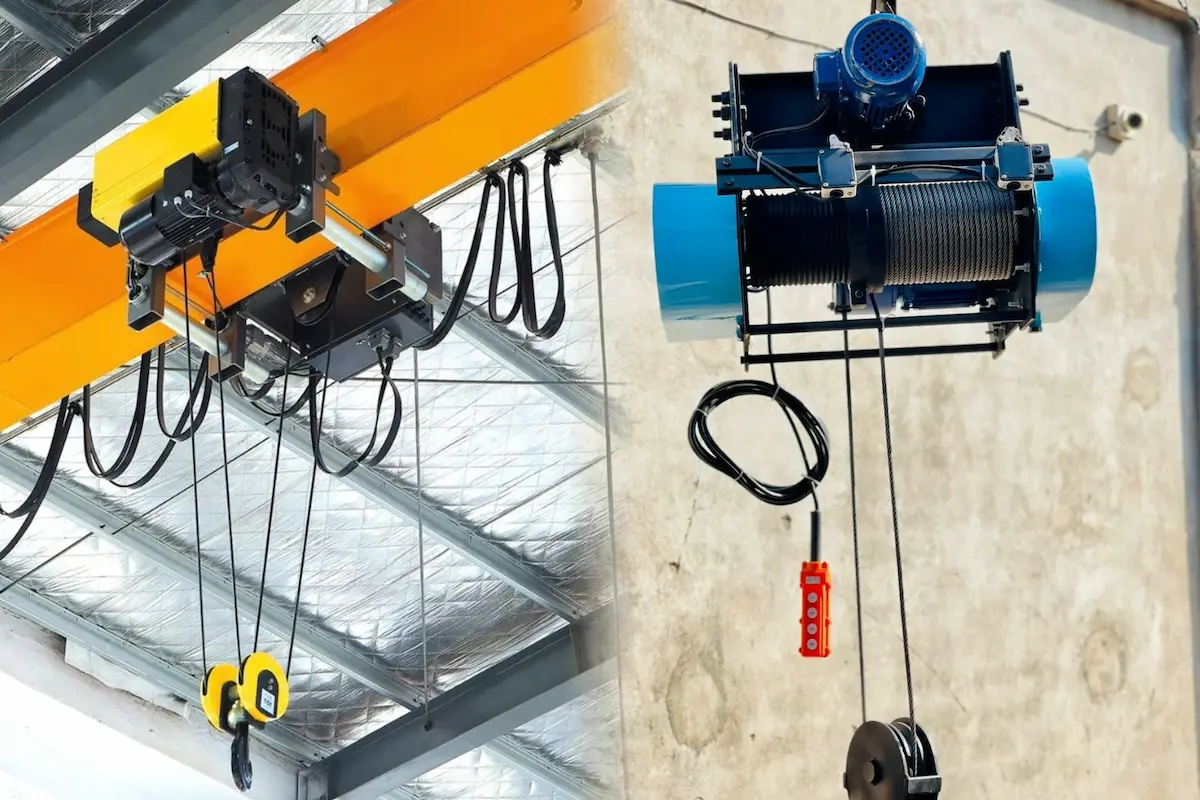
Pros and cons of FEM standard electric hoist
Pros:
If you visit newly built modern factories, almost all use the FEM standard electric hoist. Its advantage is not just looking good. It can practically solve pain points in production:
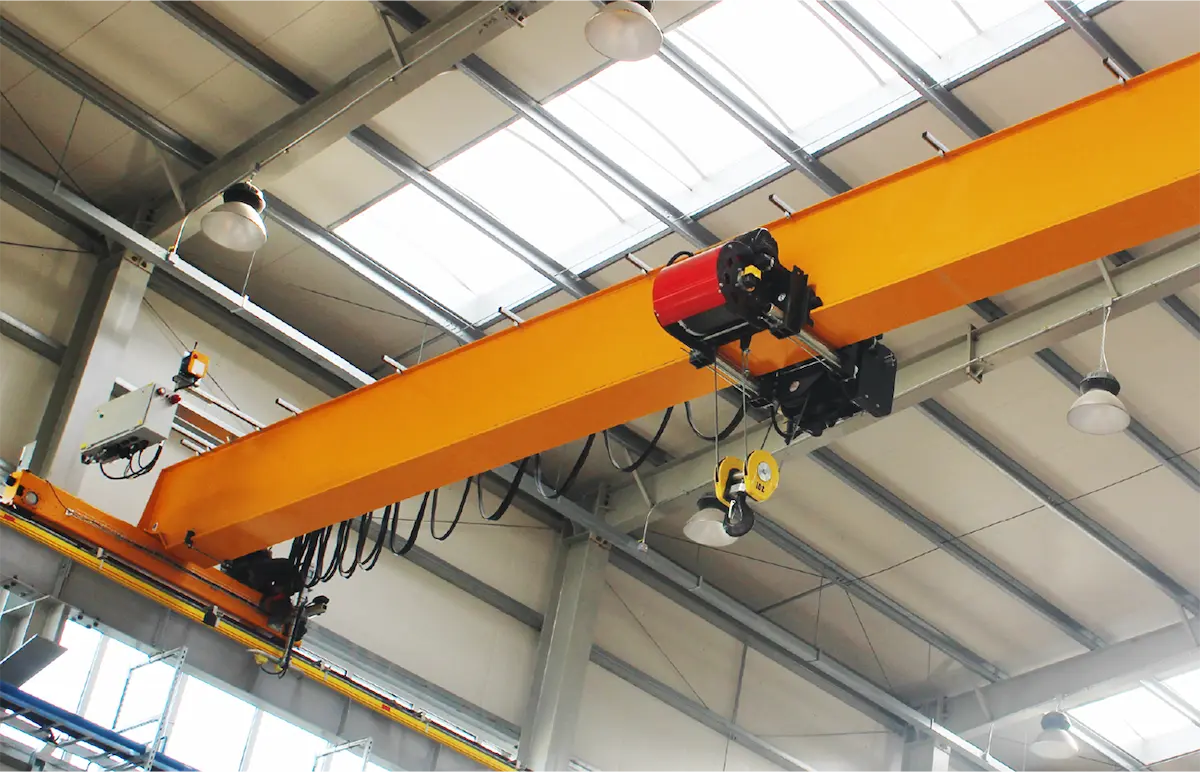
●More compact structure: Modular design says goodbye to bulky shapes. It has light weight and small wheel pressure. This saves costs for the factory’s load-bearing steel structure.
●Higher working efficiency: The running speed is fast and stable. It perfectly suits high-frequency, fast-paced assembly line work.
●Lower headroom: This is what many clients value most! The hook can infinitely approach the main beam. You can lift higher under the same factory height. Or you can build a lower roof for new factories. The saved construction cost far exceeds an electric hoist.
●More precise positioning: Standard variable frequency control is included. Lifting lacks scary sudden rushes and heavy load swaying. Mold closing and precision equipment assembly are done smoothly.
●Lower maintenance costs: Many core parts like gearboxes are maintenance-free for life. The wire rope is also extremely wear-resistant. This saves the trouble of keeping many maintenance workers.
●Longer service life: It easily reaches high M5 or M6 working classes. Its durability far exceeds traditional equipment.
●Better for smart manufacturing: It reserves abundant electrical interfaces. It easily connects to unmanned factories and PLC control systems.
Cons:
●Higher initial procurement cost: Buying it indeed feels a bit painful. It is much more expensive than traditional equipment. This blocks some small enterprises with extremely tight budgets.
●Higher installation requirements: It belongs to precision equipment. You cannot just find a welder to assemble it. Professional teams must debug the inverter and limits.
Pros and cons of traditional wire rope electric hoist
Pros:
Although the trend is the FEM standard electric hoist, old CD/MD electric hoists remain. They still have a huge market share. Its survival logic is very simple:
●Lower cost: This is the biggest ultimate weapon. It has an absolutely cheap cabbage price. It suits limited funds or occasional equipment lifting conditions.
●Rich maintenance resources: Domestic streets are full of masters who fix this. They can even disassemble the electric hoist with their eyes closed.
●High parts universality: Even in a remote town’s electromechanical market. You can always buy its contactors and rope guides.
Cons:
●Heavier dead weight: The equipment is heavy. Factory steel beams must be thickened accordingly. This indirectly increases infrastructure costs.
●Lower headroom utilization: There is a huge blind spot above the hook. For the same lifting height, factories must be taller. They need an extra one or two meters.
●Higher energy consumption and noise: The transmission efficiency is quite low. You can hear the gears roaring from afar.
●Increased later maintenance cost: Rope guides easily break. Brake pads need frequent adjustment, and wires break easily. Although parts are cheap, downtime causes production stagnation losses. Bosses often fail to calculate this loss.
Unsure which electric hoist suits your working conditions?
Buying expensive is a waste, buying cheap means daily repairs. HSCRANE’s senior engineers can customize lifting solutions one-on-one. They base this on your capacity, span, and height. They also consider duty class and real usage frequency. We provide the most cost-effective lifting solutions.
[Contact us now to get a free technical proposal!]
How to choose the right electric hoist for different conditions?
Discussing selection without actual working conditions is irresponsible. We summarized this matching selection guide for you. It is based on HSCRANE’s frontline service experience:
|
Application Conditions |
Recommended Type |
Core Selection Reasons |
| Manufacturing factory | FEM standard | Factory space is precious. Its low headroom advantage is obvious. Variable frequency lifting better protects molds. |
| Auto production line | FEM standard | The pace is extremely fast. It needs precise positioning and low failure rates. High duty class variable frequency equipment is required. |
| Logistics center | FEM standard | It involves high-frequency continuous operations. It runs fast with low energy consumption. It saves electricity and maintenance fees long-term. |
| Steel industry | Custom metallurgy electric hoist | Harsh environment with high temperature and dust. Durable metallurgy-specific electric hoists are recommended. Or choose heavy anti-corrosion customization. |
| Power industry | Traditional or FEM standard | Occasional lifting during maintenance. Usage frequency is extremely low. Choose traditional if on a budget. Choose FEM standard for maintenance-free features. |
| Ports and terminals | FEM standard | It must handle high salt spray and humidity. It offers good sealing and high anti-corrosion grades. Longer life is guaranteed. |
| Precision equipment | FEM standard | Zero micro-movement must be achieved. Double speed or stepless frequency meets needs. It allows millimeter-level impact-free precise assembly. |
| Automated lines | FEM standard | Traditional equipment cannot connect with central control. It has standard smart interfaces. It is the only choice for unmanned workshops. |
What parameters to focus on when purchasing a FEM standard electric hoist?
Many buyers just say “quote a 5-ton electric hoist” when sending inquiries. To perfectly match equipment to your workshop without wasting money. You must confirm these hardcore parameters during purchasing communication:
1.Lifting capacity: Do not just calculate your daily cargo weight. Consider rigging weight and possible future added loads. Leave a 20% safety margin appropriately.
2.Lifting height: What is the clearance from beam bottom to ground? Do you need to reach down into pits? This directly decides drum length and wire rope meters.
3.Duty class: This is the most easily deceptive parameter! Costs completely differ for 2 hours versus 20 hours daily. You must decide based on real usage frequency. Buying cheap low-class ruins motors later.
4.Lifting and traveling speed: Need single, double, or stepless variable frequency? For precision assembly, you must use variable frequency. Slow speed is imperceptible, while fast speed ensures efficiency.
5.Power voltage: Pay special attention to overseas projects! Is it 380V 50Hz or 440V 60Hz? Do some even need single-phase power? Please confirm this in advance.
6.Working environment: Is it indoors or outdoors? Are there corrosive gases or heavy dust? This determines protection grades and motor insulation classes.
7.Control method: Pendant control, wireless remote, or centralized control room access later?
8.Safety protection configuration: Do you need anti-sway functions besides basic limiters? Do you need a safety black box for data? Higher configurations keep workers safer.
Total Cost of Ownership (TCO) Analysis
Many buyers and bosses are attracted by low initial quotes of traditional equipment. But industrial equipment is never a one-time deal. Its real cost lies in the next ten years. We introduce the common TCO model to check real costs:
●Initial procurement cost: One FEM standard electric hoist equals two or three traditional ones. The traditional electric hoist wins this round. But this only accounts for 15% of total lifecycle costs.
●Energy cost: Lifting equipment consumes much factory power. The FEM standard electric hoist widely uses efficient motors and reducers. Transmission efficiency exceeds 95%. Traditional hoists have huge transmission losses. Over time, European equipment saves considerable annual electricity.
●Parts replacement cost: Traditional equipment wears out quickly after 1-2 years. Frequent vulnerable parts purchase is normal. The FEM standard electric hoist has 10-year maintenance-free core parts. Galvanized wire ropes last 3-5 times longer.
●Maintenance cost: Traditional equipment failures need two repairmen climbing. It wastes labor and causes safety risks. Maintenance-free designs directly cut most daily maintenance labor costs.
●Downtime loss: Bosses easily ignore this cost. One hour of main crane downtime causes huge production losses. This far exceeds the price difference of premium hoists. The FEM standard electric hoist firmly protects production paces.
●Service life cost: Traditional hoists under high frequency need early overhauls. The FEM standard electric hoist lasts over 10 years. Spreading the purchase cost annually makes it cheaper.
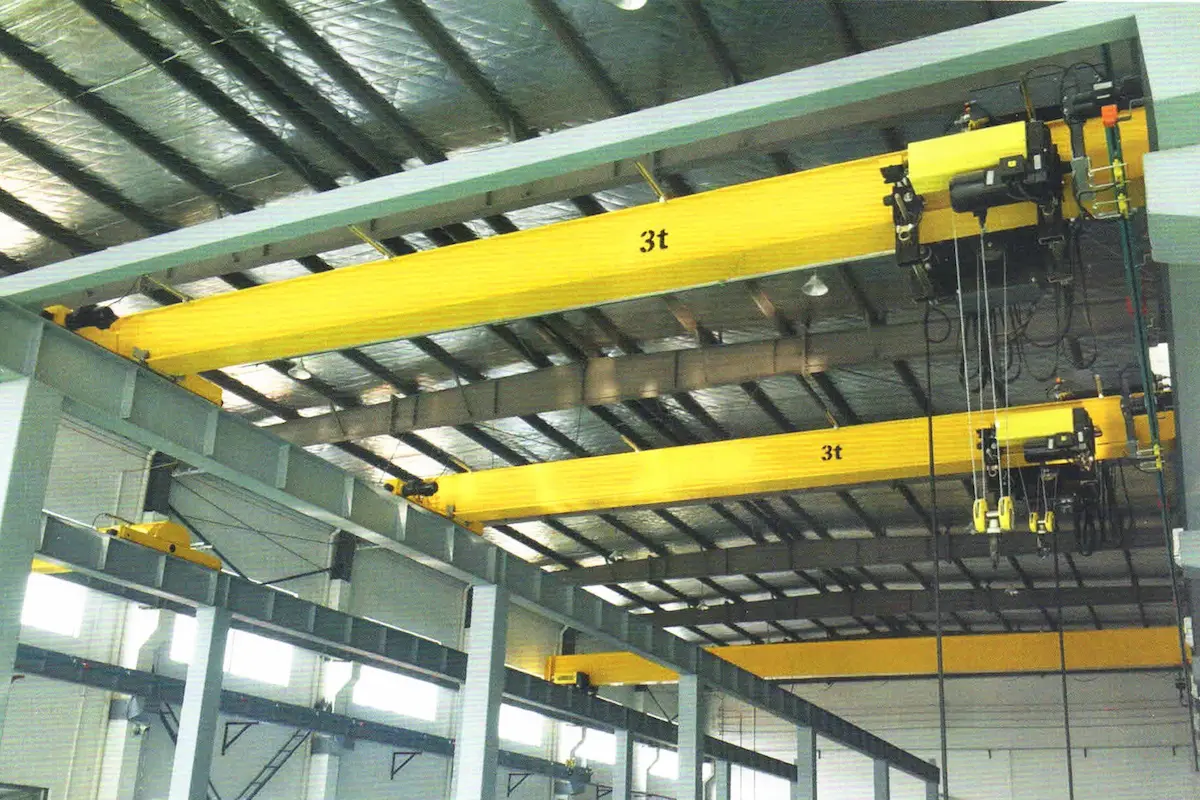
Why do more enterprises choose HSCRANE FEM standard electric hoist?
Clients are increasingly knowledgeable nowadays. A mere “European shell” cannot fool people anymore. HSCRANE entered many top enterprises’ supply chains. This relies on real hard strength matching international basic norms. We reject word games. Every equipment withstands strict scrutiny:
●True FEM/ISO design: Our structure strictly executes FEM 1.001 design codes. Crane classification fully complies with ISO 4301-1:2016 standards. This completely relies on high European heavy industry standards. It is definitely not a fake replica model.
●High-quality core parts: Systems strictly follow EN 14492-2:2006 terms. We use imported or top domestic hard-tooth reducers. Gear precision reaches ISO 6 grade. Premium inverters achieve zero-micro-movement stepless speed regulation.
●Smart safety system prevents trouble: Say goodbye to simple mechanical limits. We include four-level safety protection standards. Optional safety black boxes record real-time operating data. It issues active warnings before equipment dangers occur.
●Extreme compactness and eco-friendliness: C-type design compresses limit dimensions. The hook blind spot shrinks by about 30%. Efficient motors and lightweight drums reduce noise heavily. Full load noise stays under 75 decibels for green workshops.
●Global response network: Selling equipment is just the start. HSCRANE has a mature global spare parts storage network. Whether in Southeast Asia, Middle East, or South America. We provide modular parts to solve downtime within 48 hours.
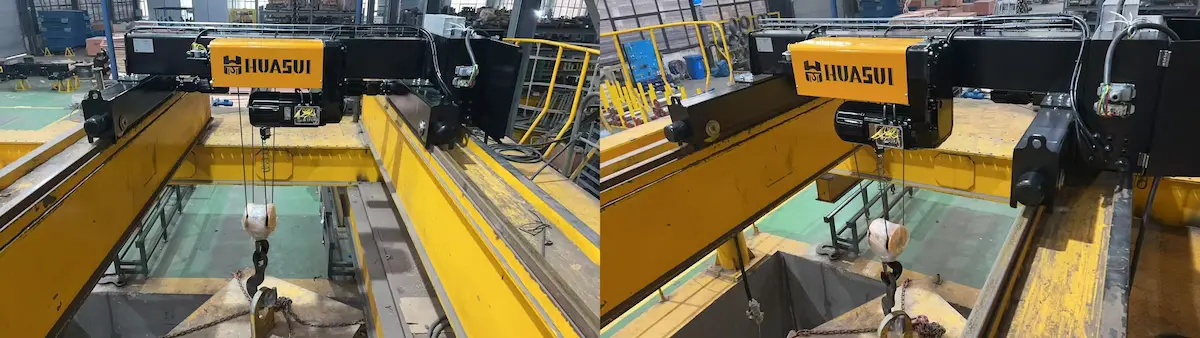
HSCRANE Classic Cases
Beautiful parameters are less convincing than actual battles. Below are our real delivery records in recent years. Data is traceable.
Case 1: FEM standard electric hoist project in a Mexican auto parts factory
●Client Background: A global Tier-1 auto parts supplier in Nuevo León, Mexico. They supply parts for Tesla and Ford.
●Project Type and Quantity: Purchased and installed 18 units of HSCRANE equipment. These included 5t/10t FEM standard low-headroom electric hoists and single-girder cranes.
●Client Pain Points: The old factory renovation faced original building structure limits. The workshop clearance was only 6.5 meters. New large stamping molds required a hook lifting height over 5.2 meters. Impact tolerances during mold placement had to reach millimeter levels.
●HSCRANE Solution: Adopted the FEM series electric hoist with extreme low-headroom design. We cleverly hid the electric hoist body beside the main beam. This maximized upper space utilization. All units featured Schneider closed-loop frequency control systems.
●Implementation Effects and Benefits: Successfully gained 1.2 meters of lifting height in extreme space. This avoided huge infrastructure renovation costs from rebuilding roofs. The equipment maintained zero overhauls for three years. Micro-speed positioning increased mold replacement efficiency by 40%. This directly boosted single-shift capacity.
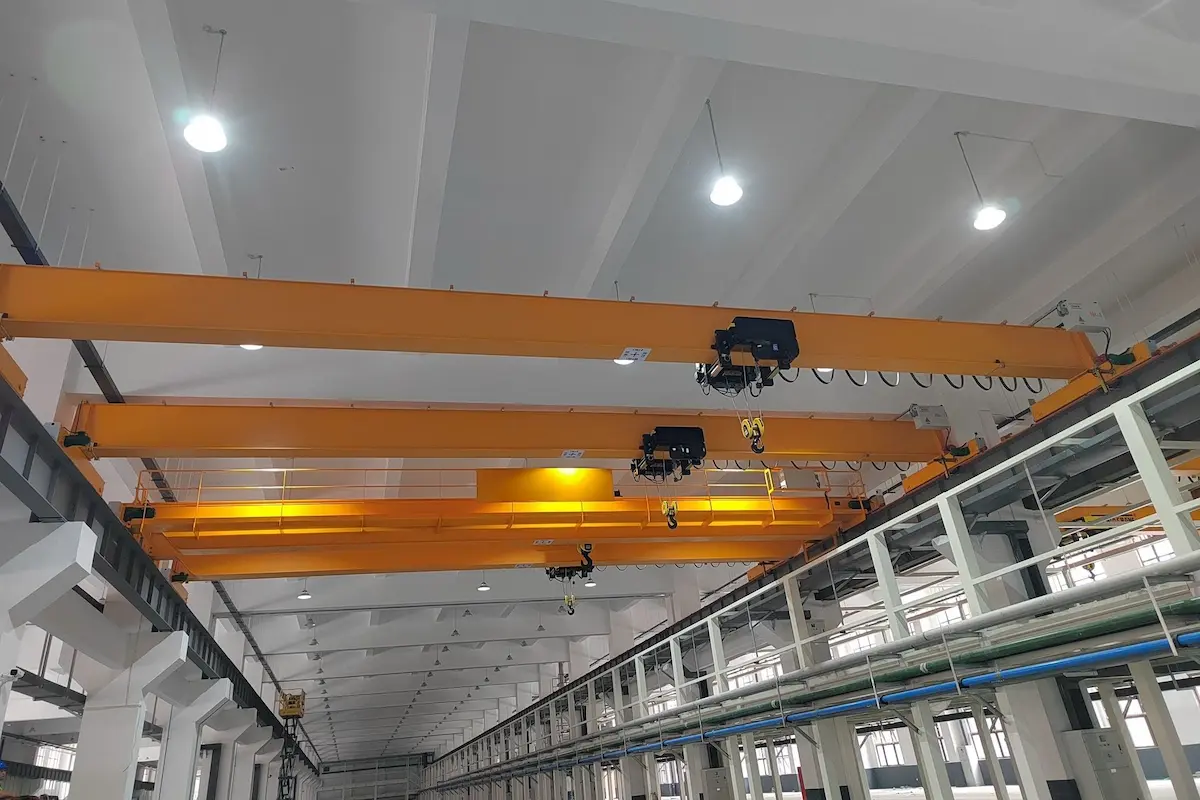
Case 2: Smart warehousing logistics hub project in Warsaw, Poland
●Client Background: The Warsaw distribution center of a top European cross-border logistics provider.
●Project Type and Quantity: Custom delivery of 12 double-rail trolley FEM standard electric hoists. They had a 10t capacity and high M6 duty class.
●Client Pain Points: A typical non-stop working condition for machines. During major sales events, equipment runs 24 hours continuously. It operates at full load in three shifts. Under continuous high-frequency jogging, traditional motors easily overheat and burn. Traditional brake pads also wear out extremely fast.
●HSCRANE Solution: Selected a special lifting motor with a 60% ED duty cycle. Added a forced air-cooling module. Adopted disc electromagnetic brakes with one million lifespans. This automatic clearance compensation eliminates tedious manual brake adjustments. Fully opened PLC interfaces to connect the client’s WMS system.
●Implementation Effects and Benefits: Completely cured overheating downtime caused by continuous operations. Utilized WMS scheduling optimization and inverter energy-saving feedback tech. Clients calculated an annual power saving of 3,200 kWh per unit. Extreme stability ensured clients avoided warehouse bursts during peak logistics seasons.
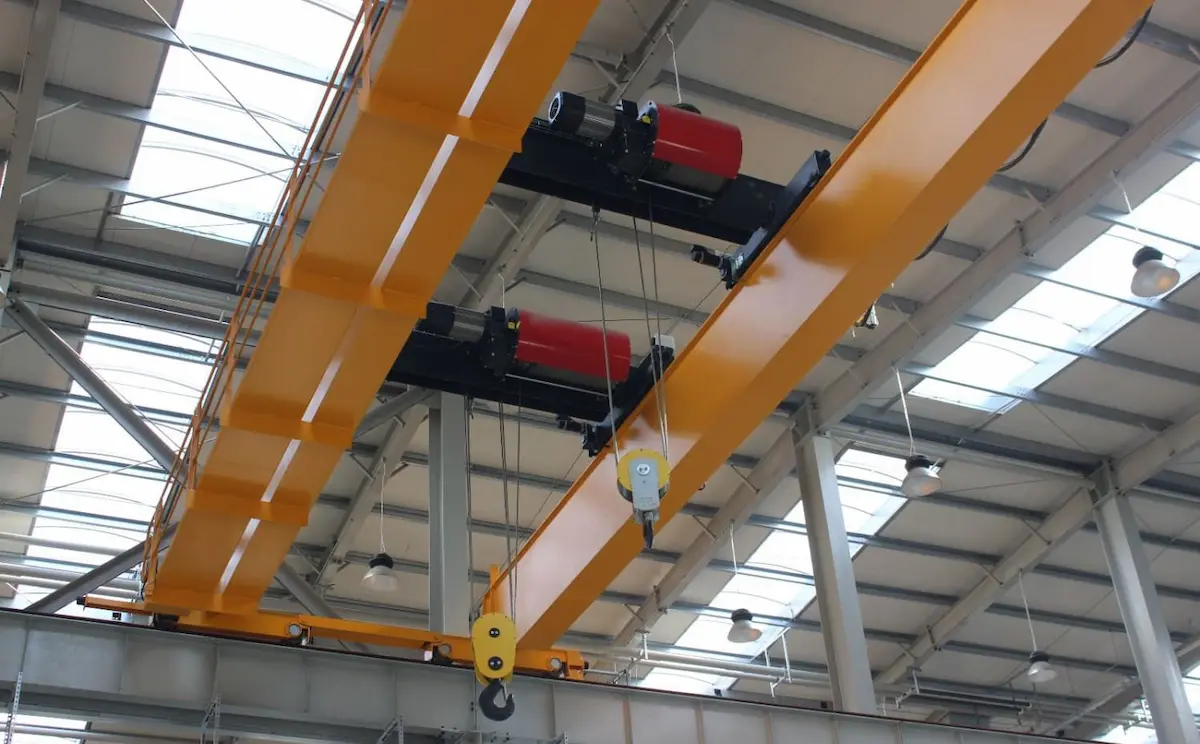
Conclusion
In the upgrade wave of industrial equipment, selection transcends simple price comparisons. Through the previous teardown, we draw a clear conclusion.
Old traditional hoists have low prices and suit rare usages. However, the FEM standard electric hoist answers modern factory needs. It lowers costs and boosts efficiency. It reduces factory infrastructure costs via low headroom designs. It slashes daily electricity bills through high energy efficiency. It nearly eliminates maintenance labor with maintenance-free core parts. It provides unmatched operating precision. This excellent TCO combination completely crushes initial low prices.
Cranes are the main arteries of workshop logistics. Frequent failures of inferior hoists paralyze entire assembly lines. This causes massive financial losses for enterprises. Investing in equipment reliability is always the safest bet.
Ready for a heavy-duty upgrade in your workshop?
Do not let old equipment become bottlenecks dragging down capacity. HSCRANE has over a decade of deep FEM standard experience. We offer turnkey projects from drawing design to global delivery. We cover new factory crane planning or old workshop overhauls.
[Contact HSCRANE senior engineers now] for custom solutions and quotes!
Next Step: How to determine your electric hoist duty class?
After selecting equipment types, duty class decides the procurement budget. Suppliers often lower duty classes to highlight price advantages. They sell occasional-use equipment to high-frequency lines. Unsure whether to use 1Am or 2m?
[Click for formulas: 《Electric Hoist Duty Class Selection Guide: How to Avoid Over-Specifying or Under-Specifying Your Hoist》]
FAQ
Q: People say the FEM standard electric hoist breaks easily. Are parts expensive?
A: This is a misunderstanding. A true FEM hoist uses high-strength materials. Its low failure rate beats traditional ones. Scarce parts happen when buying unbranded imports. HSCRANE uses modular designs and global warehouses. Common parts ship anytime at transparent prices.
Q: Can we replace old green CD/MD hoists on existing beams?
A: Yes, in most cases. FEM hoists have lighter dead weights. Original beams easily handle the load. We only need a few site dimensions. We customize conversion plans for cost-effective upgrades.
Q: Why does the 5-ton FEM hoist motor seem smaller?
A: It has high transmission efficiency. Traditional hoists suffer huge gear losses. They need big motors to pull hard. FEM hoists use hard-tooth gearboxes exceeding 95% efficiency. Every bit of power is fully utilized.
Q: Can European equipment survive heavy dust or corrosion?
A: It performs better. Traditional hoists only have IP44 protection. Dust easily causes short circuits. HSCRANE hoists start at IP55 protection. Motors reach IP66 with anti-corrosion coatings.
Q: How long is your usual delivery time?
A: Standard configurations like 3.2t, 5t, or 10t ship in 7-15 workdays. Complex custom equipment takes 30-45 days. We always confirm clear delivery times in our quotes.
This document is for reference only. Specific operations must strictly comply with local laws and regulations and equipment manuals.