

Overview
Crane wheels act as the “feet” of the entire equipment. In practice, crane wheels bear the machine’s dead weight. They also withstand huge vertical lifting loads and lateral impact forces. Choosing wrong wheels causes frequent rail gnawing and rapid wear. It can even cause derailment, highly increasing downtime costs and safety risks.
Clients often ask me during inquiries: “Are forged crane wheels always better than cast crane wheels?” Honestly, the construction machinery field has no absolute dominance. There is only the most suitable match. Forging and casting processes each have their own applications. Blindly praising one over the other is not advisable.
In this guide, I will share my years of practical project experience. I will break down these two types of wheels in detail. We will explore manufacturing processes, physical differences, life-cycle costs, and working conditions. This will help you truly understand how to pick the perfect crane wheels.
What are Forged Crane Wheels?
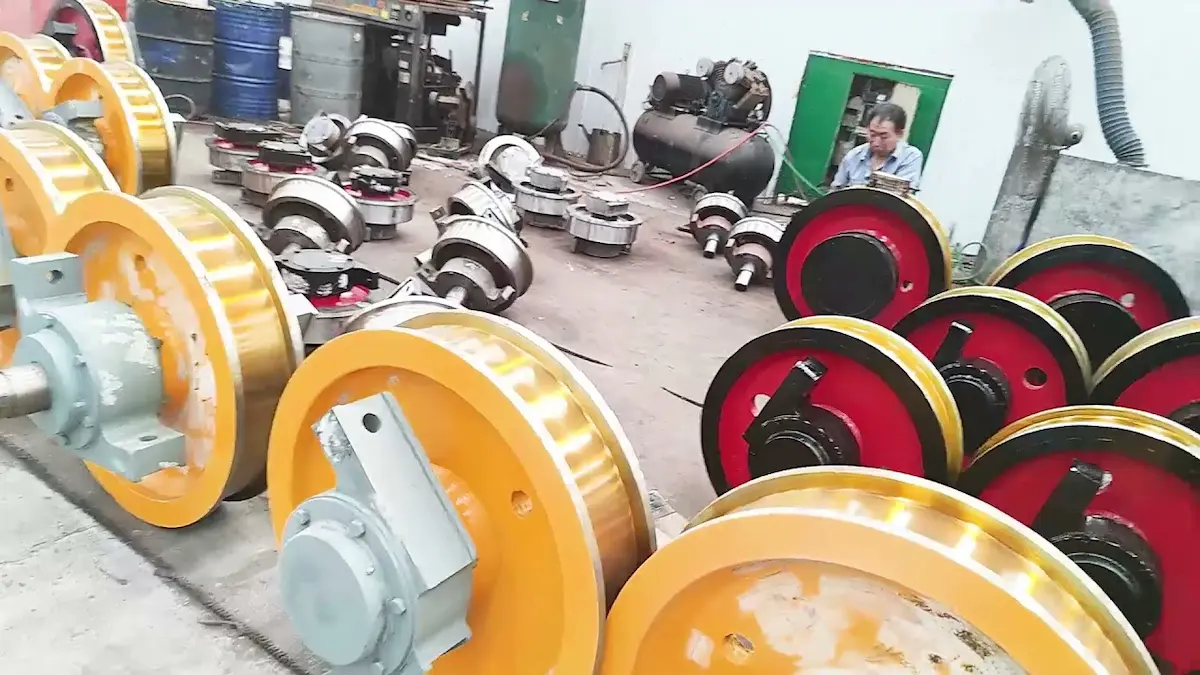
Simply put, forging is like continuous hammering in blacksmithing. It uses mechanical force to press and hammer metal in a plastic state. This alters the metal’s internal structure to finally create forged crane wheels.
Manufacturing Process of Forged Crane Wheels
Forged crane wheels are robust entirely due to this rigorous process. Qualified forged crane wheels usually go through the following five core steps:
1. Billet Heating: Cut raw materials based on material requirements. Heat them to an austenite state in a furnace over 1000℃. This softens the metal and makes it highly plastic.
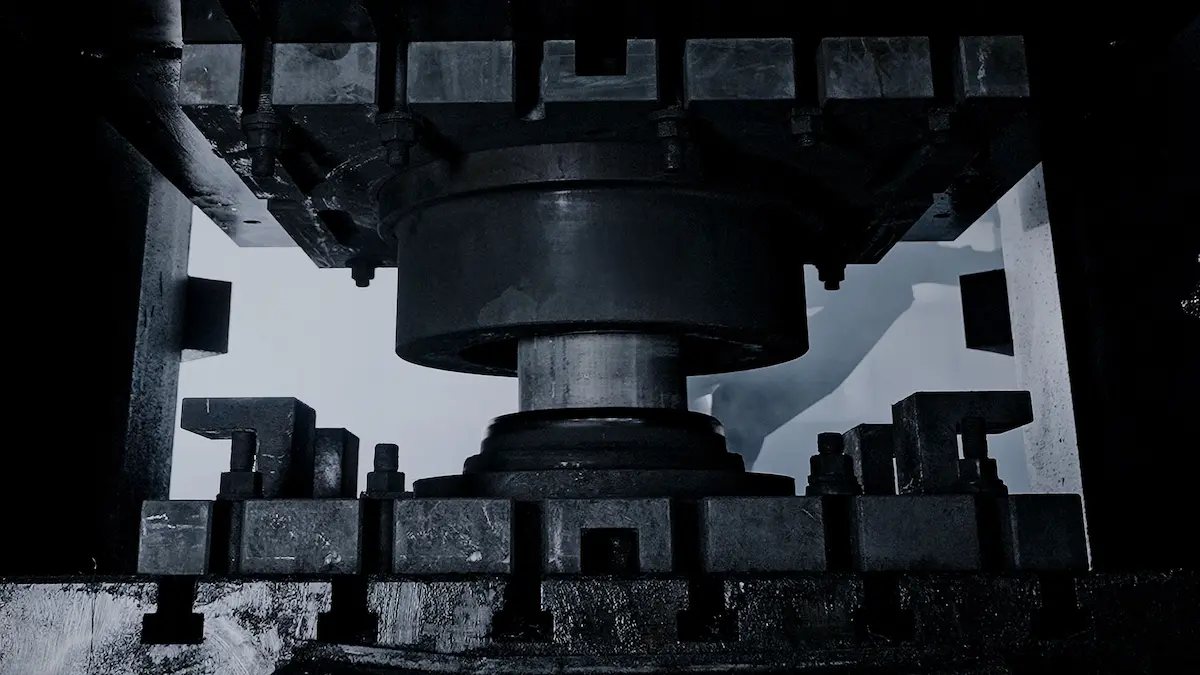
2. Forging: This is the most crucial step. Large hydraulic presses or hammers repeatedly upset and draw the red-hot billet. This forces the metal material to completely fill the mold. This process fully compacts all internal pores of the material.
3. Heat Treatment: The forged blank requires normalizing, quenching, and tempering. This eliminates forging stress. It pushes overall strength and tread hardness to the optimal design state.
4. Machining: Send the rough blank to CNC lathes and milling machines. Precisely cut flange dimensions, tread width, and bearing holes for installation accuracy.
5. Surface Treatment and Testing: Apply anti-rust primer coating. Conduct ultrasonic and magnetic testing to ensure no hidden cracks exist. Finally, accurately measure the hardness and tolerances.
Main Features of Forged Crane Wheels
Thanks to this intense extrusion forming method, forged crane wheels have excellent physical traits:
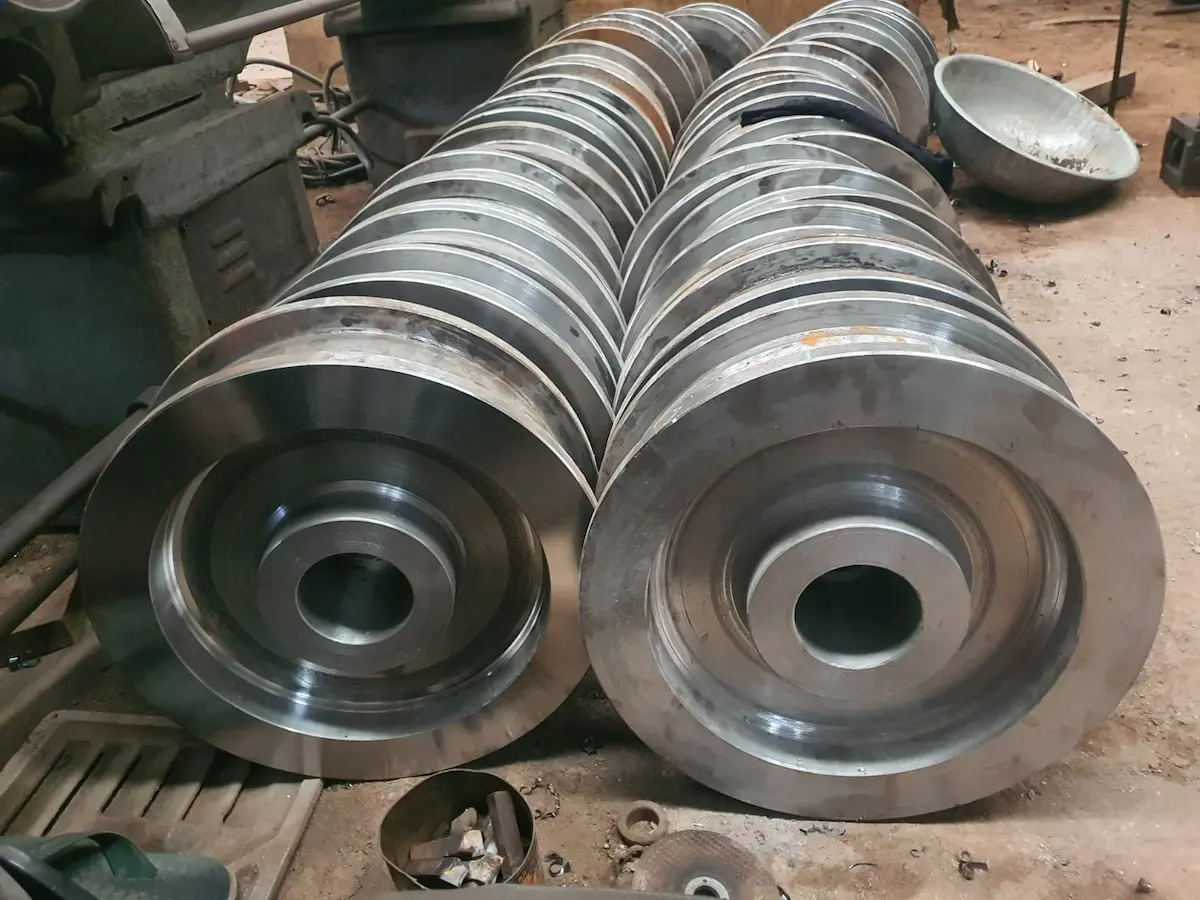
●Extremely Dense Internal Structure: Forging squeezes out original shrinkage and pores in the steel ingot. There are almost no gaps inside the material.
●High Strength and Toughness: Metal grains form continuous fibrous flow lines along the wheel shape. This makes it highly durable when bearing heavy pressure.
●Excellent Impact Resistance: It rarely suffers brittle fracture or chipping. This remains true on uneven rails or during sudden starts and stops.
●Perfect for High-Frequency Operation: Extremely high fatigue strength handles continuous three-shift operations effortlessly.
●Great Performance Customization: We can flexibly adjust steel grades and heat treatment depth. This is tailored specifically to your exact site working conditions.
Which Cranes Are Better Suited for Forged Crane Wheels?
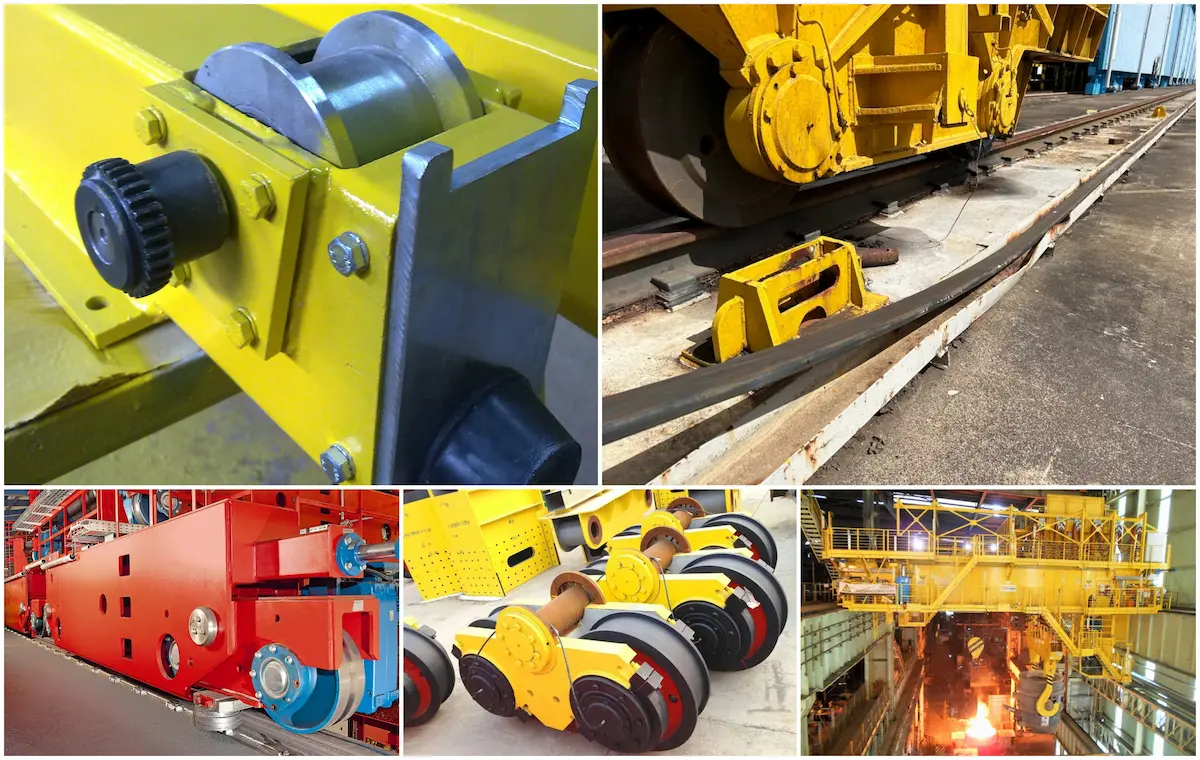
Since forged crane wheels perform so well, should all equipment use them? Not exactly, good steel should be used where it counts most. Here are the equipment and working conditions from our actual projects. In these scenarios, we strongly recommend using forged crane wheels. For a clearer view, I compiled the selection reference table below:
|
Applicable Cranes / Conditions |
Reasons for Choosing Forged Crane Wheels |
Typical Application Industries |
Common Working Duty |
Key Parameters for Selection |
| Overhead Cranes (Large Tonnage) | Large span and huge vertical loads. High bearing capacity of forged crane wheels prevents tread deformation. | Steel Smelting, Heavy Equipment Manufacturing | A5-A8 | Tread Hardness Gradient, Wheel Load |
| Gantry Cranes (Outdoor) | High wind loads and complex rail conditions. Strong lateral impact resistance is needed to prevent gnawing. | Ports, Railway Freight Yards, Shipyards | A5-A7 | Flange Thickness, Core Toughness |
| Heavy / Super-Heavy Cranes | Lifting massive loads demands extremely high material yield strength. Cast crane wheels have internal defect risks. Forgings are much safer. | Aerospace Assembly, Hydropower Station Rooms | A6-A7 | Flaw Detection Level, Material Yield Strength |
| High-Frequency Operating Cranes | Equipment runs 24 hours continuously. This heavily tests fatigue life and wear resistance of wheels. | Waste Power Plants, Scrap Steel Recycling | A7-A8 | Surface Wear Resistance, Heat Treatment Depth |
| High Temp / Dust / High Impact Environments | Harsh environments accelerate material aging and wear. Dense streamlined structures of forged metal offer longer stable service. | Steel Plant Casting Shops, Cement Plants | A6-A8 | High-Temp Material Adaptability, Special Alloys |
What are Cast Crane Wheels?
If forging is “blacksmithing”, casting is simply “pour-molding”. It heats steel until liquid. Then it pours metal into shape-matching molds, usually sand molds. After cooling and solidifying, workers clean out the wheel blank.
People often view cast parts as rough with easy air pores. However, modern cast steel technology improves quality greatly. With proper molten steel control, cast crane wheels work reliably in industry.
Manufacturing Process of Cast Crane Wheels
Reliable cast crane wheels go through key steps from scrap steel.
1. Metal Smelting: Melt steel in medium frequency or electric arc furnaces. Lab technicians sample the melt to adjust carbon, manganese, and silicon. This crucial step decides the chemical genetics of cast crane wheels.
2. Pouring: Pour molten steel with proper temperature into pre-made wheel molds smoothly.
3. Cooling and Sand Shakeout: Molten steel slowly cools and crystallizes inside the mold. Cooling speed requires strict control to prevent internal shrinkage cavities. After solidifying, break sand molds and extract wheel blanks with risers.
4. Heat Treatment: As-cast crane wheels have high internal stress and brittleness. Annealing, normalizing, and tempering eliminate stress and refine metal grains. This meets mechanical performance required by drawing specs.
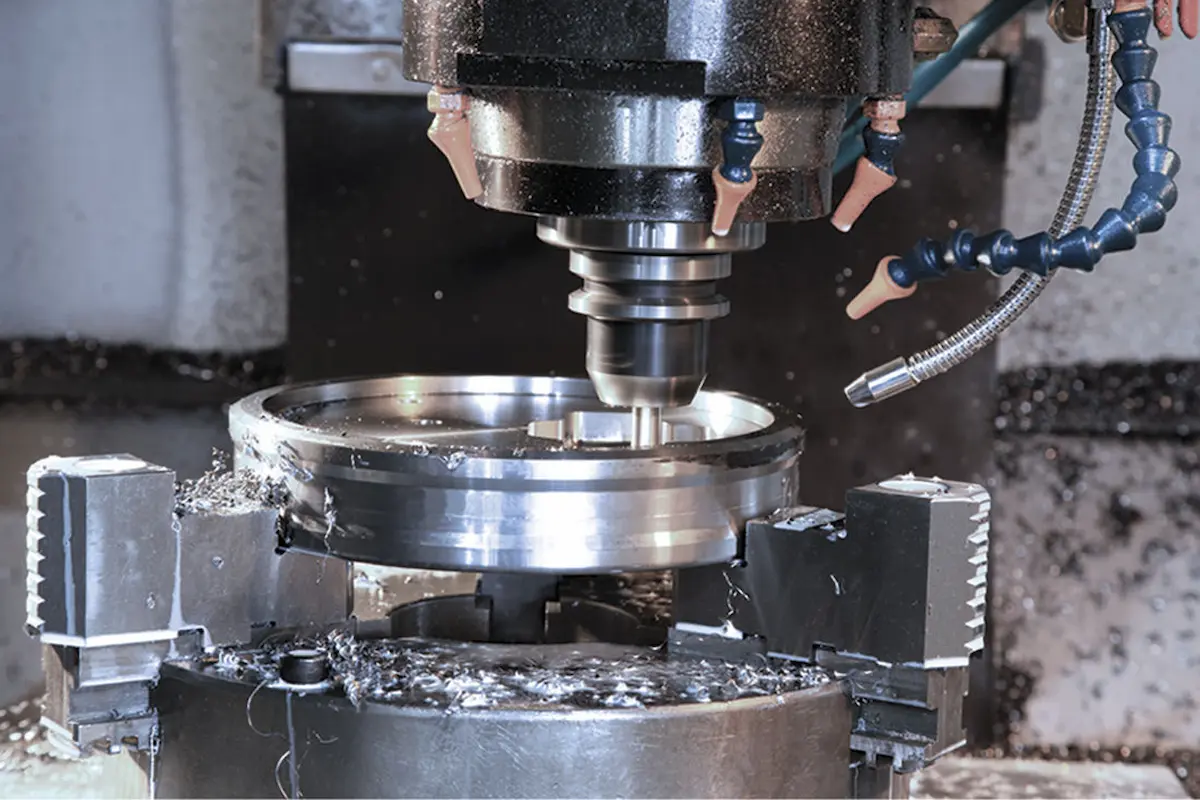
5. Machining and Inspection: Cut off extra risers and machine precision surfaces on lathes. Casting parts may contain invisible pinholes or sand holes inside. Strict flaw detection on flanges and treads is absolutely necessary.
Main Features of Cast Crane Wheels
Why use casting when forged crane wheels are so strong? Casting offers unique inherent advantages over forging:
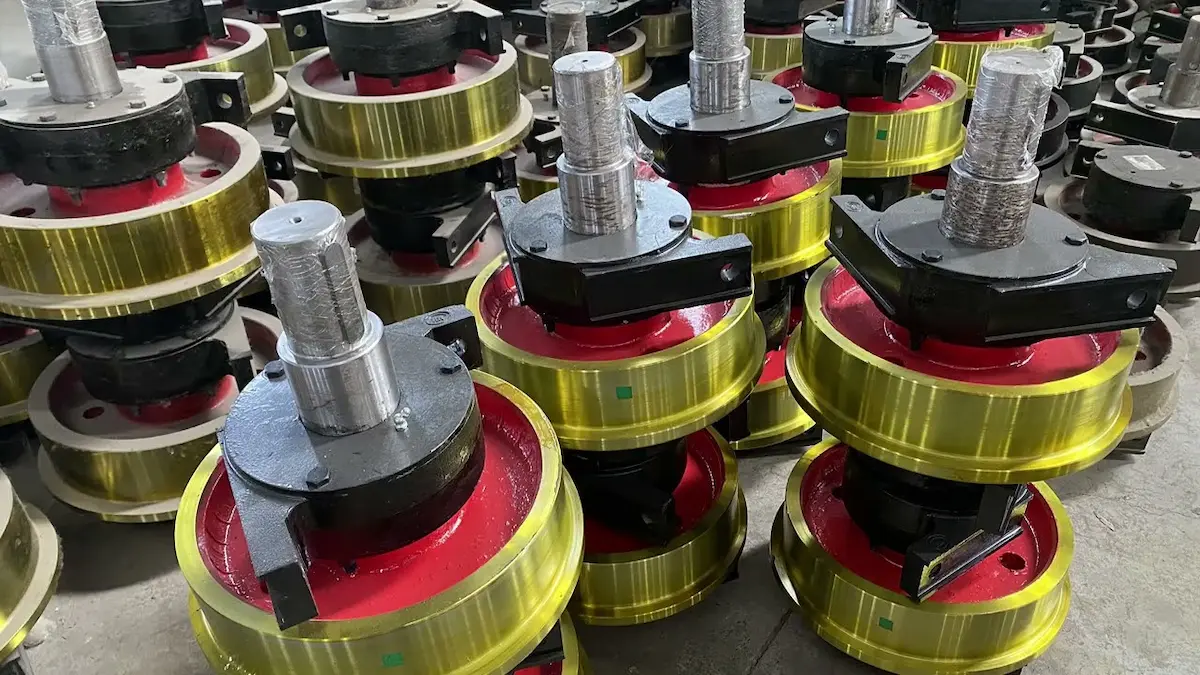
●Flexible Manufacturing: Liquid metal fills every mold corner effortlessly. Cast crane wheels easily form complex or unconventional web structures. Forging often struggles with highly intricate or complex shapes.
●Advantages for Large Sizes: Massive wheel diameters exceed normal forging equipment limits. Casting becomes the only economical choice for oversized port wheels.
●Competitive Cost in Mass Production: Once molds exist, pouring efficiency is extremely high. Unit costs for mass-produced cast crane wheels are lower than forging.
●Ideal for Low to Medium Duty: Standard workshops do not run constantly day and night. Cast crane wheels provide plenty of performance for standard duties.
Which Applications Suit Cast Crane Wheels Best?
I recommend cast crane wheels in specific customer scenarios. Check the application table below to match your operational needs:
|
Application / Condition |
Reasons for Choosing Cast Crane Wheels |
Common Crane Types |
Duty Class |
Cost and Benefit Considerations |
| Low-to-Medium Operating Frequency | Equipment runs briefly each day without needing extreme fatigue strength. | Standard Workshop Single/Double Girder Overhead Cranes | A1-A4 | Fully satisfies performance needs while cutting initial procurement budgets significantly. |
| Complex Structures / Non-Standard Sizes | Special weight-reduction holes or irregular flanges make forging processing expensive. | Special Non-Standard Cranes, Retrofitted Equipment | Case-by-Case | Uses casting advantages to reduce material waste and machining hours. |
| Oversized Wheels | Giant wheel diameters exceed forging press capabilities for one-piece forging. | Giant Shipbuilding Gantry Cranes, Large Yard Reclaimers | A5-A6 | Solves manufacturing feasibility issues; large cast steel technology is mature. |
| Cost-Sensitive Projects | Limited project budget without strict limits on wheel pressure and speed. | Light Workshop Overhead Cranes, Simple Gantry Cranes | A3-A4 | Mass production scale creates competitive pricing for overall bids. |

Differences Between Forged and Cast Crane Wheels
Buyers often hesitate when comparing similar crane wheel drawings. This comparison list breaks down core differences between both processes clearly:
|
Dimension |
Forged Crane Wheels |
Cast Crane Wheels |
Operational Impact |
| Manufacturing Method | Solid mechanical extrusion deformation | Liquid metal pour casting | Determines risk of internal shrinkage cavities or slag inclusions. |
| Internal Structure | Extremely dense with continuous fiber flow | Relatively loose, controlled by casting process | Dense forged crane wheels resist tearing under sudden overloads. |
| Tensile / Yield Strength | Higher strength with strong load capacity | Meets standards, lower than forged counterparts | Affects whether tread deforms under full load operations. |
| Impact Resistance | Excellent toughness; flanges resist breaking | Average; improper heat treatment causes brittle fracture | Forged crane wheels handle uneven rails and sudden braking better. |
| Wear Resistance | Uniform surface hardness; long wear life | Quench-hardenable, but slightly less consistent wear | Determines replacement cycle length between three or five years. |
| Design Flexibility | Best for solid, simple standard shapes | Highly flexible for irregular or giant parts | Casting solves complex labyrinth wheel drawing requirements easily. |
| Initial Procurement Cost | Higher unit cost | Lower overall cost for batch or complex parts | Affects budget approval; consider downtime maintenance costs too. |
| Typical Applications | Heavy load, high frequency, harsh conditions | Low-to-medium frequency, standard parts, large sizes | Match selection properly without overspecifying or underspecifying equipment. |
Note: Do not judge simply as “forging = good, casting = bad”. Final performance depends on steel grades, heat treatment, flange structures, hardness, machining precision, and working conditions.
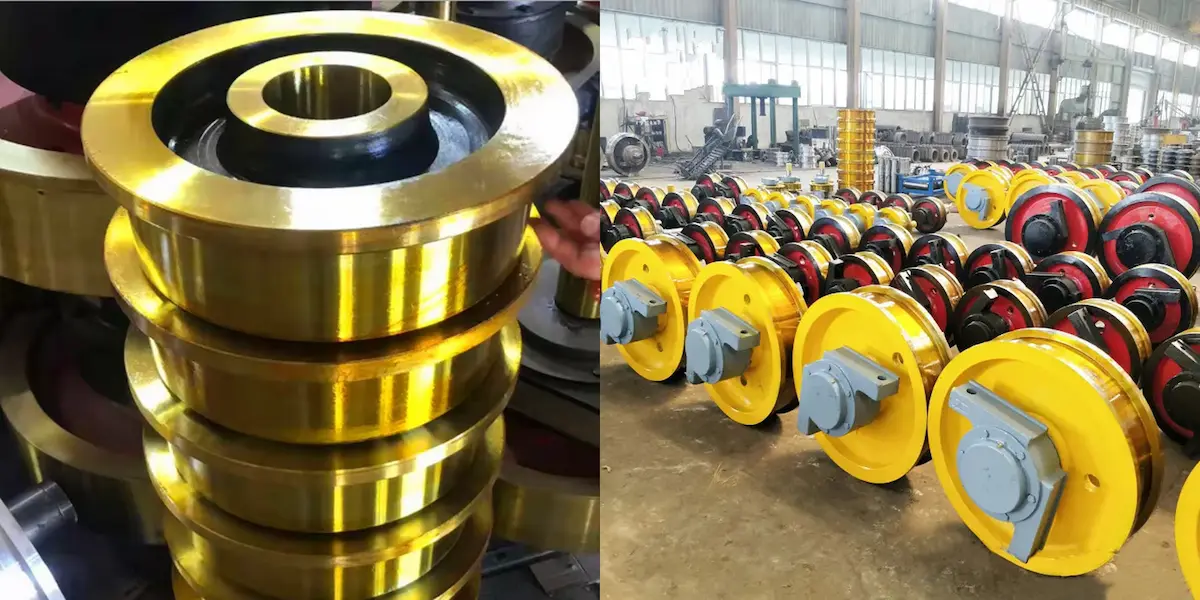
How to Choose Between Forged and Cast Crane Wheels?
Stuck between forging and casting? There is no standard answer—it depends entirely on your working conditions. Using HSCRANE’s years of site experience, we created this practical selection guide to help you find the right match:
|
Dimension |
Actual Conditions / Needs |
Recommendation |
Logic Behind Selection |
| Capacity | 50+ tons heavy loads | Forging | High yield strength resists permanent deformation. |
| Under 50 tons | Casting / Forging | Pressure is within cast limits; casting saves money. | |
| Duty | A5-A8 (continuous, heavy) | Forging | High fatigue strength avoids fractures during continuous runs. |
| A1-A4 (light, intermittent) | Casting | Meets lifecycle needs for short daily operations. | |
| Rail Condition | Old rails, uneven joints | Forging | Superior toughness prevents gnawing from lateral impacts. |
| New, straight rails | Casting / Forging | Smooth running lacks excessive stress. Both work. | |
| Environment | High heat, dust, corrosion | Forging | Dense flow lines resist oxidation for longer life. |
| Normal clean workshops | Casting | Friendly environments require no expensive material premium. | |
| Speed | >90m/min, sudden stops | Forging | Reliable wear resistance handles extreme friction. |
| Low or normal speed | Casting / Forging | Low wear rate allows standard specifications. | |
| Budget | 5-10 years lifespan | Forging | Higher initial cost drastically reduces expensive downtime. |
| Tight upfront budget | Casting | Low initial cost; ideal for periodic replacement. |
How to Choose Suitable Wheels for Your Crane?
Single-dimension evaluations are often inaccurate, requiring comprehensive professional guidance.
[Contact HSCRANE for free crane wheel selection and quotes]. Get a complete technical guide covering dimensional tolerances, material comparisons, and heat treatment depths!
Key Technical Parameters for Selecting Crane Wheels
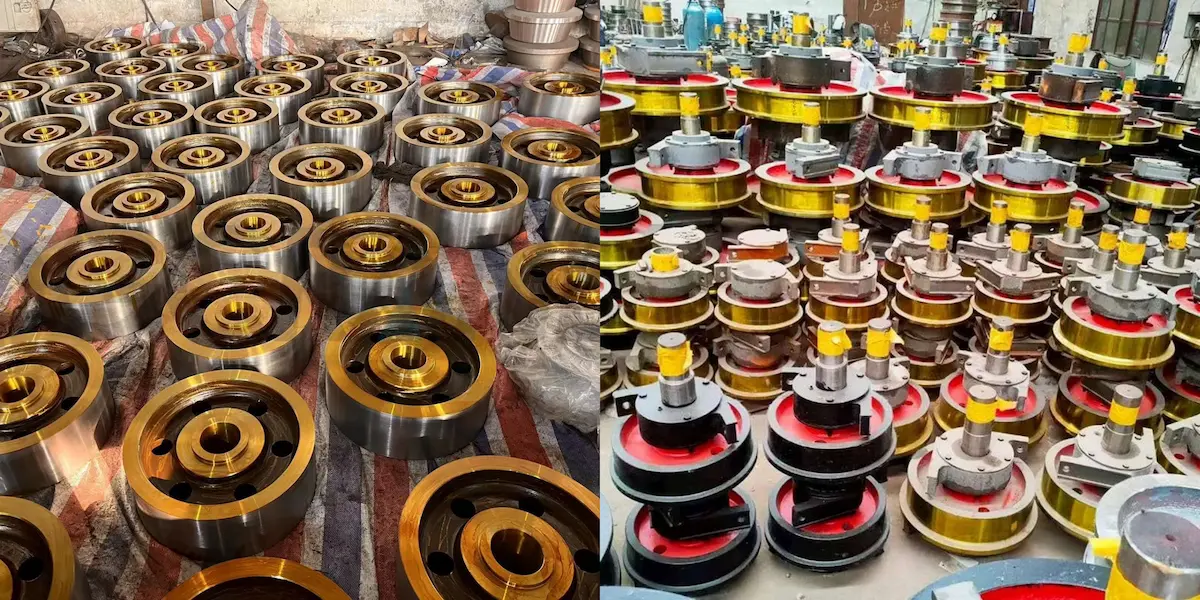
Stop stressing only over manufacturing processes. Smart buyers and engineers check these seven core parameters first on a quote. These data decide if wheels fit, run smoothly, and last long.
●Wheel Diameter: Bigger is not always better. It affects wheel pressure directly. Small wheels crush rails. Large ones waste money and restrict installation space.
●Flange Dimensions: Single or double flange? What are the flange thickness and height? This prevents crane derailment. Flange parameters are vital for large-span gantry cranes.
●Tread Width: It must match your rail model (like P43, QU80). Treads are usually 20-30mm wider than the rail head. This disperses pressure and tolerates snaking movements.
●Material: The wheel’s “genes”. Forging uses 65Mn, 42CrMo; casting uses ZG340-640. Do not just read grades. Check the manufacturer’s MTC to ensure chemical compliance.
●Tread Hardness: This is highly technical. Low hardness (under HB200) wears out quickly. High hardness ruins workshop rails, which is very troublesome. Hardness is usually HB300-380, keeping a reasonable difference from rail hardness.
●Heat Treatment: This separates good quality from bad! Ask about the hardening depth clearly. Good wheels maintain uniform high hardness 10-15mm below the surface.
●Machining Precision: This includes radial runout, bore tolerance, and surface roughness. Rough machining makes wheels wobble. It causes motor noise and damages reducers quickly.
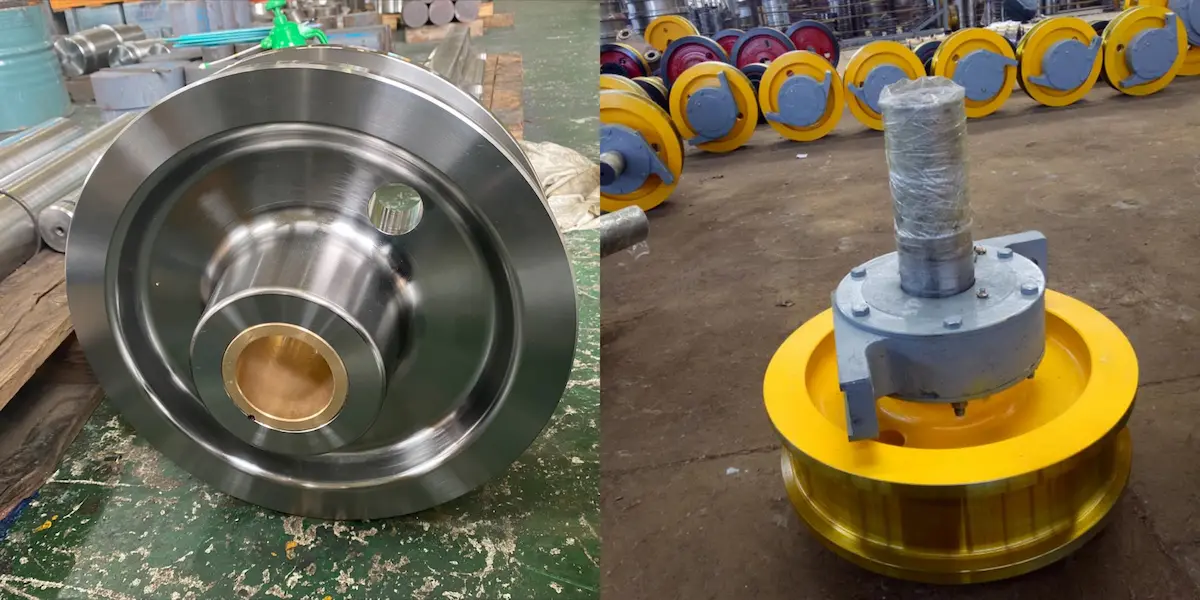
Are Forged Crane Wheels Always Better?
If you still think forging always beats casting, I have not explained clearly enough. Objectively speaking, there is no absolute dominance.
●Advantages of Forged Crane Wheels: They perform brilliantly in high-end applications. In heavy-load, high-frequency operations, their strong metal flow lines provide extreme toughness. Deep heat treatment yields perfect surface hardness and core toughness. They are incredibly tough.
●Advantages of Cast Crane Wheels: In other scenarios, cast crane wheels are irreplaceable. Forging cannot produce giant wheels or complex webs with weight-reduction holes. Casting handles these easily. In standard A3/A4 workshops, casting offers huge cost advantages with sufficient performance. Blindly choosing forging wastes capacity.
●Compare “Overall Performance”: An industry saying goes: do not just compare forging versus casting. You must evaluate the entire delivery system. Wheels that truly save money and worry follow this formula:
High-Quality Materials + Suitable Process + Strict Heat Treatment + Precise Machining + Matching Conditions = Excellent Lifespan
Recognize your actual working conditions clearly. Spend your budget on the right parameters. This is the smartest selection strategy.
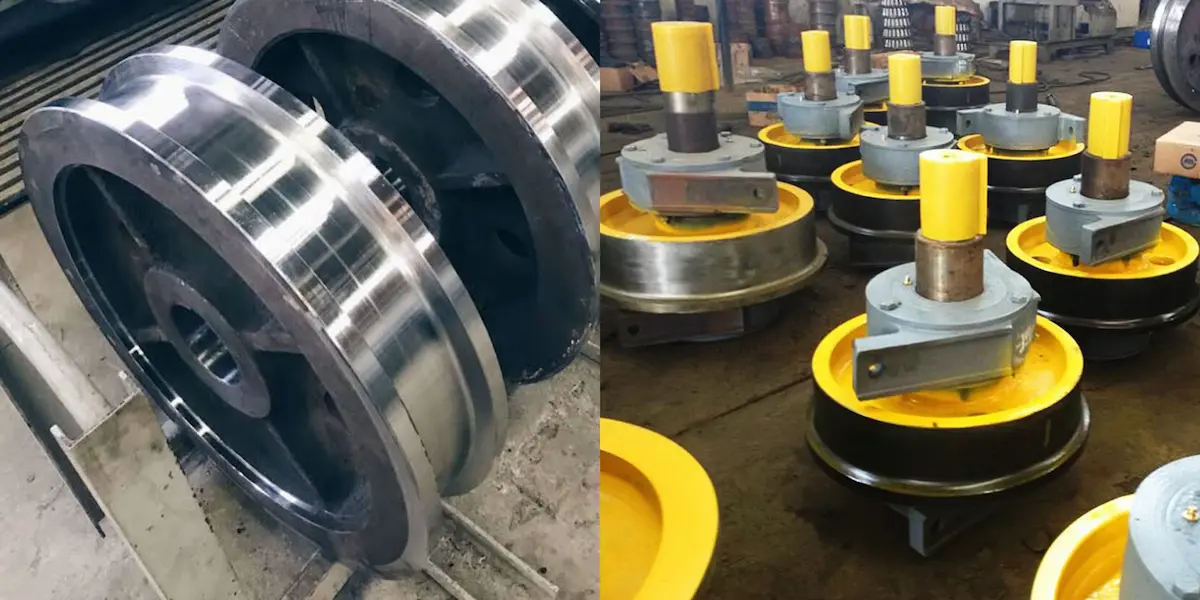
What are the Advantages of HSCRANE Crane Wheels?
As professional crane wheels manufacturers, HSCRANE strictly adheres to international standards. We design and manufacture wheels following these core specifications:
●FEM 1.001 (Section 4, Clause 4.1.3): We strictly calculate wheel fatigue and wear resistance based on this clause. This ensures the mechanism’s lifespan meets standards.
●ISO 12488-1:2012: Machining tolerances and installation dimensions strictly follow this standard. This ensures perfect wheel-to-rail matching, reducing noise from the source.
●EN 13001-3-3: We comprehensively meet the latest European crane safety design specifications. This applies to wheel-rail contact stress and limit state verification.
We have full-chain professional manufacturing and quality control capabilities. This includes 100% dual MT/UT testing and strict hardness gradient control. We reject one-size-fits-all solutions. HSCRANE offers deep customization for extreme cold, high heat, or heavy loads. This covers material selection, heat treatment depth, and custom sizes. We ensure you do not just buy a generic part. You receive exclusive crane wheels perfectly matching your current rails.
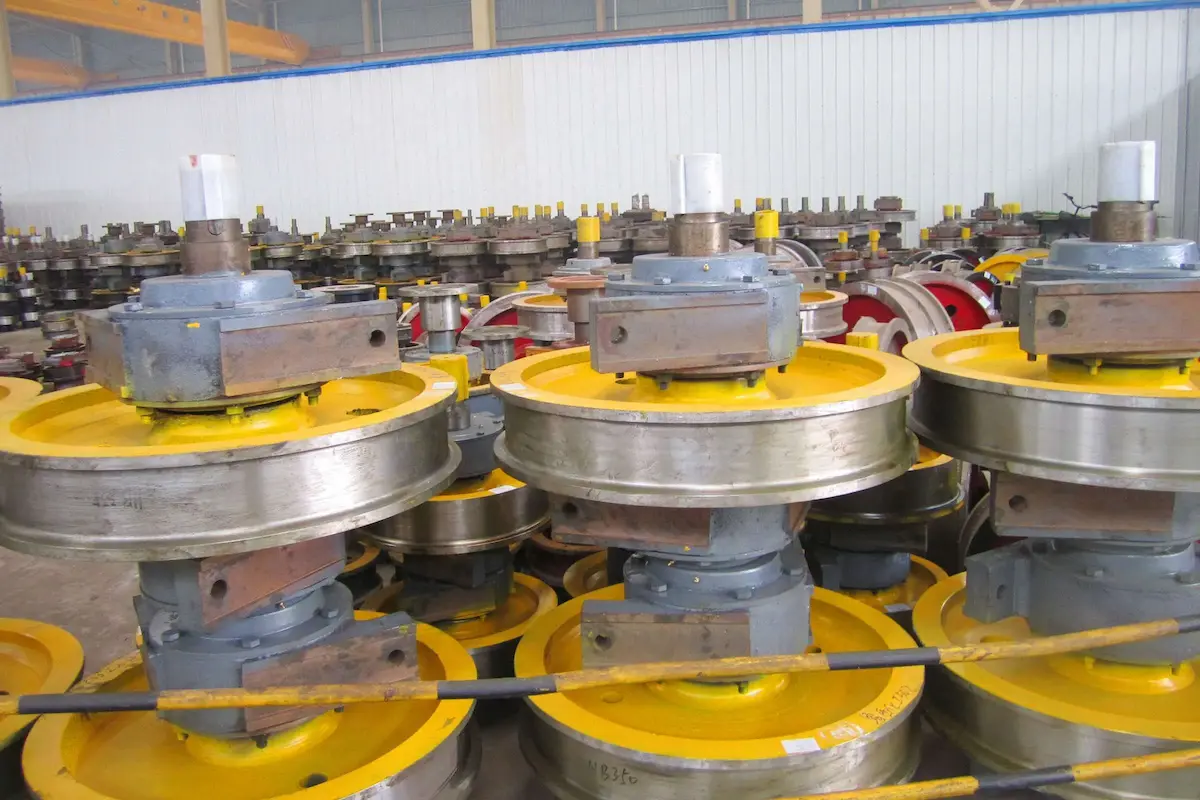
Classic Case of HSCRANE Crane Wheels
●Project Background: TATA Steel’s smelting workshop expansion in India required new wheels. We equipped three 250t metallurgical overhead cranes with traveling mechanism wheels.
●Problem Faced: Original cast crane wheels faced A8 duty and over 60℃ temperatures. Tread spalling and severe rail gnawing appeared within eight months. This harsh condition forced multiple production line shutdowns.
●HSCRANE Solution: Our team evaluated their P120 rails on-site and recalculated contact stress. We customized 24 pieces of Φ800mm 42CrMo forged crane wheels. Using special medium-frequency quenching, we controlled tread hardness precisely at HB350-380. The hardened layer depth reached 15mm.
●Delivery and Inspection: All wheels passed EN 10204 3.1 material certification and ultrasonic testing. We delivered them to the Indian site early within 35 days.
●Project Result: After 24 months of continuous operation, tread wear is under 1.2mm. Rail gnawing is completely eliminated. The client reported this upgrade saved over $150,000. It prevented potential downtime, maintenance, and replacement costs.
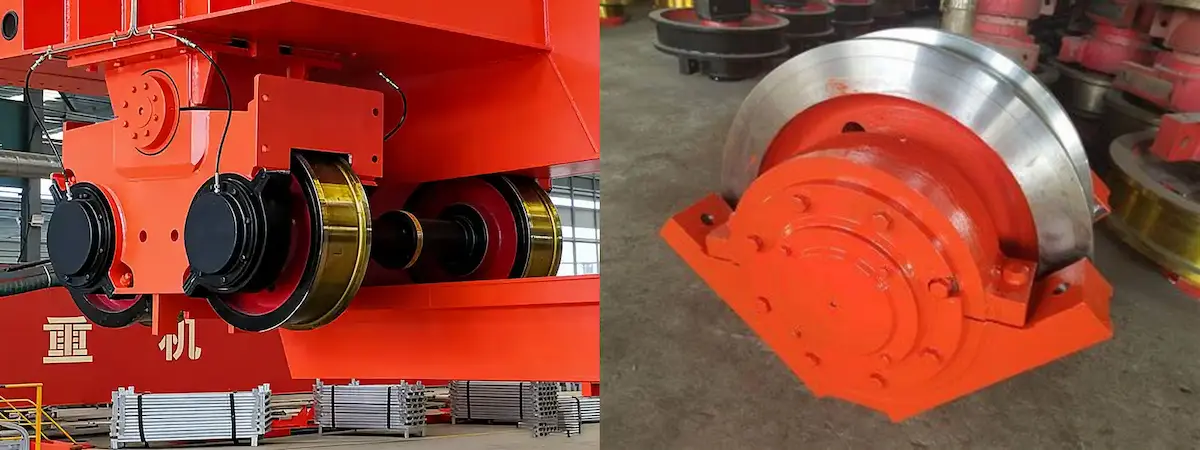
Conclusion
Choosing right crane wheels buys long-term insurance for equipment safety. It also guarantees enterprise production efficiency. Forged crane wheels have amazing capacity, while cast crane wheels offer high value. Neither has an absolute advantage. The core secret is condition matching. Blindly pursuing high configurations wastes your budget. Choosing wrong materials for cheap prices causes production disasters.
Please carefully evaluate your crane tonnage and working duty before purchasing. Also, assess workshop rail conditions and long-term maintenance budgets. Do you still feel confused about selection or uncertain about drawing parameters? Do not leave trial-and-error risks to on-site commissioning.
Are you tired of frequent wheel replacements and downtime maintenance?
It is time to get more durable shoes for your crane. Wheels with wrong processes or poor heat treatment waste procurement fees. They also cause extremely high downtime production losses. HSCRANE knows various ISO/FEM standards well. We offer extremely durable heavy-load forged crane wheels. We also provide cost-effective custom cast crane wheels. Both perfectly match your rails.
[Contact HSCRANE technical engineers immediately]. Get free one-on-one crane wheels selection guidance and customized quotes.
After determining overhead crane tonnage and span, accessory selection is often tricky.
Clients often ask if overhead cranes must use forged crane wheels. Actually, there is no absolute dominance. There is only the most suitable match. If you are unsure about budgets and configurations, check our underlying selection logic:
[Recommended Reading: Overhead Crane Wheel Applications: A Complete Industry Selection Guide]
This document is for reference only. Specific operations must strictly comply with local laws and regulations and equipment manuals.