

Abstract
The gantry crane rail clamp is a vital safety device. It prevents crane sliding or overturning under high wind loads.
Core Technical Points
●Physical Mechanism: The system uses hydraulic release and constant spring-loaded clamping. High-friction jaws ensure secure rail locking.
●Technical Categories: We compare manual, automatic hydraulic, and self-locking gantry crane rail clamps. This analysis covers performance and selection standards.
●Safety Value: These devices improve anti-slip stability in extreme weather. They ensure compliance with special equipment safety regulations.
●Maintenance Guide: We provide engineering advice for hydraulic failure and jaw wear. These strategies focus on proactive preventive maintenance.
Engineering Insights: This text analyzes structural components and automated interlocking logic. It also covers durability optimization for highly corrosive environments. These insights help engineers enhance lifting equipment safety levels.
For custom wind-protection solutions, contact the HSCRANE Technical Department
What Is a Gantry Crane Rail Clamp?
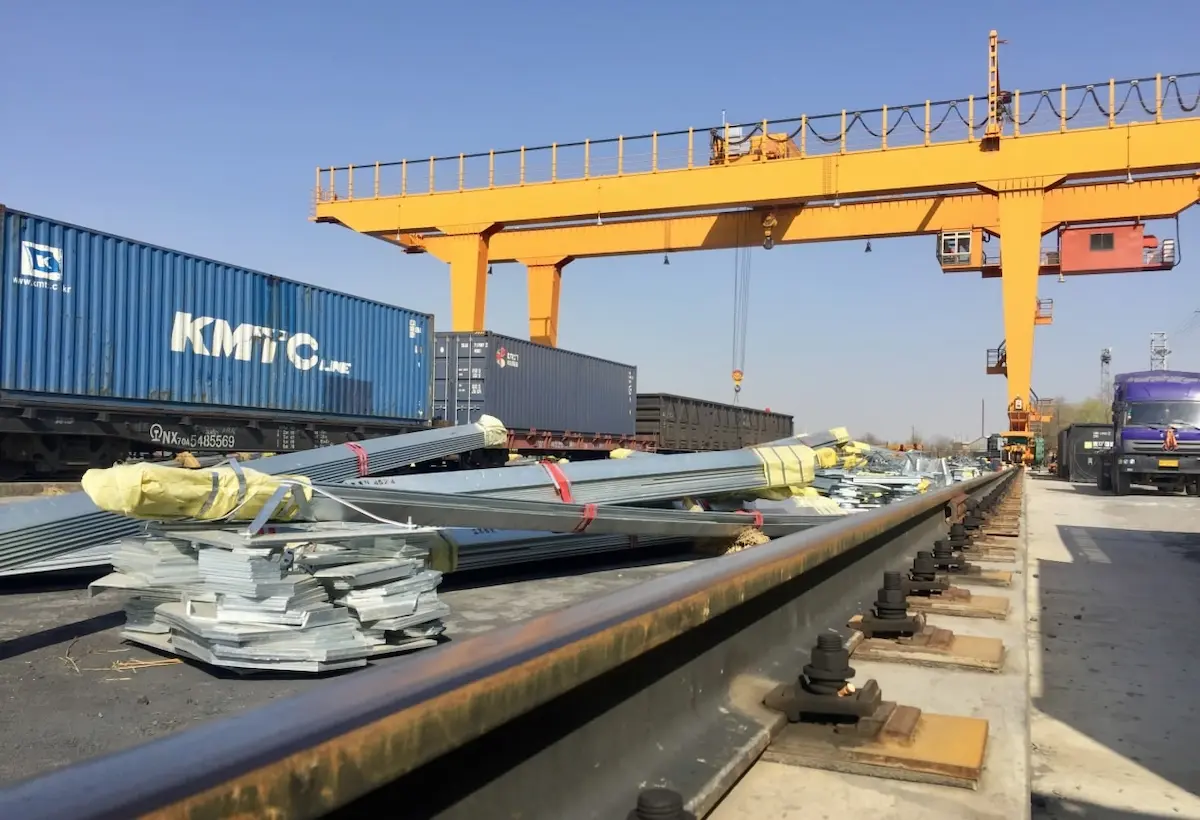
A gantry crane rail clamp is a mechanical safety device installed at the bottom of the crane’s end carriage. It physically grips both sides of the runway rail to generate a static holding force that anchors the crane in place. The clamp is designed as a fail-safe (spring-applied) or interlocked system — when de-energised, powerful springs force high-friction pads against the rail profile, creating a rigid mechanical lock.
Unlike the crane’s travel motor brakes that decelerate motion, the rail clamp is a dedicated static anchoring device. It holds the crane even when power is lost, hydraulic pressure decays, or wind gusts exceed operational limits.
Typical Engineering Applications
Common applications:
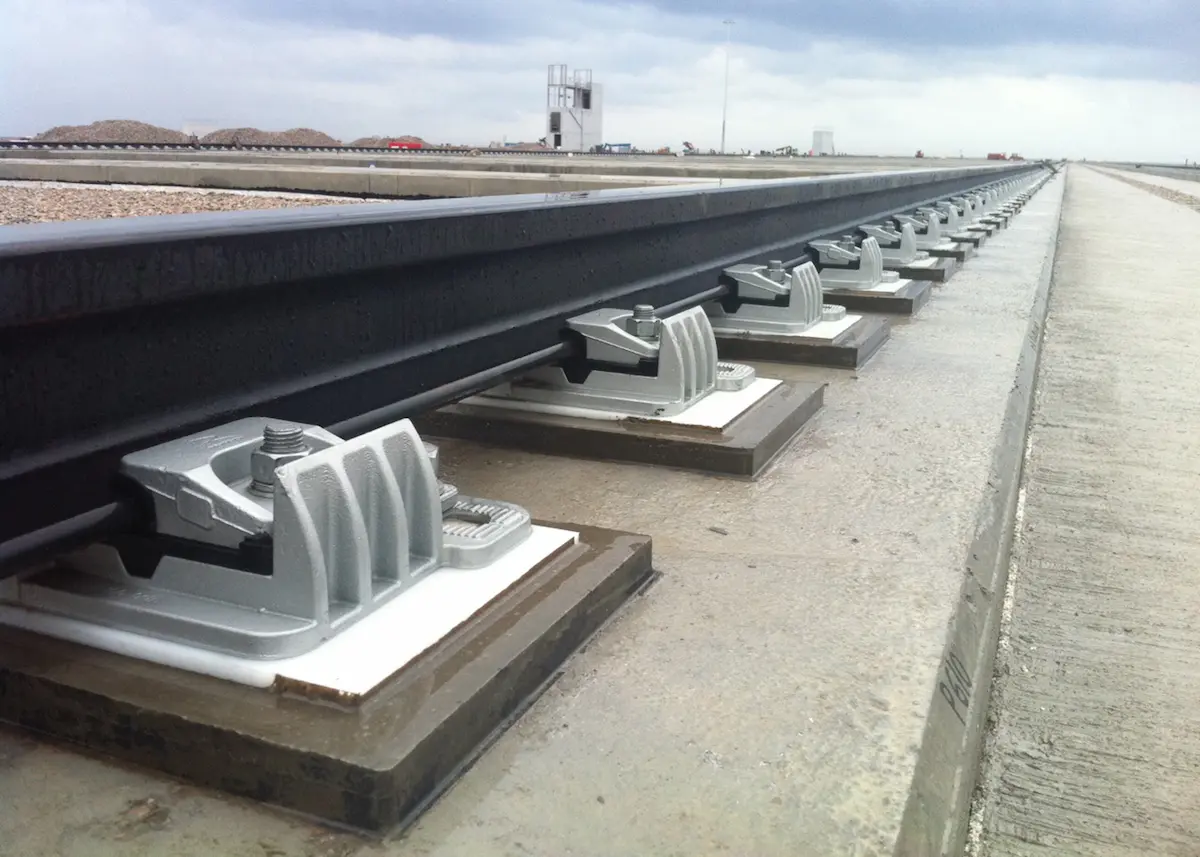
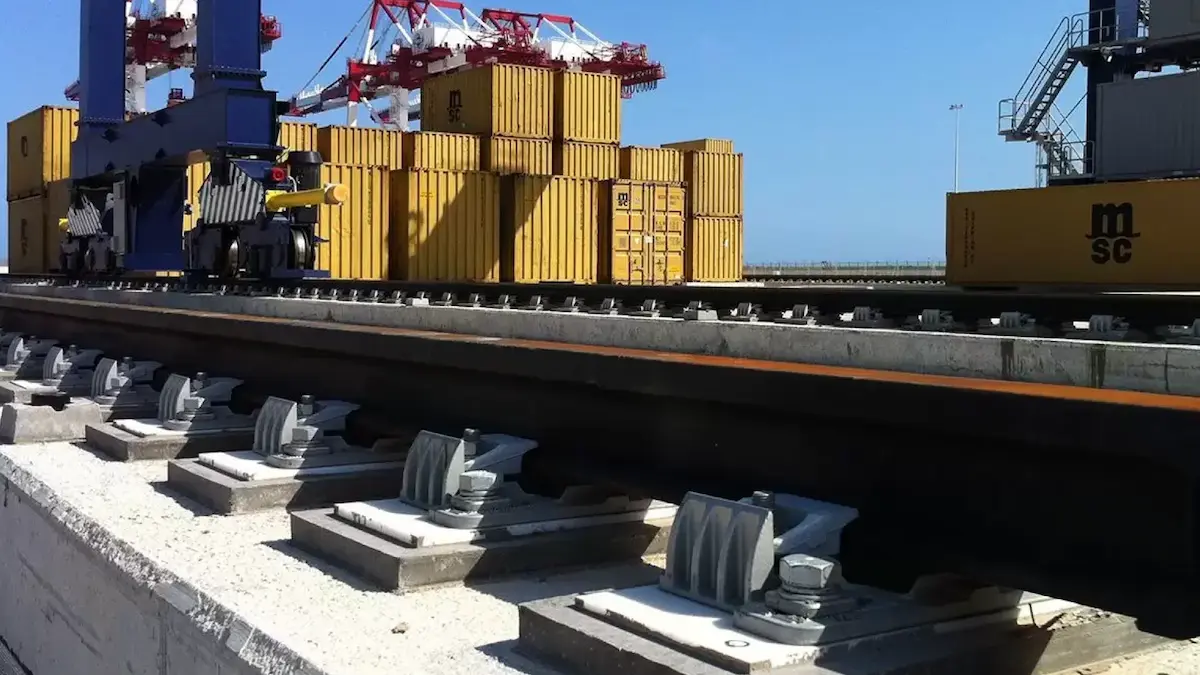
●Port & container terminals: STS and RMG cranes exposed to coastal storms.
●Shipyards: Goliath gantry cranes with massive wind sail areas.
●Steel mills & bulk material yards: High-dust, high-corrosion environments.
●Open-yard automation: Automated stacking cranes needing guaranteed zero-drift parking.

Why Rail Clamps Are Non-Negotiable for Crane Safety
Outdoor gantry cranes can have wind sail areas exceeding 300 m². A sudden 22 m/s gust can exert a horizontal thrust of over 80 kN on a large box-girder crane. Standard motor brakes, even with a 200% holding torque margin, often fail to resist this force because they rely on gearbox friction — not a direct mechanical rail lock.
Three consequences of operating without – or with undersized – rail clamps:
1.Gantry drift during idle periods. A parked crane creeping 2 metres in 30 minutes can collide with adjacent equipment or buffer stops.
2.Derailment or tipping in extreme wind. Without a positive mechanical anchor, a crane can over-run the end stops, leading to structural failure.
Example: In 2020, a 150-tonne gantry crane without active rail clamps slid 14 metres during a thunderstorm in Southeast Asia, shearing its anchor bolts and causing $320,000 in damage.
3.Regulatory non-compliance. International standards (ISO 4304, FEM 1.001) and national codes (GB/T 3811-2008, AS 1418.3) require outdoor rail-mounted cranes to be equipped with anti-wind rail clamps. Non-compliant equipment is typically red-tagged during inspection.
Key regulatory references:
●ISO 4306: Cranes — Wind load assessment
●FEM 1.001: Rules for the design of hoisting appliances
●GB/T 3811-2008: Design rules for cranes (China)
●AS 1418.3: Cranes, hoists and winches — Bridge, gantry and portal cranes (Australia)
Mid-article CTA: Ready to match your crane to the right clamp model? Submit your rail profile and local wind zone — HSCRANE will return a clamping force calculation within 24 hours →
How Gantry Crane Rail Clamps Work: Step-by-Step
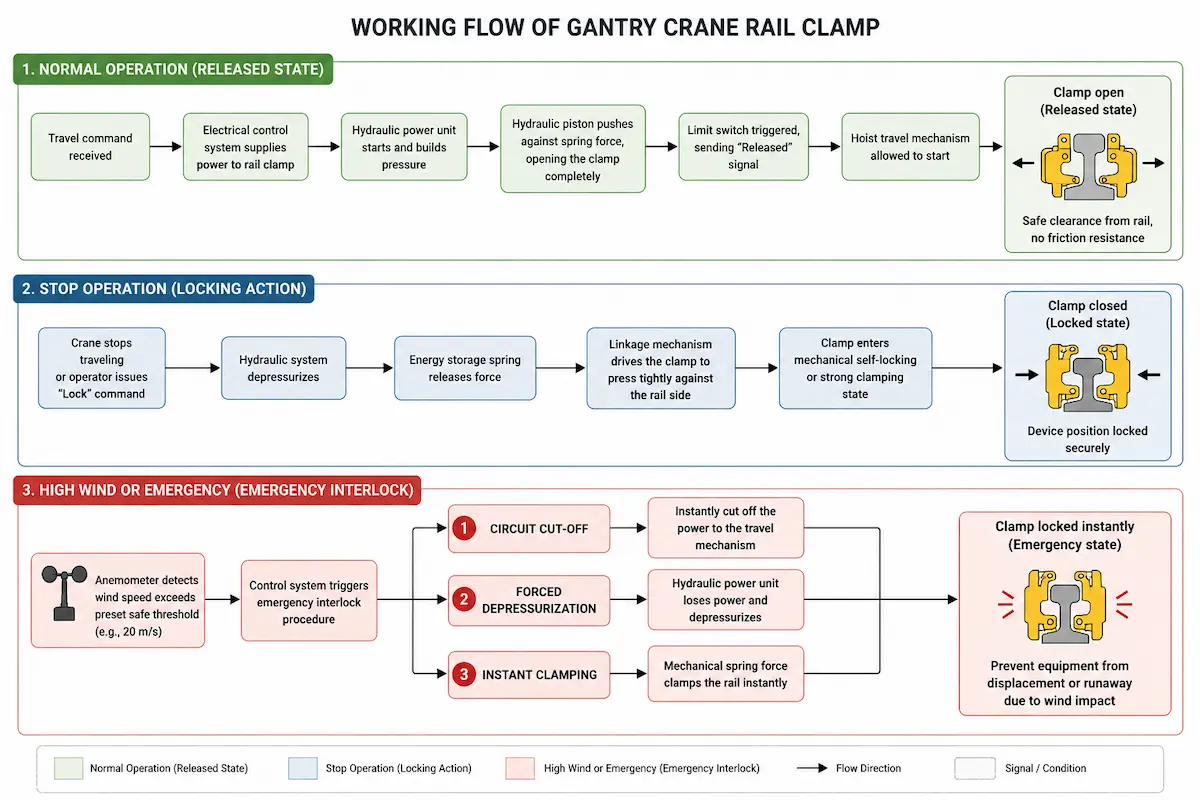
The fundamental principle is simple: positive mechanical friction overcomes horizontal wind thrust.
Basic Operating Principle
The core braking logic of a gantry crane rail clamp relies on normal force generating frictional resistance.
●Mechanical Locking: The drive mechanism, typically a hydraulic pusher or spring, moves the two jaws inward. This exerts massive normal force on both sides of the rail.
●Friction Conversion: High-friction pads contact the steel rail. They convert mechanical pressure into horizontal static friction. This force must exceed wind-driven thrust to lock the crane.
●Wind-Protection Logic: The system follows a fail-safe design. During power or hydraulic loss, internal high-torque springs automatically close the jaws. This ensures passive safety in extreme conditions.
Operating sequence
1. Crane travelling (clamp open)
When the operator gives a travel command, the PLC first energises the clamp’s hydraulic pump. The pump builds 180–250 bar pressure, forcing a piston to retract against a stack of disc springs. The clamp jaws open to a clearance of 5–8 mm from the rail side. A proximity sensor confirms the “clamp open” status, and only then does the travel drive permitted to start.
2. Crane parked (clamp closed)
The operator stops the crane and initiates “parking.” The hydraulic circuit depressurises through a solenoid valve. The pre-compressed springs instantly expand, pushing the clamp linkage and forcing the friction pads against the rail. Total closing time from signal to full mechanical lock: <3.5 seconds on HSCRANE hydraulic-spring models.
3. Emergency wind event (automatic)
An anemometer mounted on the crane continuously monitors wind speed. At 18 m/s (adjustable), the system sounds an alarm. At 25 m/s, the PLC:
●Cuts power to the travel drives.
●De-energises the hydraulic pump.
●The springs immediately close the clamp — no electrical power needed.
This fail-safe architecture means the clamp engages even if the main power cable is severed.
Core Components
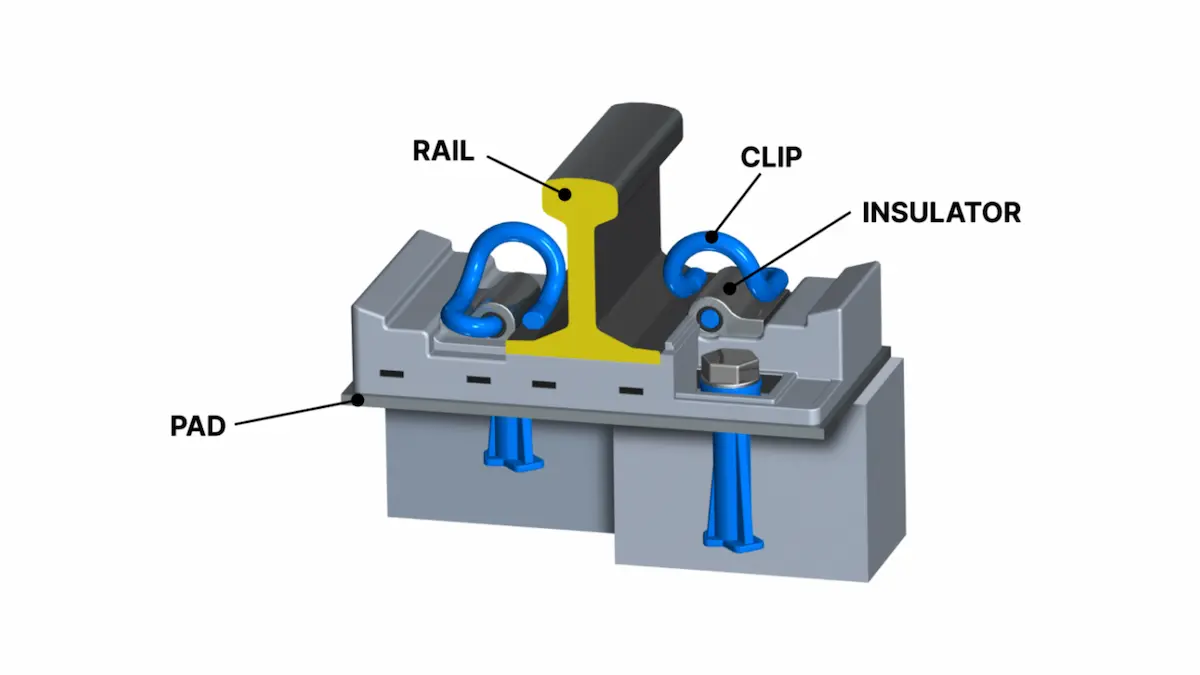
A complete clamping system consists of several precision modules:
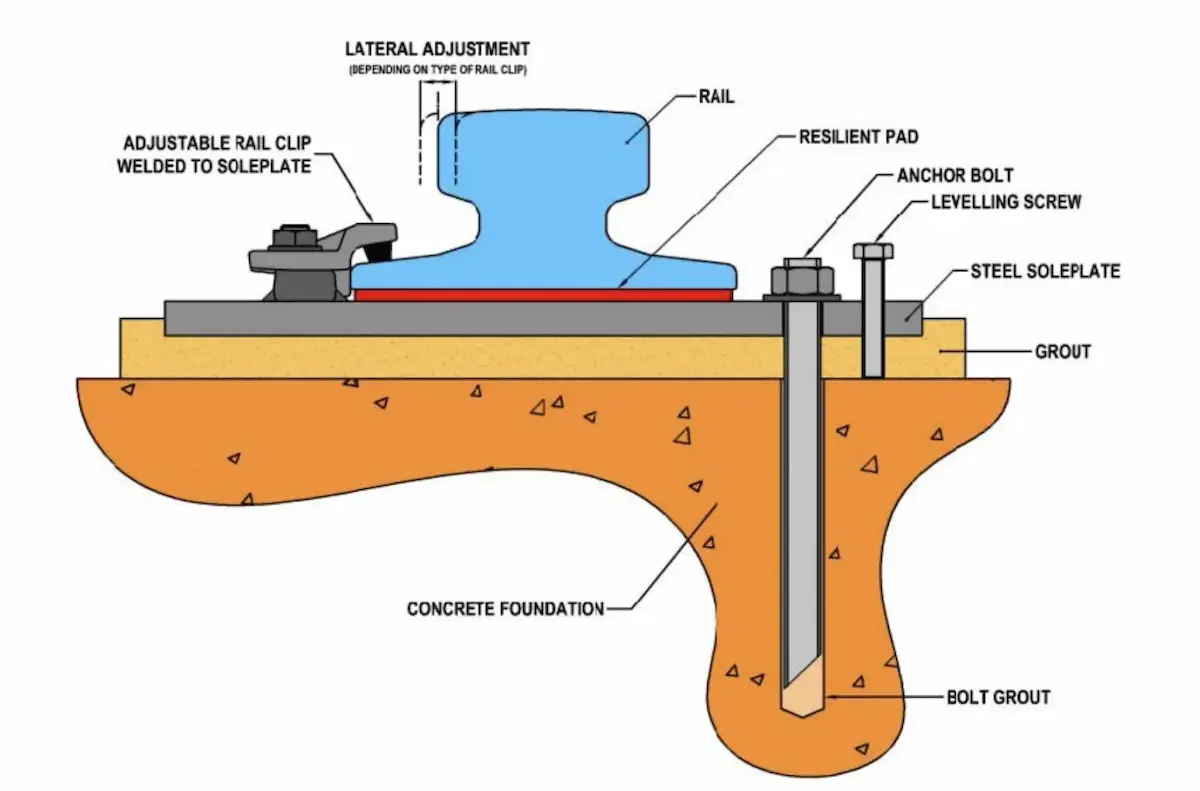
●Clamping Mechanism: Forged from high-strength alloy steel, it features replaceable, wear-resistant friction pads.
●Drive System: This includes the hydraulic station, cylinder, and high-performance springs for power conversion.
●Electrical Control: This unit contains PLC logic modules, contactors, and status feedback loops.
●Monitoring and Interlocking: Integrated anemometers and limit switches ensure the crane cannot move unless the clamp is open. It also forces a stop if wind speeds exceed safety limits.
Types of Gantry Crane Rail Clamps
There are four distinct types. The following table compares their core characteristics.
|
Type |
Actuation |
Typical Closing Time |
Key Feature |
Best-Fit Application |
| Manual rail clamp | Hand wheel / screw spindle | 15–60 seconds (manual) | Zero power requirement, simple mechanism | Small indoor gantry cranes, secondary backup on larger cranes |
| Automatic hydraulic clamp | Hydraulic pump with solenoid valve | 3–6 seconds | Constant clamping force, easily integrated into PLC | Common on 20–100 tonne gantry cranes in general industry |
| Electro-hydraulic clamp | Integrated motor-pump unit, direct electrical control | <2 seconds | Very fast response, simple wiring | Automated yards, cranes requiring millisecond-level interlock |
| Self-locking (storm brake) clamp | Mechanical eccentric/wedge, wind force intensifies clamping | Instantaneous (mechanical) | True fail-safe: no power, no hydraulics needed for holding. Holding force increases with wind thrust. | Port cranes (STS, RMG), shipyards, typhoon-prone areas |
Which type should you choose?
●High-wind coastal regions (>45 m/s 3-second gust) → Self-locking storm brake. Its wedge geometry multiplies clamping force as wind tries to slide the crane. Even if the crane loses all power during a typhoon, the clamp remains mechanically locked.
●Automated container terminals → Electro-hydraulic type with sub-2-second release time to minimise cycle time.
●Light-to-medium industrial gantry cranes (≤32 t) → Automatic hydraulic offers the best balance of cost and reliability.
Key Factors Influencing Rail Clamp Performance
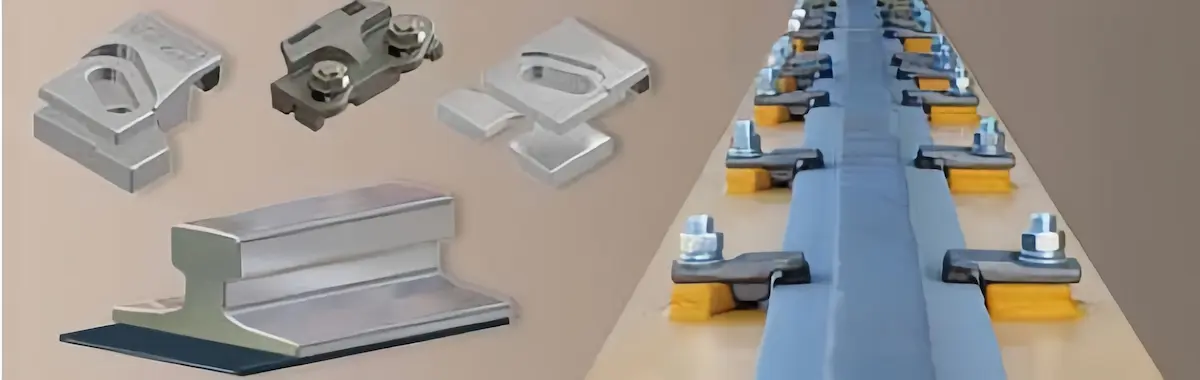
Even a correctly sized clamp can underperform if these variables are not addressed:
|
Factor |
What to Check |
Consequence if Ignored |
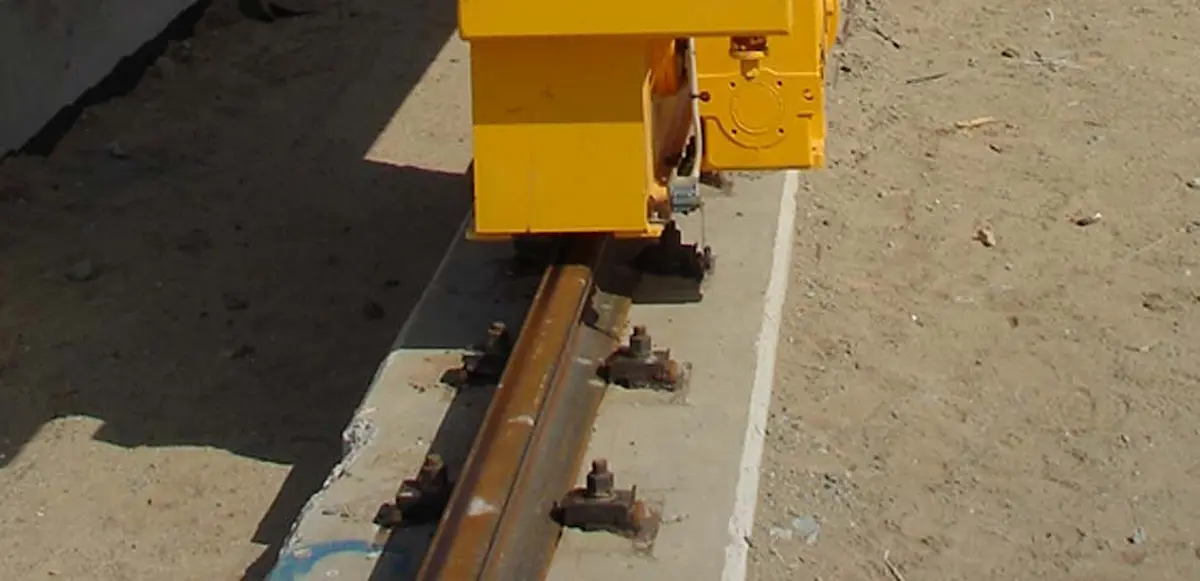
| Rail profile compatibility | Clamp jaw geometry must match rail head profile (e.g., QU100, DIN A65, CR 73). Provide rail drawing to manufacturer. | Reduced contact area drops effective μ, cutting clamping force by up to 40%. |
| Rail surface condition | Surface rust, mill scale, grease, or ice can lower μ to <0.15. HSCRANE pads are tested for μ≥0.30 even on wet, lightly rusted rail. | Clamp capacity insufficient for design wind; crane creeps in gusts. |
| Spring fatigue | Springs lose 3–5% of initial force over 10 years. Annual force verification recommended. | Gradual reduction of holding force, undetected until wind test failure. |
| Hydraulic oil condition | Moisture or contamination causes valve sticking. Oil sample analysis every 500 operating hours. | Clamp fails to open or, worse, fails to re-close on command. |
| Synchronisation | On wide-span cranes, both side clamps must engage within 0.5 seconds of each other to prevent frame twist. | Can induce permanent structural misalignment in the gantry legs. |
| Electrical interlock reliability | Verify wind speed sensor calibration every 6 months. Test emergency closure sequence monthly. | Delayed or failed automatic engagement during sudden storms. |
【Contact the HSCRANE Technical Team】
Common Issues and Maintenance for Gantry Crane Rail Clamps
Common Fault Analysis
Long-term operation in harsh conditions like salt spray and high dust can cause technical failures. These issues directly impact wind-resistance safety.
●Mechanism Jamming or Clamping Failure:
◦Causes: Rusted linkage pins, jammed solenoid valves, or broken return springs.
◦Result: The crane remains unlocked during high winds, losing its safety protection.
●Insufficient Braking Force:
◦Causes: Friction pads worn past limits, greasy or icy rails, or low hydraulic pressure.
◦Physical Feature: Jaws engage but fail to generate enough static friction against wind loads.
●Hydraulic System Failure:
◦Phenomena: Pressure drops, frequent pump starts, or cylinder crawling.
◦Main Causes: Internal leaks from aged seals, contaminated oil, or air in the lines.
●Electrical Interlock and Feedback Errors:
◦Phenomena: The crane won’t start after release, or signals conflict with actual status.
◦Main Causes: Damaged limit switches, loose cable connectors, or PLC logic errors.
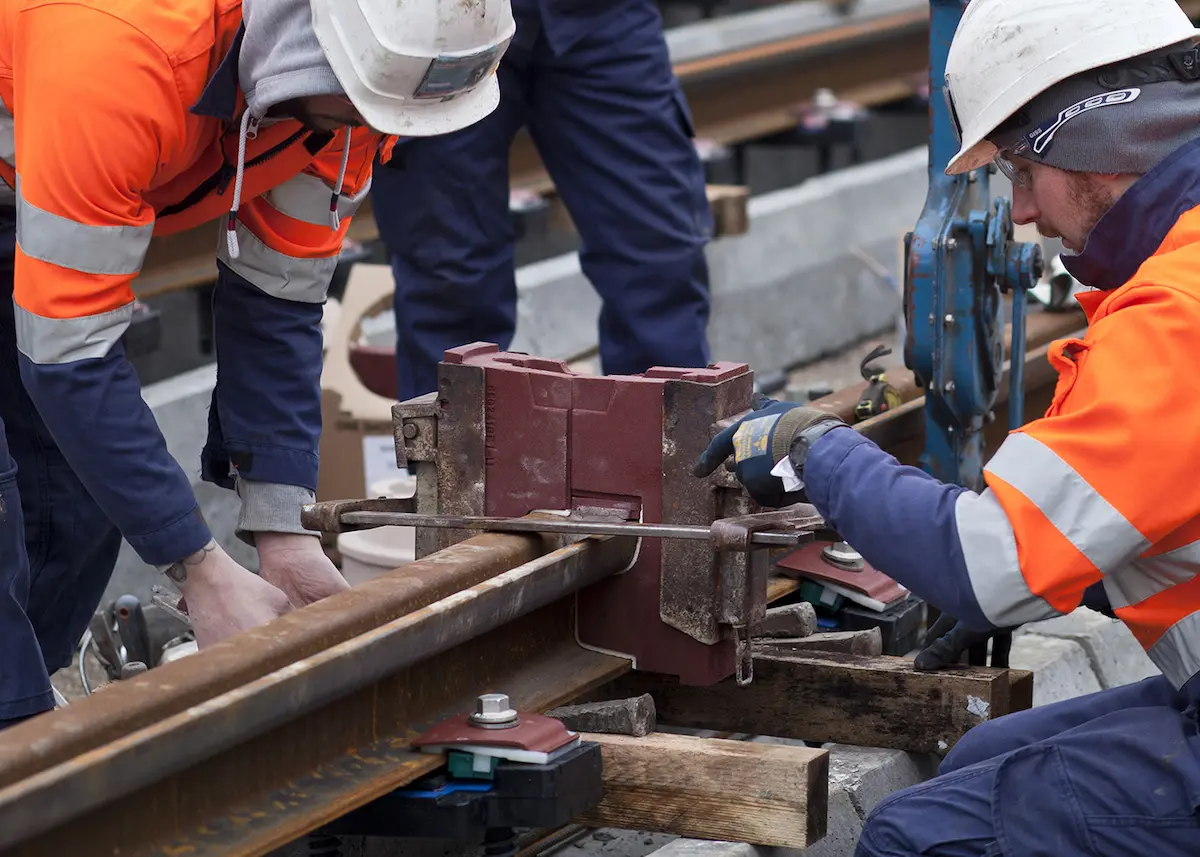
Preventive Maintenance Suggestions
Friction Pad Regular Inspection
1.Check pad wear quarterly. Replace them if wear reaches 30% of original thickness.
2.Keep rail sides clean. Regularly remove oil and rust to maintain the friction coefficient.
Hydraulic Circuit Integrity
1.Check the pump station and cylinder joints for leaks. Replace emulsified or blackened oil immediately.
2.Inspect spring fatigue. Ensure the pre-pressure meets original design specifications.
Wind Alarm and Interlock Calibration
1.Verify anemometer accuracy regularly using a calibration device.
2.Perform field tests. Simulate high-wind signals to ensure the system cuts power and engages the clamp.
Automation and Emergency Testing
1.Perform weekly manual and automatic toggle tests. Ensure mechanical springs provide reliable locking during power loss.
2.Test electrical feedback loops to prevent malfunctions caused by false signals.
Engineer’s Tip: Include all gantry crane rail clamp records in annual inspection files. Only professionals should adjust hydraulic parameters.
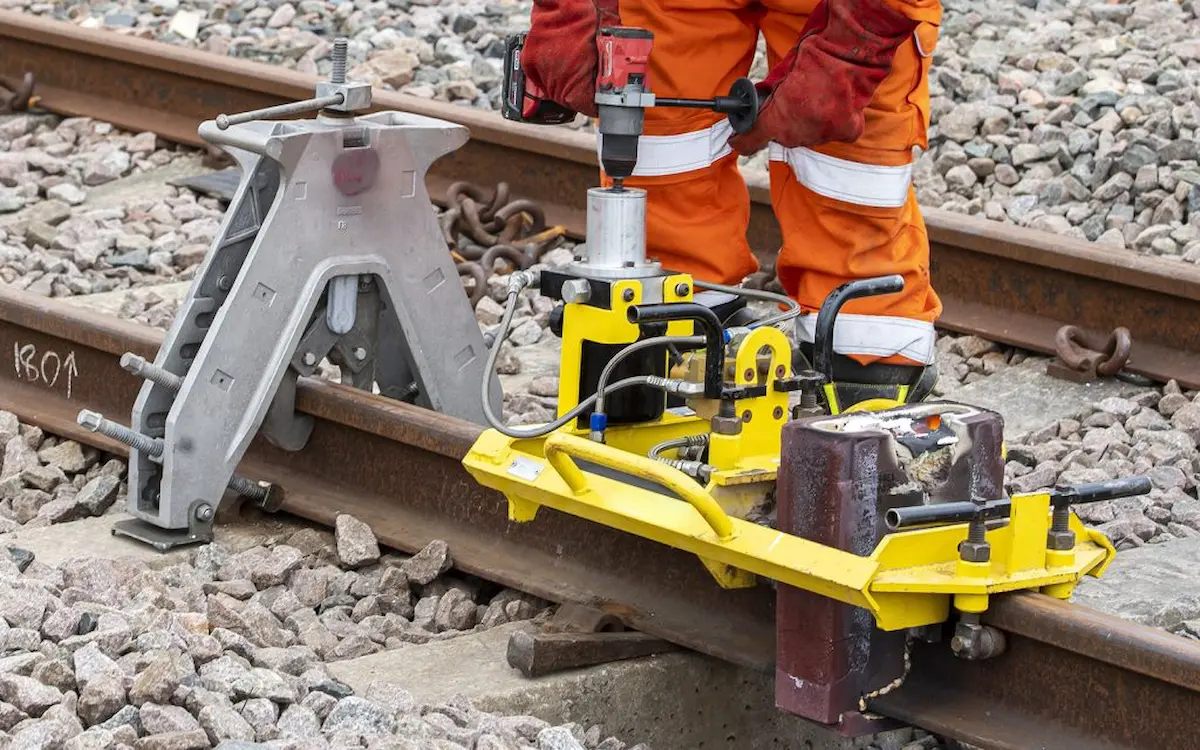
How to Select the Right Gantry Crane Rail Clamp
Choosing a gantry crane rail clamp is not just about buying a component; it is about building safety redundancy for the entire machine. The following guide outlines selection criteria based on engineering practice.
Selection Dimensions and Technical Requirements
|
Dimension |
Considerations & Technical Requirements |
Recommended Configuration |
| Crane Type | Deadweight & Wind Area: Box beams face higher wind resistance than truss beams. Larger spans require higher synchronization. | Large Gantry/STS Cranes: Hydraulic self-locking types. Small Gantry Cranes: Manual or simple electric actuator types. |
| Environment | Corrosion & Temperature: Coastal (salt spray), metallurgical (heat/dust), or arctic regions. | Coastal/Port: Stainless steel pins, hot-dip galvanized structures, and anti-corrosion seals. Cold Regions: Hydraulic station heaters. |
| Wind Rating | Calculated Wind Pressure: Mechanical verification based on working and non-working (storm) wind speeds. | High-Wind Areas (Typhoon Belts): Clamps with mechanical self-locking functions; braking force increases as wind force rises. |
| Automation | Control Integration: Requirement for logical interlocking with the drive mechanism and anemometers. | Automated Yards: Electro-hydraulic types with multiple sensors for signal feedback. Intermittent Ops: Semi-automatic or cost-effective electric clamps. |
Engineering Selection Checklist
●Safety Margin: Ensure the rated static friction (anti-slip force) of the gantry crane rail clamp is at least 1.5 times the maximum calculated wind thrust.
●Rail Compatibility: Provide precise rail models (e.g., QU100) and wear tolerances. This ensures the jaw pads achieve full-surface contact.
●Response Time: For high-speed cranes, prioritize hydraulic quick-release models with a release time of less than 3–5 seconds.
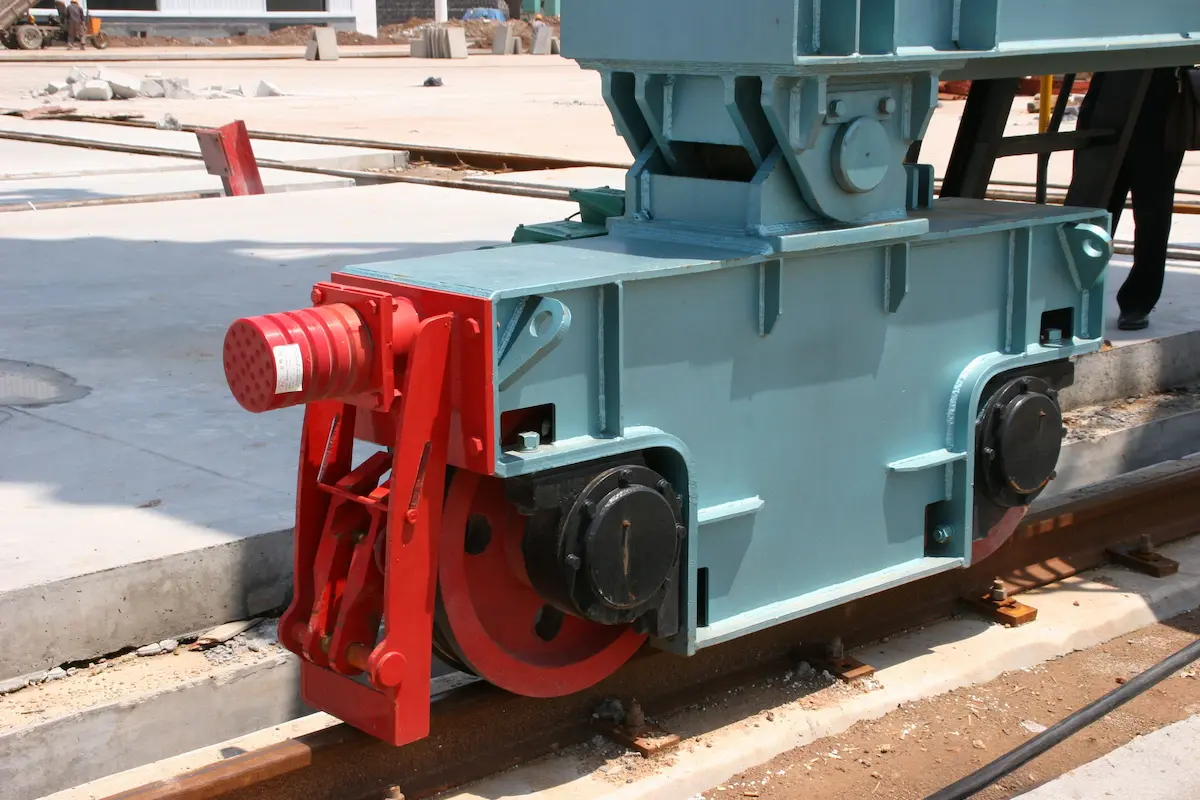
Why Choose HSCRANE Gantry Crane Rail Solutions?
Choosing HSCRANE means selecting an engineering-proven, systematic wind-protection safety guarantee.
●High-Safety Wind Design: Our solutions use physical self-locking logic. Braking force increases automatically as wind loads rise. The fail-safe system ensures millisecond response during power loss to lock equipment.
●Customizable Solutions: We offer manual to fully automatic self-locking models for QU, P, and DIN rails. We provide 1:1 force simulations based on site wind pressure and equipment tonnage.
●Premium Materials and Durability: Key load-bearing parts are forged from alloy steel. Surfaces feature C5-M grade anti-corrosion coating. Our composite friction pads extend service life by over 40%.
●Smart Control and Automation: Systems integrate seamlessly with Siemens and Schneider PLCs. Digital sensors provide real-time feedback on clamping status, oil pressure, and pad wear.
●Global Experience and Support: Our gantry crane rail clamp solutions serve major global ports and steel terminals. HSCRANE provides site surveys, installation, and lifecycle maintenance to ensure compliance.
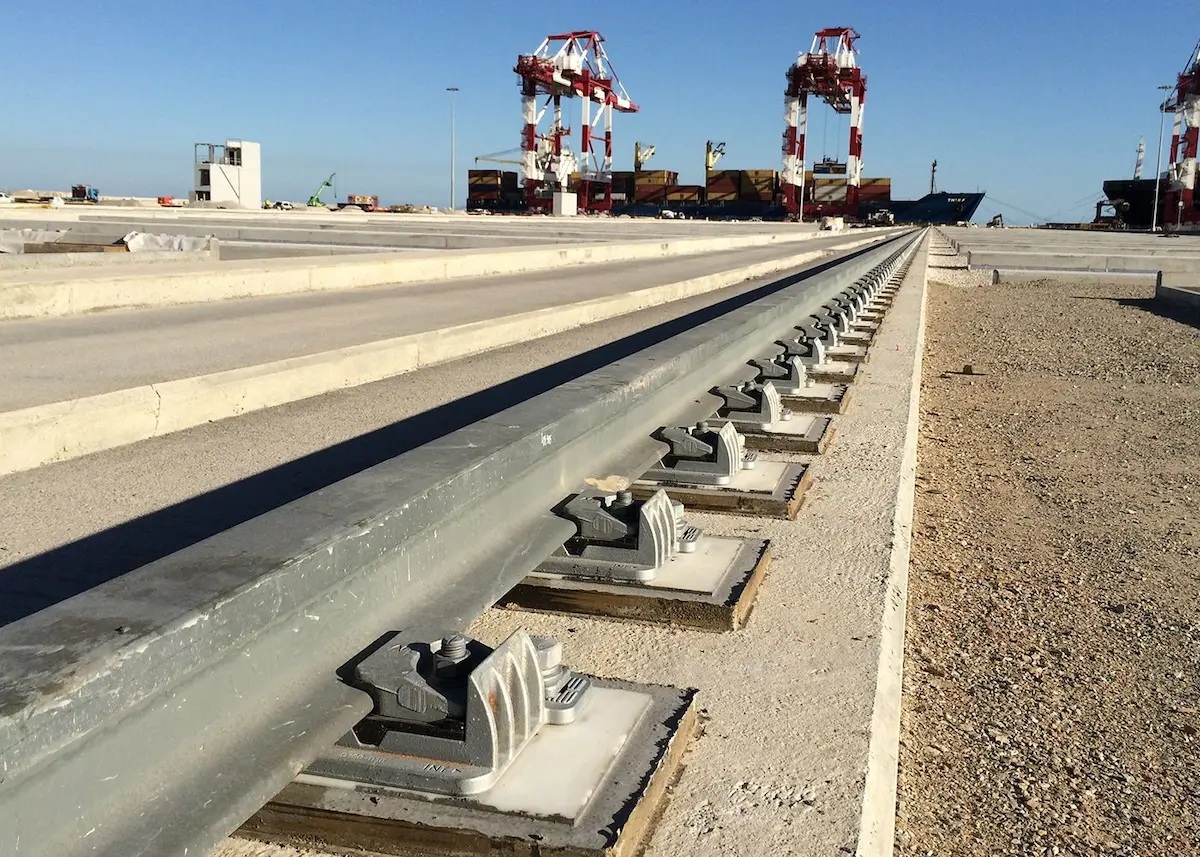
Conclusion
In outdoor conditions, gantry cranes are precision machines and massive wind-resistance subjects. The gantry crane rail clamp is a vital component balancing efficiency and structural safety.
Core Summary
●Fundamental Logic: Clamps use hydraulic or spring-driven mechanical friction to anchor equipment. This directly offsets risks from wind loads.
●Selection Essentials: Options range from manual types to high-response electro-hydraulic and self-locking port models. Selection must match tonnage, environment, and automation levels.
Safety Warning: Ignoring maintenance or improper selection often causes crane sliding or overturning accidents. High-standard braking systems are essential investments for protecting port and industrial assets.
Contact HSCRANE for Professional Wind Protection
Is your lifting equipment threatened by extreme weather? Or does your current clamping system fail to meet new safety standards?
HSCRANE engineers provide:
●Custom selection calculations based on local wind pressure and rail specs.
●Original high-performance replacement parts and system upgrades.
●Technical white papers for complete wind-protection locking systems.
[Inquire Now for Custom Gantry Crane Rail Clamp Solutions]
Further Reading: Building a Comprehensive Safety Line
Rail clamps prevent static “runaway” risks. However, how do you avoid collisions during dynamic operations?
Read “Crane Anti-Collision System Solutions: Enhancing Equipment Reliability and Operational Safety“ to learn how dynamic monitoring completes your safety puzzle.
Gantry Crane Rail Clamp: FAQ
Q: Why install a rail clamp if I already have wheel brakes?
A: This is a common safety misconception. Motor brakes (brakes) handle deceleration and parking during operation. Their braking torque is limited. A rail clamp is a static anchoring device designed for massive wind loads. Instant gusts can easily exceed motor brake friction. Only a mechanical device acting directly on the rail can prevent sliding.
Q: Which is better: manual or automatic hydraulic clamps?
A: It depends on your specific application and safety level:
●Manual: Simple and low-cost. Best for indoor use, small cranes, or low-wind areas. It relies on manual labor and responds slowly.
●Automatic Hydraulic: Fast response (usually < 5s). It links with anemometers for unattended automatic locking. This is standard for large gantry cranes and coastal ports.
Q: How often should I replace friction pads?
A: Pads are wear parts. Frequency depends on the environment and usage. Engineering suggestions:
●Measure thickness every 3 to 6 months.
●Replace pads immediately if wear reaches 30% of original thickness. Also replace if physical cracks or uneven wear appear.
Q: What are the requirements for high-corrosion seaside environments?
A: Salt spray causes mechanical corrosion and hydraulic leaks. HSCRANE recommends:
1.Material Upgrades: Pins and fasteners should be stainless steel or hot-dip galvanized.
2.Coating Standards: The housing must meet C5-M anti-corrosion grades.
3.Sealing: Use high-performance anti-corrosion seals for cylinders. Increase electrical protection to IP65 or higher.
Q: How do I know if the braking force is sufficient?
A: Professional verification uses this formula:
Ff ≥ K · Fw
(Ff is effective braking force, Fw is max design wind load, K is the safety factor, usually≥1.5).
If the crane moves during wind, or hydraulic pressure is below rated levels, the braking force is insufficient. You must adjust the pressure or replace the springs.
Q: How does the clamp link with the wind alarm?
A: This follows a closed-loop safety logic:
1.The anemometer monitors real-time wind speed.
2.At warning levels (e.g., 15m/s), the system triggers sound and light alarms.
3.At forced-stop levels (e.g., 20m/s), the PLC cuts travel power. It triggers the hydraulic station to release pressure, letting springs instantly lock the rail.
This document is for reference only. Specific operations must strictly comply with local laws and regulations and equipment manuals.