

Overview
In daily operations of mobile equipment like gantry and overhead cranes, the crane cable drum acts as the lifeline. It provides power and control signals. Poor selection often causes cable slack, tangling, and outer jacket wear. It can even lead to retracting failure and power interruption during critical lifting. Engineers often struggle to choose among spring, motor, and magnetic coupler types. Based on working conditions, this article systematically reviews their principles, differences, applications, and parameters. It provides a professional and practical selection guide for you.
Looking for the right crane cable drum for your crane?
HSCRANE offers crane cable drums with various drive types. Providing crane type, travel distance, and cable parameters helps determine the best config.
[Click to Get HSCRANE Selection & Quote]
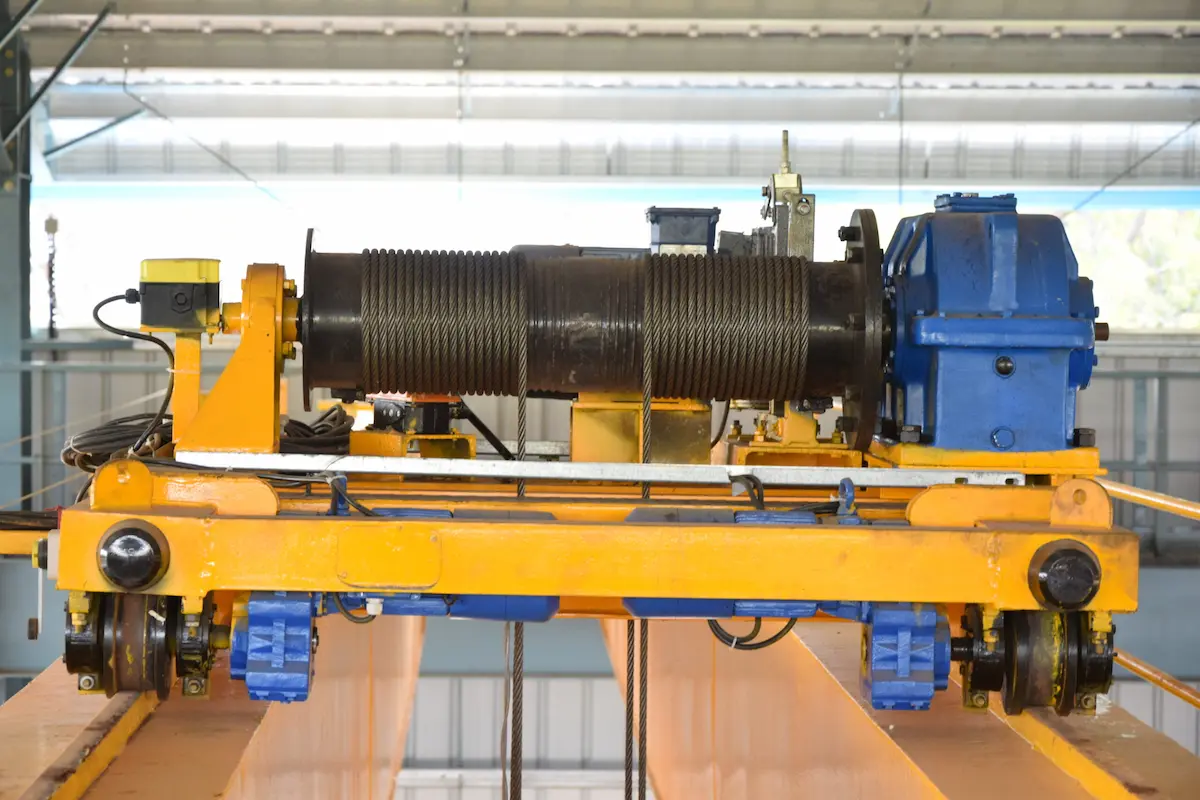
What Is a Crane Cable Drum? What Is Its Function?
Safely and stably supplying power and signals in heavy mobile equipment is a key focus for field engineers. The crane cable drum is the core equipment to solve this dynamic power supply challenge.
Basic Working Principle of a Crane Cable Drum
Mechanically, the core logic of the drum is winding and releasing cables via automatic spool rotation. Its specific working mechanism includes the following aspects:
●Dynamic Retraction Synchronization: As the crane moves on tracks, the inner drive automatically senses movement for synchronized spooling or tensioning.
●Two-Way Transmission of Power and Signals: Built-in slip ring brush boxes or rotary joints seamlessly transmit fixed external power and signals to moving parts.
●Constant Tension Control: Maintaining proper mechanical tension during spooling prevents cables from sagging, touching the ground, or stretching damage.
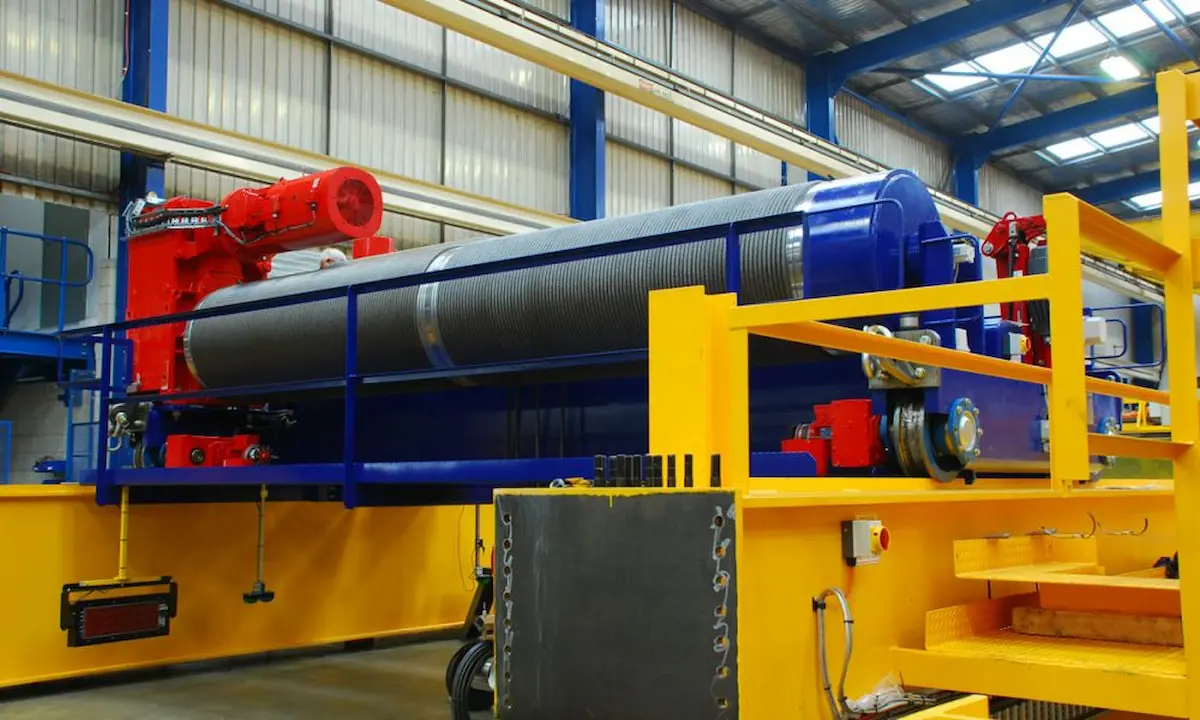
Core Functions of a Cable Drum
●Eliminate Slack and Tangling: Automatically adjusting cable length eliminates safety hazards caused by ground accumulation and tangling.
●Reduce Mechanical Damage: Guiding cable movement greatly reduces damage from improper dragging, sharp friction, and over-bending.
●Enable Long-Travel Movement: It provides reliable mobile track power support for long-distance equipment like gantry cranes and unloaders.
●Ensure Continuous Operation: Eliminating power outages from cable jamming or breakage reduces unplanned downtime and boosts overall efficiency.
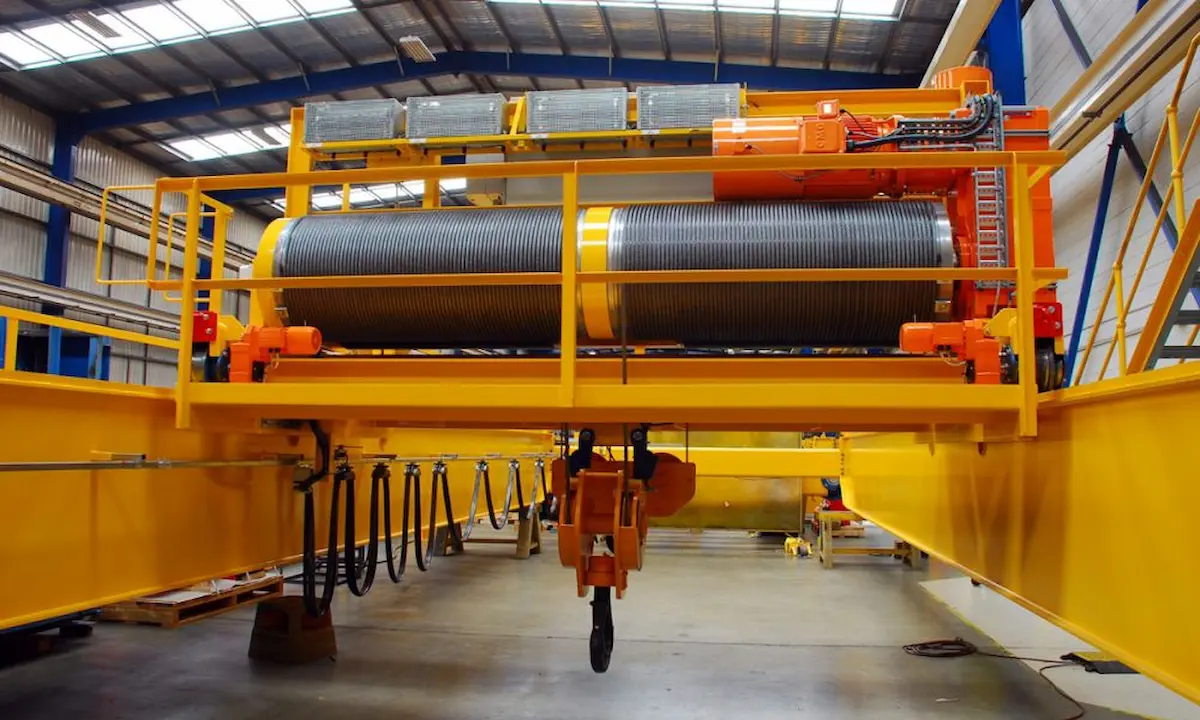
Which Lifting Equipment Needs a Cable Drum?
|
Equipment Type |
Typical Application Scenario |
Application Description |
| Gantry cranes and double-girder gantry cranes | Freight yards, outdoor material yards, hydropower dams | With large spans and long travels, the crane cable drum is the main power and signal transmission solution. |
| Specific mobile power supply for overhead cranes | Workshop interiors, heavy metallurgical cranes | It serves as a safe power supply backup for special conditions or when traditional conductor bars cannot be used. |
| Bridge erecting machines and large engineering cranes | High-speed railway construction, highway bridge construction | With frequent equipment relocation, high portability and reliability are required for the cable drum. |
| Ports, shipyards, and heavy steel fabrication | Quayside container cranes, shipbuilding gantry cranes, heavy transfer carts | It is a standard power management unit for high-intensity and high-frequency operating environments. |
Note: Choosing a crane cable drum, conductor bar, or cable carrier depends on equipment structure, travel distance, dust, and site conditions.

What are the Differences Between Spring, Motor, and Magnetic Coupler Cable Drums?
Facing varied working conditions, crane cable drums evolved into multiple drive types. Ignoring performance boundaries during selection often causes costly problems later. Below is a core comparison of three main types:
|
Comparison Dimension |
Spring Cable Drum |
Motorized Cable Drum |
Magnetic Coupler Cable Drum |
| Drive Method | Relies on internal spring mechanical storage for rewinding | Independent motor drive and professional gear transmission mechanism | Uses magnetic coupling principles to smoothly transmit torque |
| Structural Features | Relatively simple, compact, and requires no external power source | Comprehensive functions with more drive and electrical control configs | Relies on magnetic transmission with a clever structural design |
| Selection Focus | Spring torque attenuation, max effective travel, and cycle counts | Motor power matching, running speed, VFD or PLC control | Transmitted torque size, slip control, and temperature rise |
| Typical Selection Direction | Suitable for compact applications with short travels and light loads | Suitable for long travel, heavy load, and high intensity operations | High-demand conditions that strictly prioritize constant cable tension |
| Key Precautions | Pay attention to spring fatigue and long-term tension decay | Focus on electrical system stability and routine drive maintenance | Accurately calculate magnetic coupling parameters to match actual conditions |
The comparison above serves as a general guide only. It does not reflect performance boundaries of custom models. Final solutions must be based on actual product technical documents and mechanical calculations.
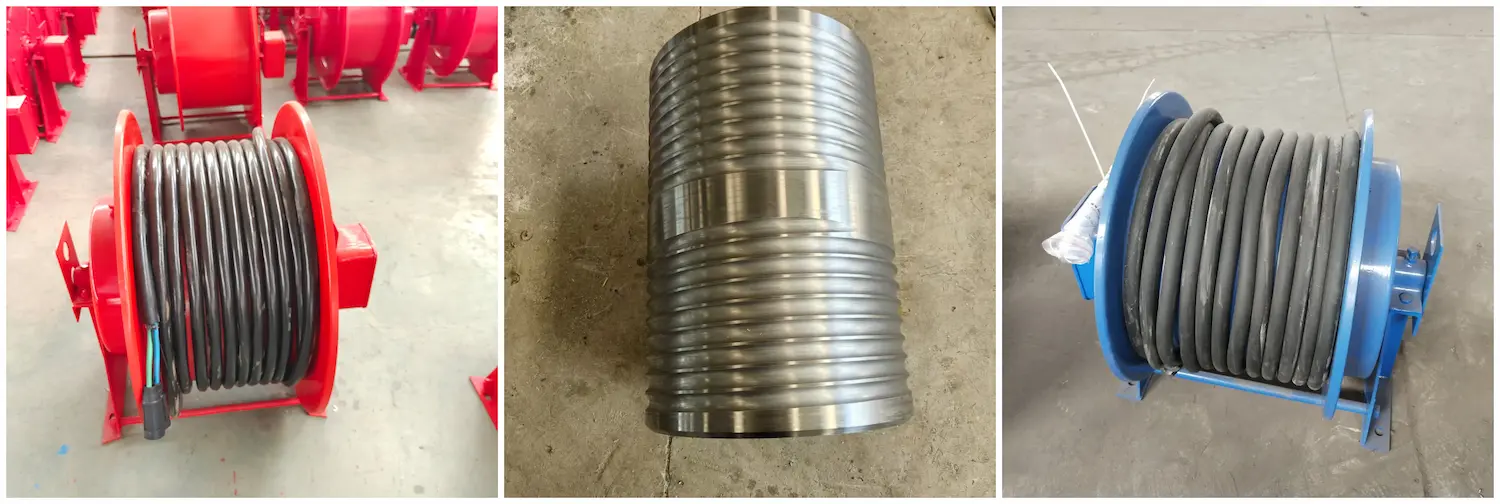
How to Select the Right Crane Cable Drum Based on Working Conditions?
Selection simply means matching job site requirements with drum performance. Missing key parameters upfront leads to severe cable wear or weak pulling force. You can start from the following five aspects:
●Select by Crane Travel Distance: Travel distance determines the crane cable drum’s capacity and drive type. Trips within 30 meters are easily handled by spring types; for long travels reaching dozens or hundreds of meters, motor or magnetic coupler types are necessary, and identifying the power supply location (track end or midpoint) is vital as it affects required spooling length.
●Select by Cable Specifications: Cable outer diameter (mm), weight per meter (kg/m), and minimum bending radius are key factors. Thicker, heavier, or multi-core cables require higher torque; choosing a spool with too small a bending radius accelerates internal copper wire fatigue.
●Select by Running Speed and Frequency: When crane speed is under 20m/min, spring drives can manage smoothly; for speeds over 30m/min or high-frequency movements, a crane cable drum with VFD or magnetic slip adjustment must be selected to prevent cable breakage from sudden tension changes during fast starts or stops.
●Select by Mounting Position and Environment: Consider whether mounting space is beside the main girder, under support legs, or inside the cabin. For harsh environments like port salt spray, metallurgy heat, or explosion-proof areas, the crane cable drum requires upgraded housing protection (IP65/IP66), anti-corrosion coatings, and slip ring insulation.
●Key Parameters to Provide Before Purchasing: To avoid disputes, prepare these parameters before ordering: travel distance, power point location, crane speed, cable diameter, weight per meter, voltage, signal core count, mounting space limits, operating temperature, and protection requirements.
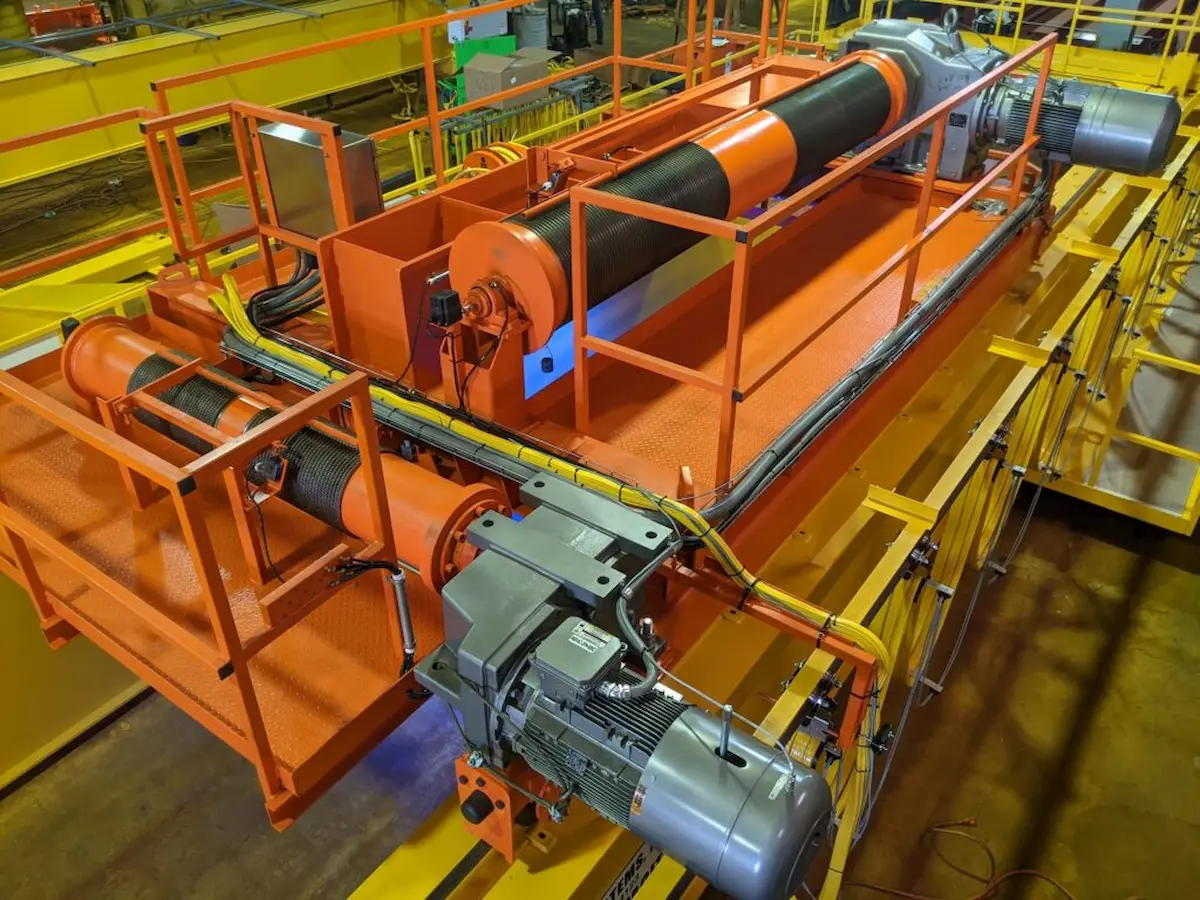
Why Choose HSCRANE Crane Cable Drum?
Choosing HSCRANE means seamlessly connecting overall crane structures with professional power supply safety codes. We deliver far more than just a junction box. From internal mechanical design to smooth power transmission, every crane cable drum strictly follows international standards, guaranteeing long-term operational stability.
●Strict International Standards: For structural design and load calculation, we strictly implement ISO 8686-1:2012 requirements. Electrical and mechanical fatigue life evaluations meet FEM 1.001 (M4-M8) rules, while cable mechanical protection fully satisfies EU EN 13001-2:2014 dynamic overload standards.
●Flexible Drive Customization: To suit varied project budgets and specific working conditions, we provide full series options including spring, motor-driven (with VFD control), and magnetic coupler types. This prevents under-powering or costly over-specifications.
●Long-Term Cable Protection: Unique spool structures optimize cable arrangement and bending radii. Built-in high-conductivity slip ring boxes effectively prevent moisture and dust, ensuring continuous power and signal transmission during frequent rotations without arcing.
●Extreme Condition Testing: From drive shaft load bearing and spool rigidity to internal fatigue life, rigorous software simulations and physical testing ensure zero deformation or failure under high-frequency mechanical impacts.
●Harsh Environment Options: Whether for high salt spray coastal docks, dusty steel mill yards, or extreme cold regions, we provide targeted galvanized anti-corrosion housings, explosion-proof collector boxes, and electric heating insulation modules.
●Proven Engineering Experience: Leveraging years of global crane project expertise, we understand real operational pain points. Our reliable factory configurations fit seamlessly on-site, saving you time and secondary modification hassle.
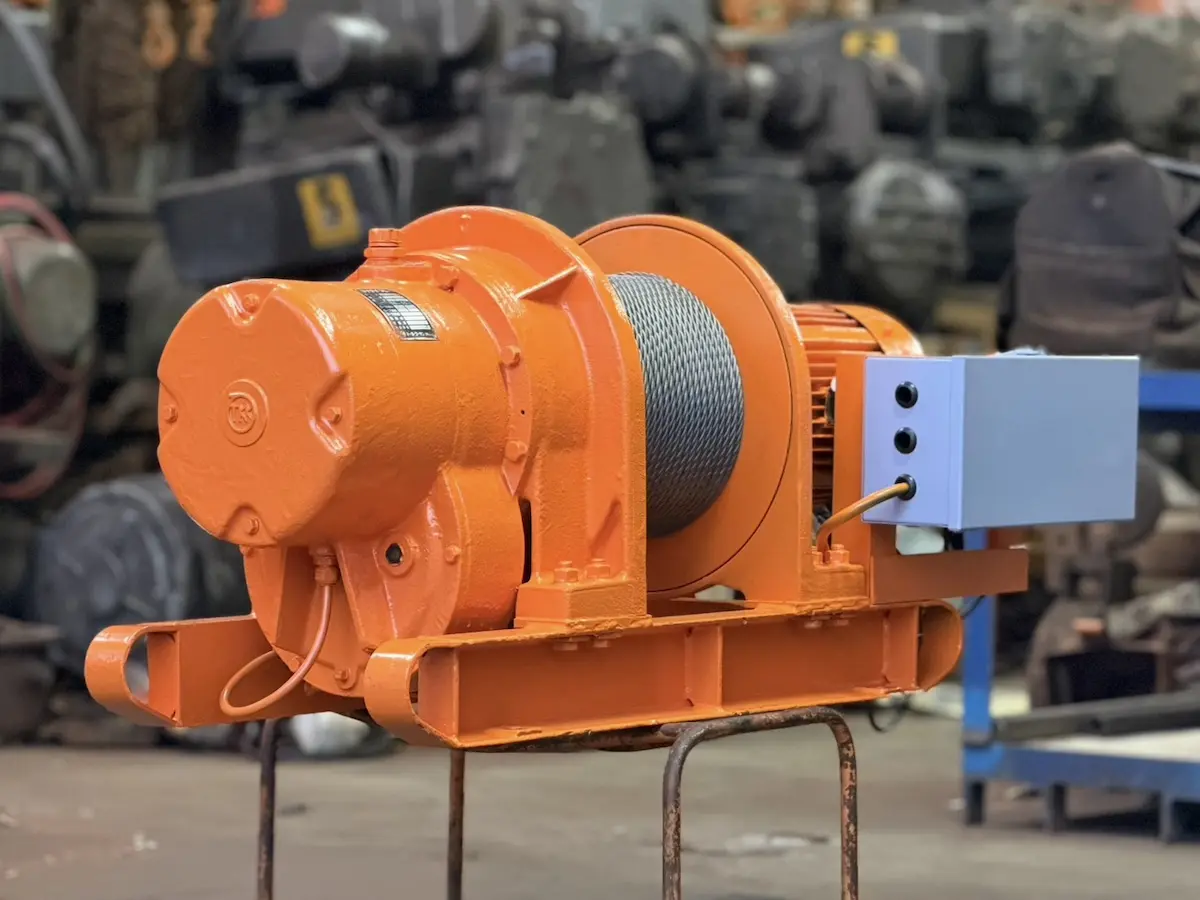
Classic Case — HSCRANE 20t Double Girder Gantry Crane Project in Vietnam
●Project Information: The client is a large steel structure and heavy component manufacturer in Dong Nai Province, Vietnam (Hoa Phat Steel Structure). They purchased 2 sets of HSCRANE 20-ton A-type double girder gantry cranes (rated load 20t, span 28m, track length 180m, duty class A5) for high-frequency steel plate and heavy welded component handling in an open yard.
●Project Challenges:
1.Outdoor Rainy and High Humidity Environment: Vietnam’s coastal climate features high heat, humidity, and long rainy seasons. The site required a power collection system protection rating of IP65 or higher to prevent cable short circuits and housing corrosion.
2.180-Meter Long Travel and High-Speed Impact: Crane traveling speed reached 38m/min. Traditional spring drums could not meet the 180m travel pulling force. Frequent starts and stops easily caused cable stretching, slipping, or track jamming.
●HSCRANE Solution: For long travel and high frequency conditions, the HSCRANE team matched a VFD motor-driven + magnetic coupler control crane cable drum (midpoint power supply, spool equipped with 90m 3×35+1×16mm² heavy rubber flexible cable). Combined with a built-in magnetic slip mechanism and PLC VFD control, spooling tension stayed constant at 800–1000 N across the entire travel. The collector box was upgraded to a 304 stainless steel explosion-proof anti-moisture structure with internal anti-condensation heating modules.
●Case Takeaways: For outdoor gantry projects with long travel (>100m), high speed (>30m/min), and harsh environments, never force spring drums to cut costs. Magnetic coupler or VFD motor crane cable drums are the ultimate solution to ensure zero cable stretching and zero system downtime.
Conclusion
Choosing the right crane cable drum makes gantry and overhead cranes run smoother. It also directly helps companies avoid unplanned downtime risks caused by broken or jammed cables. Ultimately, selection core lies in figuring out field conditions: travel distance, speed, and humidity. Compact spring types save hassle for short travels, while motor or magnetic coupler types must safeguard long travels and heavy loads. Remember, parameters cannot be guessed blindly. Cable weight, speed, and protection levels must align strictly with actual working conditions. Instead of frequent later repairs, calculating details during upfront procurement and following industry standards keeps equipment working reliably for years in workshops or docks.
Struggling with Crane Cable Drum Selection?
Our engineering team is ready to provide professional technical support anytime. Whether dealing with complex travels, special environments, or custom designs, we match the optimal power solution to avoid trial-and-error costs. Click the button below to connect directly with our experts for custom product info and quotes!
[Click to Contact HSCRANE Professional Team]
Recommended Reading
With power cable spooling solved, core mechanical transmissions in lifting operations remain equally vital. If designing overall structures or conducting equipment overhauls, read our sister guide: Crane Drums & Wire Ropes Selection: D/d Ratios, Fleet Angles & Spooling Guide. Shifting focus to mechanical cores, we analyze groove design, D/d ratios, and anti-tangling mechanisms to help eliminate messy spooling and wire breakage.
[Read Full Article: Crane Drums & Wire Ropes Selection: D/d Ratios, Fleet Angles & Spooling Guid]
FAQ
Q1: What travel distance range suits a spring crane cable drum?
A: Spring types suit short travels under 30 meters with lower speeds. Internal spring deformation limits their effective mechanical storage. Longer travels cause fatigue and insufficient rewinding force.
Q2: Why avoid spring drums for long-travel, high-speed cranes?
A: Long travels cause excessive spring tension that snaps cables easily. Pure mechanical rewinding speed cannot match fast crane travel speeds. This delay causes cable slack, accumulation, and ground rolling.
Q3: How to choose between motor and magnetic coupler crane cable drums?
A: Choose motor types for heavy loads, long travels, and VFD speed control. Choose magnetic coupler types for constant tension control. Magnetic slip torque adjustment protects cables from sudden mechanical impacts.
Q4: Why provide cable outer diameter and weight per meter to suppliers?
A: These parameters dictate required torque and overall spooling capacity directly. Heavier cables dramatically increase total required torque after multi-layer winding. Missing data leads to insufficient tension or damaged inner cable insulation.
Q5: How to protect cable drums in port or high-humidity salt spray environments?
A: Specify IP65 or higher housing protection for harsh environments. Use 304 stainless steel collector boxes against salt spray corrosion. Add internal anti-condensation heaters to prevent short circuits and sparking.
This document is for reference only. Specific operations must strictly comply with local laws and regulations and equipment manuals.