

Abstract
This article analyzes how overhead crane rail misalignments impact operational stability. We explain common misalignment types like straightness, parallelism, span, and elevation. Research shows that rail misalignments cause equipment shaking, rail gnawing, abnormal wear, and uneven drive loads. These issues reduce equipment life and increase safety risks. We summarize typical failure symptoms based on real working conditions. Our solutions cover installation control, precision testing, and maintenance adjustments. We also highlight HSCRANE advantages in high-precision manufacturing and stable drive systems. These features effectively improve crane smoothness and reliability. Scientific management and optimized design can minimize rail misalignment impacts. This ensures safe and efficient equipment operation.
Overhead cranes are key equipment in modern industrial production. They are widely used for material handling and loading tasks. Operational stability directly affects production efficiency and workplace safety. Unstable operation impacts task precision and creates potential safety hazards. As the foundation for crane movement, rail installation precision is vital. Rail condition determines overall performance. Therefore, rail misalignments are a critical factor affecting operational stability.
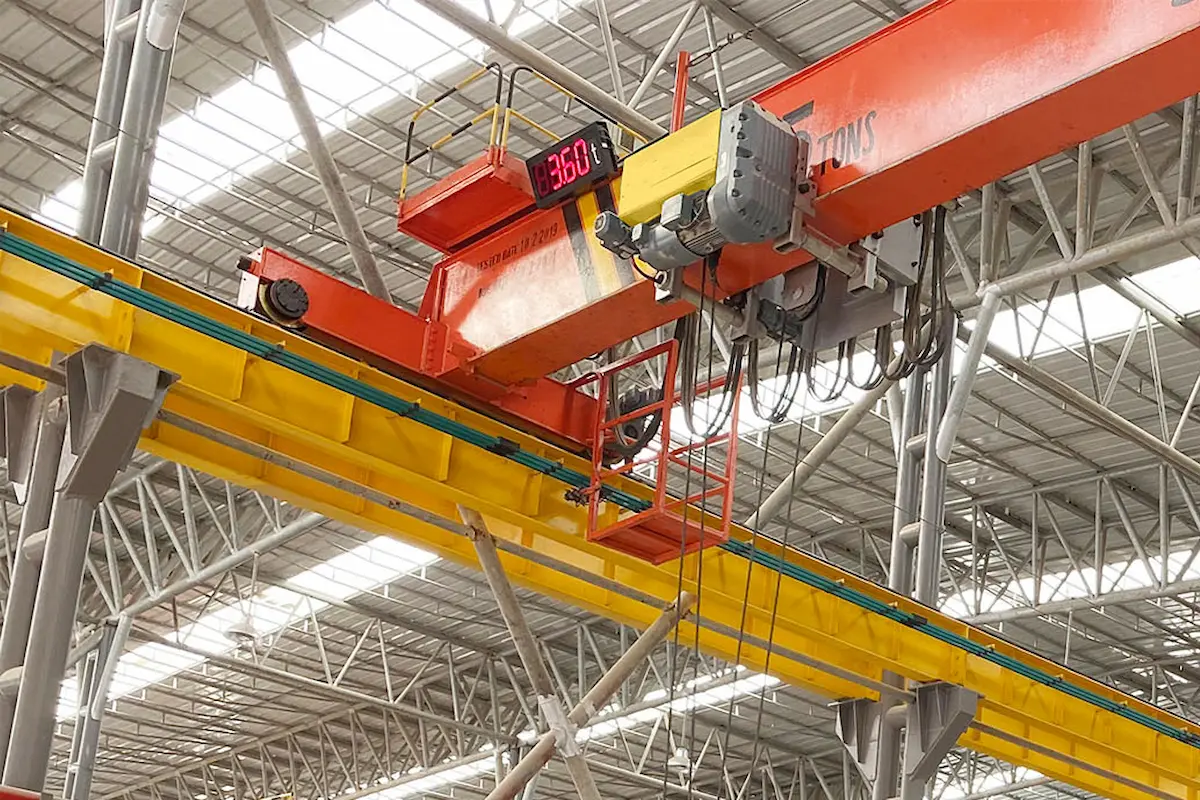
Main Types of Overhead Crane Rail misalignments
Crane operation depends on the geometric precision and installation quality of the rail system. Any rail misalignment directly impacts equipment smoothness, service life, and safety performance. Based on engineering practice, rail misalignments mainly fall into the following categories:
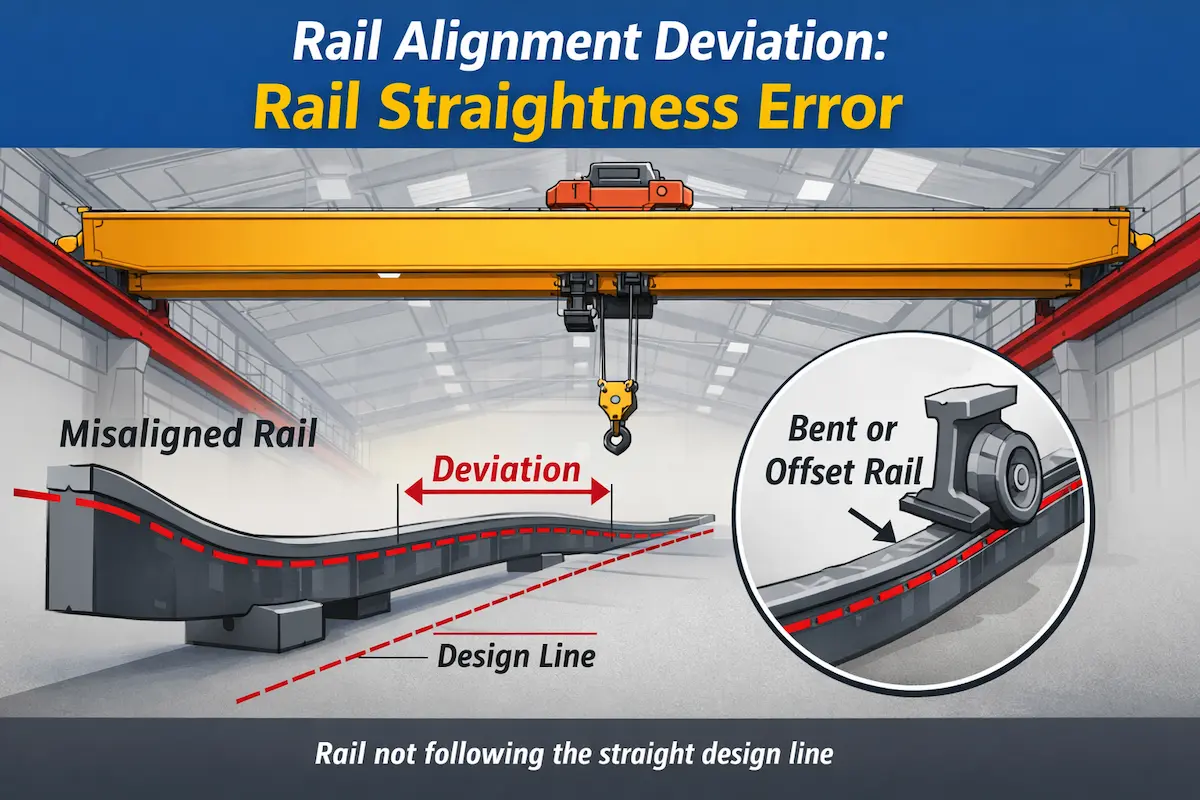
Rail Straightness misalignment
Rail straightness misalignment refers to the horizontal deviation or bending of the rail. It fails to maintain the required straight form in the horizontal projection.
Common Manifestations:
●Local bending or overall offset of the rail.
●Inaccurate positioning during the installation process.
●Deformation caused by foundation settlement after long-term use.
Impact Analysis: Straightness misalignments generate lateral forces during crane operation. This causes uneven contact between wheels and rails, increasing resistance and vibration. It may even cause “crabbing” or deviation issues.
Rail Parallelism misalignment
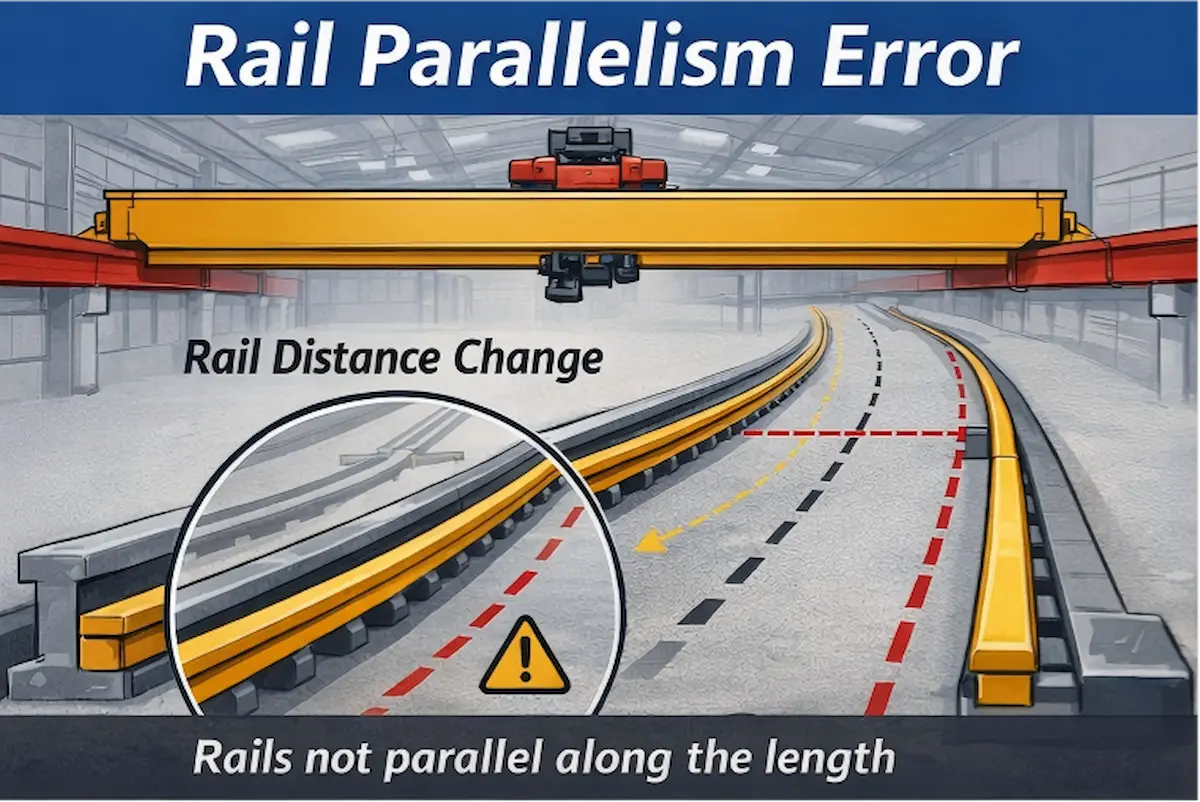
Rail parallelism misalignment means two rails fail to stay parallel along their length. This results in varying spacing between the rails at different positions.
Common Causes:
●Measurement misalignments during the initial installation.
●Structural deformation or uneven foundation settlement.
●Rail position shifts due to long-term heavy loads.
Impact Analysis: Parallelism misalignment is a major cause of “rail gnawing.” When rails are not parallel, wheels suffer lateral squeezing forces. This increases energy consumption and accelerates wear on both wheels and rails.
Span Deviation
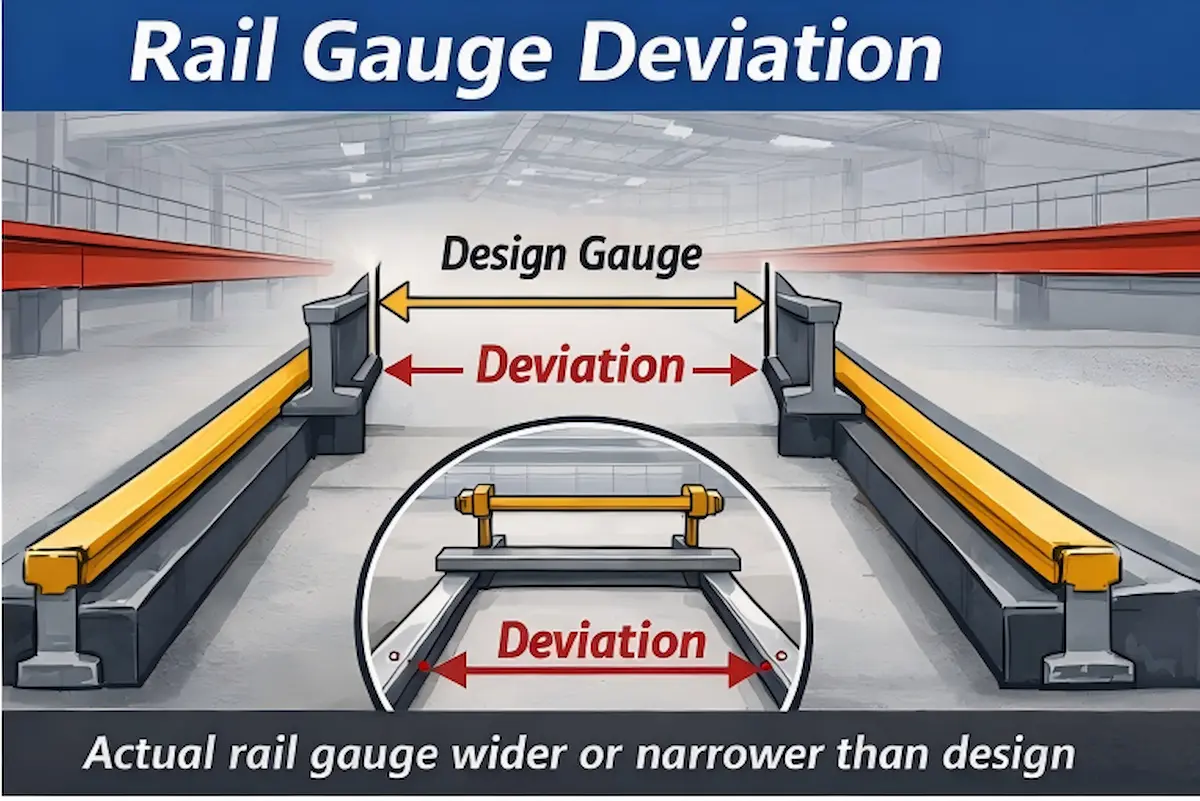
Span deviation refers to the difference between the actual spacing and the design span.
Common Situations:
●The span is too large or too small.
●Sudden changes in span occur in local areas.
Impact Analysis:
Span deviation directly affects the force distribution of the crane traveling mechanism:
●Large Span: Causes abnormal contact and reduces guiding stability.
●Small Span: Squeezes the wheels and increases running resistance.
●Severe cases lead to wheel set deformation, jamming, or safety accidents.
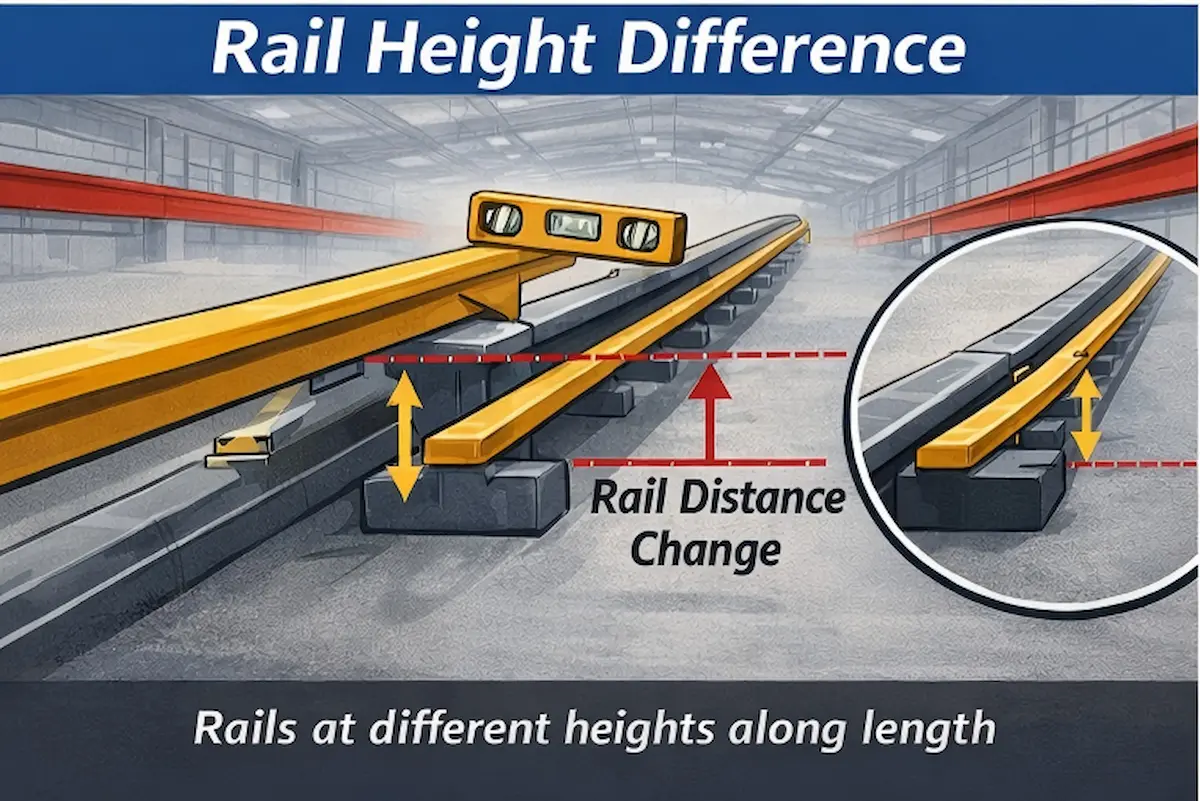
Elevation misalignment (Height Difference)
Elevation misalignment means the vertical height of two rails is inconsistent. It also refers to undulations along the same rail length.
Common Causes:
●Uneven construction of the rail foundation.
●Failure to perform precise leveling during installation.
●Foundation settlement occurring over long-term usage.
Impact Analysis:
Elevation misalignments cause periodic vibration and impact loads during crane operation. This places extra stress on the structure:
●Increases fatigue risk for main and end beams.
●Affects the smoothness of the lifting process.
●Reduces overall operational comfort and equipment safety.
Joint Alignment misalignment
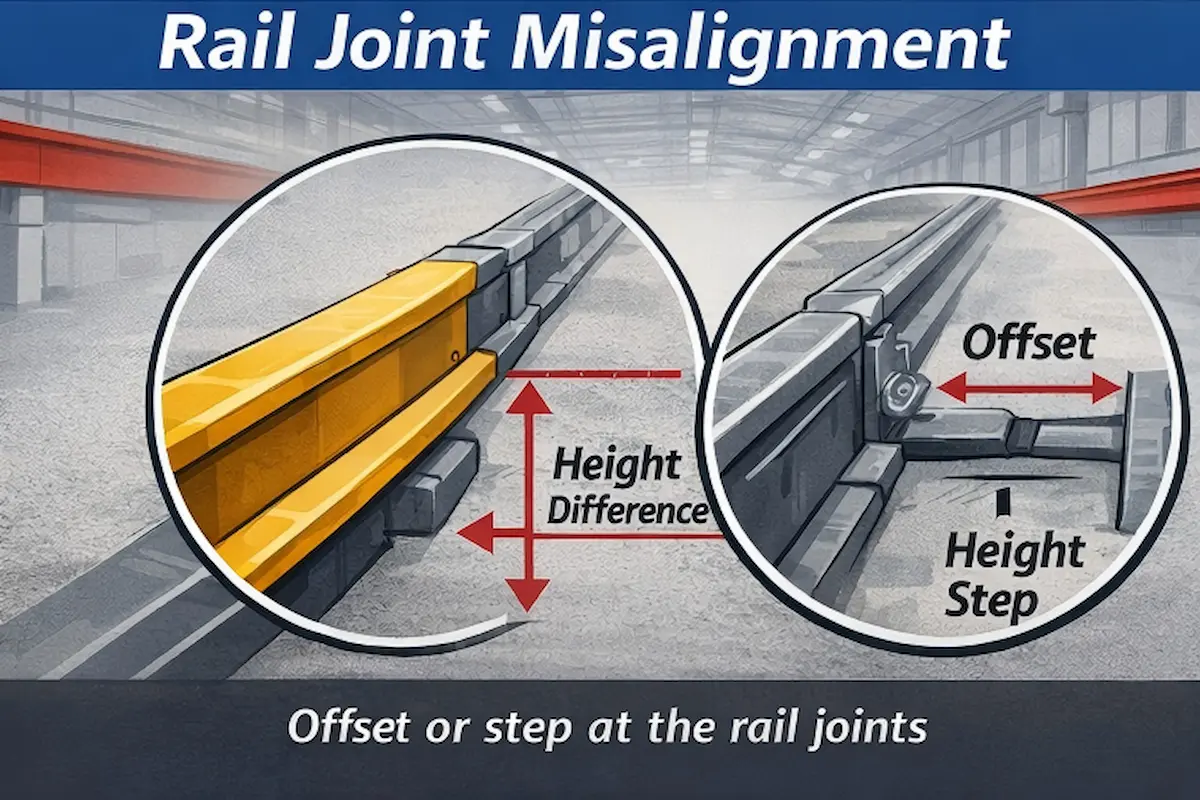
Joint alignment misalignment occurs when rail joints fail to provide a smooth transition. This happens in both horizontal and vertical directions.
Common Manifestations:
●Uneven height at the rail joint.
●Left or right misalignment of the rail ends.
●Excessive joint gaps or improper joint treatment.
Impact Analysis:
Significant impact loads occur when wheels pass over the joints:
●Causes periodic vibration and loud operational noise.
●Exacerbates local wear on wheels and rail ends.
●Long-term operation may lead to loose fasteners or structural damage.
Impact Analysis of Rail misalignments on Operational Stability
Rail misalignments are more than surface unevenness. They create chain reactions through mechanical transmission. Here is a deep analysis of their impact on stability:
Impact on Operational Smoothness
Dynamic load coefficients increase significantly when cranes pass height differences or misaligned joints.
●Vibration and Shock: Uneven rails cause wheels to jump vertically. This instant impact travels through the wheel set, causing strong local vibrations.
●Noise Pollution: Continuous metal clashing at joints signals component damage. It also distracts operators and lowers the quality of the work environment.
Impact on Structural Safety
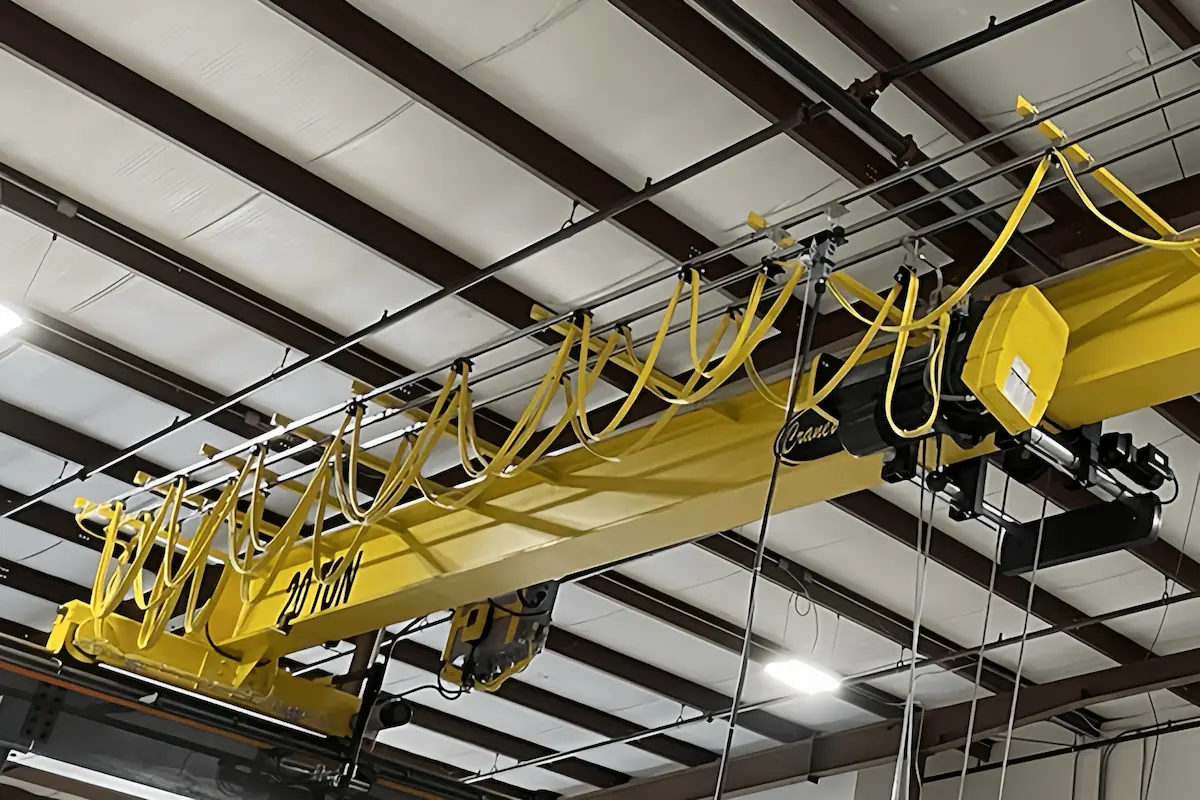
Rail misalignments change the crane’s original stress model. This places extra burdens on the metal structure.
●Increased Tearing Risk: Large span deviations force the crane to drag along the rails. This lateral pulling force often destroys end carriage connection welds first. If welds tear, the crane faces total failure or falling risks.
●Structural Fatigue: Long-term operation on faulty rails puts main beams under abnormal stress. Research shows uneven joints cause local stress surges. This accelerates fatigue cracks and shortens the overall service life.
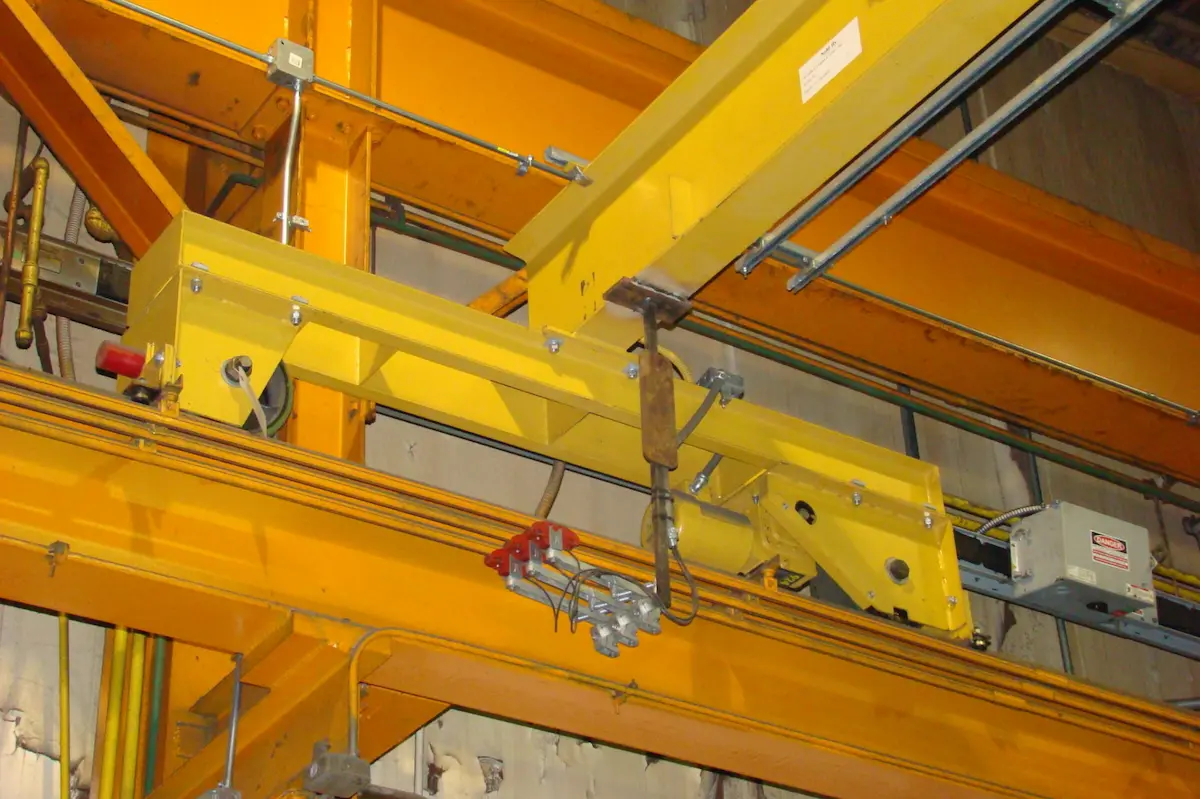
Impact on Wheel and Rail Wear
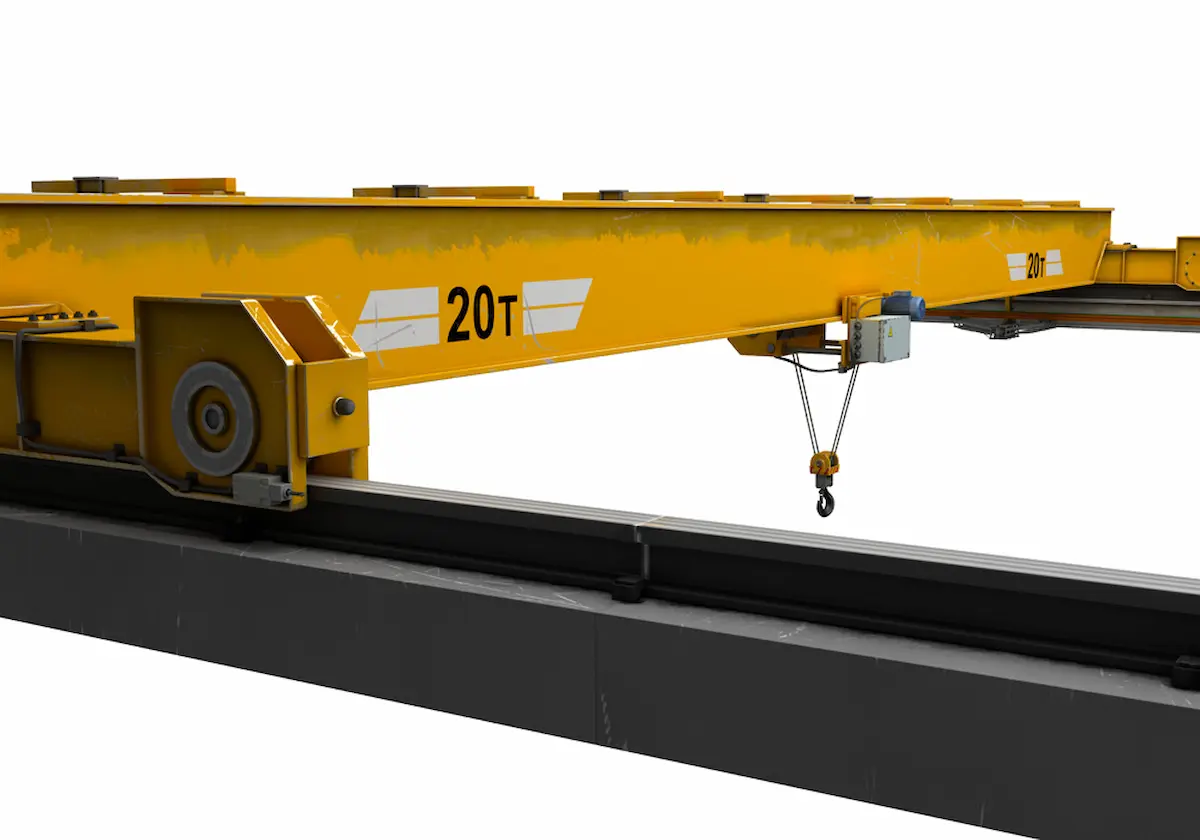
This is the most direct negative effect of parallelism and straightness misalignments.
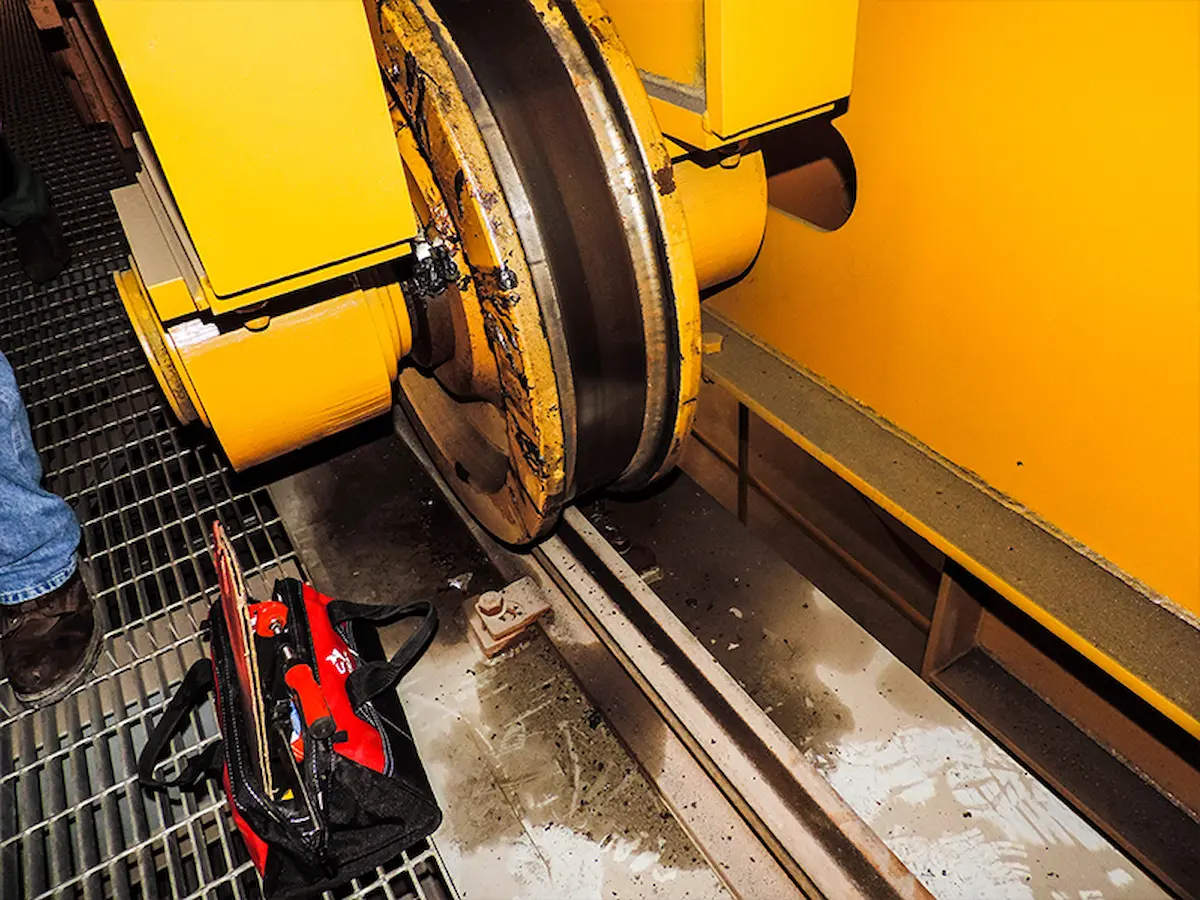
●Rail Gnawing and Uneven Wear: Strong friction occurs between wheel flanges and rail sides. This process generates a large amount of metal debris.
●Flange Damage: Severe lateral friction thins the wheel flange quickly. This abnormal wear increases replacement costs and worsens tracking issues due to inconsistent diameters.
Impact on the Drive System
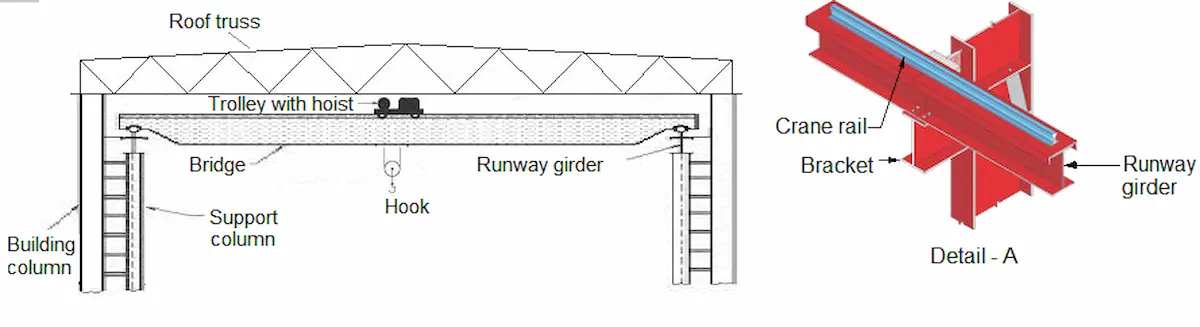
Rail misalignments convert into extra running resistance. This puts heavy pressure on the drive source.
●Uneven Motor Load: To overcome friction from rail gnawing, drive motors show significant current differences. This leads to frequent motor overheating.
●Shortened Reducer Life: Frequent impact loads transmit backward through the linkage shaft to the reducer. Gears working under uneven loads suffer from pitting or seal failure.
Impact on Safe Operation
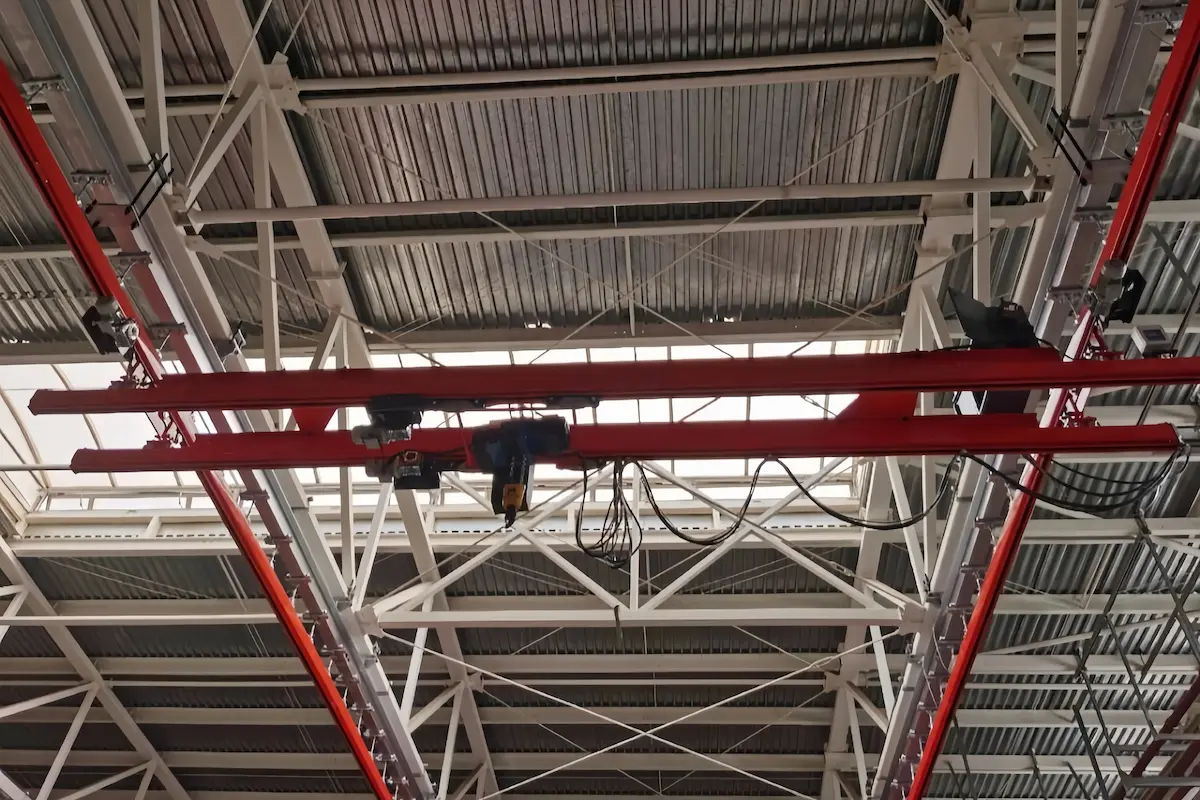
This is the most dangerous level. It directly threatens personnel and equipment safety.
●Increased Derailment Risk: Combined span and straightness misalignments may cause wheels to climb the rail. This leads to high-risk derailment or falling accidents.
●Impact on Lifting Precision: Rail shaking and deviation cause unexpected hook swings. This makes precise positioning difficult and reduces efficiency in automated warehouses or assembly shops.
Common Problems and Failure Symptoms
When rail misalignments exist, overhead cranes show several typical failure symptoms. Identifying these issues helps evaluate rail status and take corrective actions quickly.
| Failure Symptoms | Core Manifestation Description | Possible Rail misalignment Causes | Potential Risks and Impacts |
| Crane Deviation | The crane automatically leans to one side. It cannot maintain a straight travel path. | Poor rail straightness or inconsistent rail elevation (left high, right low). | Increased operational difficulty; leads to structural distortion and excessive local stress. |
| Severe Rail Gnawing | Intense friction between wheel flanges and rail sides. It creates metal shavings or rust. | Parallelism exceeds standards (toe-in/out), or span deviation is too large or small. | Rail gnawing causes piercing metal screams and heavy iron debris. Wheel life drops from 5-8 years to months. |
| Abnormal Noise | Dull thumping sounds or sharp grinding noises during operation. | Misaligned rail joints, excessive joint gaps, or surface peeling. | Loose components; the transmission system (reducer) suffers damage from impact loads. |
| Operational Shaking | Obvious vertical vibration or horizontal swaying during travel. | Rail elevation misalignments exceed standards, local rail bending, or settlement. | Reduced lifting precision; accelerates fatigue in main beam welds and loosens electrical parts. |
| Shortened Life | Frequent bearing damage, main beam sagging, and high motor or reducer failure rates. | Long-term comprehensive rail misalignments and uncorrected harsh working conditions. | Maintenance costs surge; premature equipment scrapping and increased unplanned downtime. |
These failure symptoms often result from multiple rail misalignments working together. In practice, combine detection data with operational phenomena for root-cause analysis. This ensures the long-term stable operation of overhead cranes.
Is Your Crane Rail Misaligned? The 3-Minute Visual Inspection Checklist
Don’t wait for a catastrophic failure. If you notice any of these symptoms on your shop floor, your crane rails are likely out of tolerance (ISO 12488-1):
●The “Metal Snow” Effect: Look at the floor directly beneath your crane runways. Do you see shiny metal dust or shavings? This is the tell-tale sign of severe flange wear caused by span or parallelism misalignments.
●Loud Screeching on Startup/Travel: A healthy crane should hum. If your crane lets out a high-pitched metallic scream when traveling down the runway, the wheels are binding against the rail head.
●Loose or Sheared Rail Clips: Walk along the runway walkway. If you see missing bolts, sheared rigid clips, or rails visibly shifting during crane passage, your fastening system has failed.
●Premature Drive Motor Burnouts: Are your inverter (VFD) drives constantly tripping on “overcurrent,” or are your travel motors overheating? The motors are working overtime to overcome the friction of a misaligned track.
The HSCRANE Upgrade: Flexible Rail Fastening Systems
Traditional rigid welding or bolting is obsolete for heavy-duty cranes. To absorb impact and accommodate building settlement, HSCRANE offers Flexible Rail Fastening Upgrades. By utilizing adjustable clips with vulcanized rubber pads, we can reduce dynamic stress by up to 30%, extending your wheel and rail life by years, not months.
Rail misalignment Detection and Control Methods
To ensure stable crane operation, establish a strict control system from installation to maintenance. Here is the industry-recognized rail quality control process:
Installation Phase Control
Installation precision is the foundation for smooth operation.
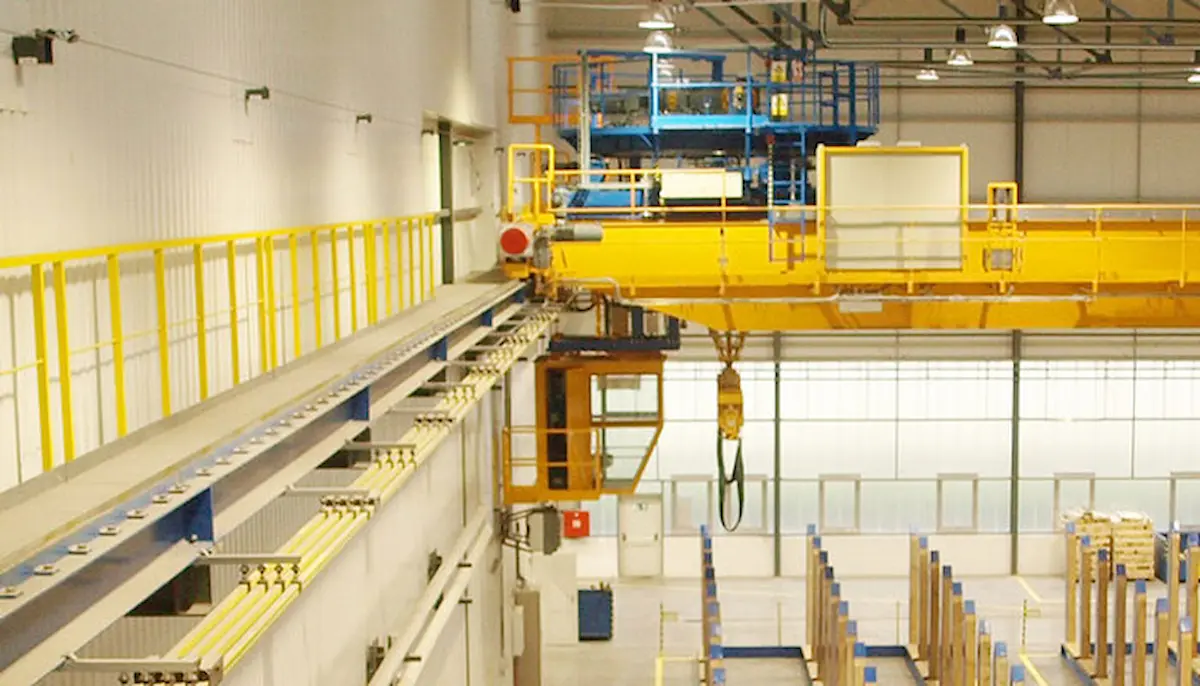
Precise Measurement Standards: Use high-precision theodolites or steel tapes before installation. Recheck centerlines and elevations of load-bearing beams.
●Standardized Construction: Follow international standards like ISO 12488 for rail clip fixation. Ensure joint misalignments stay within ±1mm using miter joints or welding.
●Secondary Review System: Re-measure span and parallelism under no-load and rated-load conditions. Ensure geometric dimensions remain compliant after stress release.
Adjustment and Maintenance Methods
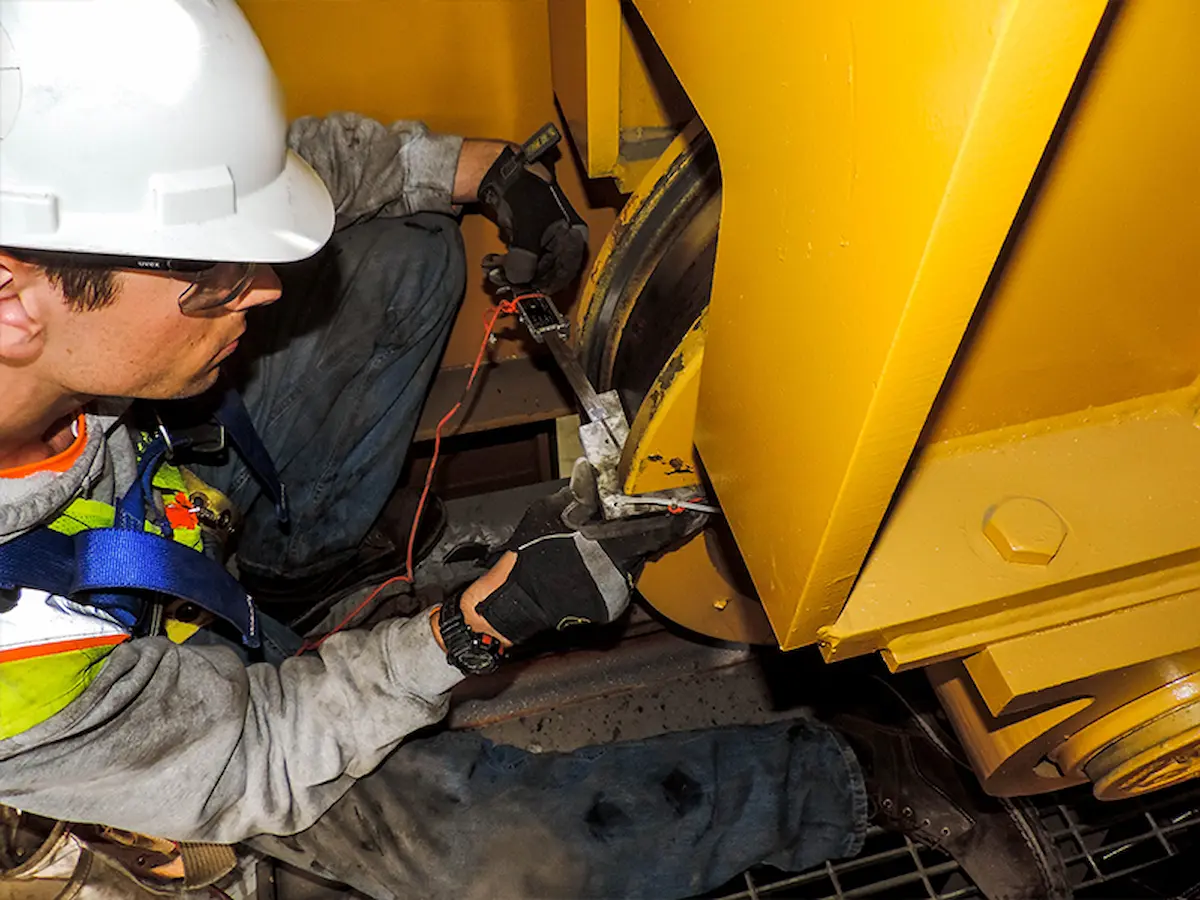
Take specific actions when misalignments exceed standard ranges (usually span misalignment within ±5mm):
●Rail Correction: Loosen rail clips and use adjustment bolts to realign the rail. Then, re-tighten the rail to the design centerline.
●Shim Plate Adjustment: Install standard steel shims for local elevation misalignments. This compensates for height differences and eliminates travel impacts.
●Wheel Set Optimization: If rail adjustment space is limited, adjust wheel skewness. This compensates for rail misalignments and improves rail gnawing issues.
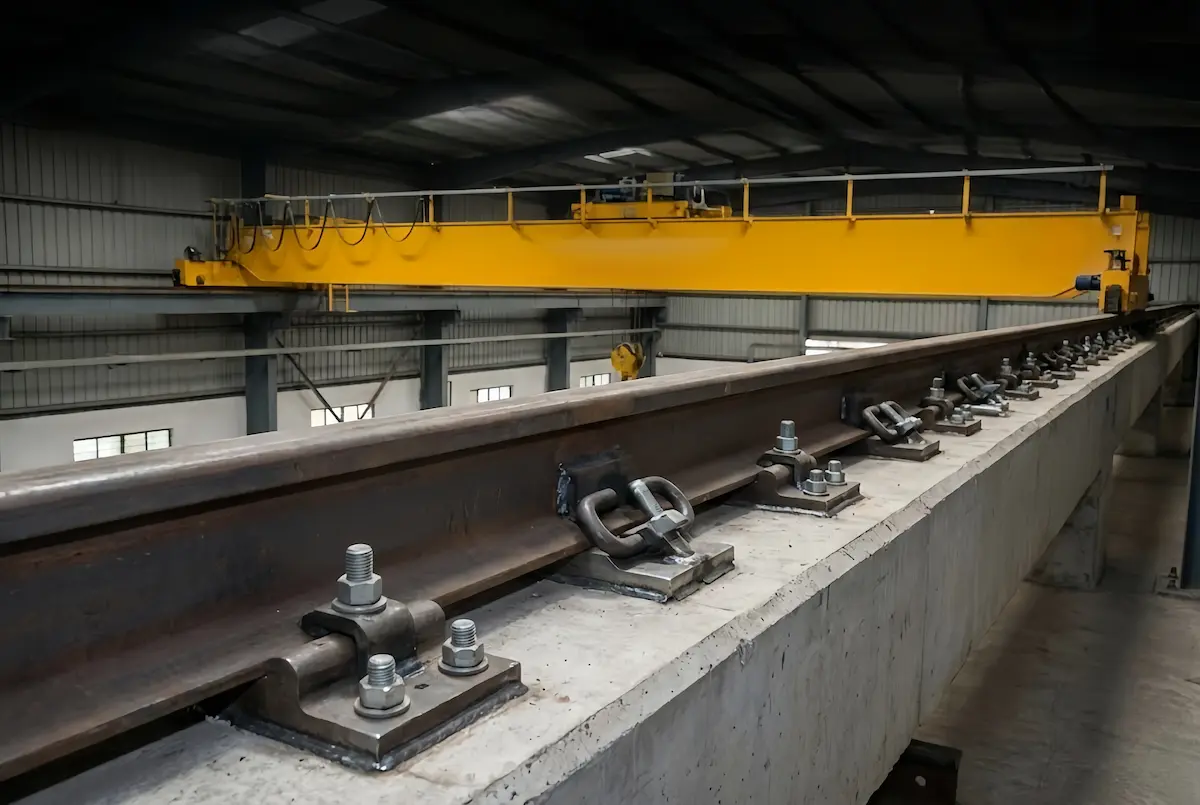
HSCRANE recommends using Adjustable Clips with vulcanized Rubber Pads. They absorb over 30% of travel vibration. They allow for thermal expansion and lateral movement. This fundamentally prevents loose clips and rigid rail deformation.
Optimization Suggestions to Improve Overhead Crane Stability
●Improve Rail Installation Precision: Strictly control straightness, parallelism, and elevation misalignments. Use high-precision measuring equipment and standardized construction to reduce deviations at the source.
●Select High-Quality Wheels and Drive Systems: Use wear-resistant wheel materials and reliable drive systems. Optimize the wheel-rail match to lower running resistance and wear.
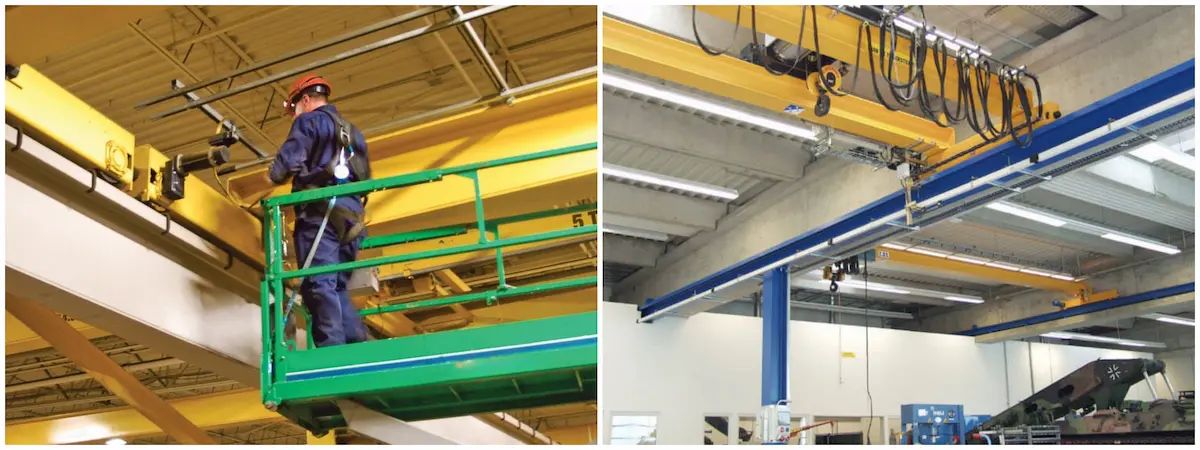
●Strengthen Daily Maintenance and Inspection: Establish a standardized inspection system. Regularly check rail conditions, fasteners, and key parts to handle potential issues early.
●Introduce Smart Monitoring Systems: Use sensors and data analysis to monitor operational status in real time. This enables early warnings and predictive maintenance to improve overall reliability.
HSCRANE Overhead Crane Rail Product Advantages
●High-Precision Design and Manufacturing: HSCRANE rails use advanced design concepts and precision processes. We strictly control dimensions and assembly to ensure long-term stability and reliability.
●Optimized Drive Systems: We achieve multi-drive synchronization through proper configuration of motors and reducers. This reduces impact and uneven loads, making equipment operation smoother and more efficient.
●Premium Materials and Wear-Resistant Components: We select high-strength steel and wear-resistant wheel components. This enhances fatigue resistance and service life while reducing maintenance frequency and replacement costs.
●Customized Solutions: We provide personalized designs based on different industries and working conditions. Our solutions fully match client site requirements to boost overall performance.
●Comprehensive Technical Support and Service: We offer full-process support from design and installation guidance to after-sales maintenance. We respond quickly to ensure safe and stable equipment operation.
In summary, rail misalignment is a key factor affecting overhead crane stability and safety. misalignments in straightness, parallelism, elevation, or joints are amplified during operation. This leads to vibration, wear, and structural fatigue. Therefore, rail precision control is vital throughout the equipment’s life cycle. Combining scientific installation with regular testing effectively reduces failure risks and extends service life.
If you are facing severe rail gnawing, abnormal vibration, or planning a rail renovation, contact HSCRANE engineers immediately for free technical support.
[Contact HSCRANE for Professional Crane Solutions]
●Expert Tip: Perfect operational stability begins with a high-precision rail system.
Click to read [The Complete Guide to Crane Rail Systems: Selection, Design, and Maintenance (2026 Professional Edition)] to see how HSCRANE defines industry-leading standards.
FAQ
Q1: What specific impacts do rail misalignments have on equipment?
A1: Rail misalignments cause vibration, shock, and noise. They increase wear on wheels and rails while causing uneven stress on beams. This accelerates structural fatigue and affects lifting precision.
Q2: How can rail misalignments be minimized during the installation phase?
A2: Follow construction specifications strictly for positioning. Use high-precision equipment to control straightness and elevation. Ensure the rail foundation is level and stable with fine joint processing.
Q3: How can rail misalignments be monitored during use?
A3: Use high-precision instruments like lasers or total stations for regular testing. Combine these with levels and steel rulers for quick checks. Build detection files for trend analysis and early warning.
Q4: How should rail misalignments be adjusted and maintained once they appear?
A4: Correct straightness and parallelism using mechanical or hydraulic methods. Adjust shim plates to fix elevation misalignments. Tighten bolts to prevent displacement and optimize wheel sets to improve contact.
Q5: What methods can guarantee long-term operational stability for overhead cranes?
A5: Improve installation precision and choose high-quality drive systems. Establish a daily maintenance routine and introduce smart monitoring systems for real-time tracking and alerts.
This document is for reference only. Specific operations must strictly comply with local laws and regulations and equipment manuals.