

Overview
The overhead crane wheel is the equipment’s “foot sole”. Its performance decides if the crane runs stably and lasts long. From hot, dusty steel mills to busy ports, heavy loads test the overhead crane wheel. They test its material, heat treatment, and flange design. Wrong selection worsens wear between the overhead crane wheel and track. It also creates hidden safety risks. We skip empty theories and start with real industrial scenes. We help you clarify the selection logic and material details of the overhead crane wheel. We also share hardcore tips to extend its life. We include HSCRANE real projects to help you avoid detours.
Get Free Selection Plan
Are you looking for a high-quality overhead crane wheel for your project? HSCRANE offers forged, cast steel, and European overhead crane wheel sets. These custom solutions perfectly match various loads and track models.
【Contact us now to get exclusive selection advice and quotes】
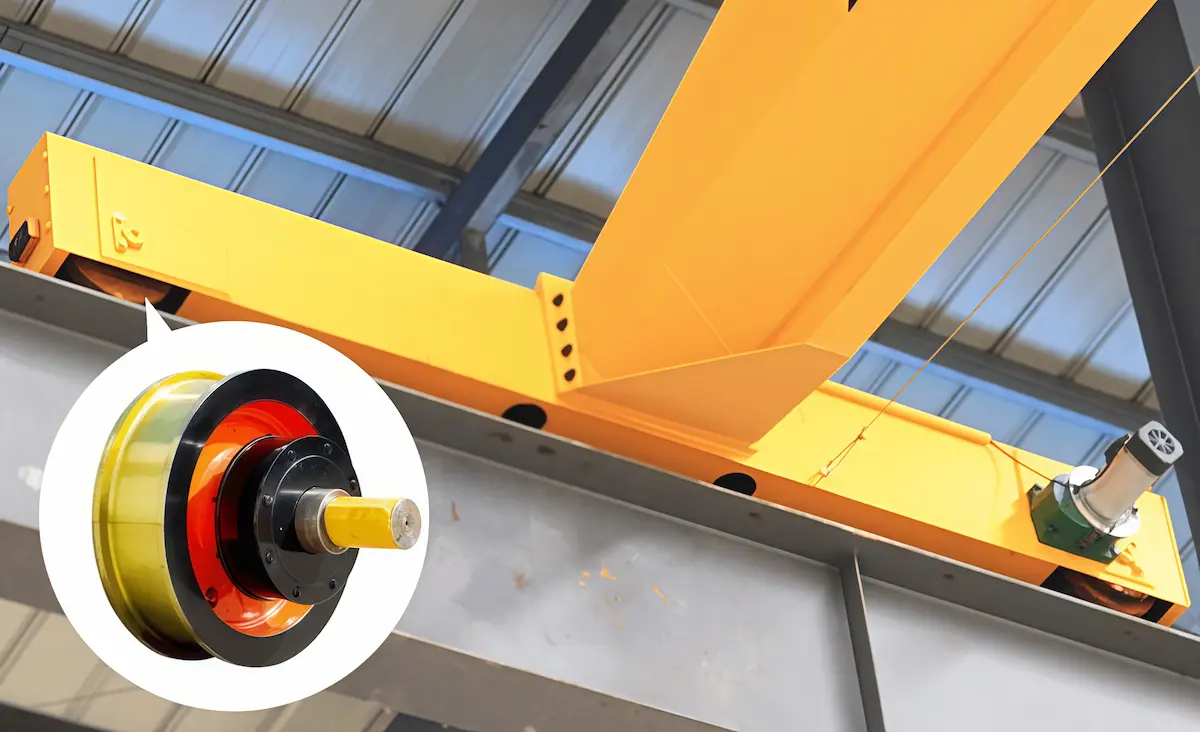
Why is the overhead crane wheel so important?
Ask workshop maintenance workers which crane part is most troublesome. The overhead crane wheel ranks at the top. As the only medium contacting the crane and track, it is the equipment’s load-bearing wall. The overhead crane wheel is also a consumable deciding the service life.
Core roles of the overhead crane wheel
●Bear machine weight and loads: The heavy crane itself and tons of loads on the hook are huge. All final force points press on the overhead crane wheel.
●Ensure stable bridge running: Good materials and precise tread machining make the overhead crane wheel run stably. This reduces jerks and abnormal noises during operation.
●Reduce track wear: Many people ignore this point. Good flange design and reasonable hardness gradient effectively reduce fatal rail gnawing. This protects expensive plant tracks from irreversible damage by the overhead crane wheel.
●Improve equipment running safety: It is the last defense against derailment. The overhead crane wheel’s reliability directly affects the safety of equipment and workers below.
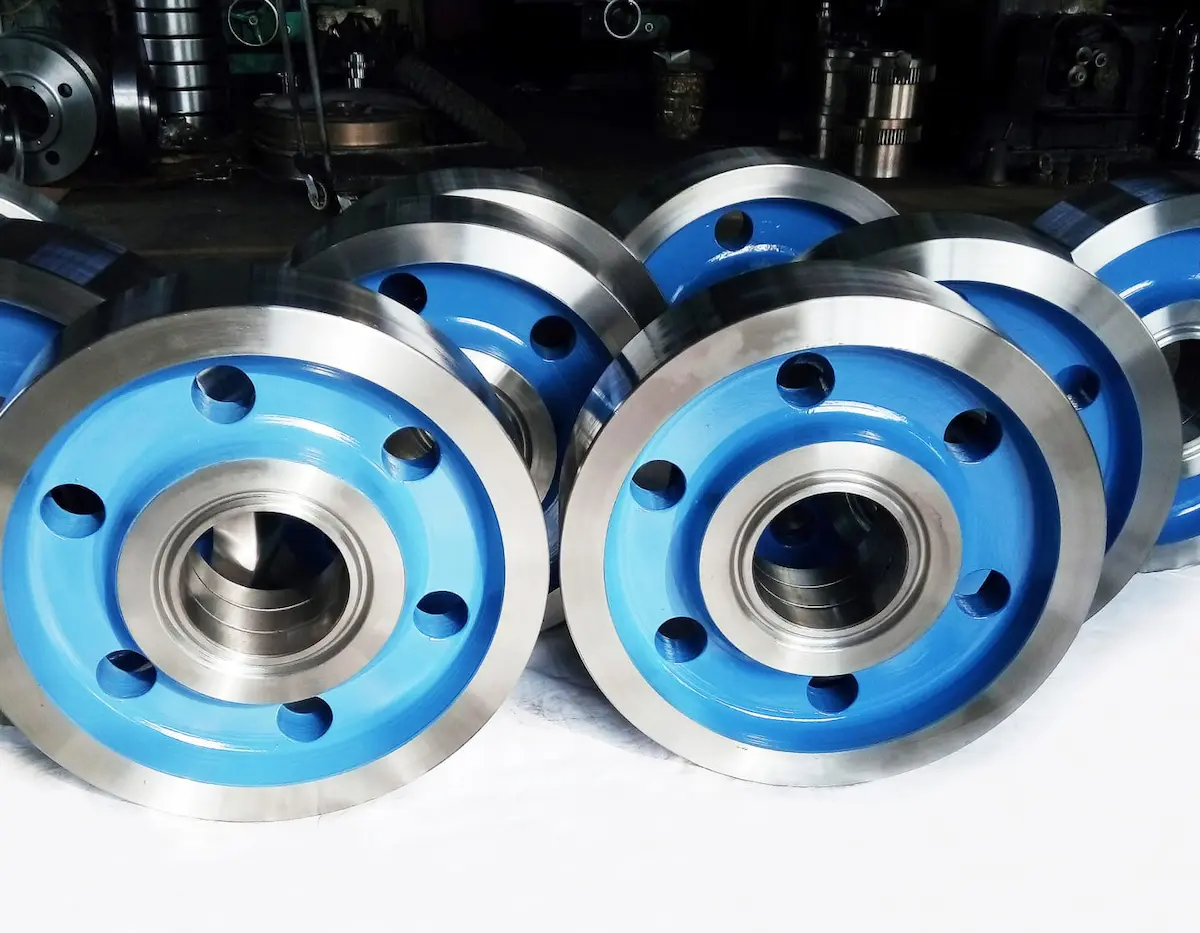
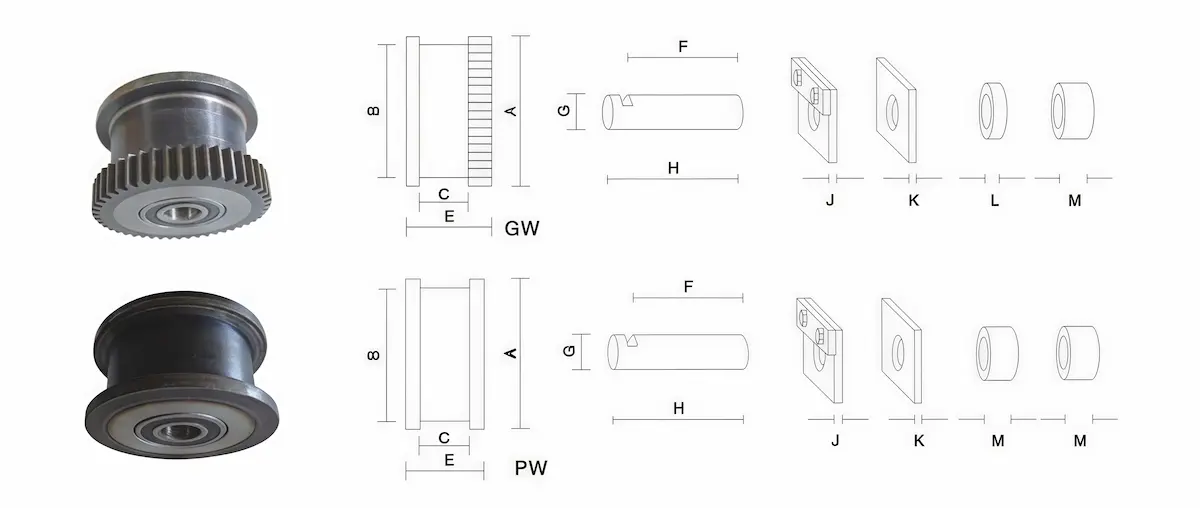
What parts does an overhead crane wheel set include?
Never think the overhead crane wheel is just a simple round iron block. To handle extreme friction and loads, a modern overhead crane wheel set is a highly integrated module. It includes the following core components:
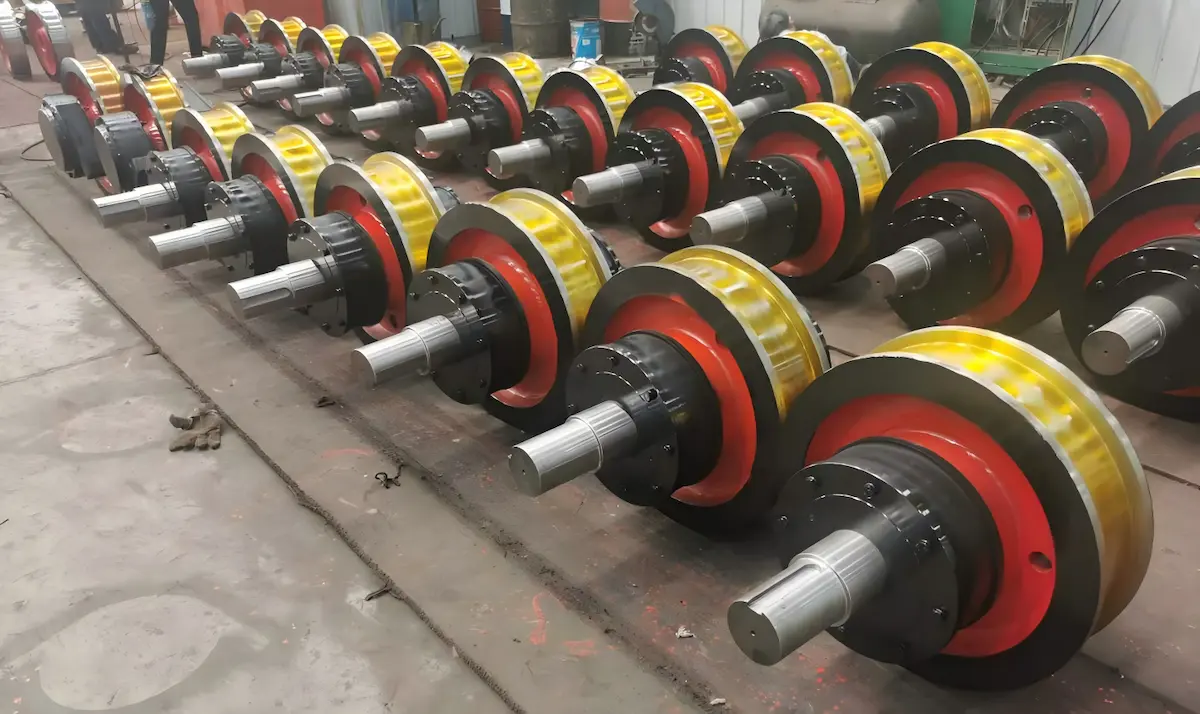
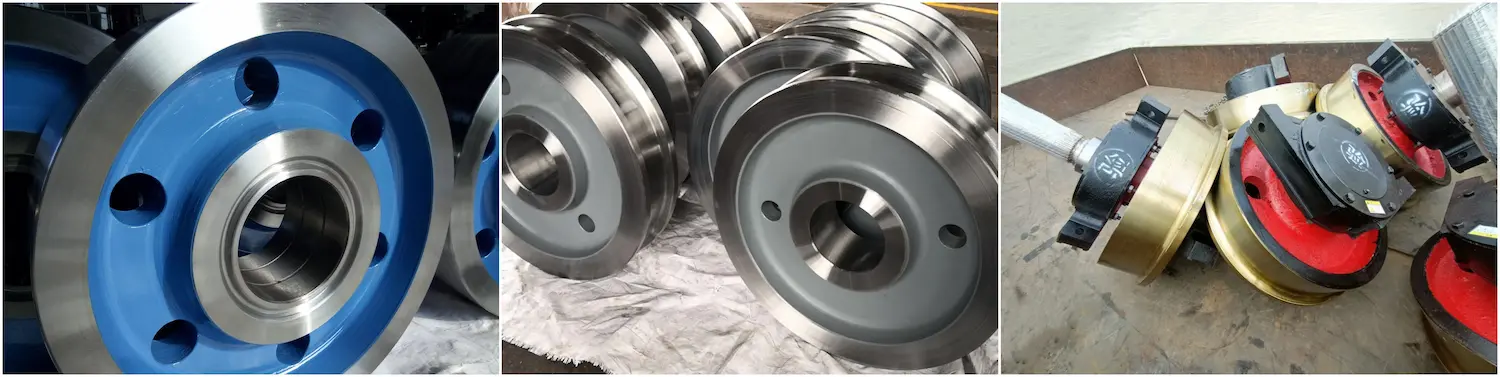
●Wheel: The main body directly hitting the track. This overhead crane wheel is usually single or double flanged.
●Wheel shaft: It passes through the overhead crane wheel center. It acts as the skeleton connecting the transmission system.
●Bearing: The key to making the overhead crane wheel turn smoothly. Heavy-duty spherical roller bearings are usually equipped for heavy loads.
●Bearing block: Used to fix the bearing. Common ones are angular bearing boxes or European cylindrical blocks.
●Sealing system: Especially in dusty workshops, it is vital. Dustproof and waterproof seals save the overhead crane wheel bearing.
●Wheel axle assembly: The overall module after assembling and debugging the above parts. It allows direct replacement to shorten overhead crane wheel maintenance time.
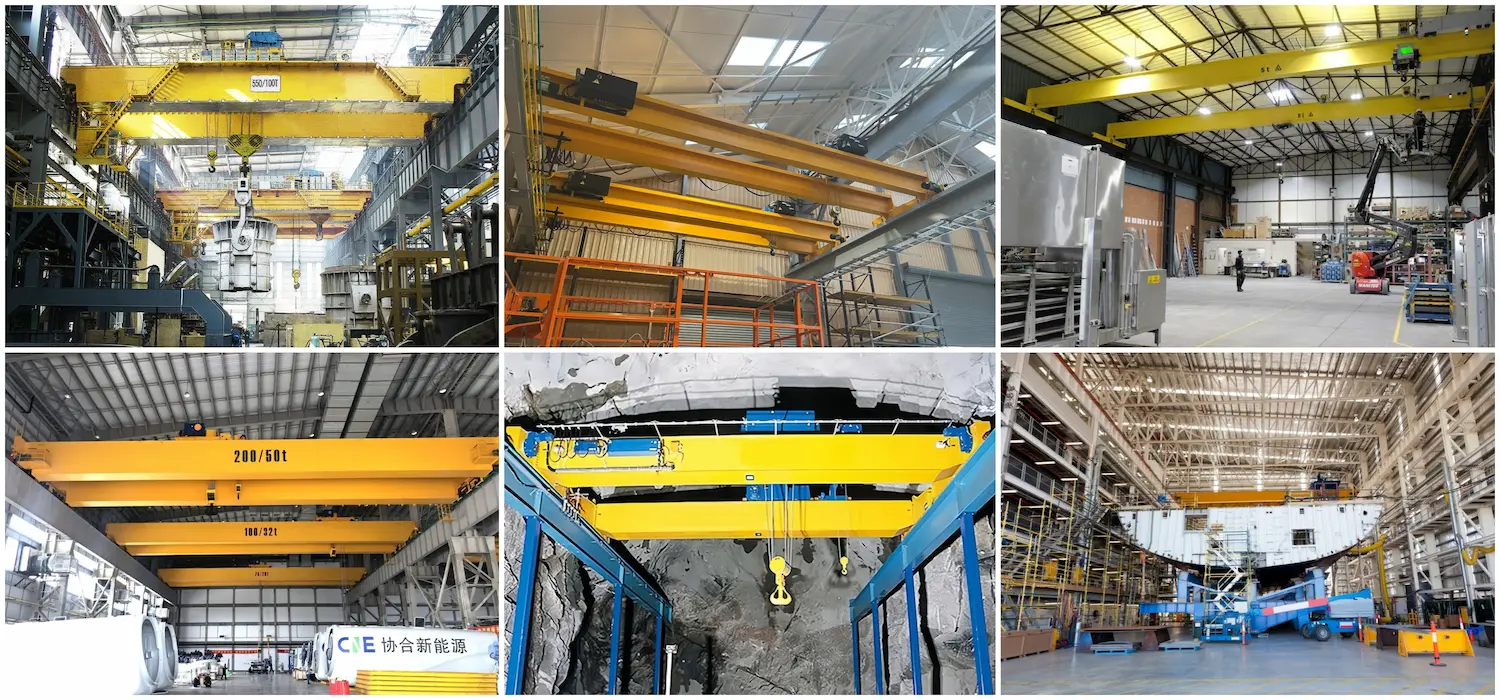
What are the main applications of the overhead crane wheel?
With the same lifting weight, machining and steel plants have different requirements. Their demands for the overhead crane wheel are vastly different. Choosing the wrong overhead crane wheel causes frequent replacements. In severe cases, it can shut down the production line. Here are the real demand differences for the overhead crane wheel across industries:
|
Application Industry |
Typical Conditions and Environment |
Core Requirements for the overhead crane wheel |
| Steel Industry (Metallurgy/Casting) | High heat radiation, high dust, 24-hour high-frequency full-load running. | Extremely high surface hardness and wear resistance. Usually uses forged overhead crane wheel with excellent heat treatment for high temperatures. |
| Port Logistics Industry | Outdoor work, high salt spray corrosion, large wind load, extremely high frequency. | Strong anti-corrosion coating and high load capacity for the overhead crane wheel. Needs reliable sealing system to handle complex climates. |
| Manufacturing Factory (Machining/Assembly) | Normal temperature, medium frequency, requires positioning accuracy. | Stable running with low noise. Standard cast steel or European overhead crane wheel set meets cost-effective needs. |
| Power Industry (Power Plant Maintenance) | Low running frequency, but single lifting value is high and requires absolute precision. | Emphasizes startup reliability of the overhead crane wheel after long stops. High dimensional accuracy, no jamming allowed. |
| Cement and Mining Industry | Abrasive dust everywhere, harsh environment, tracks often have debris. | The overhead crane wheel material needs strong impact and wear resistance. Bearings must have heavy-duty dustproof seals. |
| Shipbuilding Industry | Huge span, amazing weight, outdoor or semi-outdoor environment. | Adapts to slight structural deformation from large spans. The overhead crane wheel needs high load redundancy, windproof, and anti-rust designs. |
How to choose the overhead crane wheel for different industries?
Choosing an overhead crane wheel is like buying shoes. You must check the size, meaning lifting capacity. You also check where and how often it runs. Many clients blindly choose standard parts to save initial budgets. Soon after production, track gnawing begins. Later downtime costs far exceed the overhead crane wheel price difference. Here is the selection guide to avoid pitfalls from our engineers:
Choose based on lifting capacity
The overhead crane wheel load capacity decides its material and diameter. Larger lifting weight means higher local wheel pressure on tracks.
●Under 5T (Light load): This equipment is light. High-quality cast steel easily meets the overhead crane wheel needs. It focuses on high cost-effectiveness and low replacement costs.
●5-20T (Medium load): This is the most common workshop range. Notice the overhead crane wheel tread heat treatment hardness. Medium carbon steel balances wear resistance and impact resistance.
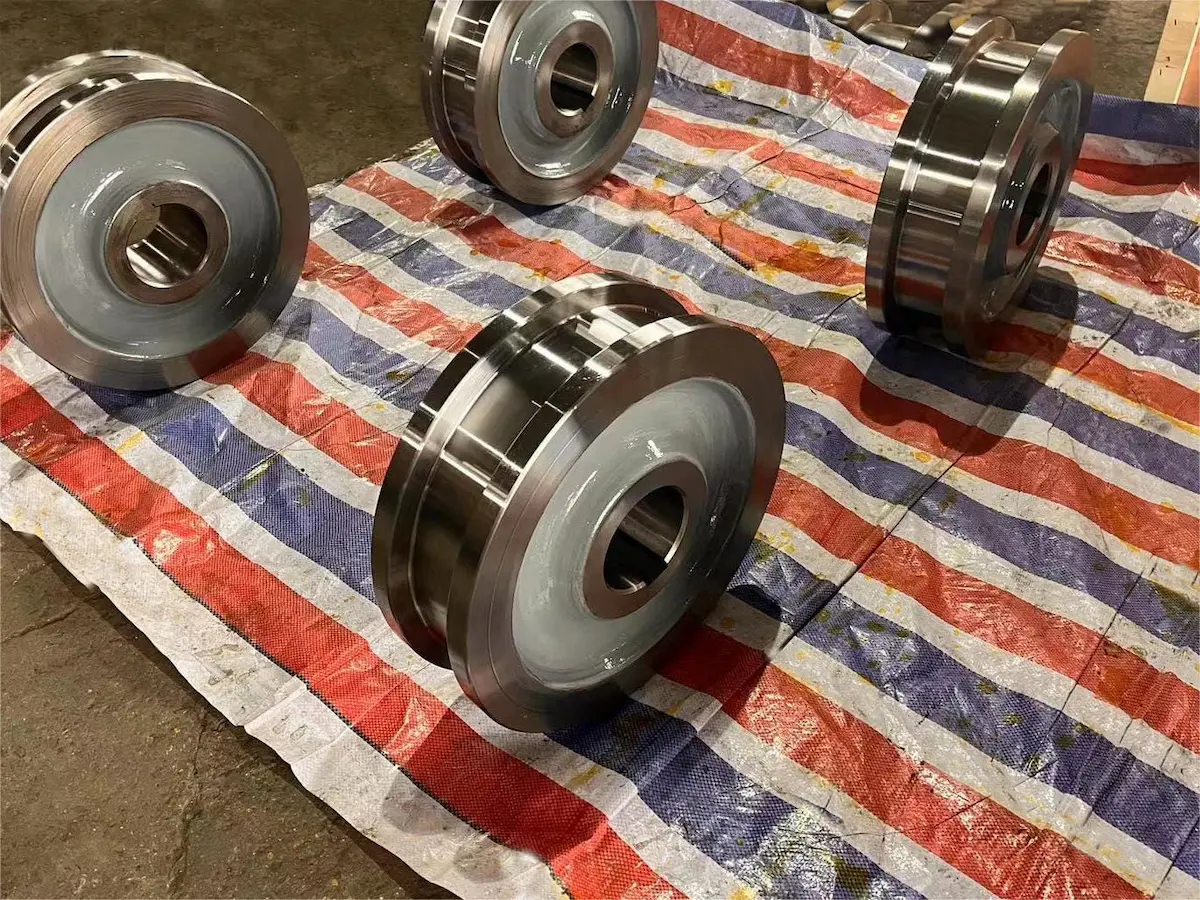
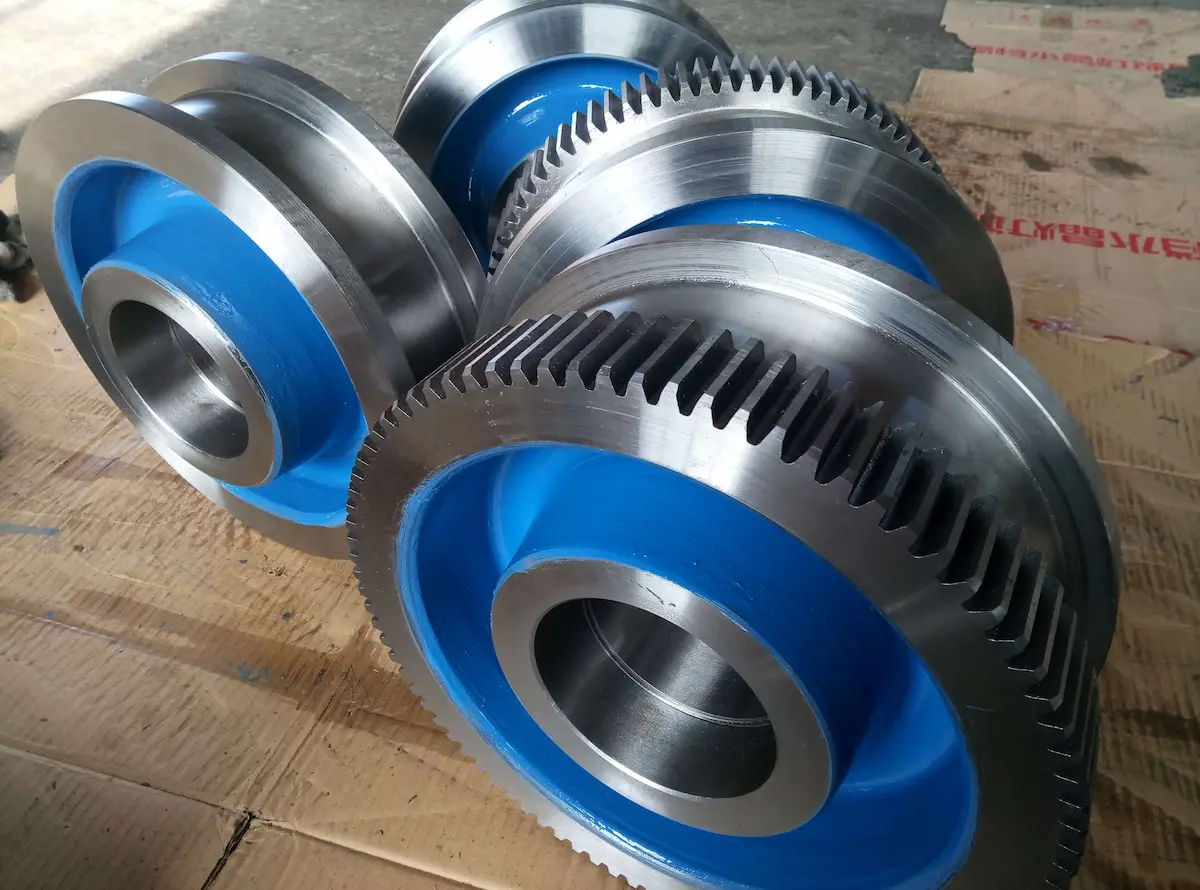
●20-50T (Heavy load): The overhead crane wheel pressure is quite large here. We strongly recommend a forged overhead crane wheel like 42CrMo. Its denser internal structure prevents tread fatigue spalling under heavy loads.
●Over 50T (Super heavy load): Like metallurgical casting cranes in steel mills. Do not hesitate to use high-strength alloy forged steel. The overhead crane wheel tread and inner flange need deep quenching. The overhead crane wheel diameter increases to disperse wheel pressure.
Choose based on running frequency
●Low frequency (Power plant maintenance, pump rooms): It runs rarely. Or it only runs during equipment maintenance. The overhead crane wheel wear is minimal. Selection focuses on bearing rust prevention and static load deformation.
●Medium frequency (Normal mechanical assembly workshops): It runs hours daily. Select the overhead crane wheel by normal national or European standards. Ensure regular lubrication for a very long service life.
●High frequency continuous running (Garbage grabs, scrap yards): Running almost 24/7. This is an extremely abusive working condition. You must choose a high-grade forged overhead crane wheel. Bearings must be heavy-duty from top international brands. Otherwise, metal fatigue easily causes bearing shattering or overhead crane wheel deformation.
Choose based on environment
●High temperature (Steel mills/Foundries): Radiant heat is extremely high. The overhead crane wheel material must resist high-temperature softening. Bearings must use special high-temperature grease, not ordinary lithium grease.
●High humidity/Corrosion/Outdoor (Ports/Chemical plants): Salt spray and acids ruin metal. The overhead crane wheel needs high-grade anti-corrosion coating. Bearing blocks must be fully sealed. Extreme cases require stainless steel components for the overhead crane wheel.
●Dust (Cement plants/Mines): Fine ore dust grinds bearing balls like sandpaper. Sealing is the core of this overhead crane wheel condition. Labyrinth seals and dust rings are standard for the overhead crane wheel.
Choose based on track model
Remember an iron rule. The overhead crane wheel tread must be 20-30mm wider than tracks. This leaves enough snaking clearance for the overhead crane wheel to prevent jamming.
●P track (Light/Heavy rails like P43, P50): The top is mostly arc-shaped. It is most used for small and medium cranes. The overhead crane wheel tread is usually machined into a cylinder.
●QU track (Dedicated crane rails like QU80, QU100): Designed for large wheel pressure. The track top is relatively flat and wide. Essential for heavy cranes, the overhead crane wheel profile must match it precisely.
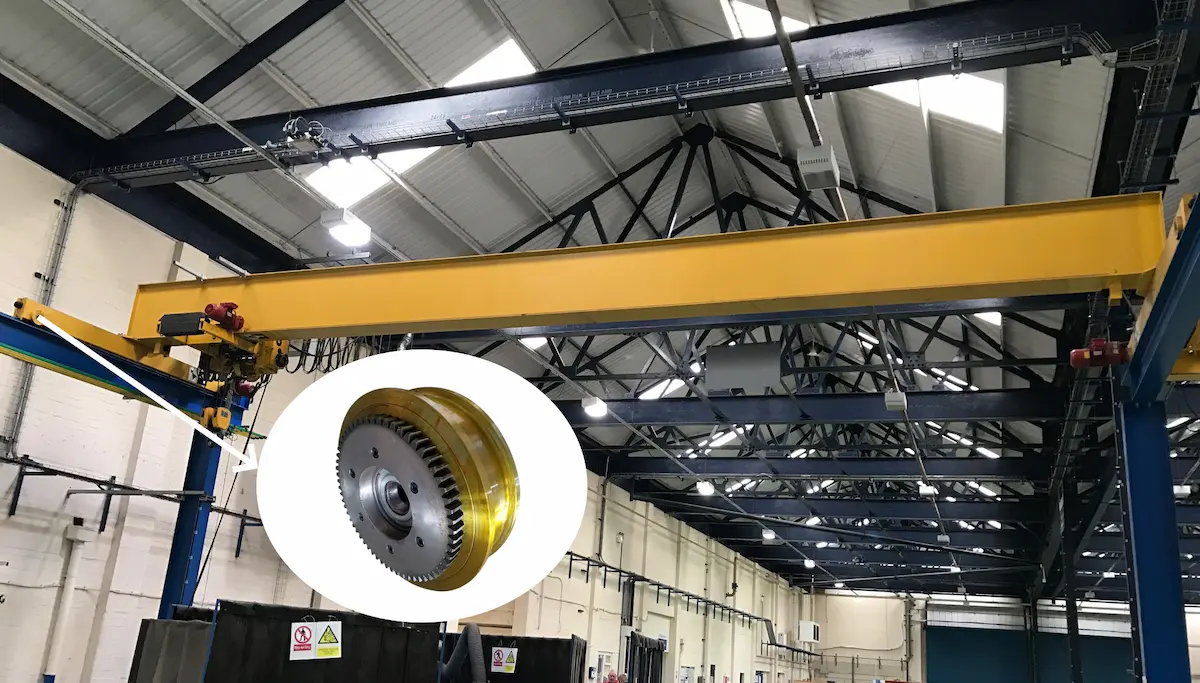
●DIN track (like A75, A100): European standard with a flat head. Mostly used with European cranes. Usually uses a flangeless overhead crane wheel and horizontal guide wheels. This overhead crane wheel setup runs extremely smoothly.
Comparison of Common Overhead Crane Wheel Types
Market options are varied. We present a direct head-to-head comparison of three mainstream overhead crane wheel types:
|
Overhead Crane Wheel Type |
Manufacturing Process and Material Features |
Core Advantages |
Potential Disadvantages |
Most Applicable Scenarios |
| Forged overhead crane wheel | Red-hot steel ingots are forged under high pressure using forging hammers (like 65Mn, 42CrMo). | Dense internal structure without blowholes or sand holes. Maximum impact and wear resistance. Strongest load capacity. | Higher manufacturing cost. Relatively longer processing cycle. | Metallurgical steel plants, heavy-duty ports, large capacity overhead cranes, and high-frequency conditions above A6. |
| Cast steel overhead crane wheel | Molten steel is poured into molds to cool and shape (like ZG340-640). | High production efficiency and lower cost. Easily casts complex shapes. | Internal micro-porosity or shrinkage may exist. Fatigue strength is lower than forgings. | General assembly lines under 50T, and regular overhead cranes running at medium-to-low frequencies. |
| European overhead crane wheel set | Modular design (usually ductile iron or forged steel) with spline shaft drive and built-in bearings. | Compact size, light weight, and quiet operation. Extremely simple installation and maintenance (flange connection for direct pull-out). | High requirements for installation accuracy and track flatness. Higher price. | Compact modern plants, automated workshops, and European standard overhead cranes. |
Supplementary Knowledge: Single Flange vs Double Flange, How to Choose?
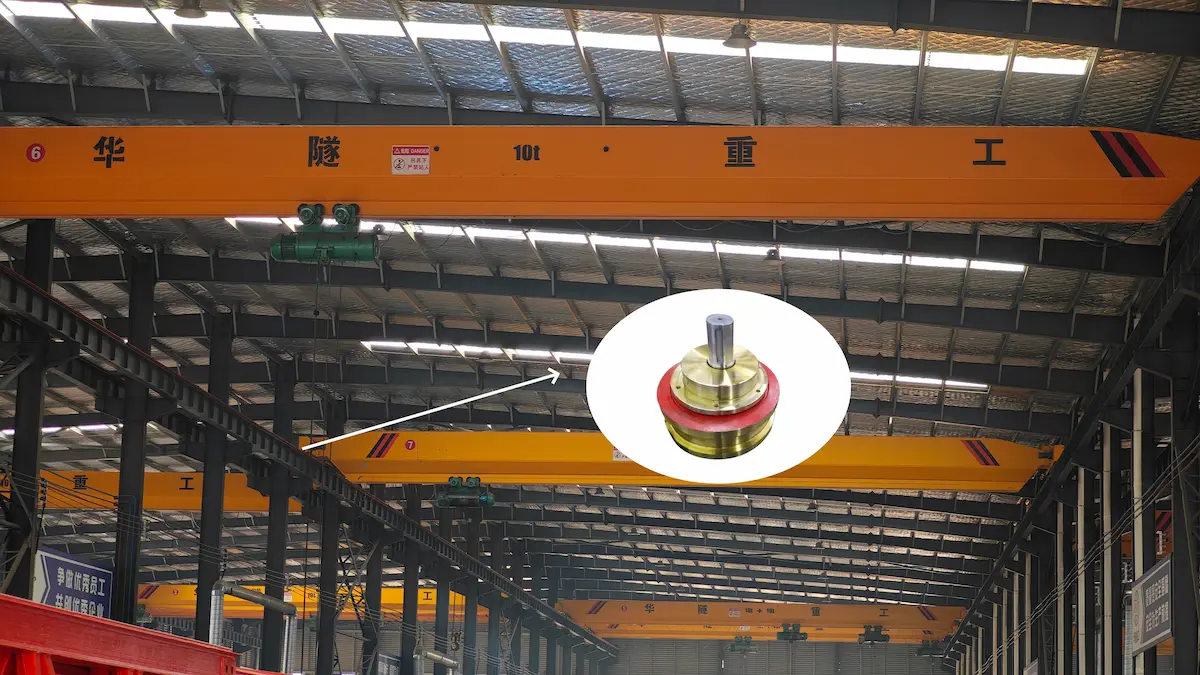
●Double flange overhead crane wheel: The standard choice for overhead crane bridge travel mechanisms. High span makes bridge travel tilt easily. Double flanges grip both rail sides to prevent derailment.
●Single flange overhead crane wheel: Mostly used for overhead crane trolley mechanisms. The trolley runs on main beams with small gauge and high rigidity. It is not easy to run off course. Single flange guides sufficiently and reduces friction resistance.
Difficulty in Selection? Leave It to Us!
Not sure which overhead crane wheel fits your equipment? Stop wasting time searching data.
Provide your capacity, rail specs, running speed, and duty class. HSCRANE engineers will tailor the ideal overhead crane wheel custom solution. Our goal is not just making it turn. We help drastically reduce future maintenance costs and extend equipment life.
【Click here now to contact HSCRANE for a free selection report and quote】
How to Extend the Service Life of an Overhead Crane Wheel?
Many buyers care about materials but ignore maintenance. Even top forged steel overhead crane wheels age fast in harsh environments. To extend overhead crane wheel life and save money, follow these six details:
●Correct Installation: Installation is not just bolting the overhead crane wheel into frames. Control diagonal deviation, span tolerance, and vertical tilt within standards. Toe-out installation causes severe track gnawing within days.
●Regular Lubrication: The bearing is the overhead crane wheel heart. Make lubrication plans based on duty class and temperature. Replenish extreme-pressure lithium grease every 3-6 months. Use high-temperature grease in steel mills to avoid dry friction.
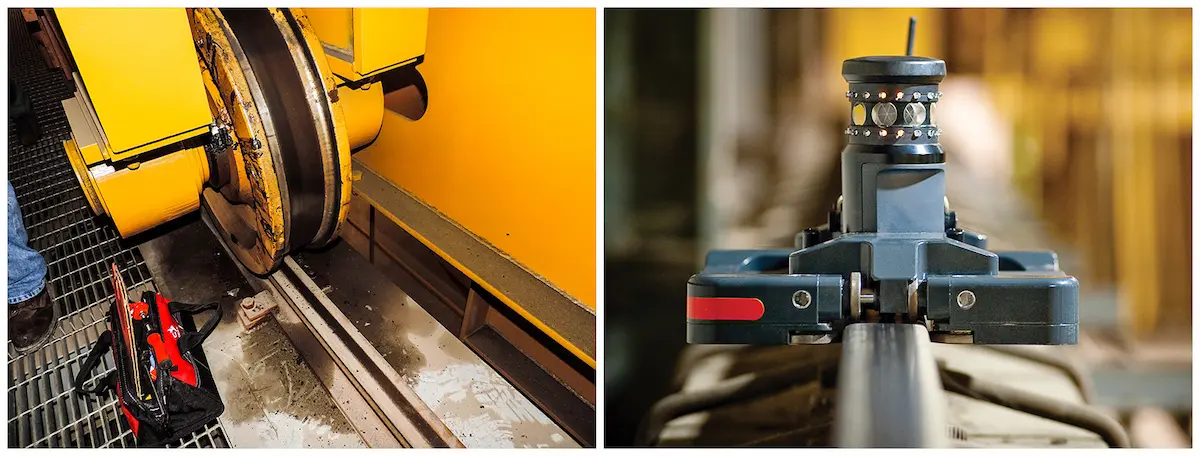
●Maintain Track Accuracy: Tracks often cause fast overhead crane wheel wear. Uneven joints and deformed rail gauge cause massive lateral impacts during running. Check track alignment regularly with laser rangefinders to protect the overhead crane wheel.
●Avoid Eccentric Loading: Forced lifting when loads are off-center causes uneven stress. The overhead crane wheel flange rubs against rails, thinning flange thickness rapidly.
●Regular Wear Inspection: Measure overhead crane wheel tread wear and flange thickness regularly. Warn immediately if tread spalling or sharp blade-like flange wear occurs.
●Replace Severely Worn Wheels: Scrap the overhead crane wheel when flange wear reaches 50% thickness. Scrap it if tread wear reaches 1.5% of diameter. Continued use causes overhead crane wheel shattering and derailment accidents.
Why Choose the HSCRANE Overhead Crane Wheel?
Industrial component strength depends entirely on field working conditions. HSCRANE is a core supplier for overseas maintenance firms and manufacturers. Our confidence comes from applying strict standards to every manufacturing detail:
●Strictly follow international standards: We strictly execute EN 13001-3-3, FEM 1.001, and ISO 9001:2015 quality systems. They precisely match all duty classes (M3-M8).
●Reject recycled scrap steel: We use virgin alloy steel ingots like 42CrMo and 65Mn. This eliminates internal looseness and inclusions from the source.
●Hardcore heat treatment process: We use exclusive medium-frequency quenching. Tread hardness stays stable at HB 300-380. Hardened layer depth reaches 15-20mm. This achieves surface wear resistance and strong core impact resistance.
●100% flaw detection inspection: We perform ultrasonic (UT) and magnetic particle (MT) testing before shipment. This guarantees zero internal cracks and comes with genuine material reports.
●All-round OEM/ODM customization: We replicate standard European wheels like Demag and Konecranes. We also customize non-standard old parts through 1:1 mapping. Products are stably exported to over 80 countries worldwide.
HSCRANE Classic Cases
Data works better than slogans. Here are two real custom projects solving client pain points recently:
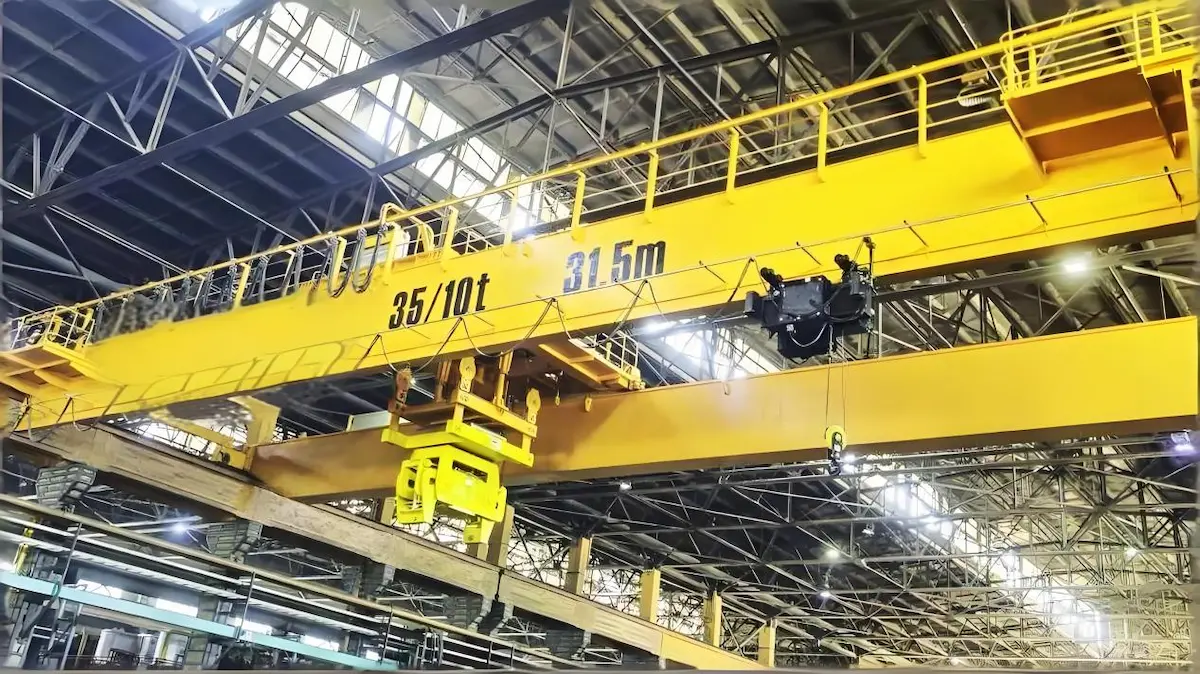
Case 1: Heavy-duty overhead crane wheel upgrade in a steel plant
●Client background: ArcelorMittal Lázaro Cárdenas Plant in Mexico.
●Project parameters: 16 sets of Ø800mm 42CrMo forged wheel sets for a 320t metallurgical casting crane.
●Special conditions: 24-hour full load (A8 class) with ambient temperature exceeding 60°C.
●Original pain points: Original cast steel wheels suffered tread fatigue spalling in just 4 months. This caused frequent downtime.
●HSCRANE solution and results:
1.Upgraded material to high-strength 42CrMo forged steel. Deep quenching raised hardness to 45-50 HRC with 18mm hardened layer.
2.Equipped with genuine Swedish SKF high-temperature spherical roller bearings and special FKM seals.
3.Final feedback: Ran fault-free for over 18 months with only slight wear. It successfully cut annual downtime maintenance costs by 65%.
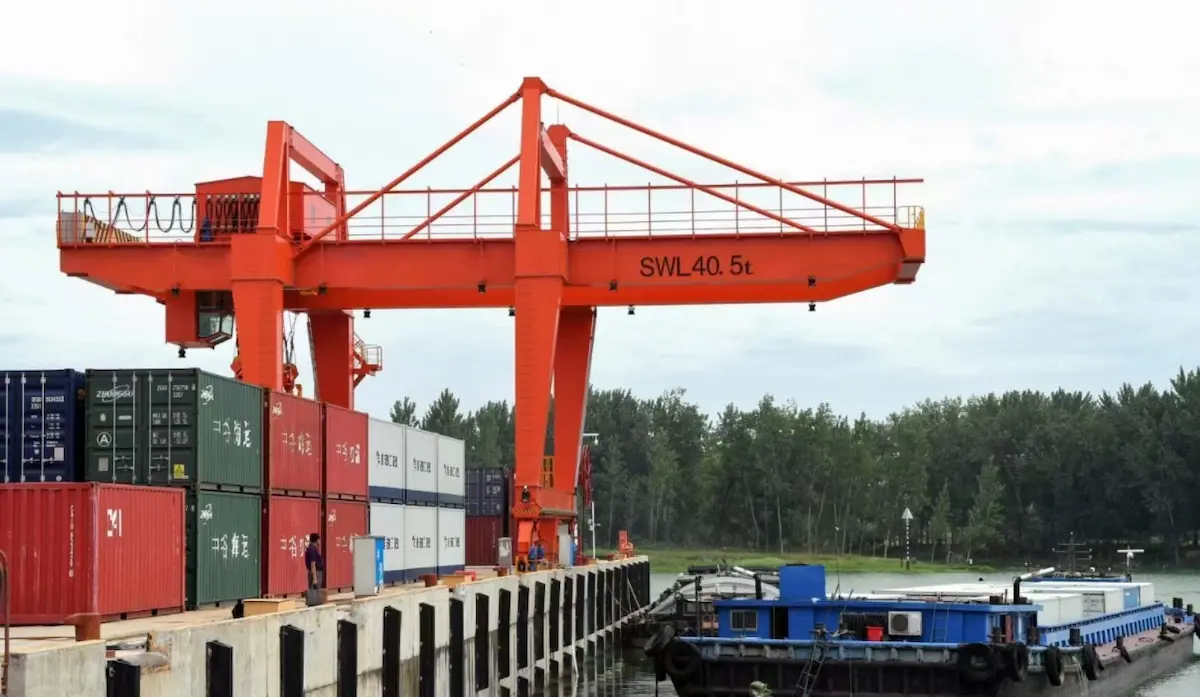
Case 2: Port crane equipment wheel customization project
●Client background: Crane maintenance contractor at Jebel Ali Port, Dubai.
●Project parameters: 32 sets of Ø630mm European double flange wheel sets for RMG, material C45.
●Special challenges: 50°C summer heat with heavy marine salt spray corrosion and fine sand.
●HSCRANE solution and results:
1.Non-working surfaces strictly follow ISO 12944 C5-M marine anti-corrosion standards. Dry film thickness reaches 320μm with epoxy zinc-rich primer and polyurethane topcoat.
2.Upgraded bearing block internals with dual protection: labyrinth dust disc and V-ring seal.
3.Final feedback: Samples passed 1000-hour neutral salt spray test (NSS). Serving outdoors for 2 years with zero rust or peeling, running smoothly in extreme weather.
Conclusion
In short, the overhead crane wheel is not a simple part turned from iron blocks randomly. It is the only hub connecting expensive equipment with factory tracks. Buying low-quality wheels to save a few hundred dollars leads to high costs. These include frequent repairs, severely damaged tracks, or even serious derailment accidents. Proper selection requires considering capacity, frequency, rail specs, and harsh environments.
Don’t let selection become your burden, leave it to experts
Planning a new European overhead crane or replacing parts on an old rail-gnawing machine? HSCRANE provides the most reliable support for you. If you have drawings, send them directly to us for evaluation. If you only have broken old wheels, we reverse-engineer and upgrade materials via field measurement.
Contact the HSCRANE team now for a free same-day quote and 1-on-1 technical selection plan!
Still struggling with forged or cast steel choices? Unsure how much clearance to leave between wheel and track?
Further reading: 【How to Choose the Right Crane Wheels for Overhead Cranes: A Complete Selection Guide】
Spend 5 minutes mastering overhead crane wheel selection logic. Make every equipment run smoother and more reliable!
FAQ
We compiled the most frequently asked questions to answer your purchasing and maintenance doubts:
Q: How often does an overhead crane wheel need replacement?
A: No absolute shelf life exists. It depends on duty class and environment. In normal workshops (A3-A4), high-quality overhead crane wheels last 5-8 years. In 24/7 garbage or steel plants (A7-A8), replacement takes 1-2 years. Scrap Standard: Focus on wear. Replace if flange wear reaches 50% or tread wear reaches 1.5% diameter.
Q: Which is better, forged or cast steel overhead crane wheel?
A: Choose based on suitability.
●Performance: Forged overhead crane wheels win with dense structure. They offer high impact resistance and fatigue strength for loads over 50T.
●Cost-effectiveness: Cast steel overhead crane wheels (ZG340-640) suffice for under 20T loads with lower cost and faster delivery.
Q: Which overhead crane wheel is required for high-temperature steel plants?
A: High temperatures soften treads and dry bearing grease. Use forged alloy steel (42CrMo) with deep quenching. Bearings need high-temperature grease and seals.
Q: How to quickly determine overhead crane wheel materials?
A: Use this reference guide:
●Light/Medium load: ZG340-640 cast steel or 45# forged carbon steel.
●Heavy load: 65Mn forged steel with excellent wear resistance.
●Super heavy load: High-strength 42CrMo alloy forgings.
Q: Can HSCRANE customize non-standard overhead crane wheels without drawings?
A: Fully supported. Provide key dimensions, rail type, and conditions, or send us the old overhead crane wheel. Engineers reverse-engineer and upgrade designs.
This document is for reference only. Specific operations must strictly comply with local laws and regulations and equipment manuals.