

Overview
Many buyers think buying enough crane tonnage solves everything. Actually, configuring shipyard crane lifting gear is much harder. Why? Shipyard conditions are very complex. Hull blocks are huge with uneven gravity centers. Joining them requires difficult mid-air turning and precise docking. Good cranes fail with mismatched gear. Wrong hooks or beams cause steel deformation or uneven stress. This can stop lifting entirely and delay dock progress. We will explain how to choose hooks, beams, and special gear. How should you combine them for different scenes? We hope this helps you avoid hidden traps.
What Gear Does Your Shipyard Need?
Plan gear based on block weight, size, and crane specs. Contact HSCRANE for custom advice.
[Get a Customized Lifting Solution]
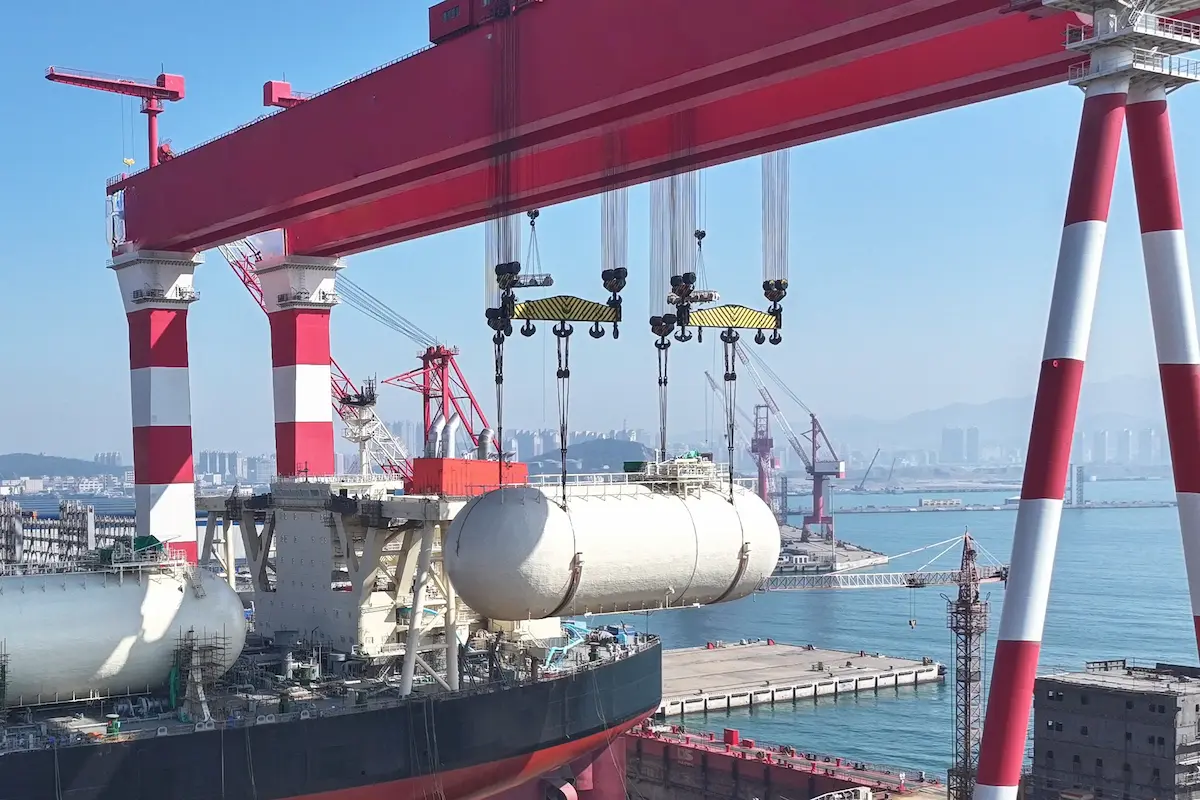
Common Shipyard Crane Lifting Scenarios
Shipyard crane lifting isn’t just picking things up. Moving steel or turning huge blocks tests the shipyard crane and gear coordination. Here are the core lifting conditions:
|
Scenario |
Difficulties |
Gear Requirements |
| Steel & Parts | Fast-paced work. Steel easily bends or slips. | Needs efficiency. Use magnets or clamps. Fast response needed. |
| Block Lifting | Huge, heavy, uneven gravity center. | Needs balance. Use double hooks or beams to spread stress. |
| Block Turning | High danger. Mid-air gravity shift causes shock loads. | Needs sync. Special turning gear and precise hooks prevent slipping. |
| Equipment Setup | Docking needs millimeter-level high precision. | Needs micro-motion. Hooks must be strictly stable without any shaking. |
| Outdoor Lifting | High wind, salt, and long distances. | Needs anti-sway systems. Gear needs heavy anti-corrosion treatment. |
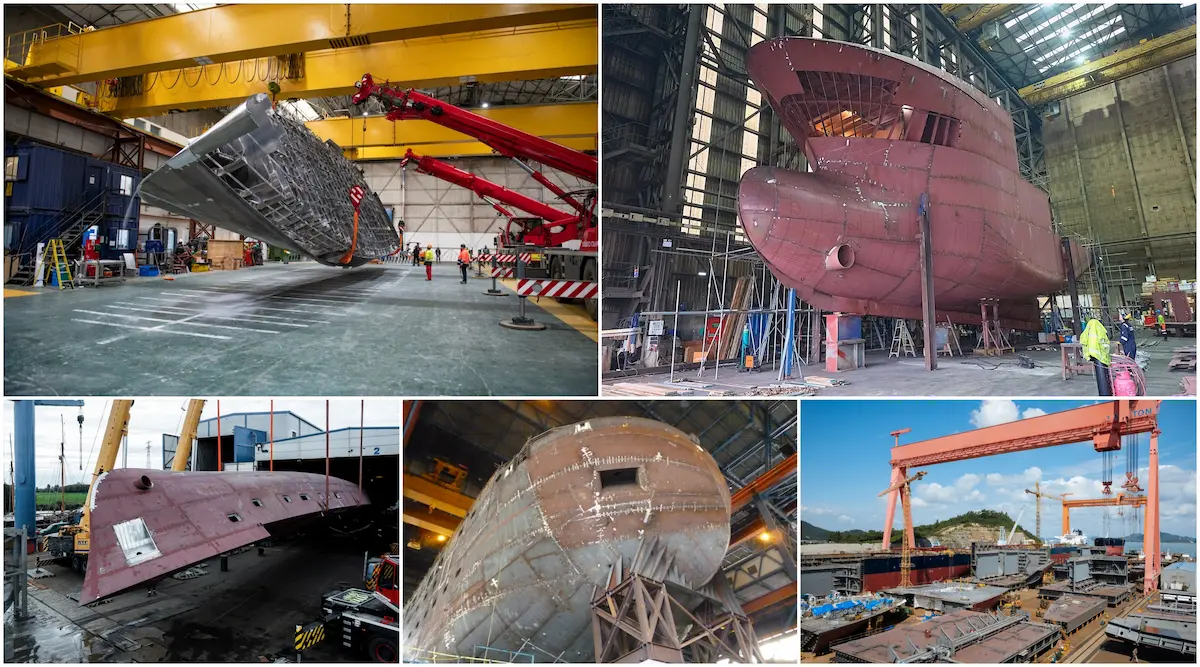
How to Choose a Shipyard Crane Hook?
Many buyers only check the main crane specs. They often ignore the hook touching the cargo directly. In shipyards, choosing the wrong hook lowers work efficiency. It can even directly damage the hull structure.
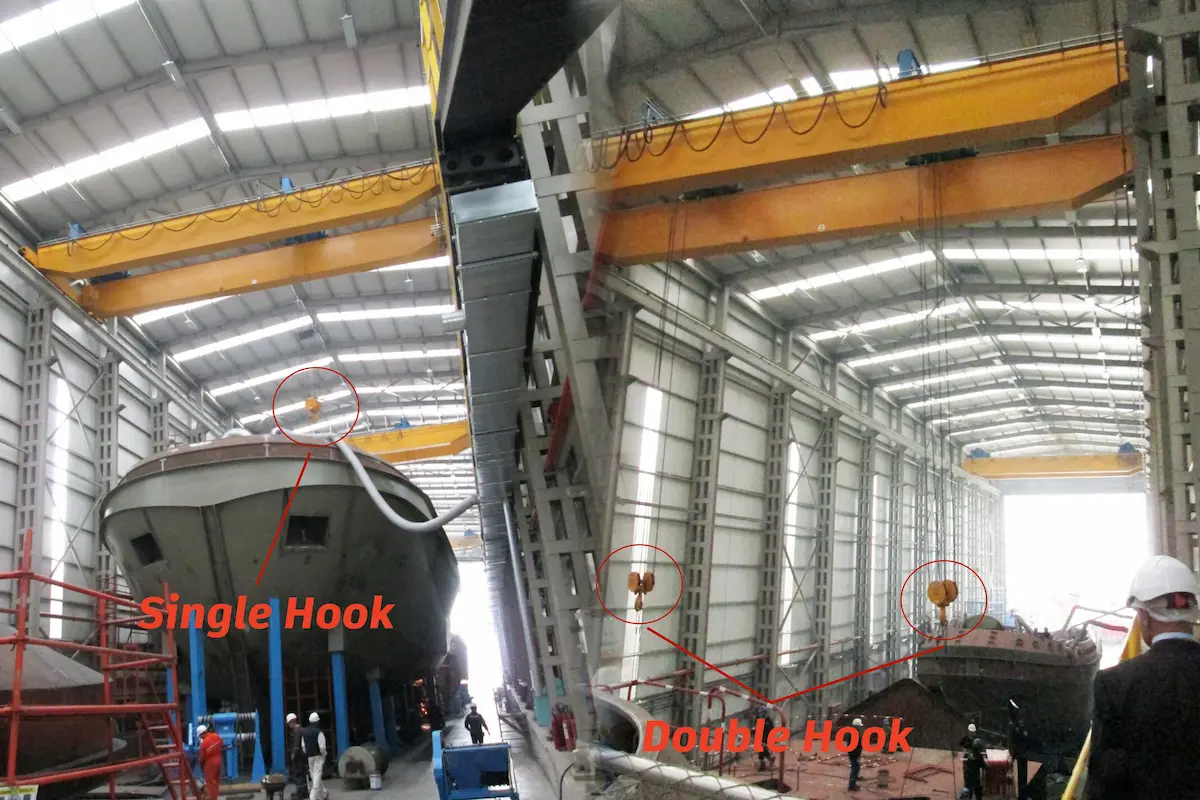
Single Hook vs. Double Hook
Single and double hooks aren’t just a quantity difference. They directly decide your lifting method. Check the table below for specific choices:
|
Contrast Dimension |
Single Hook Setup |
Double Hook Setup |
| Cargo Type | Compact parts or equipment with clear gravity centers. | Long hull blocks or parts with severe gravity shifts. |
| Stress Features | Single-point stress needs strict sling length and angle control. | Multi-point hanging stops cargo turning or tilting in mid-air. |
| Typical Scenes | Workshop profile moving, outfitting lifting, and auxiliary lifting work. | Large block joining, turning, and working with long beams. |
| Selection Advice | Top choice for light loads with low maintenance costs. | Standard for large shipyards to provide irreplaceable lifting stability. |
How to Determine Hook Capacity?
“We lift 100 tons, so a 100-ton hook works?” This is the most common mistake on site. You must calculate all hidden weights and risks properly. A reliable calculation logic should be like this:
●Core formula: Required lifting capacity ≥ Cargo + Gear + Margin.
●Gear weight: Heavy shipyard beams and special frames are heavy. Custom beams and slings for 100 tons can weigh 20 tons. This weight must be included in the hook capacity.
●Dynamic margin: Outdoor work faces wind loads. Block turning causes instant dynamic load shocks. Always keep a 15% – 20% safety margin. Never calculate without leaving a safe buffer.
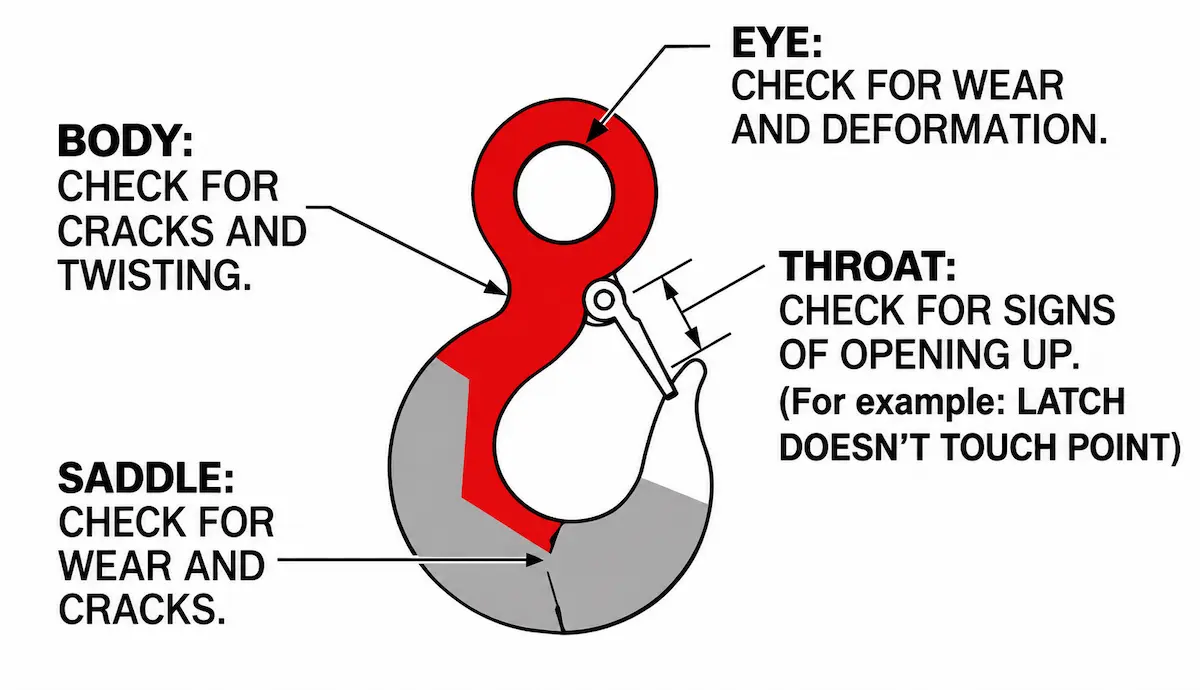
Hook Structure and Safety Devices
Shipyard conditions are rough. Hook systems must prioritize safety and durability. Focus on these hard metrics for technical requests:
●Hook shape: Single hooks are simple for normal slings. Double hooks offer symmetric stress for thick wire ropes.
●Forged hooks only: Cast hooks are strictly banned for heavy shipyard loads. Use high-quality low-carbon steel so overloads only cause deformation. They will not break suddenly.
●Pulley matching: Larger hooks need higher pulley block ratios. This saves effort and makes lifting actions much smoother. It also reduces wear on steel wire ropes.
●Anti-drop latch: Small but absolutely necessary. Dock sea winds easily blow loose slings out. The latch is your last safety defense line.
●Rotation and locking: Hooks must rotate smoothly mid-air for directional adjustments. Precise docking requires hook locks to stop wind turning.
Why Is Rated Load Not Enough?
Often, accidents happen even without hook overload. For uneven, large shipyard crane block lifting, rated load is just a baseline. The real challenges are listed below:
●Huge local stress: Weight focused on few lugs tears hull plates. Both the hook and the hull must bear the load.
●Angle and tension: Wider angles multiply actual tension on slings and hooks. Angles over 60 degrees cause dangerous risks to soar.
●Gravity shift bias: Internal equipment moves the gravity center. In double-hook work, one hook might take 70% load. This causes severe single hook overload.
●Deformation risk: Binding ropes directly causes massive inward squeezing forces. It can crush and deform thin-walled hull blocks without beams.
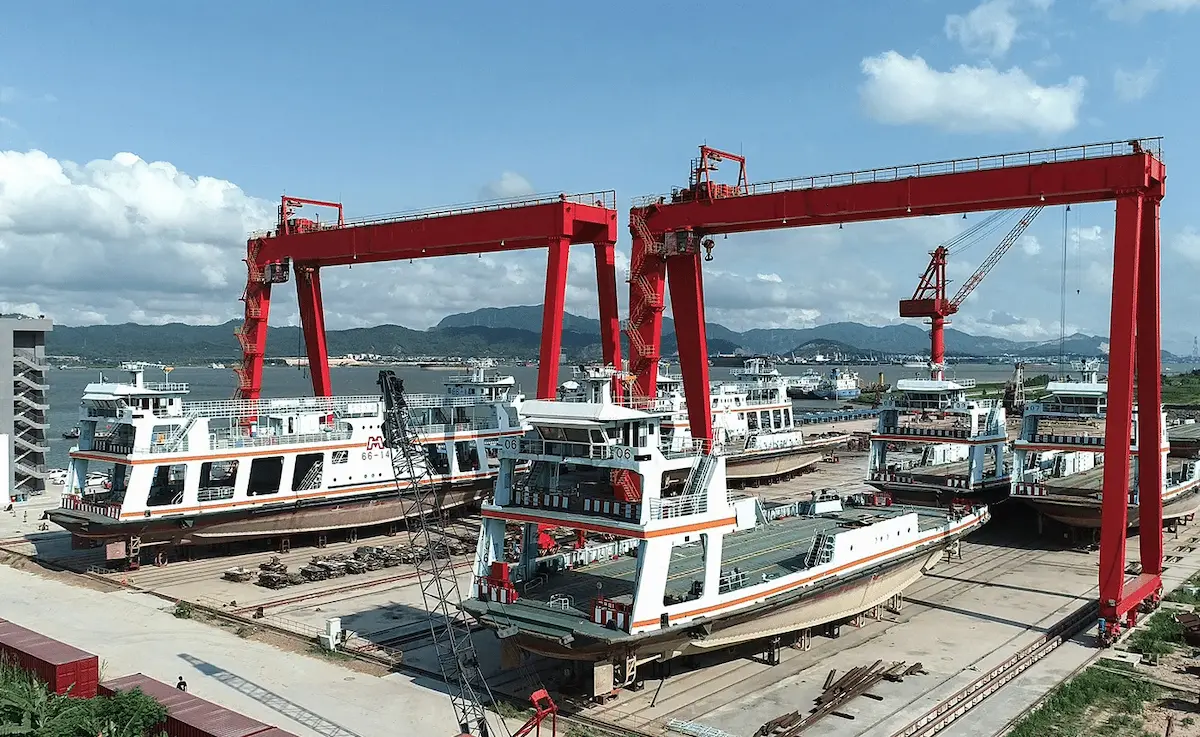
Why Do Shipyards Need Beams? How to Configure Them?
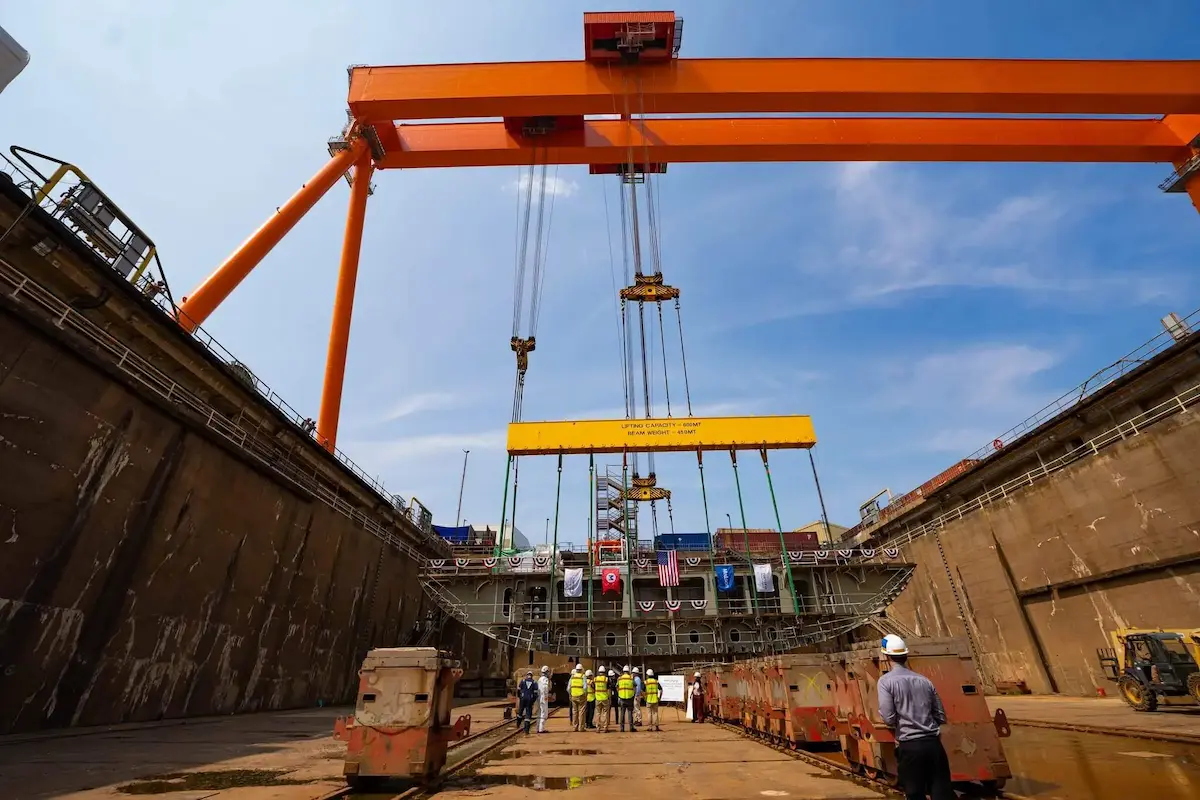
At dock sites, you often see shipyard crane working with a huge steel beam to lift blocks. This steel beam is the lifting beam or balance beam. Why take so much effort to add this middle part? Hull blocks weigh hundreds of tons but are thin shells before joining. They deform very easily. If wire ropes pull directly, horizontal squeezing forces instantly crush and deform the block.
When to Prioritize Lifting Beams?
When facing these conditions on site, use a lifting beam without any hesitation:
●Huge load length or volume: Blocks are too long. Single hooks cannot cover stress points at both ends.
●Reduce sling angle strictly: Beams turn slanted wire rope pulling into vertical stress. This completely removes horizontal squeezing forces.
●Even multi-point stress: For thin plates, it changes 1-2 upper crane points into 4, 8, or more lower points.
●Strictly control block deformation: This is a hard shipyard rule. If blocks bend mid-air, dock joining seams will fail.
●Keep lifting posture stable: For odd parts with unstable gravity centers, beams prevent mid-air spinning or severe tilting.
How to Choose Fixed vs. Adjustable Beams?
|
Beam Type |
Design Features |
Typical Shipyard Scenarios |
Advantages |
Disadvantages |
| Fixed Beam | Lugs and hanging points are welded solid. Sizes are fixed and cannot be changed. | Lifting standard blocks or hatch covers in large single-size batches. | Lighter weight, good overall rigidity, and low cost. | Only for specific use. It becomes useless if the block size changes. |
| Adjustable Beam | Has many adjust holes or sliders. Lifting point distance changes flexibly. | Mixed production lines. Areas needing frequent lifts of parts with varying sizes and gravity centers. | Highly adaptable universal gear. Finding the gravity center on site is very easy. | Heavier weight. Adjusting points wastes extra auxiliary rigging work time. |
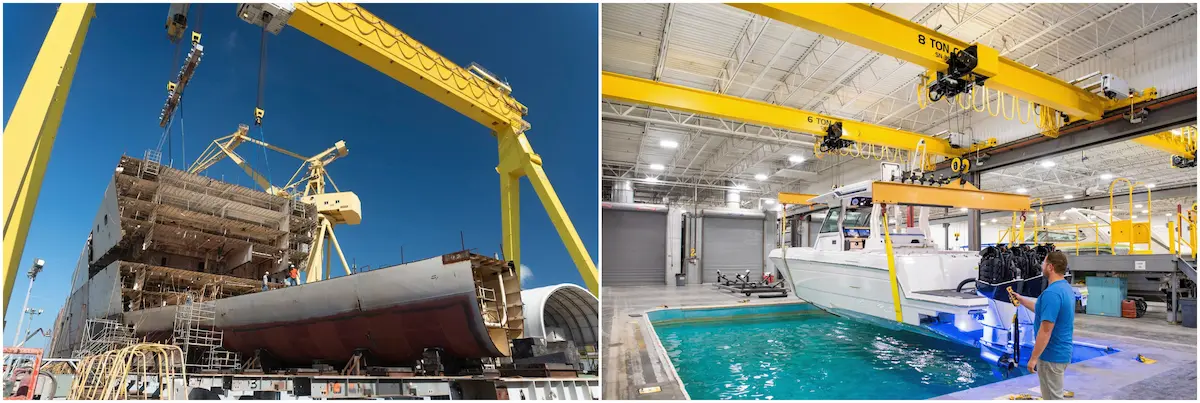
How to Choose Lifting Beam Length?
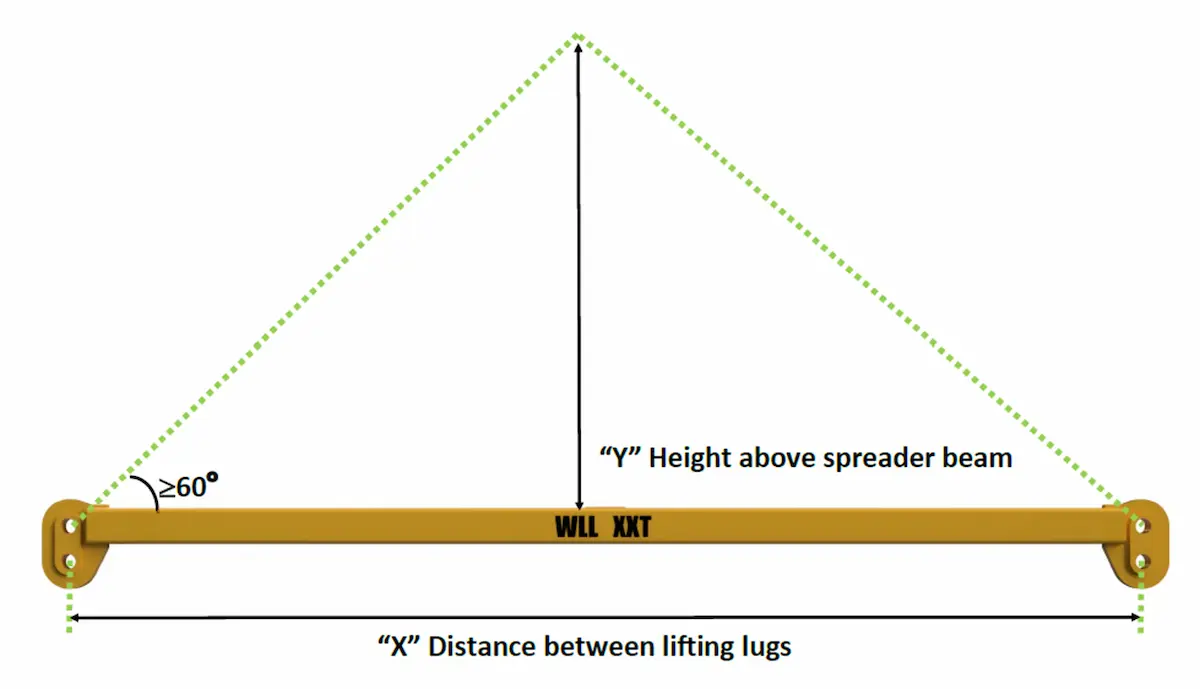
Longer beam length is not always better. You must strictly lock these key data when sizing:
●Block size and point distance: This is the hard bottom line. Effective length must cover actual bottom stress points.
●Crane span and hook distance: For double hook lifting, upper lug distance must match the two trolleys perfectly.
●Strict lifting height check: This causes the most failures. Beams and slings often take up two to three meters. If workshops are low or docks are deep, long gear causes insufficient height. Blocks won’t reach the correct position.
●Workspace clearance: You must consider if rotating beams will hit nearby workshop pillars or slipway scaffolds mid-air.
How to Match Beam Rated Load?
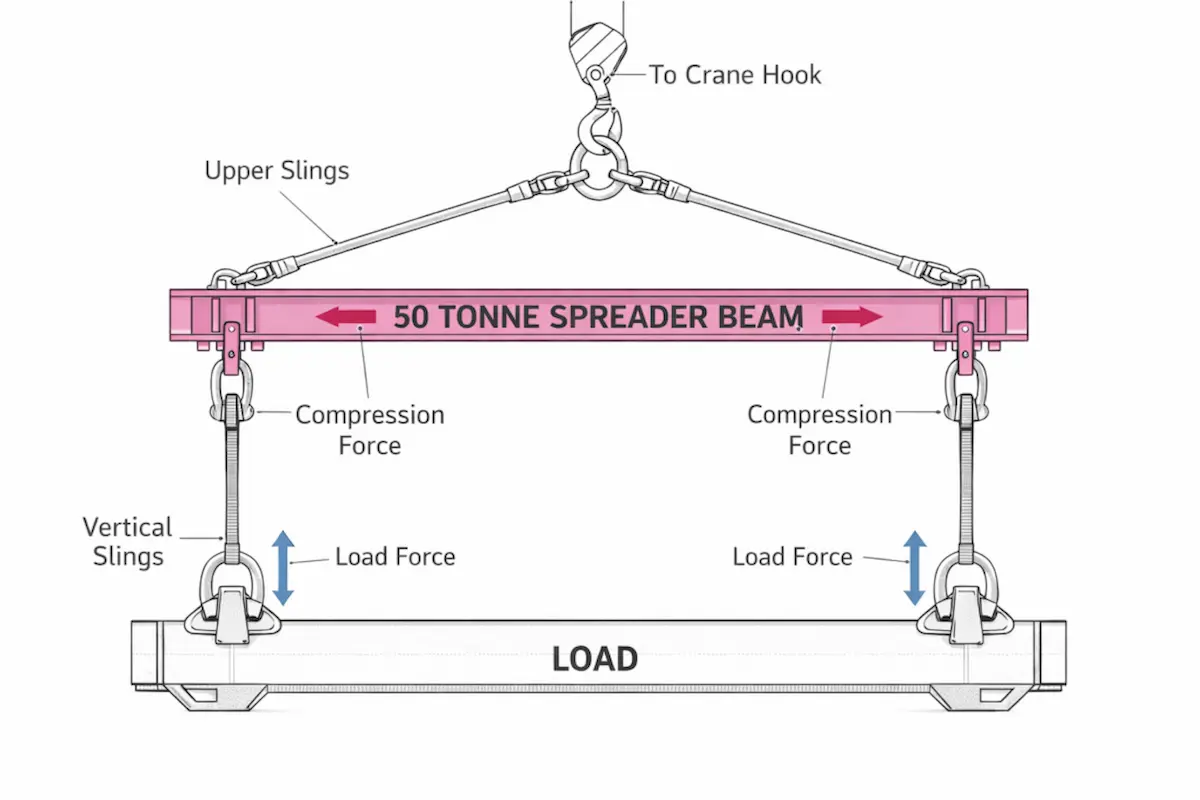
When calculating this, never just look at the lifting weight:
●Add beam weight to system: Heavy beams weigh over ten tons. This deadweight must join the crane’s total load.
●Bias load margin saves lives: Block gravity centers are rarely dead center. Do not split forces 50% on ends. You must consider sudden one-sided stress surges caused by gravity center shifts.
●Handle uneven point stress: With multiple lower points, even a few centimeters of rope length difference changes stress massively. The beam’s structural strength must keep enough safety margins.
How to Combine Beams and Double Hooks?
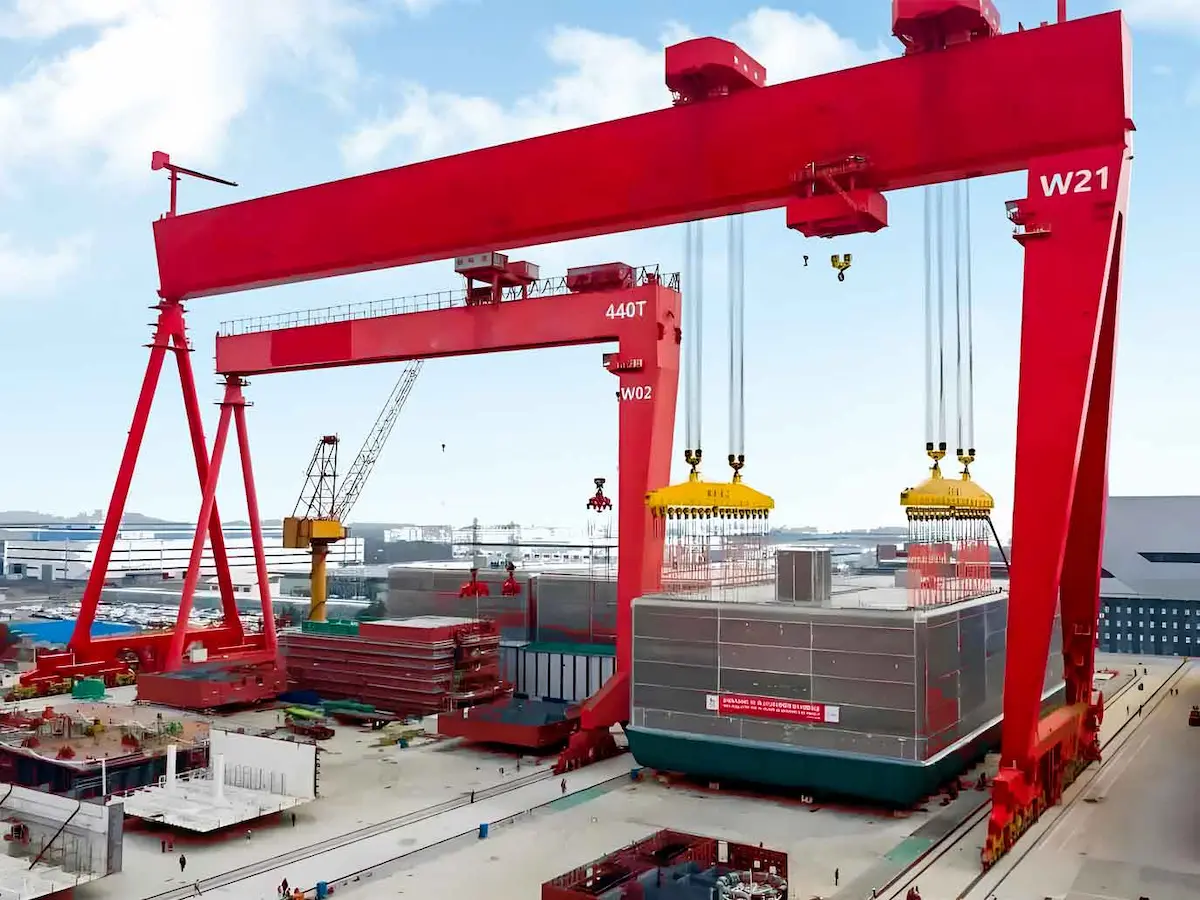
“Double hooks plus beams” is the golden partner for large shipyard crane. Their combination solves many tricky problems:
●Double hook sync avoids tipping: Use independent hook lifting with beams to easily level long blocks with asymmetric centers.
●Stable multi-point sync lifting: It safely changes two upper hook stress points into multiple vertical stress networks below.
●Strong anti-sway and anti-tilt: This combo forms a stable rigid rectangular frame mid-air. Its wind and sway resistance beats single hooks. Docking precision is extremely high.
Common Special Shipyard Crane Lifting Gear
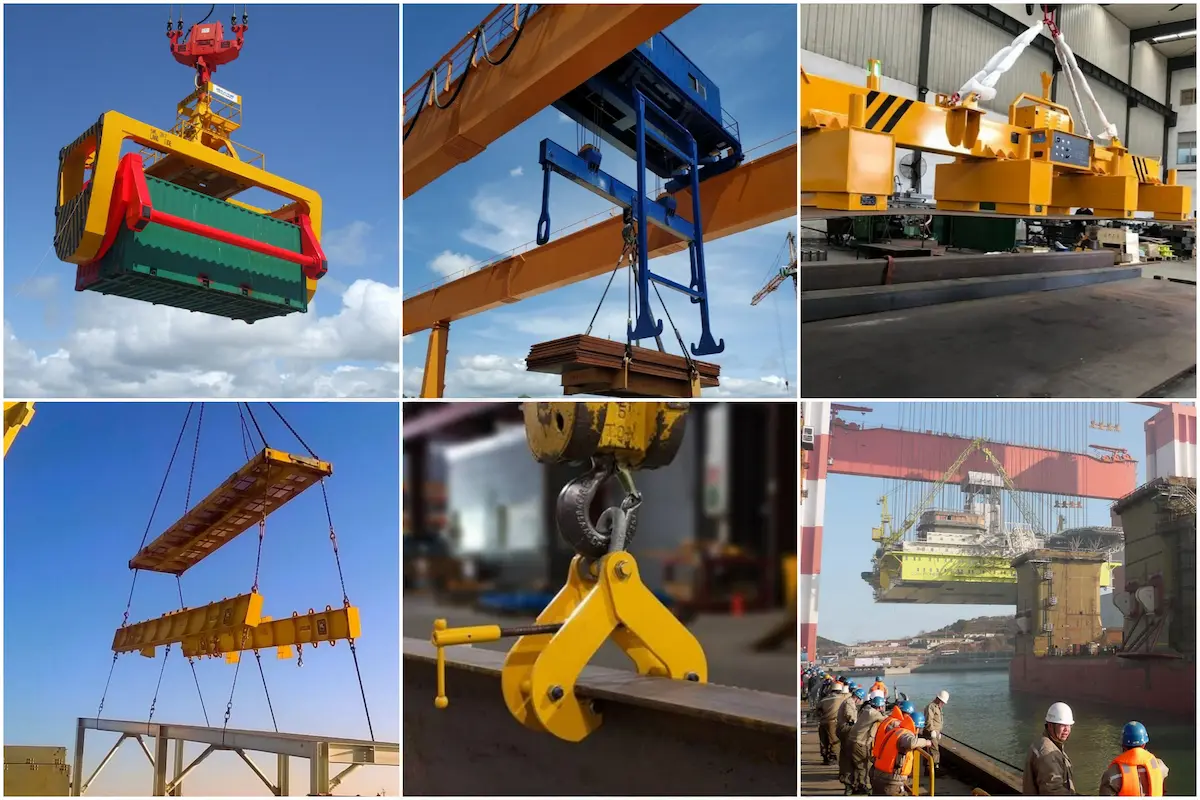
Besides general hooks and beams, shipyards often face strangely-shaped tasks. Standard gear must make way for these special devices developed for shipbuilding:
●Dedicated turning gear: A must-have for every shipyard crane. It uses internal pulleys or hydraulics to turn large blocks smoothly mid-air. This avoids hook slipping or rope breakage caused by forced two-crane pulling.
●Lifting frames: These are upgraded lifting beams. Beams are single-bar shaped, while frames use rectangular or I-beam structures. They handle 3D, ultra-wide, and stress-sensitive superstructures or engine room modules.
●Steel plate gear: The absolute workhorse in steel pretreatment workshops. A long beam carries electromagnets or clamps underneath. It lifts long thin steel plates at once without bending deformation.
●Rotating gear: Mostly used for block joining and docking. When blocks need precise rotation mid-air without guy ropes, motor-driven gear turns accurately.
●Special block clamps: Customized for specific ships like container cell guides or hatch coamings. Built-in locks hook directly into pre-drilled holes, saving tedious tying and boosting efficiency.
●Non-standard custom gear: Standard gear fails for unusual parts like bulbous bows or propellers. Engineers from professional makers like HSCRANE conduct site surveys to customize tailored gear.
How to Combine Shipyard Crane Hooks, Beams, and Special Gear?
Discussing gear combos without specific working conditions is purely theoretical. Shipyard crane lifting is a system combining cranes, hooks, beams, and end slings. We summarized classic shipyard crane setup plans to help your workshop and slipway planning:
|
Scenario |
Recommended Gear Combo |
Crane Setup Idea |
Core On-Site Focus |
| Steel & Profiles | Hook + Clamp / Magnet Gear | Single Girder Overhead Crane | Fast-paced, high grabbing efficiency. |
| Small Parts | Single Hook + Flexible Sling | Single/Double Girder Overhead Crane | Flexible, wide working range, quick lifting. |
| Medium Blocks | Double Hook + Fixed Beam | Double Girder Overhead Crane | Balanced stress, eliminating horizontal squeezing on plates. |
| Large Block Joining | Beam + Multi-point Slings | Double Girder Trolley Crane | Synchronized control, anti-slipping, handling severe gravity shifts. |
| Block Turning | Turning Gear (Independent Drive) | Double Hook / Multi-Mechanism | Posture control, bearing heavy gravity shift and shocks. |
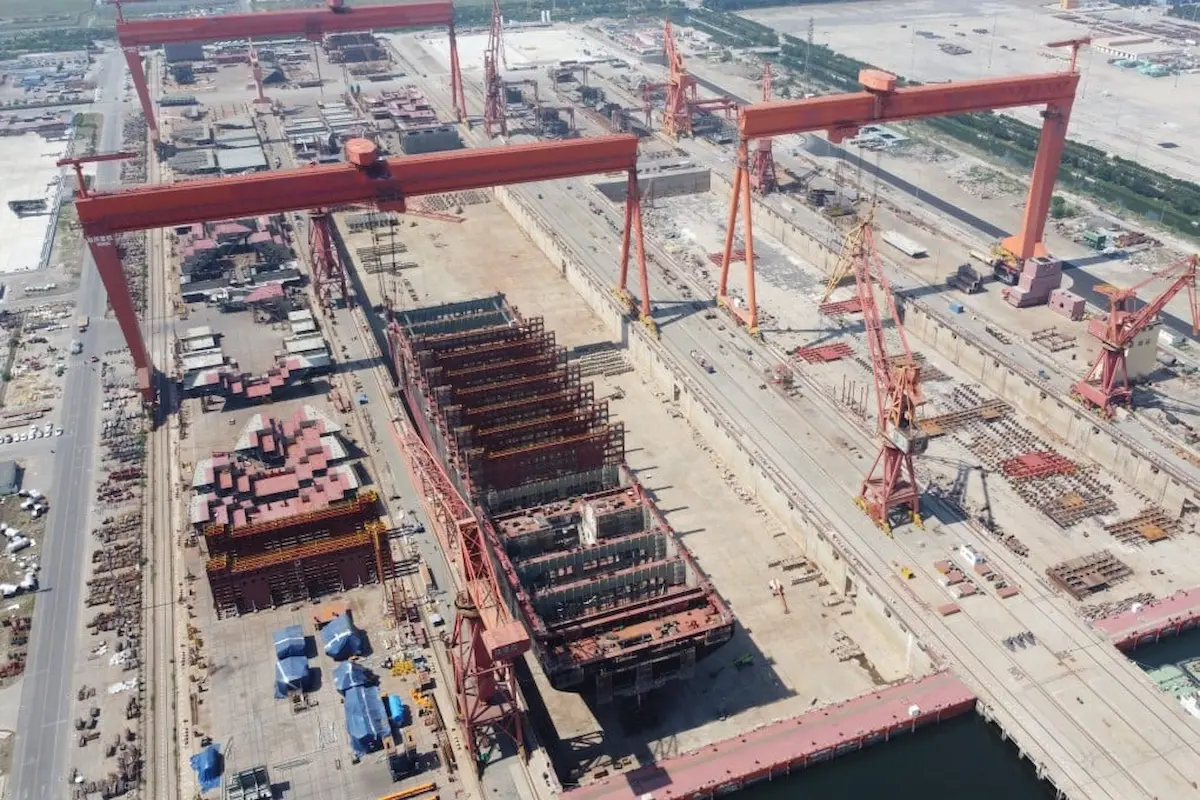
| Outdoor Large Blocks | Special Gear + Long Span Beam | Shipyard Gantry Crane | Wind load, anti-corrosion, and anti-sway treatment. |
| Irregular Parts | Site Survey, Custom Gear | Customized Crane System | Precise gravity center, matching irregular lugs, one-time alignment. |
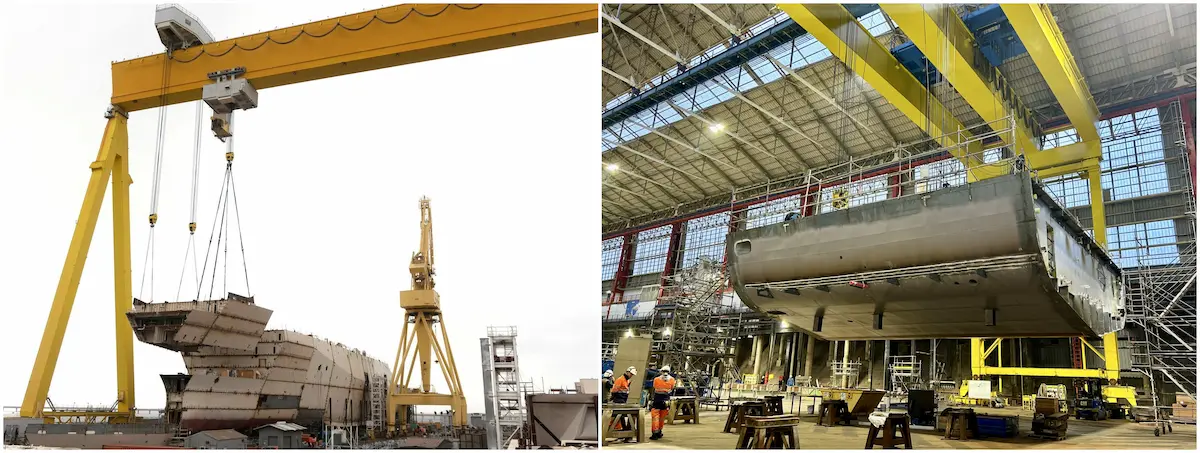
HSCRANE Shipyard Crane and Gear Product Advantages
As an equipment manufacturer deeply rooted in shipbuilding processes, HSCRANE does not simply assemble hardware. We offer highly matched lifting systems for dock production lines. We strictly maintain site safety baselines using core international standards:
●Shipbuilding Process Integration: We never blindly copy general drawings for standard parts or heavy hull blocks. Machine and gear design strictly follows FEM 1.001 standards. This covers structural fatigue and dynamic load calculations. The system absorbs complex impact forces during block joining and turning.
●Dedicated Gear Load Safety: Heavy beams and non-standard clamps fully execute EN 13155:2020 Chapter 5 rules. Finite element analysis is conducted during initial design. It fully calculates gravity shifts and eccentric load risks. This prevents unhooking or deformation under severely uneven stress.
●Marine Anti-Corrosion Ability: Shipyards face strong salt spray and heavy typhoons. HSCRANE outdoor gantry structures and exposed gear use ISO 12944-5:2019 C5-M coating systems. From strict shot blasting to multi-layer thick primer, we solve coastal rust issues.
●Smart Micro-Motion and Delivery: Standard inverter micro-motion and anti-sway systems achieve millimeter positioning for heavy blocks. Our one-stop service covers site survey, design, installation, testing, and lifecycle maintenance. This makes shipyard procurement and site dispatching totally worry-free.
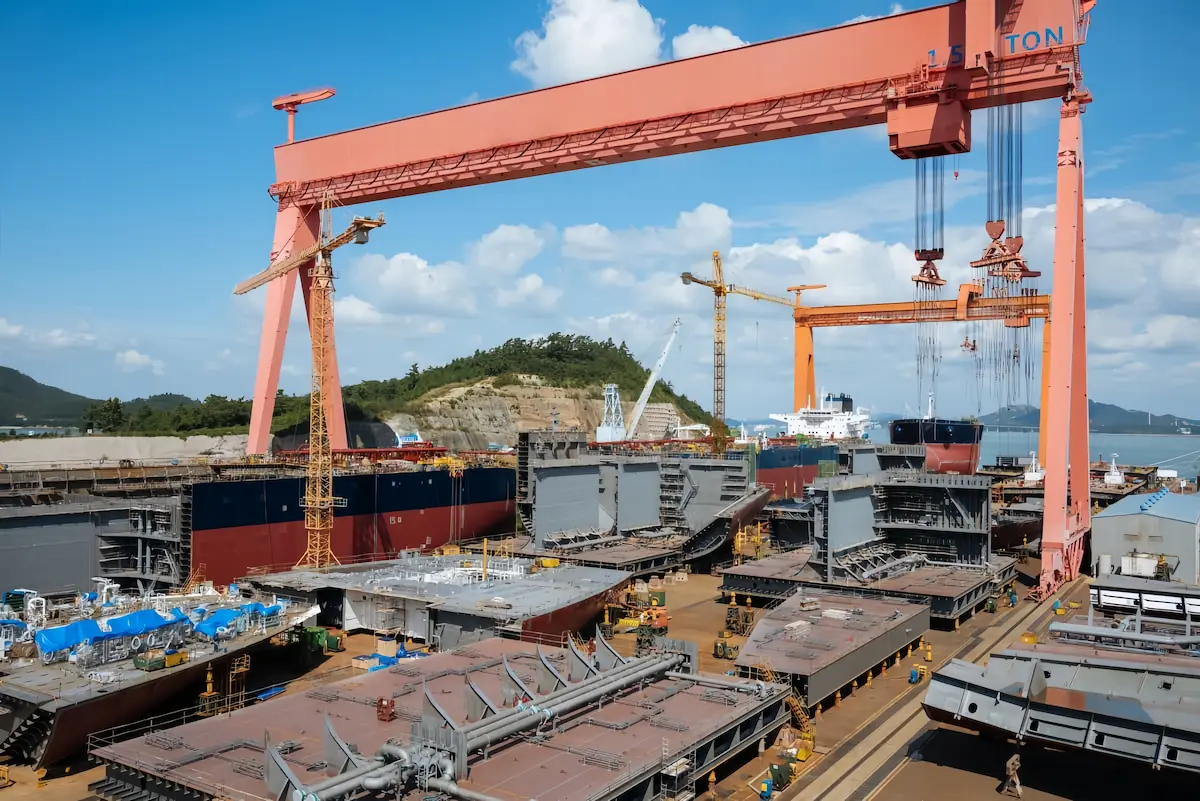
Classic Shipyard Crane Cases of HSCRANE
Theory alone is never enough. Can the combo of shipyard crane and gear withstand extreme conditions? Real site data provides the true answer. Here are two typical global delivery records from HSCRANE:
Malaysia 300t Shipyard Gantry Crane and Lifting System Project
●Project Background: MMHE shipyard is a major offshore and repair base in Johor, Malaysia. It focuses on FPSO conversion and large offshore module construction.
●Delivery Core: One 300t/120m span shipyard gantry crane with a 300t heavy adjustable beam system.
●Quantified Delivery Data:
1.Difficult Mid-Air Turning: The crane uses a classic “upper trolley 2×150t + lower trolley 150t” setup. With a custom universal joint beam, it smoothly completed a 3-point mid-air turn for a 260t module.
2.Monsoon Climate Adaptation: Non-working wind resistance reaches 55m/s for Southeast Asian typhoon conditions. Steel structures and exposed hook groups all use C5-M marine anti-corrosion coating systems.
3.Efficiency Improvement: Beams feature quick-adjusting pins for spacing. For different deck blocks, rigging workers saved 40% time changing points. Overall dock joining efficiency nearly doubled.
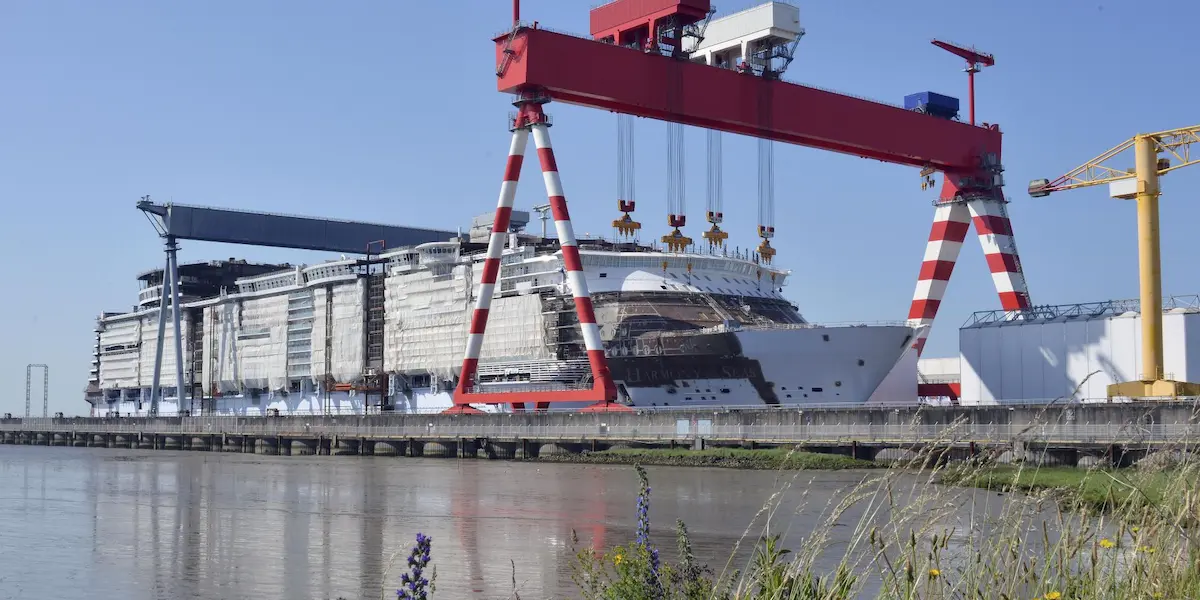
Poland Large Shipyard Smart Crane System and Process Upgrade
●Project Background: Stocznia Gdańska is a historic shipyard in Gdańsk, Poland. It focuses on luxury Ro-Pax ships and offshore wind installation vessels.
●Delivery Core: Eight 100t/50t smart double girder overhead cranes with 3D lifting frame upgrades.
●Quantified Delivery Data:
1.Two-Crane Four-Hook Sync: For long, easily deformed thin-wall superstructures, we integrated underlying control systems. This achieved wireless master-slave synchronization for two cranes and four hooks. In a 180t full-load lift test, height difference among four hooks stayed under 3mm.
2.Anti-Sway Micro-Motion Control: Full closed-loop anti-sway technology reduced start-stop sway angles below 0.2°. Micro-motion speed reached 0.1m/min. This eliminated manual guy rope pulling completely.
3.Gear Process Optimization: A rigid 3D spatial lifting frame replaced the old multi-rope pulling scheme. It solved the issue of wire ropes crushing and tearing block plate edges.
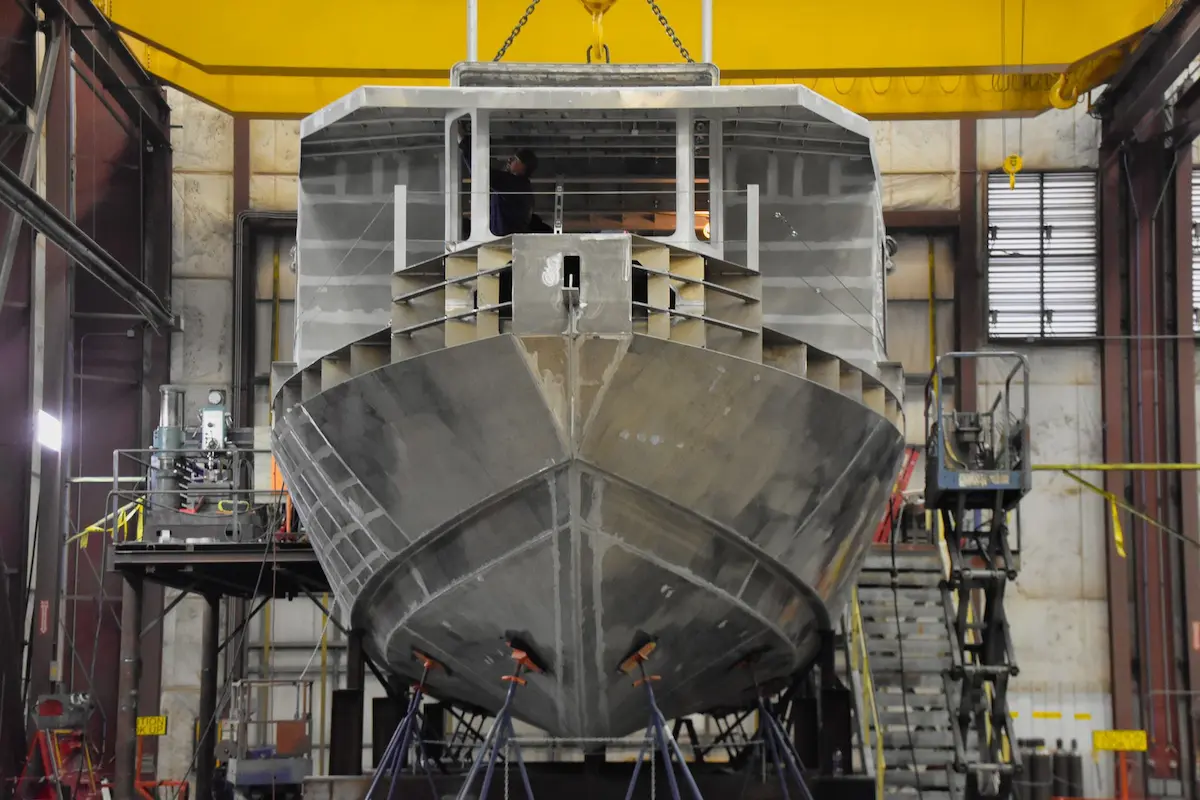
Conclusion
Buying shipyard crane lifting gear is never a simple tonnage addition. Site workers know thousands of tons of steel become a giant ship safely. Cranes are muscles, while hooks, beams, and special gear are dexterous fingers. Even with high-end main cranes, wrong stress calculations and mismatched gear lower efficiency. They become a ticking time bomb hanging over the entire shipyard. Ultimately, a shipyard crane system is a low-tolerance system engineering project. Choosing a maker with process expertise and integrated design is far more reliable.
Ready to Plan Equipment or Facing Bottlenecks?
Instead of worrying about complex gravity center formulas, hand the problem to us. For non-standard block turning or bulbous bow lifting, just provide Hull Block Drawings & Weight Distribution Data. HSCRANE senior engineers will deliver stress analysis sketches and advice within 24 hours.
[Form Entry: Upload Drawings & Get Free Customized Lifting Plan]
Recommended Reading
Good beams and slings mean nothing if hook safety levels are poor. How often must heavy-duty hooks undergo non-destructive testing? Why choose forged DG20 material specifically?
Read our deep dive: [Crane Hooks: Types, Applications, and Safety Standards in Industrial Lifting]
FAQ
Q1: Can we force lifting an off-center block with a fixed beam?
A: Absolutely not. Fixed beams require balanced stress. Forced lifting overloads one side instantly, causing tilting or structural tearing. Use an adjustable beam instead. Alternatively, use double trolley cranes to find the gravity center.
Q2: Why do thin side plates deform during medium block lifting?
A: Direct lifting without beams creates large wire rope angles. Wider angles generate huge inward squeezing forces on the hull. Solution: Match a proper beam to keep slings vertical, transferring horizontal forces onto the beam.
Q3: What is the inspection cycle for shipyard crane hooks and beams?
A: Do not wait for visible cracks. Perform NDT testing on lugs, hook necks, and welds every six months. Shorten this cycle to three months for frequent full-load or high-impact operations.
Q4: Strong winds hit outdoor docks. What gear setup is needed for gantry cranes?
A: Exposed gear must use ISO 12944 C5-M marine anti-corrosion coatings against salt spray rust. Equip anti-drop latches and anti-sway systems on main cranes. This stops mid-air swaying and enables precise dock alignment.
Q5: Irregular ship blocks need lifting. Can HSCRANE provide off-the-shelf drawings?
A: Off-the-shelf drawings do not exist for non-standard processes. We review your 3D hull drawings and run FEA analysis to find gravity centers. Then, we customize non-standard lifting frames or clamps tailored for you.
This document is for reference only. Specific operations must strictly comply with local laws and regulations and equipment manuals.