

Abstract
Choosing between a single girder and double girder overhead crane is one of the most critical decisions for your facility. Make the wrong choice, and you either waste capital on over-engineered equipment or face constant downtime because your crane can’t handle the load. In this comprehensive engineering guide, we break down the structural differences, load distributions, and headroom requirements of both designs. Whether you’re lifting 5 tons in a small machine shop or 100 tons in a steel mill, we’ll help you select the most cost-effective and reliable lifting solution for your workspace.
Overhead crane systems handle critical material lifting tasks in modern industrial production. These systems are widely used in manufacturing, warehousing, and heavy industry sectors. Single girder and double girder overhead crane designs are the most common structures. Understanding their main beam differences helps businesses balance performance and cost. This knowledge enables more efficient investment and operational decisions for your facility.
What is a Single Girder Overhead Crane?
Definition and Basic Structure
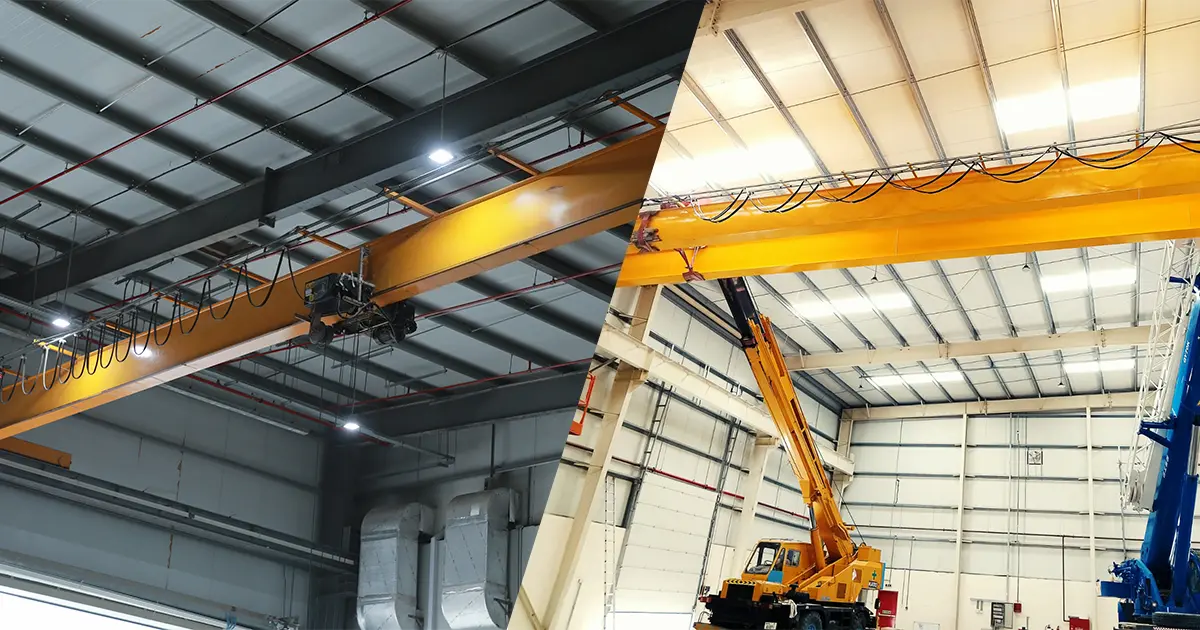
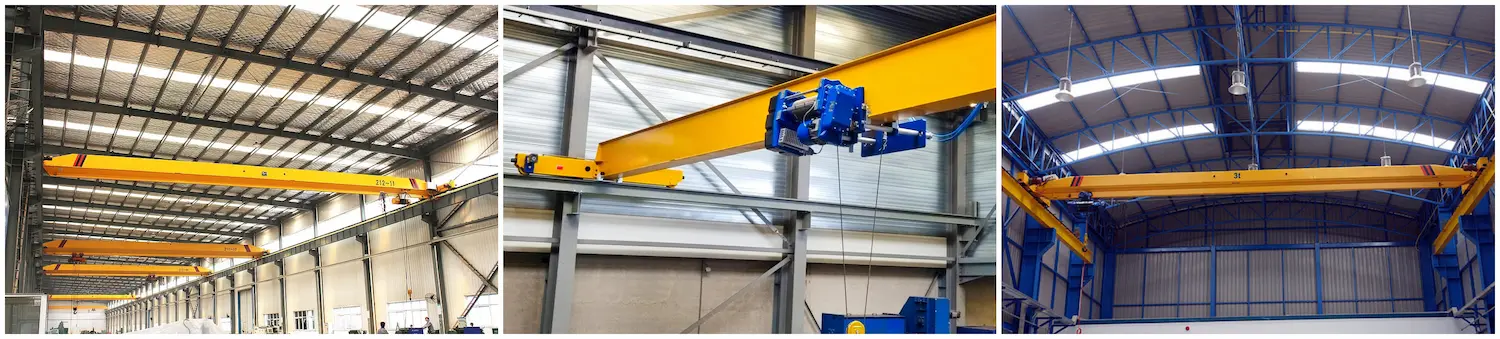
A single girder overhead crane features one bridge beam and two end trucks. Its design follows minimalism and mechanical balance for reliable lifting performance. The system includes a main beam, end carriages, traveling mechanisms, and electrical controls. This compact structure reduces the load-bearing requirements on the factory’s steel frame.
Main Beam Forms
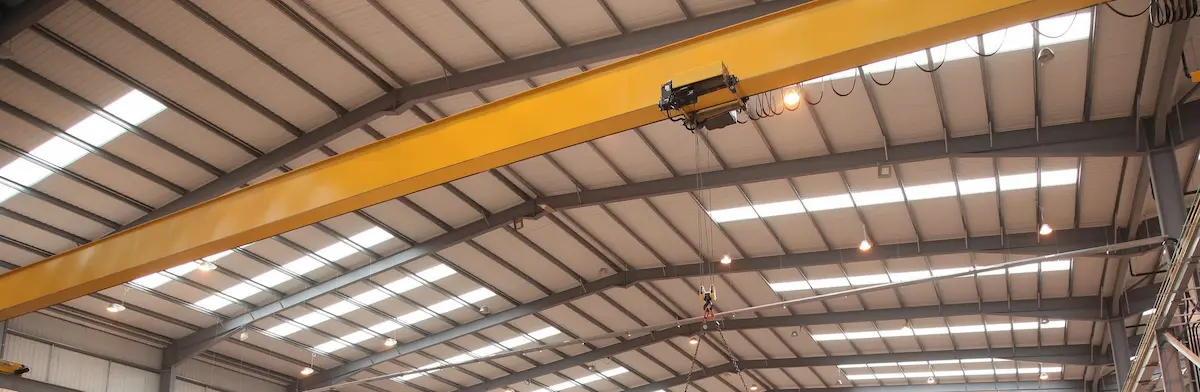
The main beam is the core component for supporting heavy loads. Depending on the capacity and span, it usually adopts the following forms:
●Steel Section Beam: High-strength I-beams or H-beams are used for small capacity and short spans.
●Composite Beam: Welded stiffeners or cover plates enhance horizontal rigidity and bending strength.
●Box Girder: Steel plates form a closed rectangular box for large spans. This design provides a light self-weight and excellent torsional resistance.
Hoist Mechanism Arrangement
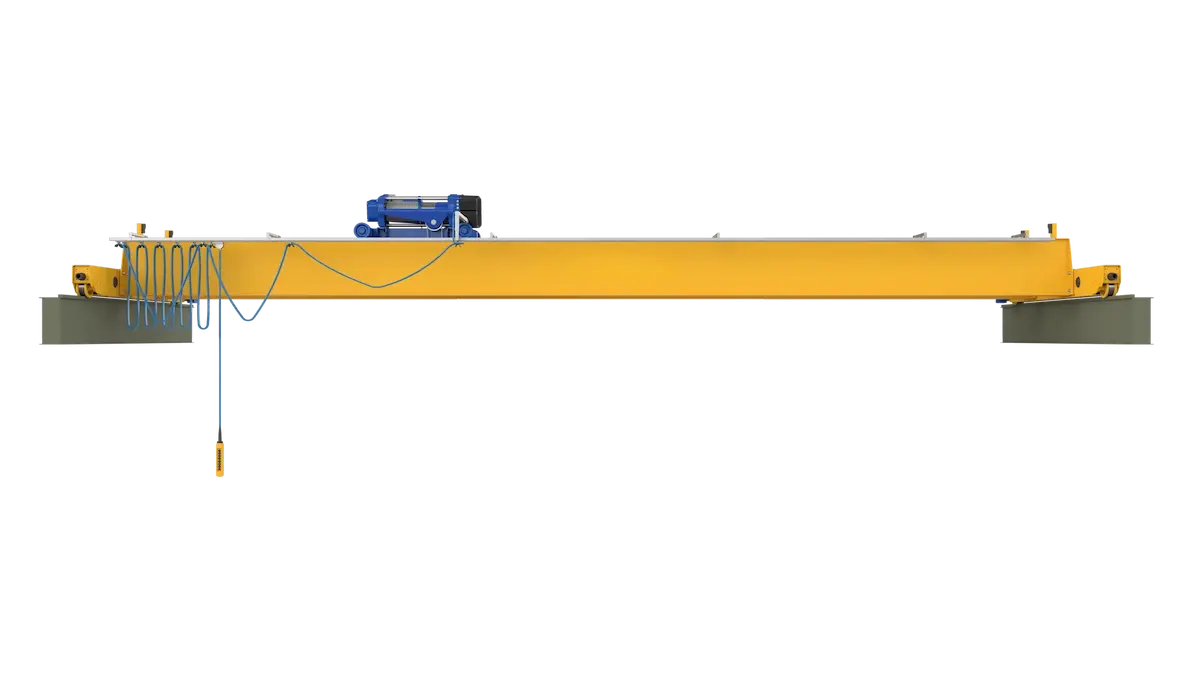
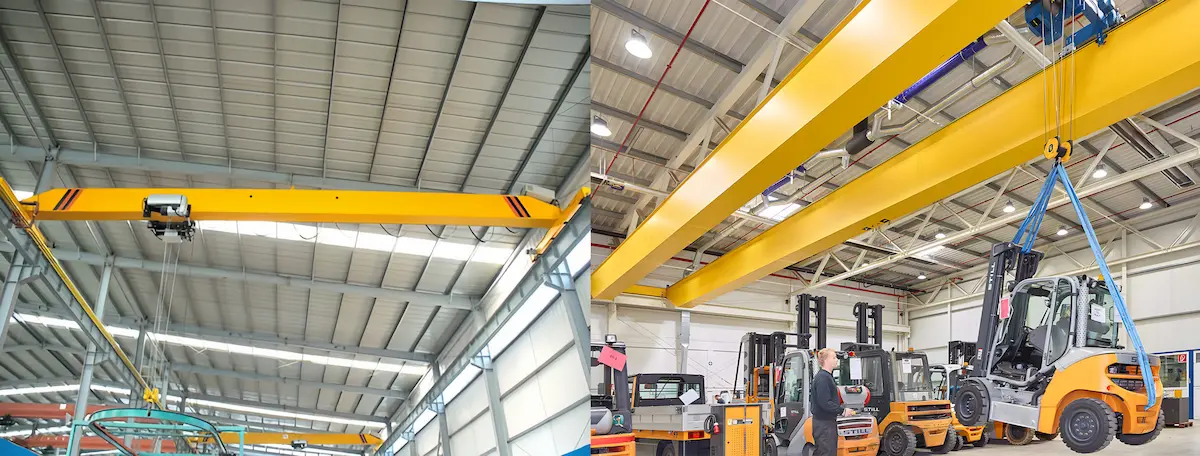
This is the most distinctive feature of a single girder overhead crane. The lifting mechanism, such as an electric hoist, runs under the lower flange. This arrangement simplifies the trolley structure and covers the workspace below. Low-headroom hoists are often used to optimize the utilization of factory height. The side-mounted design effectively shortens the height of the hoist body.
Typical Application Scenarios
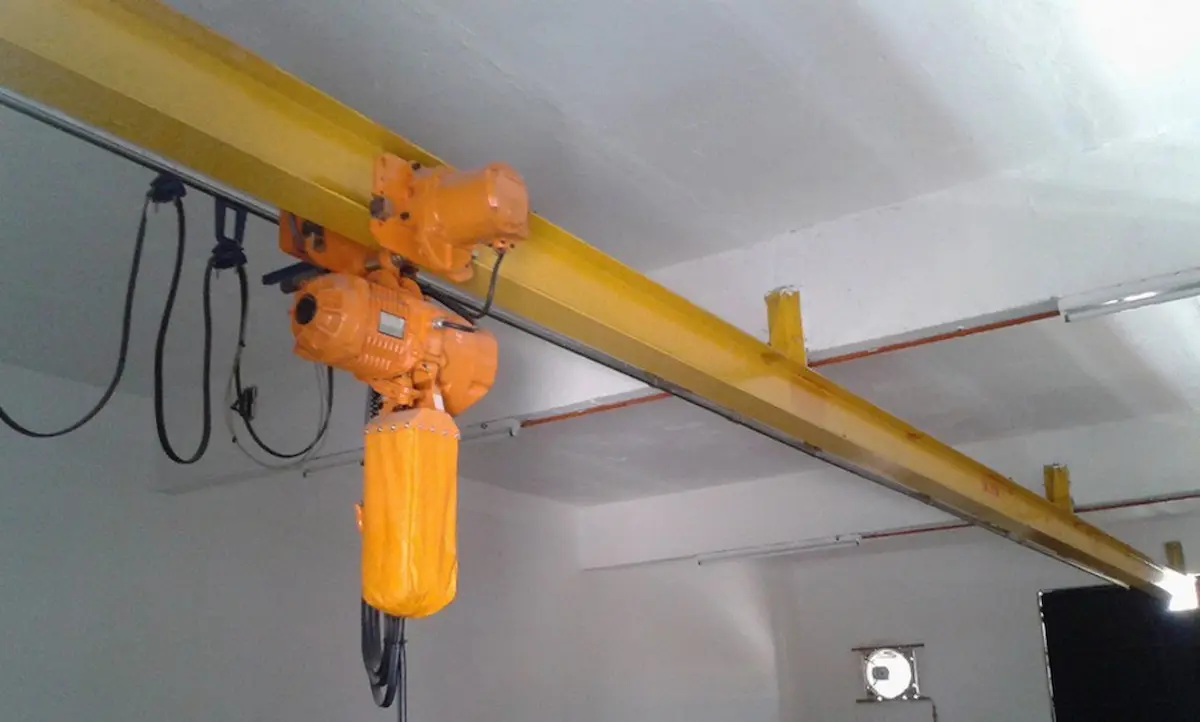
The single girder overhead crane is popular for its high cost-effectiveness and flexibility:
●Light-Duty Conditions: Rated capacities are usually under 20t with A3 or A4 work levels.
●Small Span Workshops: It is ideal for machining shops, assembly lines, and maintenance rooms.
●Space-Constrained Environments: Lower headroom requirements make it the top choice for small to medium enterprises.
What is a Double Girder Overhead Crane?
Definition and Structural Composition
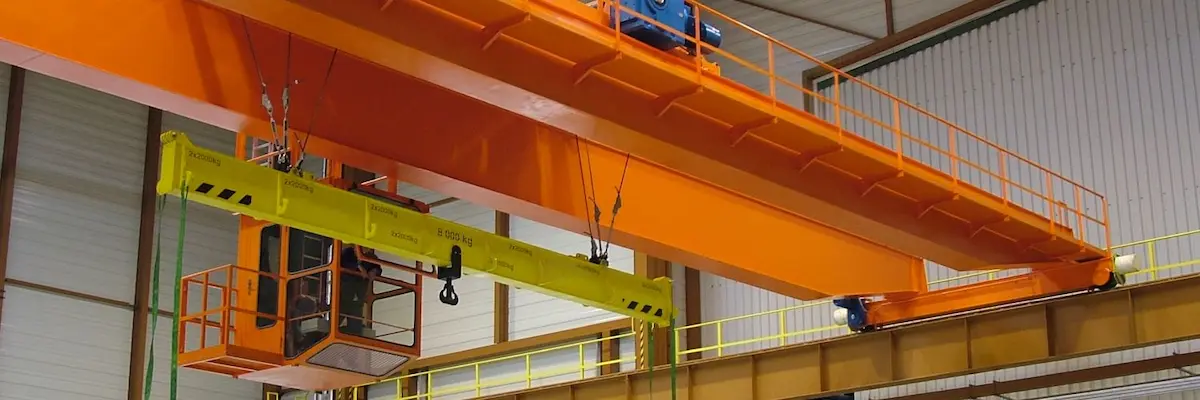
A double girder overhead crane consists of two parallel main beams and two end trucks. It also includes a crane traveling mechanism, a lifting trolley, and an electrical system. As core heavy lifting equipment, its two main beams form a very stable rectangular frame. This structure carries much higher rated loads than single beam designs. It also provides superior mechanical rigidity for demanding industrial tasks.
Main Beam Forms
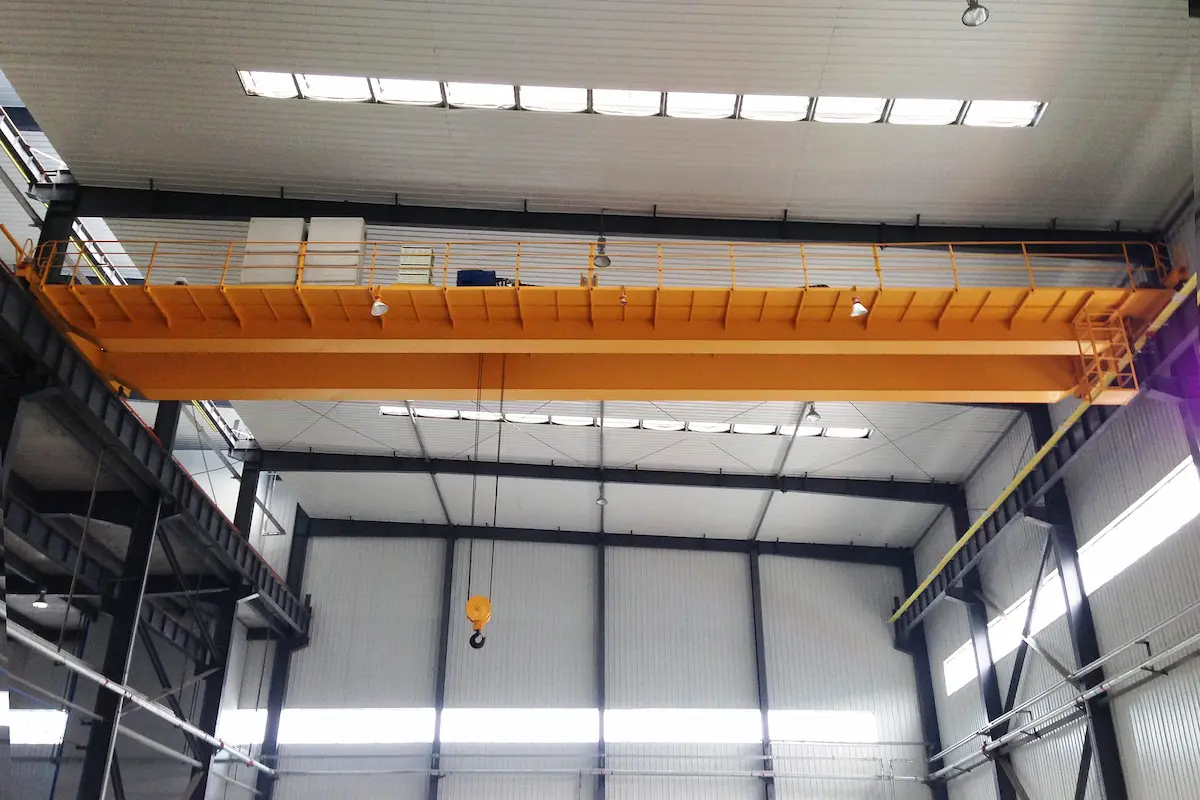
The main beams of a double girder overhead crane almost always use box girder structures.
●Cross-section Design: They are welded from top and bottom plates plus left and right web plates. Internal longitudinal and transverse stiffeners are scientifically arranged. This design maximizes bending and torsional strength while keeping self-weight controllable.
●Welding Process: Automatic submerged arc welding controls the camber curve precisely. This ensures the beam resists permanent deformation under long-term heavy loads.
Lifting Mechanism Arrangement
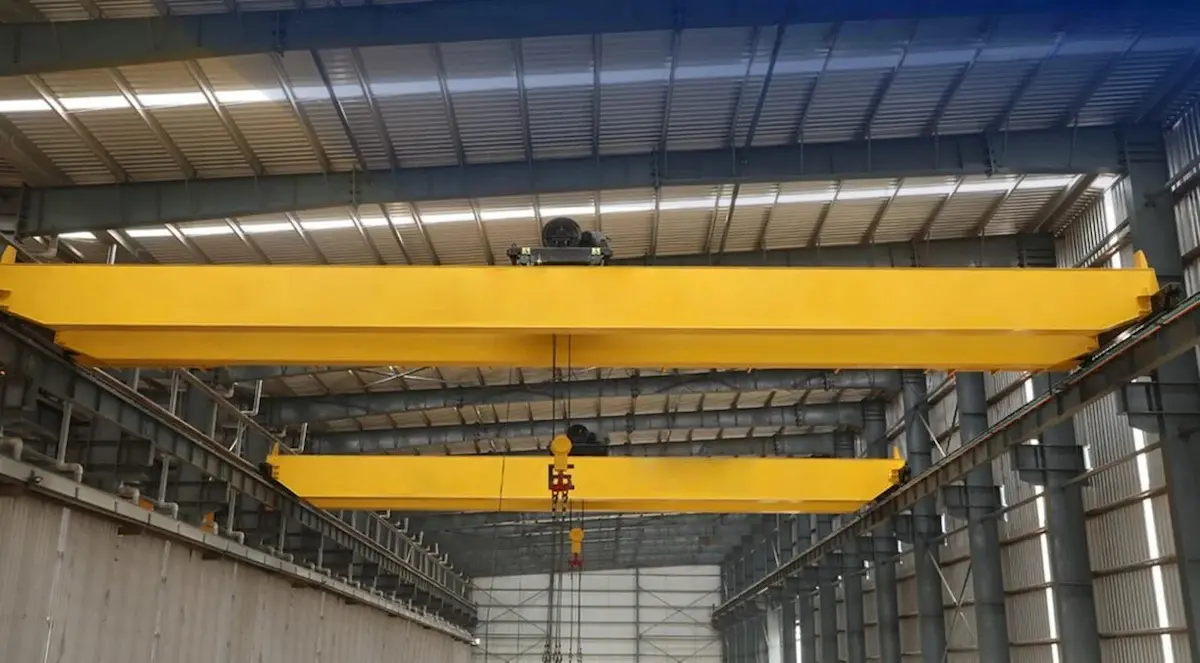
Unlike single beam cranes, the lifting trolley sits on rails on top of the main beams.
●Force Model: The load acts directly on the top rails through the trolley wheels. This “seated” layout keeps the center of gravity balanced. It avoids the torsional torque found in underslung single girder structures.
●Space Advantage: The trolley sits above the beams, so the hook can rise between them. This significantly increases the effective lifting height within the same factory ceiling height.
Typical Application Scenarios
The double girder overhead crane provides reliable performance under extreme working conditions:
●Heavy Load Needs: Lifting capacities range from 5t to hundreds of tons. It is standard for heavy machinery, metallurgy, and power industries.
●Large Span Projects: It suits large assembly shops, stockyards, and shipyards with spans over 30 meters.
●High-Frequency Operations: It meets A5, A6, or A8 work levels under ISO standards. These cranes handle intensive 24-hour lifting tasks with ease.
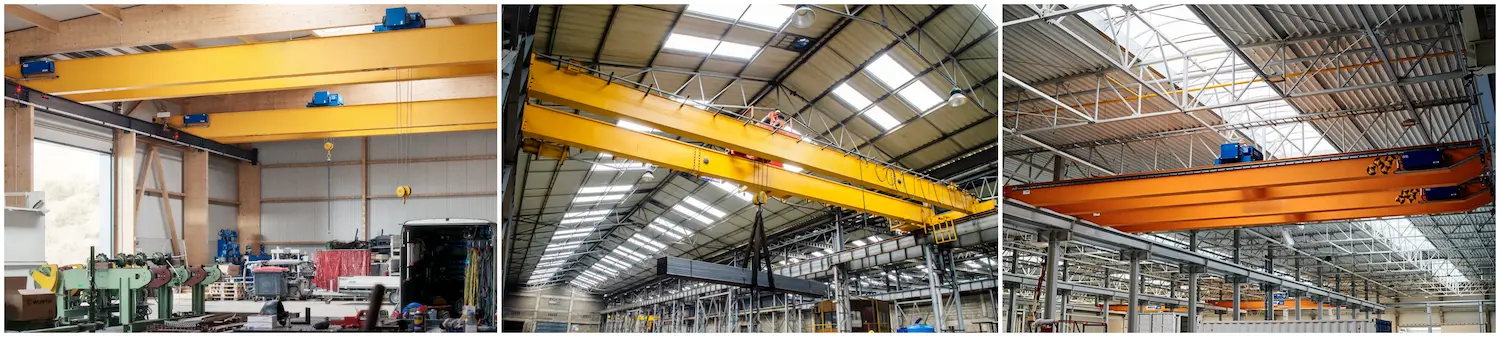
Core Differences Analysis: Single vs. Double Girder Structure
To visually demonstrate the engineering characteristics of both structures, the following table provides a detailed comparison based on mechanical models, space utilization, and application specifications:
|
Difference Dimension |
Single Girder Overhead Crane |
Double Girder Overhead Crane |
| Main Beam Structure | Usually consists of a single I-beam, H-beam, or light box girder with a minimalist design. | Consists of two symmetrical box girders and end trucks, forming a rigid frame structure. |
| Stress and Rigidity | Loads are concentrated on one beam; lower torsional rigidity under offset loads; prone to deflection at large spans. | Loads are evenly distributed across two beams via the trolley; extremely high stability and vertical/horizontal rigidity. |
| Lifting Mechanism Layout | The hook must run below the main beam; limited by hoist height; effective lifting height is lower. | The hook can rise between the two main beams, significantly reducing wasted space; larger lifting room. |
| Capacity and Span | Economical span; lifting capacity is generally ≤ 20t. | Supports 5t to hundreds of tons of super heavy loads; adapts to all large-span industrial sites. |
| Maintenance Access | Usually no walkways; maintenance requires external platforms or high-altitude work vehicles. | Full-length maintenance walkways are usually provided for easy inspection of motors and mechanical parts. |
The comparison shows that single girder structures excel in lightweight and economy. In contrast, double girder structures represent high reliability and large working ranges. These engineering differences directly determine the design requirements for rail beams and corbels during initial plant construction.

Impact of Main Beam Structure on Performance
The choice of main beam structure influences the appearance and deeply affects mechanical performance, precision, and return on investment.
Load-Bearing Capacity
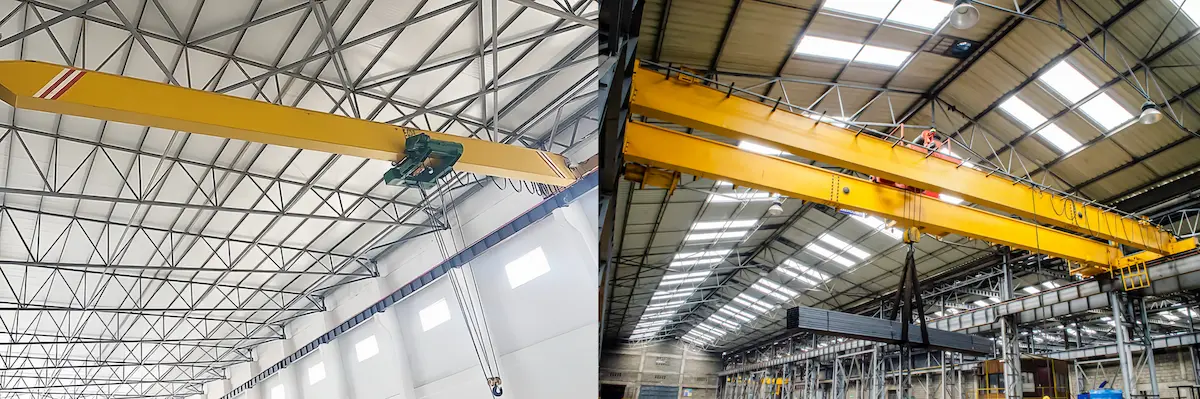
●Single Girder: Limited by the section modulus of one beam; capacity usually stays within 20 tons. Exceeding this makes the beam too heavy and uneconomical to meet rigidity needs.
●Double Girder: Uses a dual-point stress model to easily handle loads of 50t, 100t, or hundreds of tons. It is the only choice for safety in heavy industry and mold manufacturing.
Operational Stability
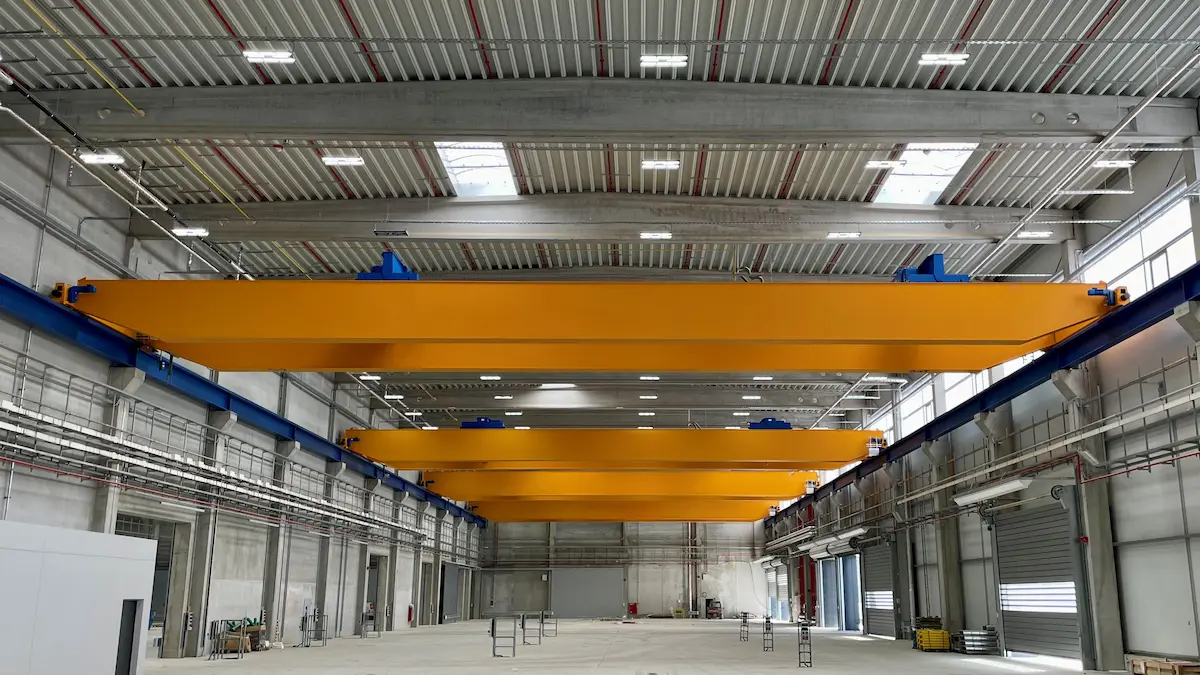
●Horizontal Rigidity: Double girder cranes form a rigid frame with two main beams, providing excellent resistance to twisting.
●Dynamic Performance: The double girder structure effectively suppresses horizontal oscillation during acceleration. The stable trolley track results in smaller hook swings, ideal for high-precision assembly.
Factory Space Utilization
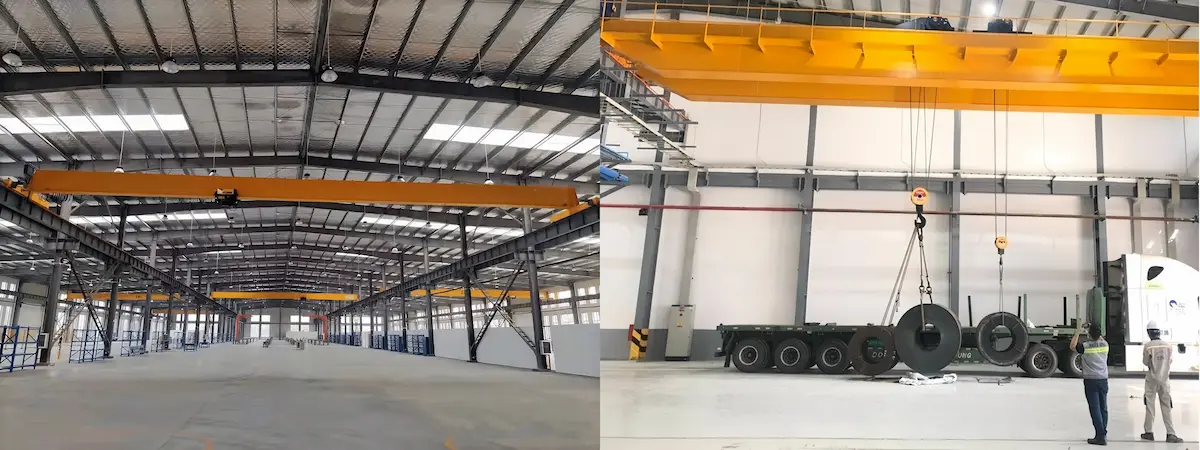
●Single Girder: The hoist is under the beam, requiring sufficient bottom clearance. This reduces the actual lifting height for a given factory height.
●Double Girder: Using “space replacement,” the hook can rise into the gap between the two beams. This provides a higher effective lifting height without increasing total factory height.
Manufacturing and Installation Costs
●Single Girder Crane: Uses less steel and has a shorter processing cycle. Its light weight reduces load requirements on factory structures, lowering initial costs.
●Double Girder Crane: Complex manufacturing requires ensuring parallelism and synchronization of two beams. While construction costs are higher, its high duty cycle (A5-A8) and low failure rate offer better long-term cost efficiency.
How to Choose the Beam Structure Based on Working Conditions
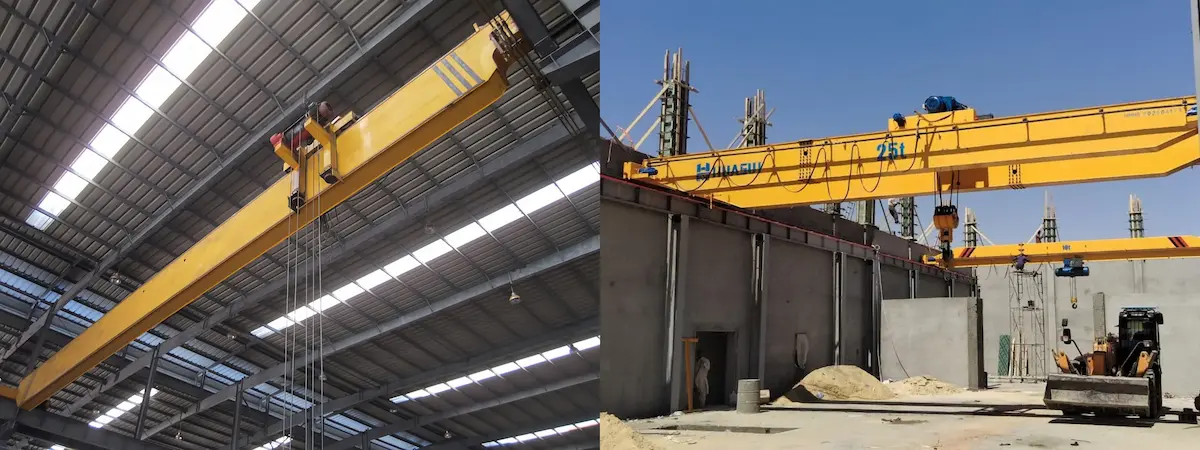
In engineering selection, there is no absolute “better” or “worse,” only what “matches” your needs. Choosing an overhead crane structure requires considering load characteristics, intensity, building constraints, and your budget.
Core Selection Dimensions
●Load Magnitude: For long-term lifting under 10t, a single girder overhead crane is the most cost-effective. For heavy equipment over 20t, a double girder overhead crane is necessary for structural safety.
●Frequency of Use: Single girder designs usually meet A3/A4 levels, suitable for non-continuous workshop tasks. For 24-hour high-frequency operations, choose an A5-A8 double girder overhead crane.
●Factory Height Limits: If internal height is low but high stacking is required, use double girder cranes. Their high-position hook feature compensates for limited vertical space effectively.
●Budget and Operation: Single girder focuses on optimizing initial investment. Double girder designs prioritize long-term efficiency and easier maintenance access.
Selection Decision Reference
Use the table below to make a preliminary judgment based on your specific factory conditions:
|
Selection Index |
Single Girder Overhead Crane |
Double Girder Overhead Crane |
| Rated Capacity (t) | Q ≤ 16t | Q > 20t |
| Span Requirements (m) | L ≤ 22.5m | L > 22.5m |
| Work Class (ISO) | A3, A4 (Light, Medium) | A5, A6, A7, A8 (Heavy, Extra Heavy) |
| Effective Lifting Height | No special requirements | Maximize utilization of roof clearance |
| Operational Precision | General logistics handling | Precision assembly, high stability |
| Maintenance Frequency | Occasional inspection | Frequent continuous work, needs walkways |
| Infrastructure Capacity | Lower corbel load capacity | Sufficient structural load-bearing reserves |
Integrated Decision Logic
Examples of decision paths:
●Load 10t → Span 18m → 2 hours daily → Solution: Single girder overhead crane (Economical).
●Load 10t → Span 30m → 24-hour operation → Solution: Double girder overhead crane (High Reliability).
After choosing the beam type, consider speed, frequency control, and auxiliary lifting mechanisms like double hooks. For complex sites, contact a professional crane engineer for mechanical calculations.
Advantages of HSCRANE Overhead Crane Beams
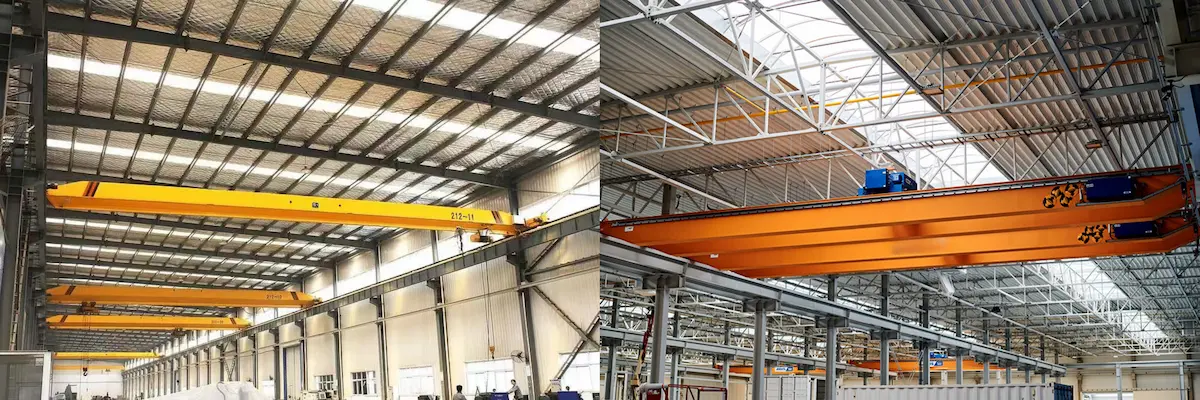
HSCRANE enhances crane performance through precision engineering. Our main beams integrate advanced mechanical algorithms with durable components.
●Optimized Structural Design: We use Finite Element Analysis (FEA) to simulate extreme load conditions. This ensures optimal balance between structural strength and material efficiency.
●High-Strength Box Girder Process: We use Q235B or Q345B steel with automatic submerged arc welding. Strict camber control prevents plastic deformation under full loads.
●Lightweight Performance: European design concepts increase rigidity while minimizing self-weight. This reduces wheel loads and lowers energy consumption for your facility.
●Superior Stability: Internal stiffeners improve overall torsional resistance. Low vibration frequencies ensure high positioning accuracy and operational safety during movement.
●Longer Service Life: Our cranes follow ISO, FEM, and EN international standards. With 100% weld testing and Sa2.5 sandblasting, they offer 20-year reliable cycles.
●Modular Installation: High-strength bolts connect beams and end trucks for easy shipping. This modular design reduces logistics costs and improves installation efficiency by 30%.
●Adaptability: HSCRANE provides customized protection for humid, high-temperature, or corrosive environments. We ensure consistent performance in various challenging industrial settings.
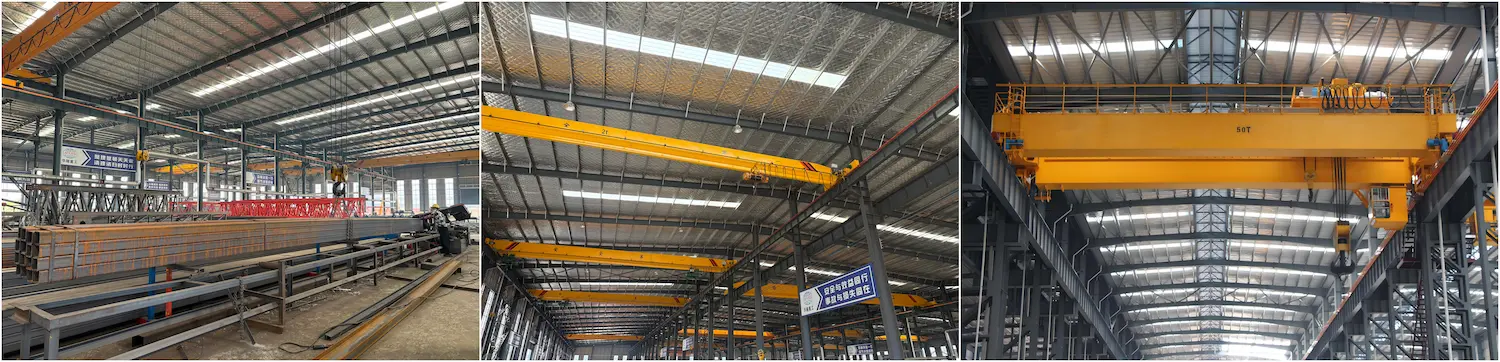
There is no absolute “winner” between single and double girder engineering logic. The difference lies in their suitability for specific task intensities, load sizes, and space needs. Single girder structures offer high cost-effectiveness and light weight for light-to-medium workshops. Double girder structures provide superior rigidity and larger lifting room for heavy-duty manufacturing and high-frequency tasks. Selecting the right main beam determines machine safety, infrastructure costs, and operational lifespan.
Unsure Which Girder Design Fits Your Facility?
Don’t guess with your infrastructure budget. Send us your required capacity, span, and building height. HSCRANE’s engineers will run the FEA calculations and provide a free structural recommendation and quote within 24 hours.
[Request a Free Engineering Consultation]
Further Reading: The Power Base Beyond the Main Beam
Main beams determine load capacity, but the End Carriage determines operational precision and lifespan. As the support point, the end carriage carries the total weight and houses the drive motors. It is the core mechanism that prevents the crane from derailing or “rail gnawing.”
●Synchronization: How do left and right end carriages achieve millisecond-level synchronization?
●Material Process: Why do high-end manufacturers prefer end carriages built to FEM standards?
●Maintenance Details: How do buffers and long-life wheel sets reduce your downtime losses? Click the link below for an in-depth analysis:
《Everything You Need to Know About Crane End Carriages》
FAQ
Q1: Why are single girder structures rare for cranes over 20 tons?
A1: Heavy loads require massive single beams to ensure stiffness. This creates excessive self-weight and low material efficiency. Double girder designs share the load, offering a safer and more scientific model.
Q2: Can I reinforce a single girder crane to increase capacity later?
A2: No. Private reinforcement is strictly prohibited. Stiffeners cannot change overall torsional rigidity or fatigue life. Overloading causes permanent deformation and risks serious structural failure.
Q3: Which structure is better for limited factory headroom?
A3: For maximum hook height, a double girder crane with a low-headroom trolley is superior. For tight budgets and small tonnages, a low-headroom single girder crane is a good compromise.
Q4: How does HSCRANE ensure safety when transporting large-span beams?
A4: We use modular technology for long-distance shipping. Main beams are split into container-sized modules using high-strength bolts. Precision flange docking ensures the assembled performance matches a one-piece beam.
Q5: Can I upgrade a single girder crane for heavier loads?
A5: No. Reinforcing a single girder crane beyond its rated capacity is dangerous. If you expect heavier future loads, invest in a double girder overhead crane system initially.
Q6: Which crane type suits low-headroom buildings best?
A6: Double girder cranes maximize height as the hoist sits between the beams. Alternatively, a side-mounted hoist on a single girder crane saves space for smaller budgets.
This document is for reference only. Specific operations must strictly comply with local laws and regulations and equipment manuals.