

Overview
When crane trolley operation becomes unstable, many site teams immediately suspect the rail. However, rail misalignment is only one possible cause. When the trolley shakes, skews, sticks, or makes unusual noises, other causes may be involved. Startup jolts and uneven travel speeds may also indicate underlying problems. Possible sources include wheel wear, bearing lubrication, drive motors, gearbox transmission, and inverter parameters. They also include brake adjustment, trolley installation accuracy, and off-center loads. This article reviews eight common causes across mechanical components, electrical drives, control systems, and load distribution. It also provides diagnostic guidance and corrective methods. This can help site personnel avoid unnecessary work and identify problems faster.
Does the crane trolley shake, stick, skew, or make unusual noises during operation?
The problem may involve more than rail misalignment. Possible causes include wheels, bearings, drive motors, and variable-frequency control systems. Finding the root cause promptly helps prevent accelerated equipment wear and reduced operating efficiency. Learn more about trolley faults and troubleshooting methods.
[Contact HSCRANE to Learn More]
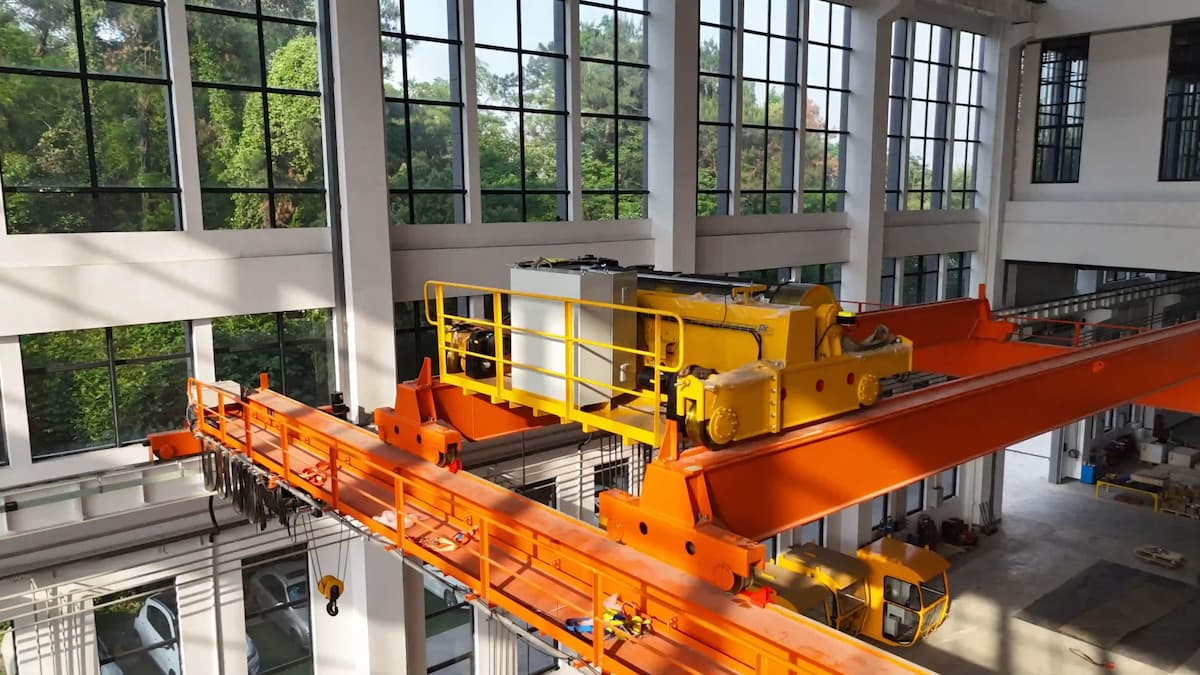
8 Common Causes of Unstable Crane Trolley Operation
Unstable crane trolley travel can make troubleshooting difficult. The biggest mistake is checking everything superficially without investigating any cause thoroughly. The eight causes below are grouped into four areas: mechanics, drives, controls, and loads. Actual faults rarely stem from just one cause. Usually, one or two are the primary causes, while others are secondary effects. Review each item to narrow down the source more accurately.
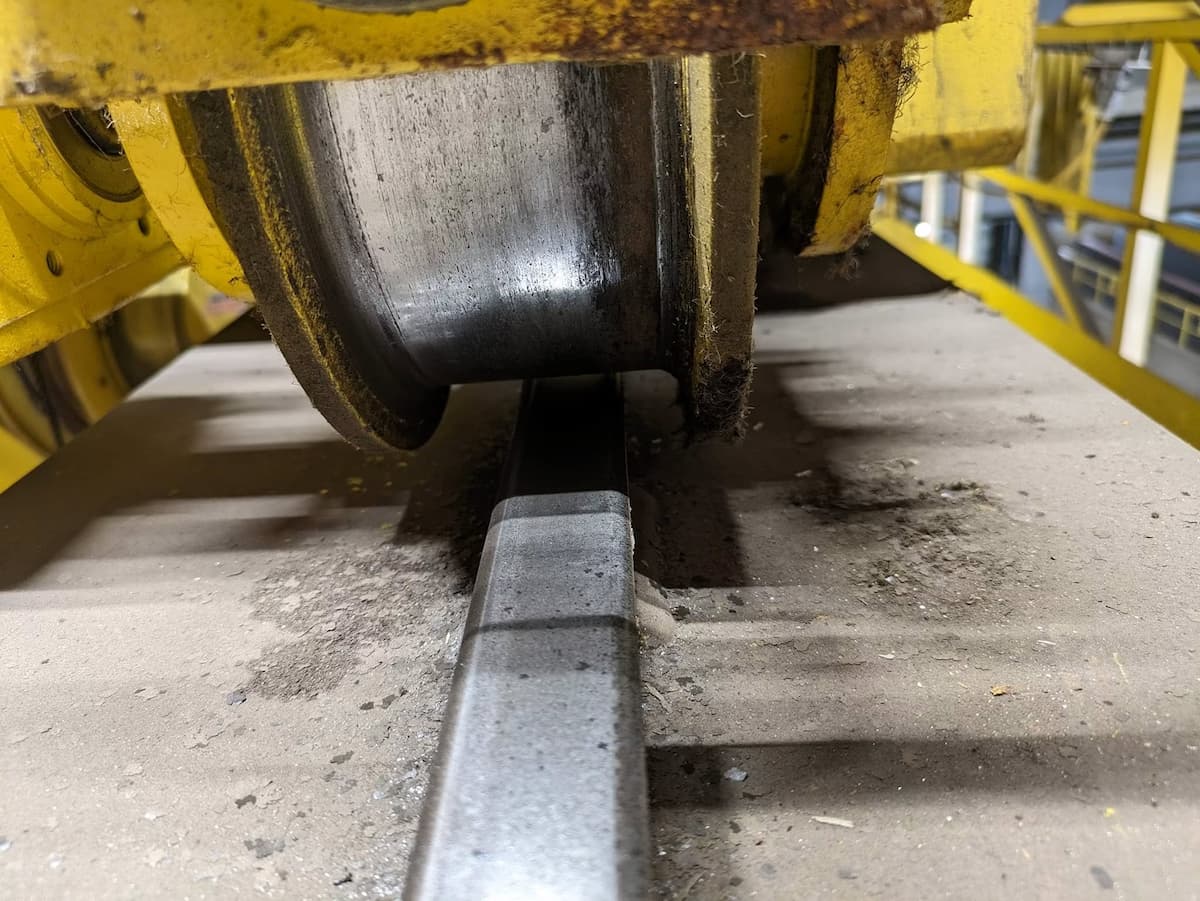
Wheel Wear or Inconsistent Wheel Diameters
This is one of the most common problems found on-site. Before adjusting the inverter, inspect the wheels and rails.
|
Inspection Item |
Symptoms on Site |
Why It Matters |
Troubleshooting Tips |
| Tread wear or flange damage | Skewing, rail rubbing noise, or shiny flange surfaces | Poorer contact causes fluctuating resistance | Check for peeling, grooves, and insufficient flange clearance. |
| Inconsistent wheel diameters within the same drive system | The trolley runs diagonally, with one side pulling ahead | Different linear speeds occur at the same rotational speed, twisting the trolley | A diameter difference exceeding 0.2 mm between drive wheels warrants inspection. For driven wheels, the threshold may be 0.5 mm. |
| Abnormal wheel-to-rail contact | Periodic vibration or a noticeable clunk | The wheel does not roll purely. Each revolution then excites the trolley. | Check wheel alignment and inspect the rail surface for steps or oil. |
During troubleshooting, inspect contact marks first, then measure wheel diameters. Do not start by dismantling the bearings.
Bearing Wear or Insufficient Lubrication
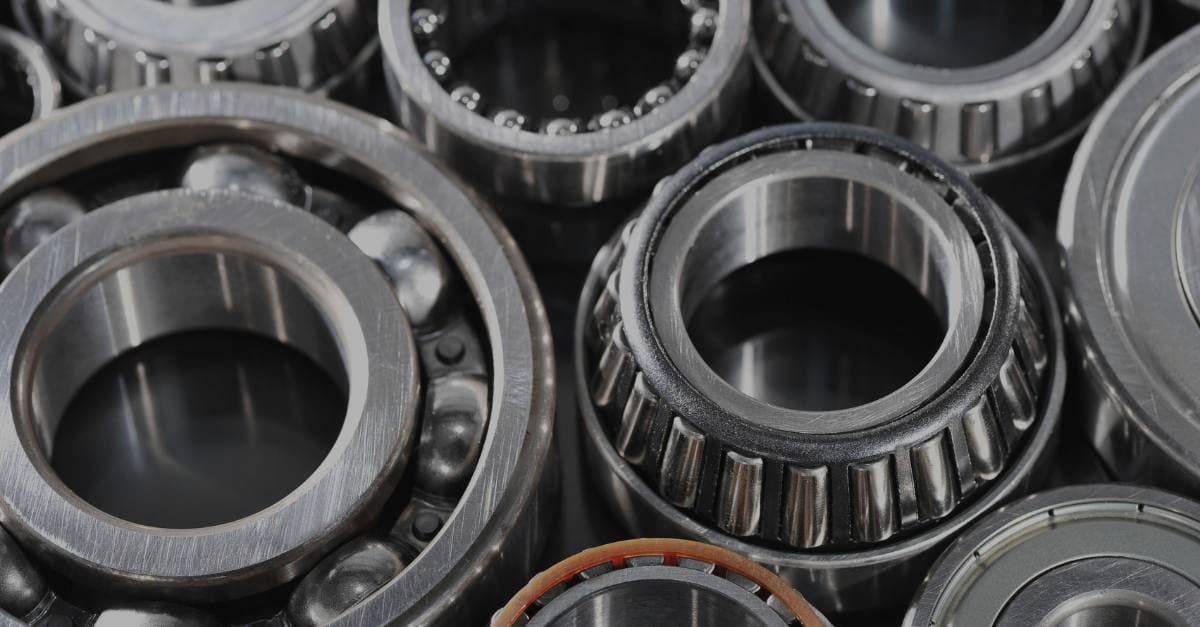
Bearing problems are highly noticeable on a crane trolley. They often cause vibration, unusual noise, and changing resistance simultaneously.
●Excessive Clearance or Damaged Rolling Elements: Excessive bearing clearance allows axial and radial wheel movement. This can cause irregular trolley vibration during travel. Pitted or spalled rolling elements produce impact-like clunking noises.
●Insufficient Lubrication: Crane trolley bearings start and stop frequently. Without timely grease replenishment, rolling elements may enter dry-friction conditions. Early signs include increased noise and faster temperature rise. Continued operation accelerates wear and creates a vicious cycle.
●Changing Resistance: A seized bearing acts like an unpredictable additional load on the drive system. The motor may deliver normal output, while wheel speed fluctuates. The trolley then feels jerky during travel.
Abnormal Drive Motor Operation
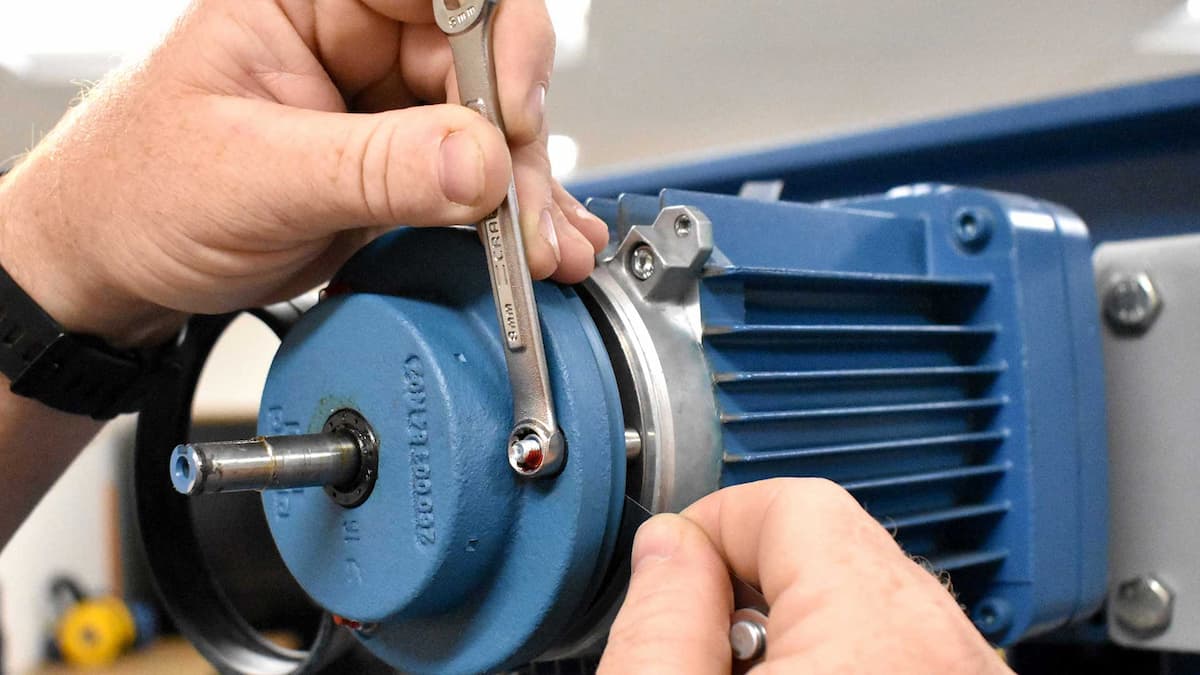
Problems at the motor level produce different symptoms in single-drive and dual-drive systems.
●Single-Motor Torque Instability: When output torque fluctuates, the speed command remains unchanged. However, actual trolley travel becomes uneven, with sudden surges. Poor power quality, encoder feedback faults, or internal motor defects may cause this.
●Dual-Motor Speed or Torque Differences: The two motors lack a rigid mechanical connection. Small differences in winding resistance, no-load current, or aging can produce different speeds. One side may pull while the other drags, twisting the trolley. Severe cases can cause wheel climbing.
●Incorrect Motor Selection: The trolley is a typical inertial load. It also starts and stops frequently. If motor inertia is poorly matched or overload capacity is insufficient, startup and low-speed performance may suffer. This can intensify impact sensations.
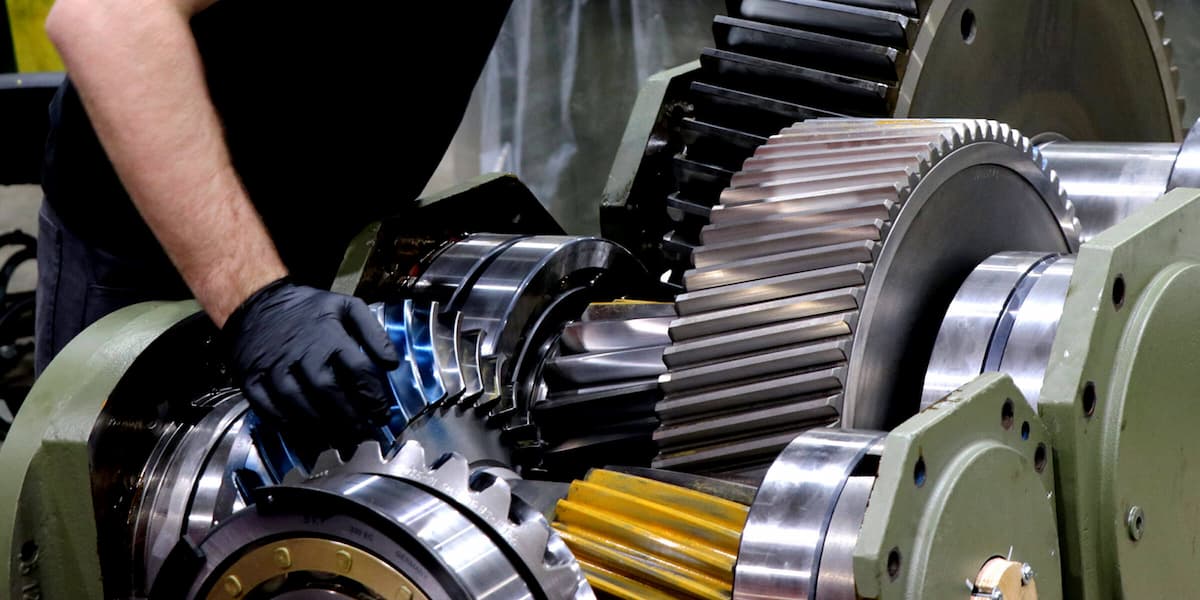
Gearbox and Transmission System Faults
Gearbox and transmission faults often show periodic symptoms. A noise may occur once per revolution or worsen under higher loads.
●Gear Wear or Abnormal Backlash: Worn tooth surfaces increase backlash. During reversing or starting and stopping, gears may collide. Vibration that increases with load often indicates poor meshing.
●Misaligned, Loose, or Damaged Couplings: When an elastic coupling’s buffer element ages or breaks, power transmission loses flexibility. It becomes a rigid connection with clearance. Startup and travel vibration can increase significantly. Misalignment also causes vibration to rise with rotational speed.
●Vibration Caused by Shaft Misalignment: An off-center gearbox output shaft introduces additional alternating loads into the transmission system. Coaxiality for rigid couplings is generally controlled within 0.05 mm. For elastic couplings, the limit is 0.1 mm. Vibration is difficult to avoid beyond these limits.
Unreasonable Variable-Frequency Drive Settings
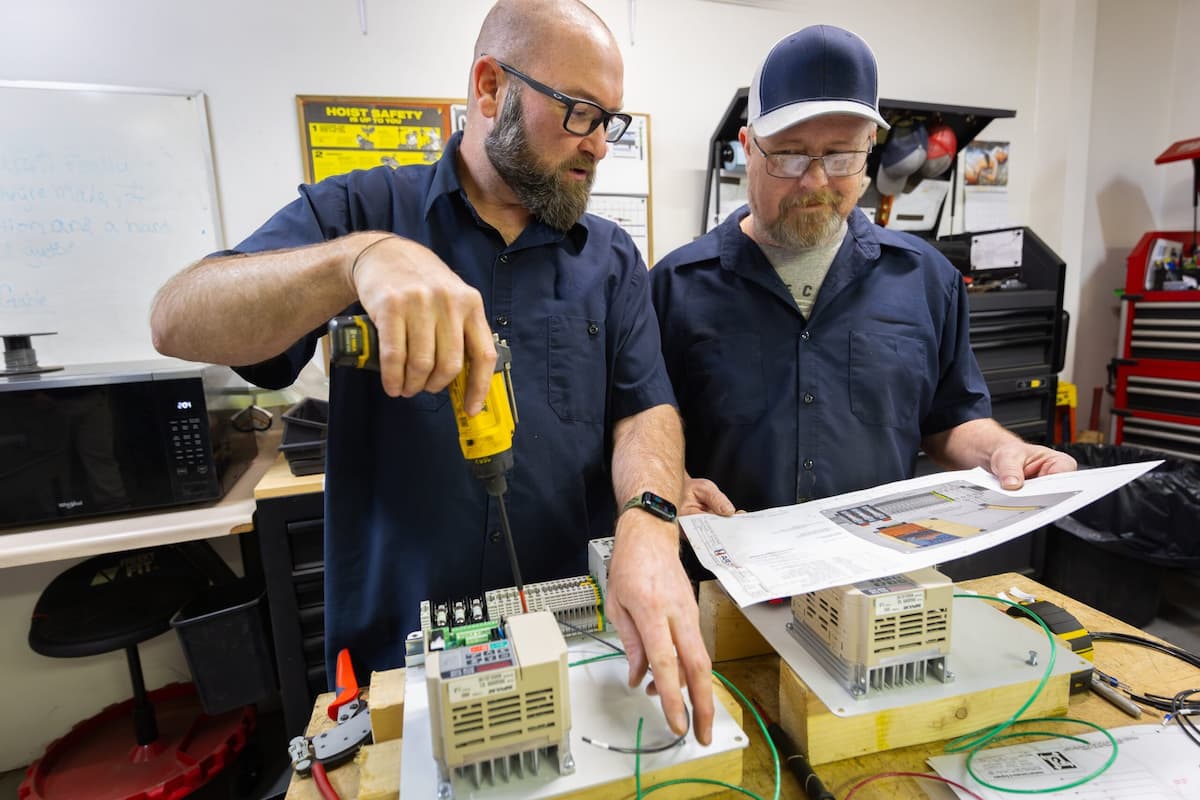
Variable-frequency drives directly determine how smoothly the crane trolley travels. Poor parameter tuning can undermine otherwise sound mechanical systems.
●Incorrect Acceleration and Deceleration Times: The trolley is an inertial load. Acceleration and deceleration times are generally tuned within 3–10 seconds. Short settings cause severe starting and stopping shocks. They can also cause noticeable load swing. Long settings make the response sluggish and operation feel less responsive.
●Mismatch Between Starting and Running Frequencies: If the starting frequency is too low, torque may not build when the brake releases. The trolley may briefly sink or hesitate. An excessively high starting frequency may cause an initial impact.
●Poor Speed-Control Settings: Insufficient S-curve time makes acceleration and deceleration transitions too abrupt. Operators may feel a sudden surge followed by a harsh stop. Setting the S-curve time to 1–2 seconds can noticeably improve smoothness.
Improper Brake Adjustment
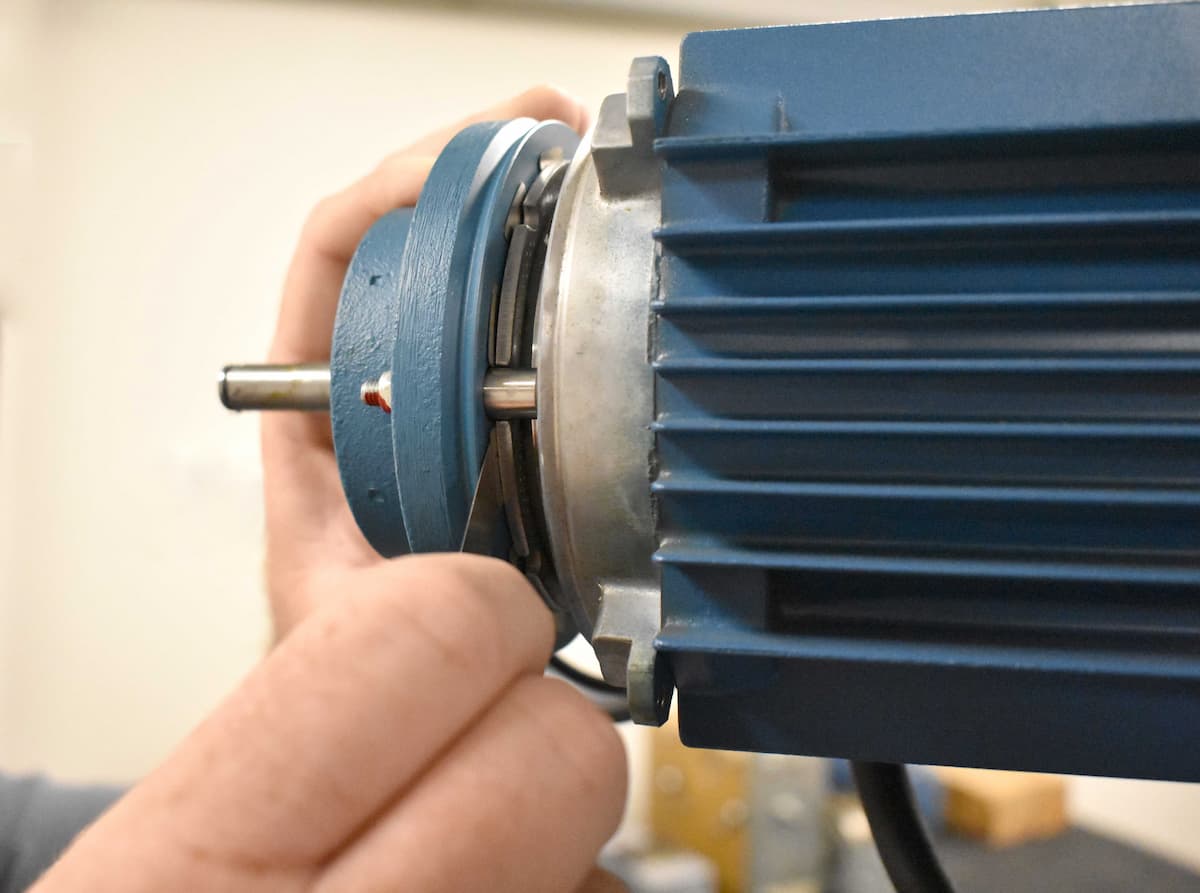
Brake problems are often blamed on electrical systems. However, inspection frequently reveals incorrect mechanical clearances.
●Clearance Outside Specifications: A common standard clearance between the brake shoe and brake wheel is 0.6–0.8 mm. If the clearance is too small, the shoes may not fully release. The trolley then travels with the brake dragging, causing sticking and heat. If clearance is too large, brake release is delayed. The electromagnet may energize before the shoes fully disengage. The trolley may need an initial tug before moving.
●Incomplete Brake Release: Energizing the electromagnet does not prove the shoes have cleared the brake wheel. When feedback comes from an auxiliary electromagnet contact, the signal may only confirm movement. Actual braking torque may still resist travel.
●Unequal Response on Both Sides: With dual brakes or dual-drive crane trolleys, one brake may release faster. This can twist the trolley during startup and stopping. Such impacts are often more noticeable under light or no load.
Crane Trolley Frame Deformation or Insufficient Installation Accuracy
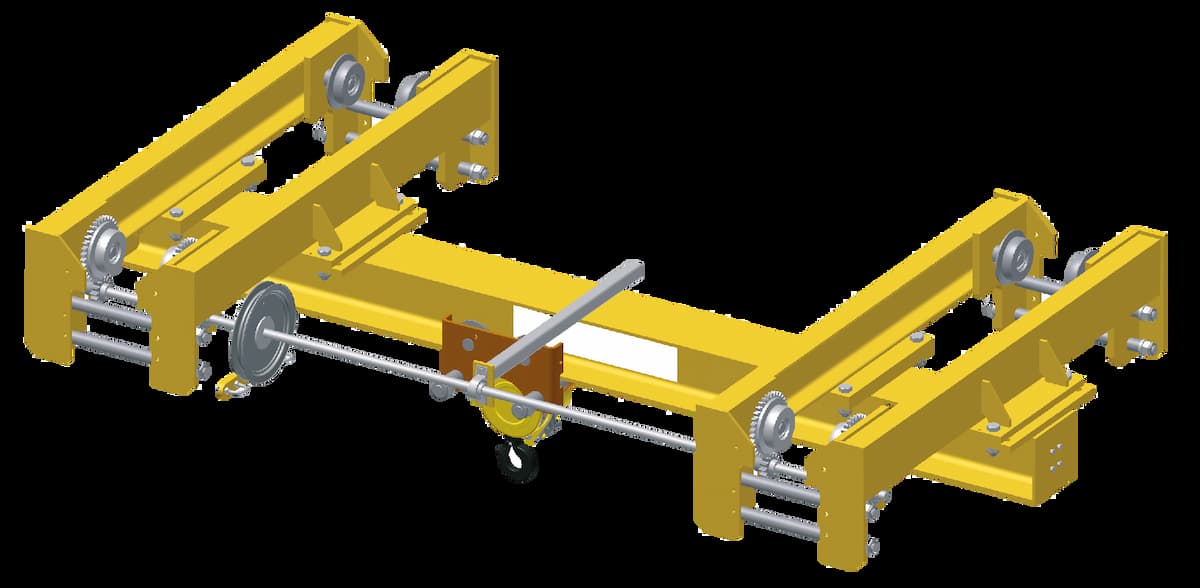
Structural accuracy is the foundation. Once the foundation is misaligned, adjustments elsewhere become less effective.
●Crane Trolley Frame Deformation: Long-term impact loads or overloading may twist the trolley frame. This can alter the mounting references for all four wheels. When the diagonal difference exceeds 5 mm (for spans ≤19.5 m), risks increase significantly. These risks include unequal wheel heights and skewing.
●Wheel Parallelism, Wheelbase, or Assembly Deviations: Horizontal wheel skew exceeding L/1,000 can cause abnormal travel. Vertical skew beyond tolerance has similar effects. The wheels no longer roll purely and generate lateral forces. These forces push the trolley off course and accelerate flange wear.
●Loose Connections: Bearing-seat bolts and frame connectors may loosen during long-term operation. Alignment accuracy then deteriorates gradually and may go unnoticed. Once the problem passes a critical threshold, vibration and unusual noise can become obvious.
Eccentric Suspended Loads and Uneven Load Distribution
This cause is easy to overlook because the problem may not lie in the crane trolley itself. It may come from the suspended load.
●Offset Load Center of Gravity: If the load’s center of gravity is not on the trolley centerline, wheel loads are redistributed. The wheels on the overloaded side carry more force, while the opposite side carries less. The trolley may then travel with a persistent lateral pull.
●Uneven Wheel Loads Amplify Instability: A wheel-load difference above 20% between two wheels on the same end truck indicates significant imbalance. The lightly loaded wheel may lack traction and slip or drag. The heavily loaded wheel wears faster, further increasing diameter differences. This can create a self-reinforcing cycle.
●Load Changes Amplify Drive and Structural Problems: Eccentric loads create horizontal forces transmitted through the frame to the drive system and wheels. Under these forces, marginal bearing clearance or gear backlash can produce noticeable vibration or skewing.
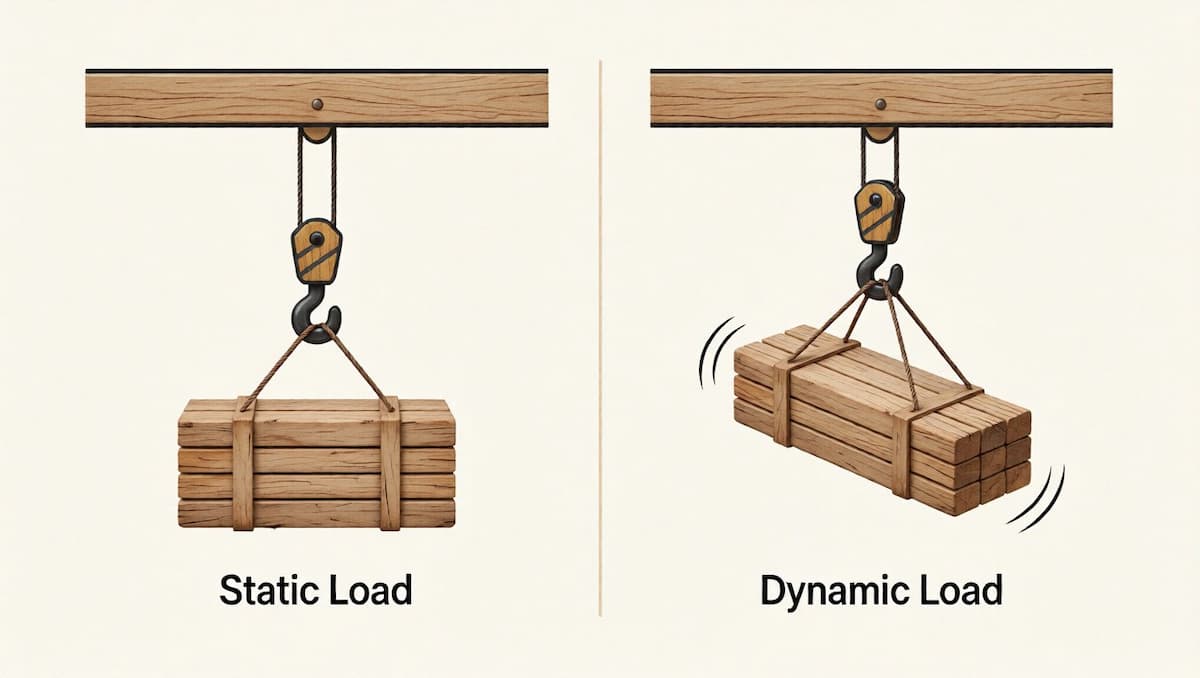
How to Identify the Causes of Unstable Crane Trolley Operation
Do not dismantle the gearbox first. Match symptoms with likely causes, then verify them individually.
|
Symptoms |
Likely Causes |
Checks |
Notes |
| Periodic vibration or noise | Oval tread, bearing damage, poor gear meshing | Inch slowly; mark one wheel revolution; check noise and vibration. | Inspect rotating parts first. |
| Skewing, rail rubbing, shiny flanges | Unequal wheel diameters, misalignment, frame diagonal errors | Measure drive-wheel diameters; check flange gaps and frame diagonals. | Check contact marks first. |
| Startup surge or hesitation after release | Incorrect inverter ramps or S-curve; incomplete brake release | Check current and speed curves; measure brake gap (0.6–0.8 mm). | Test controls and brakes separately. |
| Jerky travel, noise, or overheating | Poor lubrication, coupling damage, brake drag | Measure temperature; listen; compare manual rotation resistance. | Check lubrication and brake drag. |
| Dual-drive twisting or unstable speed | Unequal motor output or brake response | Compare currents and speed feedback; temporarily isolate one side. | Test each side separately. |
| Directional pull or uneven wheel wear | Eccentric load or uneven wheel loads | Check load-center offset and wheel contact marks. | Confirm loading first. |
Troubleshoot in this order: wheel-rail contact, transmission, brakes, parameters, then load. Test one variable at a time to avoid masking mechanical faults.
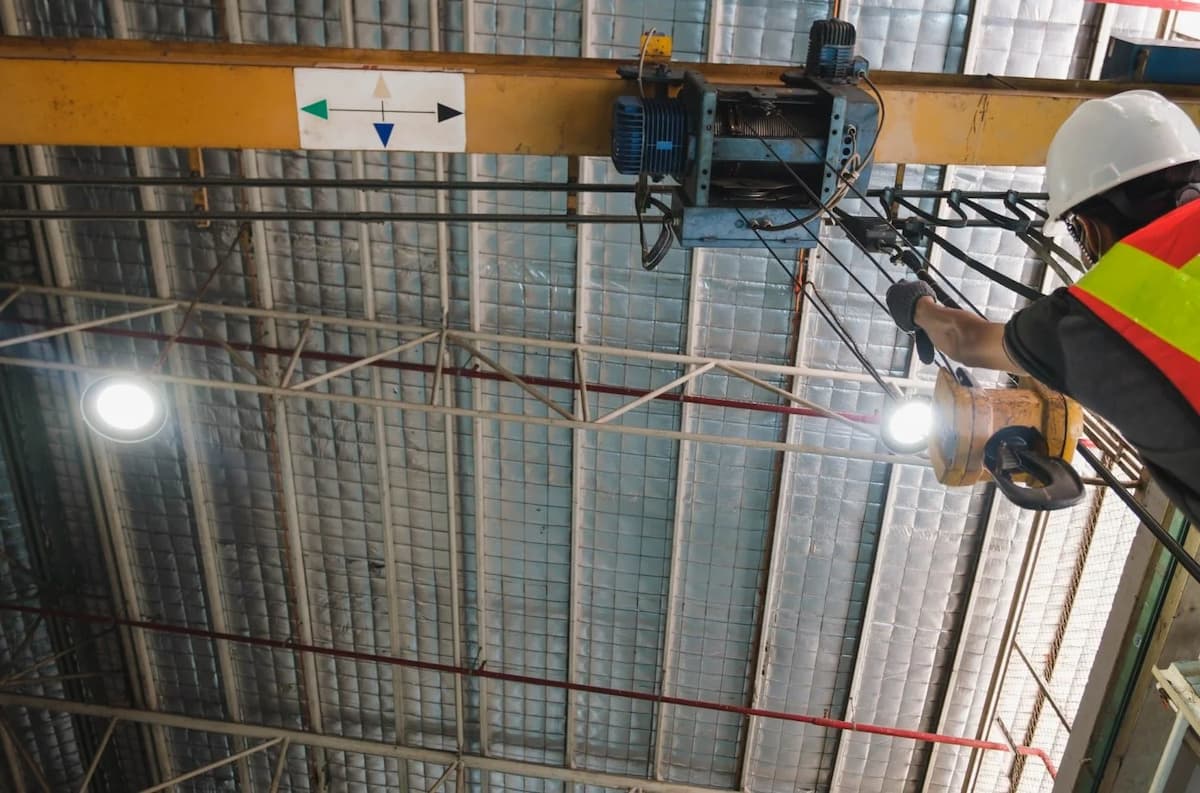
How to Improve Crane Trolley Travel Stability
1.Optimize the Trolley Drive System: For dual-drive trolleys, match motor parameters and use symmetrical transmission layouts. Select motors for frequent starts, stops, and inertial loads. Do not rely on rated power alone. Keep transmission chains short to reduce accumulated clearance.
2.Use Variable-Frequency Control and Smooth Starting: Set acceleration and deceleration times typically within 3–10 seconds. An S-curve time of 1–2 seconds helps reduce impacts. Use separate settings for loaded and unloaded operation. Ensure starting torque builds before brake release.
3.Improve Machining and Assembly Accuracy: Control wheel parallelism, coaxiality, and frame diagonals during assembly. Maintain coupling coaxiality within 0.05 mm for rigid couplings and 0.1 mm for flexible couplings. Recheck wheel diameters and bearing clearances against manufacturer requirements.
4.Establish Regular Maintenance: Check wheel treads and flanges, bearing temperature and lubrication, brake clearance, coupling buffers, dual-drive current balance, and inverter backups. Adjust lubrication intervals to operating conditions. Measure wheel diameters regularly and track changes. Preventive maintenance identifies problems before failures occur.
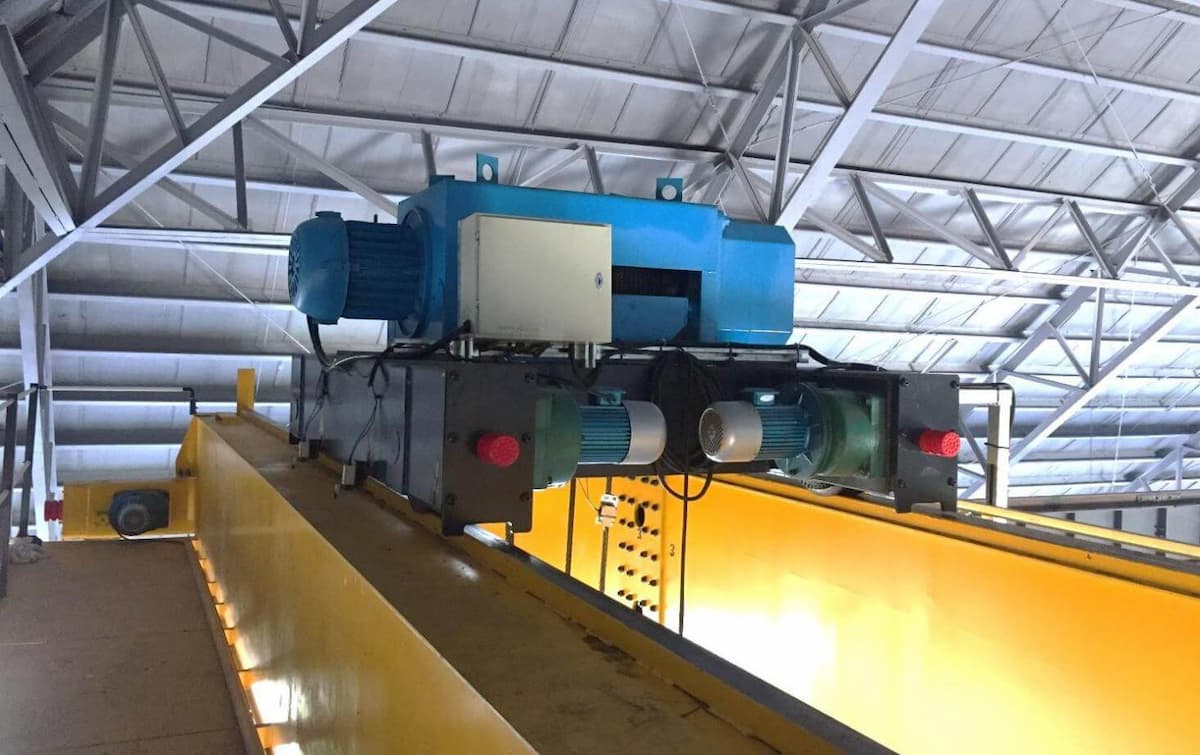
How HSCRANE Improves Crane Trolley Stability Through Product Design
HSCRANE coordinates drive systems, controls, structures, and operating conditions. Stability comes from an integrated design, not isolated features.
●Reliable Trolley Drive Systems: Selection considers mechanism classification, not rated capacity alone. Chapter 6 of ISO 4301-1:2016 classifies mechanisms and components. FEM 9.511 also guides drive-chain duty assessment. This helps prevent undersized mechanisms within otherwise adequately rated cranes.
●Variable-Frequency Control and Smooth Operation: Settings reflect actual acceleration frequency and load conditions. HSCRANE references Clause 5.2 of EN 15011:2020 for crane stability. Annex B of EN 13001-1:2015 provides acceleration classifications. S-curve settings are coordinated with brake-release timing to reduce startup and stopping impacts.
●Dual-Drive Synchronization: Dual-drive problems often come from unequal outputs between both sides. HSCRANE checks motor parameters and compares speed and torque feedback. It also assesses drive capacity under eccentric loading during design. This reduces corrective adjustments after on-site skewing.
●Reliable Structures and Components: Assembly tolerances control frame stiffness, wheel mounting references, and coupling coaxiality. Finite element analysis checks critical connections. This limits deformation under eccentric loads and frequent starts.
●Customized Project Solutions: A5/M5 is a baseline, not a ceiling. ISO 4301-5:2025 includes average displacement in mechanism classification. For humid coastal projects with frequent eccentric loads, HSCRANE adjusts drive settings, corrosion protection, and synchronization strategies. Each solution reflects its operating conditions.
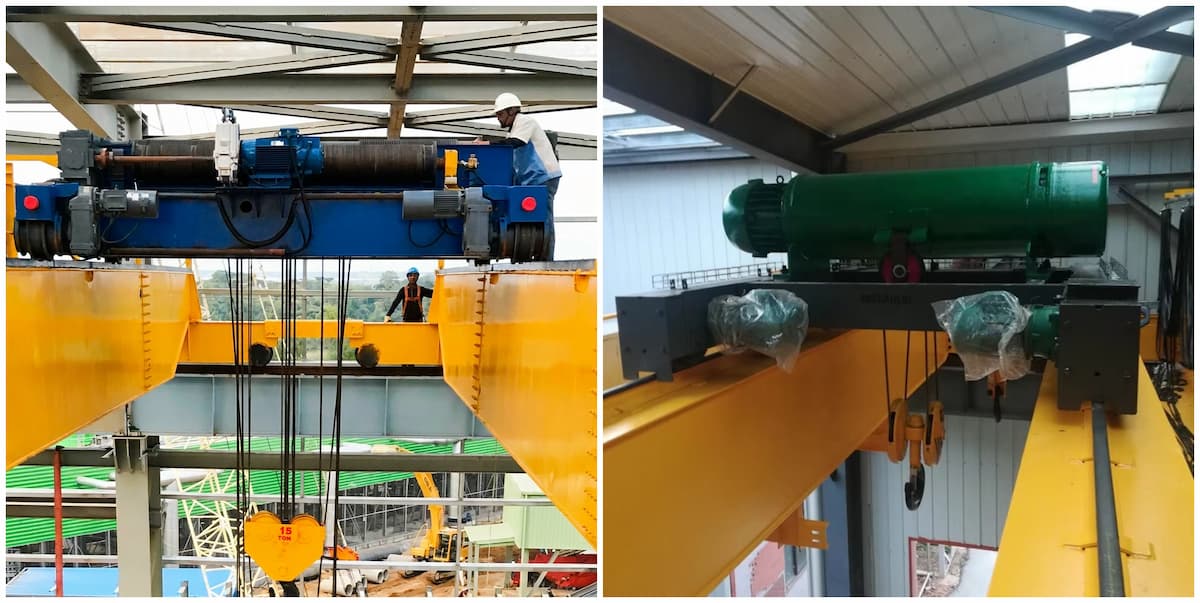
HSCRANE Classic Crane Trolley Project Cases
30-Ton Double-Girder Overhead Crane Project in Ecuador
●Customer Background: The customer is a local company in Guayaquil, Ecuador. It processes large steel structures and hydropower equipment components. During expansion, the company needed reliable equipment for handling long and eccentric loads. Existing equipment lacked sufficient stability under heavy loads and long-workpiece conditions.
●Equipment Configuration: QD-type 30-ton double-girder overhead crane, with a 22.5 m span customized to the factory column spacing. The lifting height is 12 m, with an A5/M5 duty classification. The power supply is 440V/60Hz/3-phase. The main hoist speed is 3.5 m/min. The trolley speed is 20 m/min, while bridge travel reaches 30 m/min.
●Drive and Variable-Frequency Control Strategy: Both hoisting and travel mechanisms use variable-frequency drives. Here, trolley speed control prioritizes precision rather than maximum speed. It enables low-speed positioning during precise lifting. Smooth acceleration and deceleration reduce swinging during steel structure and mold handling. Finite element analysis verified the box girder structure. Maximum static deflection under full load remains within L/700. This provides a structural foundation for smooth trolley travel under eccentric loads.
●Measured Results: After commissioning, component turning and transfer time decreased by approximately 40%. Bridge travel energy consumption dropped by approximately 15%. The customer also gave positive feedback on trolley stability under heavy loads. The crane passed testing at 125% static load (37.5 tons) and 110% dynamic load. All test results met acceptance requirements.
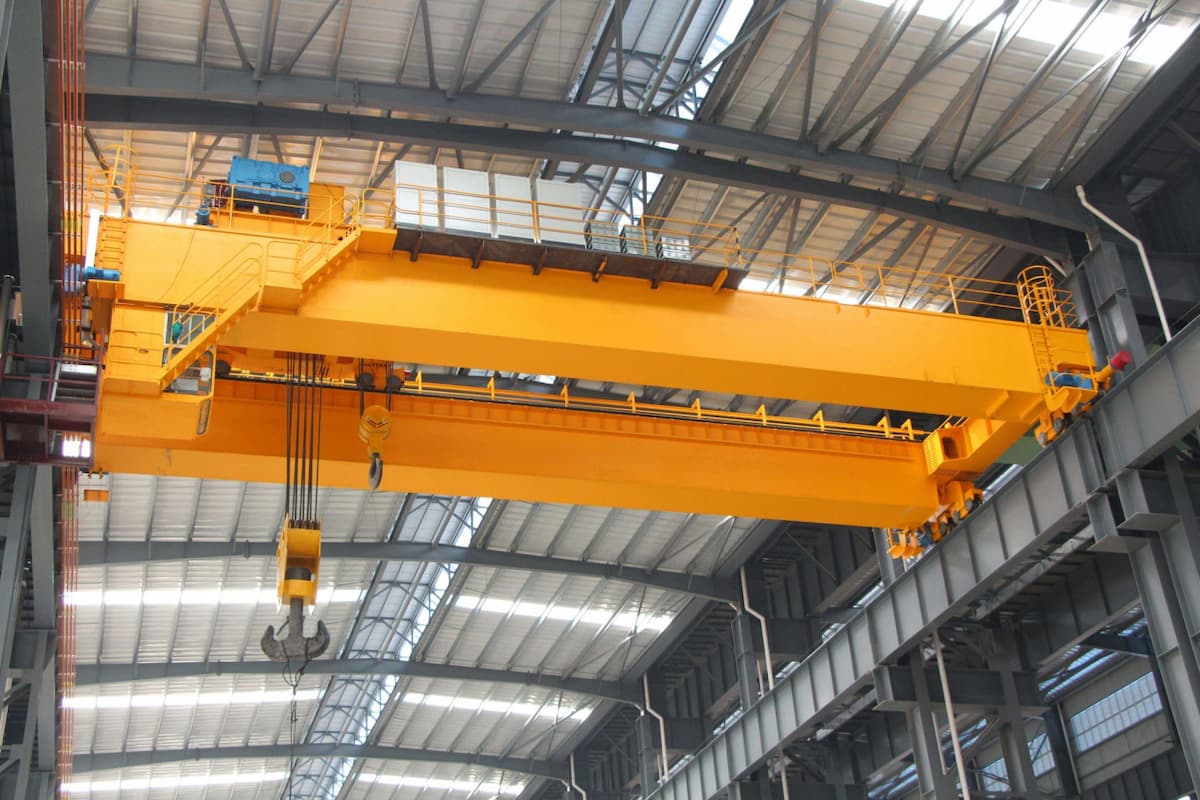
QD 10/5-Ton Double-Girder Overhead Crane Project in Indonesia
●Customer Background: The customer is a large manufacturing plant in Indonesia. Its main operations include producing and assembling large metal structures. The customer needed one crane for heavy main components and light auxiliary assembly. This would reduce redundant workshop equipment. Stable travel and smooth starting and stopping were also essential requirements.
●Equipment Configuration: QD-type double-girder overhead crane with a 10-ton main hook and 5-ton auxiliary hook. The span is 20 m, and the lifting height is 6 m. The duty classification is A5, with a 415V/50Hz/3-phase power supply. The crane features variable-frequency drives and remote control. Its electrical system has IP55 protection for hot and humid local conditions.
●Key Variable-Frequency Control Strategy: Acceleration parameters are configured separately for different hook applications. They also account for differences between loaded and unloaded conditions. An unloaded trolley requires less torque buildup than a fully loaded one. Therefore, acceleration can be more direct. For loaded travel and precision assembly, longer acceleration transitions reduce impacts and load swing. This operating-state-based parameter strategy addresses jerky starting and stopping. Such problems often occur when trolley loads change frequently.
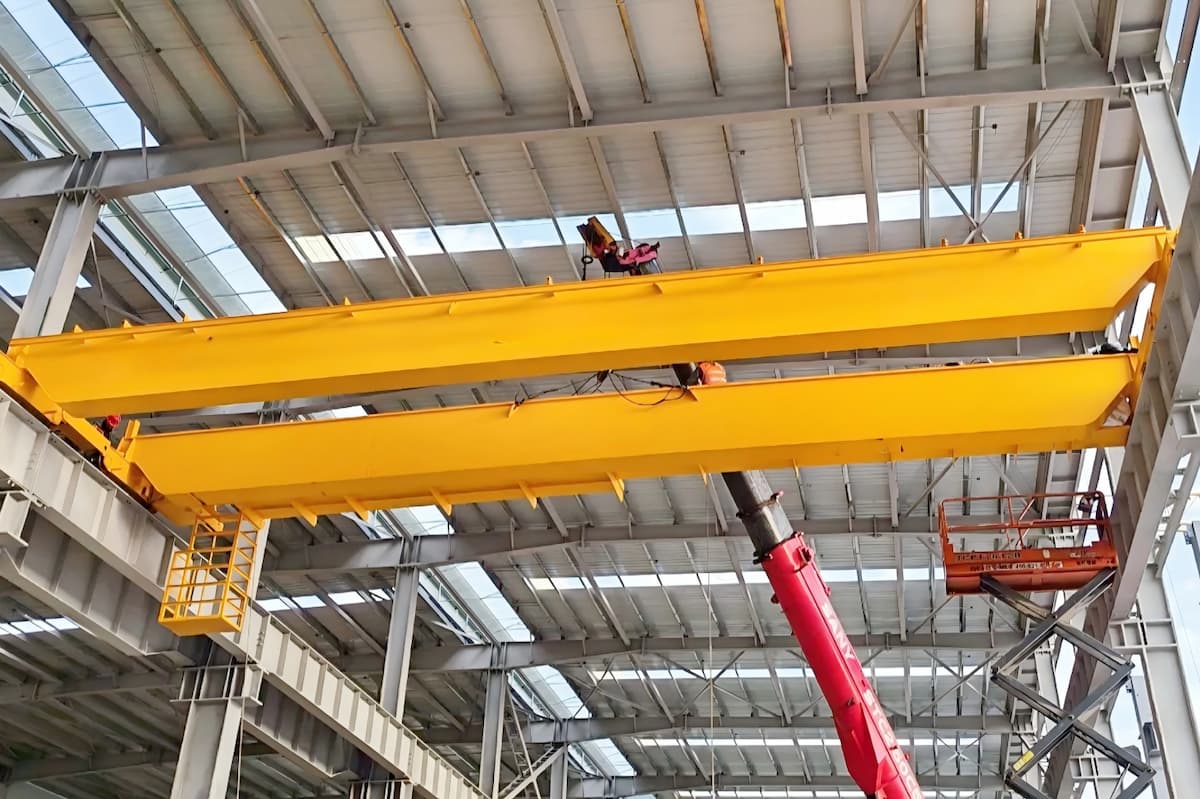
●Project Significance: This project shows that smooth trolley travel does not always require additional hardware. Matching control parameters to actual operating conditions is equally important. Using identical acceleration curves for empty and fully loaded operation often compromises performance under both conditions.
Conclusion
Unstable crane trolley operation is not always caused by rail problems. Wheel wear, bearing lubrication, motors, gearboxes, and inverter settings also affect stability. Brake clearance, structural accuracy, and eccentric loads matter too. These issues can cause vibration, skewing, sticking, or startup impacts.
Effective troubleshooting should follow this sequence: wheel-rail contact → transmission → brakes → parameters → load. Test one variable at a time. Avoid using inverter adjustments to mask mechanical problems.
HSCRANE applies this integrated approach to product design. Drive selection references ISO 4301-1:2016 and FEM 9.511. Variable-frequency settings consider EN 15011:2020 and EN 13001-1:2015. Manufacturing also addresses dual-drive synchronization and structural accuracy. Each solution is customized to actual project conditions. Stable trolley operation depends on the entire system working together.
Looking for a reliable overhead crane or crane trolley drive solution?
HSCRANE provides tailored designs and configuration recommendations. We consider lifting capacity, span, travel speed, duty classification, and operating environment. Contact our team for professional technical support and project solutions.
[Submit Your Project Parameters to Get the Best Solution]
Further Reading:
Crane trolley stability also depends on wheel-rail compatibility. Rail types, wheel treads, and flange dimensions affect travel stability and wear. Learn how to match crane wheels and rails correctly.
Read: How to Match Crane Wheels with Rails? A Guide to Rail Types and Flange Dimensions for more technical details.
Crane Trolley FAQs
Q1: What should I check first when a crane trolley runs unstably?
Check wheel-rail contact. Inspect tread wear, flange clearance, and drive-wheel diameter differences. Differences exceeding 0.2 mm need attention. Otherwise, inspect bearings, couplings, and brakes.
Q2: Why does vibration return after adjusting inverter parameters?
Inverter settings improve dynamic response but cannot eliminate mechanical clearance. Bearing play, damaged coupling buffers, or excessive gear backlash still cause impacts. Softer acceleration may only mask these faults. Check the transmission first, then tune S-curves and starting frequencies.
Q3: How can I isolate twisting in a dual-drive crane trolley?
Compare both motors’ current and speed feedback. If safe, disengage one side temporarily and inch slowly. Check whether twisting changes. If it decreases, inspect that motor’s settings, brake-release timing, and wheel diameter. Never adjust both sides simultaneously.
Q4: How often should wheels and bearings be inspected?
Frequency depends on operating conditions. For A5/M5 trolleys with frequent starts, inspect treads and flanges monthly. Measure wheel diameters and bearing temperatures quarterly. Record trends and shorten lubrication intervals in humid or dusty environments.
Q5: Can HSCRANE customize trolley drive solutions for our conditions?
Yes. A5/M5 is a baseline; demanding applications need tailored configurations. Frequent eccentric loads and coastal corrosion require specific drive settings. Dual-drive synchronization and component selection must match site conditions. Provide the span, capacity, duty class, travel speed, and environment. HSCRANE assesses mechanism classification and the actual load spectrum to recommend a suitable solution.
This document is for reference only. Specific operations must strictly comply with local laws and regulations and equipment manuals.